How Precision Nutrition Coaching Simplifies Healthy Eating
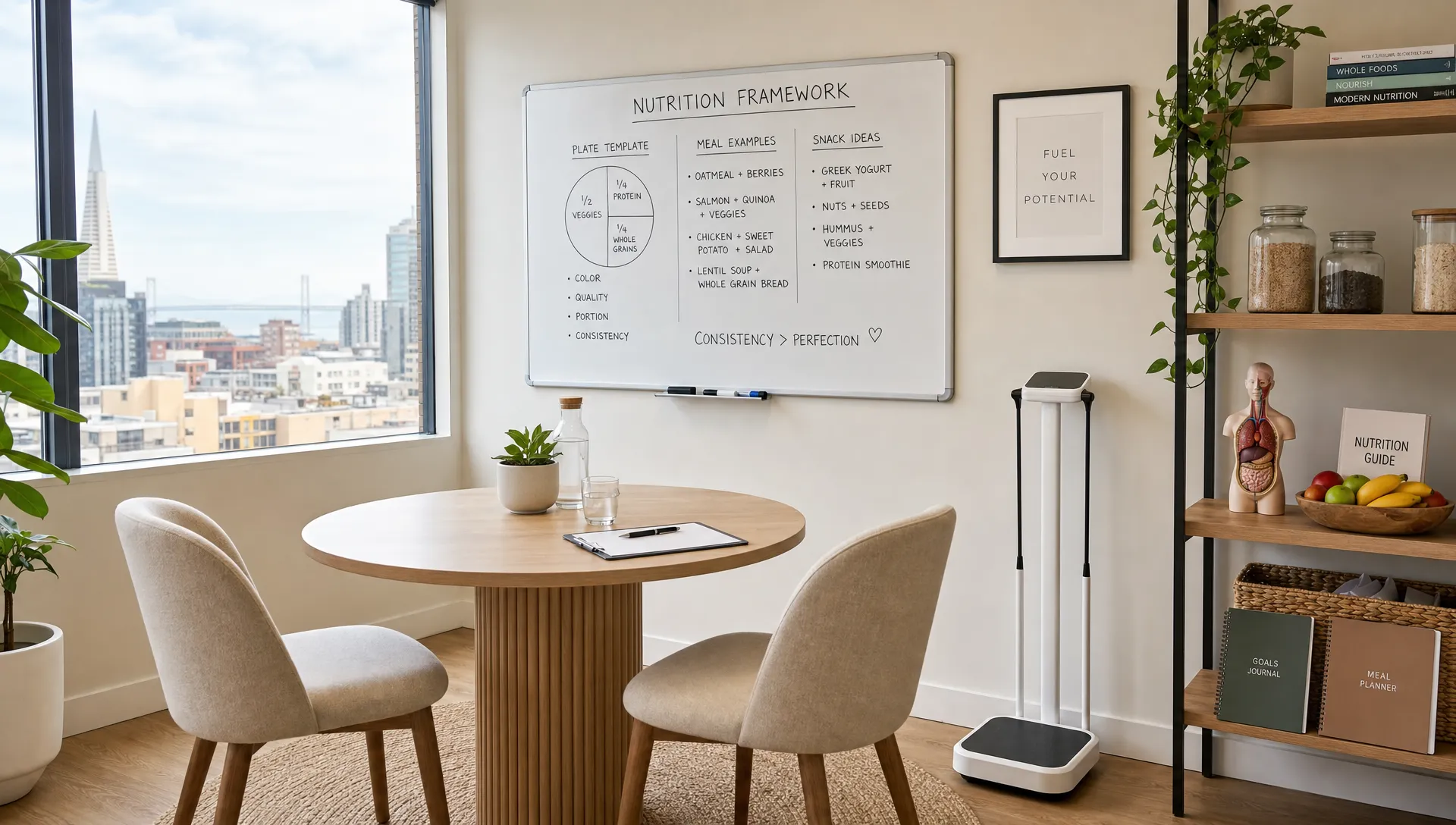


Healthy eating often becomes hard because people are asked to make too many decisions. Track every gram, avoid every imperfect meal, follow a new rule every week, then somehow sustain it through client dinners, late meetings, travel and family life. That is not a plan. It is decision fatigue disguised as discipline.
Precision nutrition coaching simplifies healthy eating by narrowing the focus to the handful of behaviors that matter most for your body, schedule and goals. Instead of chasing the latest diet trend, you work from real information: your current habits, training demands, body composition, metabolic health, food preferences and the constraints of your actual week.
For busy San Francisco professionals, that difference matters. A plan that only works when your calendar is empty will not survive a packed day between SoMa meetings, a FiDi lunch and dinner out with friends. The goal is not to make nutrition more complicated. The goal is to make the next healthy choice obvious.
Why healthy eating feels harder than it should
Most people do not fail because they lack motivation. They fail because their nutrition system has too much friction.
One person might know they need more protein but has no reliable breakfast. Another might eat well Monday through Thursday, then lose structure across restaurants and weekend plans. Someone else might track calories for two weeks, get overwhelmed and quit because the process feels disconnected from their real life.
Modern food environments make this harder. Highly palatable, ultra-processed foods are easy to overeat, not because people are weak but because those foods are engineered to be convenient, calorie-dense and rewarding. In a controlled inpatient trial published in Cell Metabolism, participants ate more calories and gained weight on an ultra-processed diet compared with an unprocessed diet, even when meals were matched for presented calories, sugar, fat, fiber and macronutrients.
That does not mean you need to eliminate every packaged food. It means your default environment should do more of the work for you. Coaching helps replace daily improvisation with practical defaults: what to buy, what to prep, what to order, what to eat before training and what to do when the day goes sideways.
What precision nutrition coaching actually means
Precision nutrition coaching is not a generic meal plan with your name at the top. It is a structured process that adapts nutrition to your physiology, preferences, health goals and behavior patterns.
A good coach starts by understanding where you are now. That may include your current meals, hunger patterns, training schedule, sleep, stress, digestion, alcohol intake, travel frequency, medical history and body composition goals. From there, the plan becomes specific enough to act on but flexible enough to repeat.
If you are comparing options locally, this is one reason credentials and assessment quality matter. Custom Fit has a deeper guide on how to choose a nutrition coach in San Francisco, including what to look for beyond personality fit.
The word precision can sound technical, but in practice it often means fewer decisions. Instead of asking, What should I eat today, you might have three reliable breakfast templates, two go-to lunch orders near your office and a dinner framework that works whether you cook or eat out.
The science supports personalization over diet tribalism
Nutrition research does not point to one perfect diet for everyone. In the DIETFITS randomized clinical trial published in JAMA, researchers compared a healthy low-fat diet with a healthy low-carbohydrate diet over 12 months. Average weight loss did not significantly differ between the two groups, which reinforces a practical takeaway: diet quality, adherence and personal fit often matter more than the label on the diet.
Other research supports the value of planning. A study in the International Journal of Behavioral Nutrition and Physical Activity found that meal planning was associated with greater food variety, better diet quality and lower odds of obesity. Planning works partly because it reduces last-minute decision-making, which is when convenience usually wins.
| Evidence-based principle | What it means for daily eating | How coaching simplifies it |
|---|---|---|
| Diet quality matters | More minimally processed foods, lean proteins, fiber-rich carbohydrates and healthy fats | Build repeatable meals instead of chasing novelty |
| Adherence beats theory | The best plan is one you can follow consistently | Match meals to schedule, taste and social life |
| Planning reduces friction | Decisions made in advance are easier to execute | Create grocery lists, restaurant defaults and travel strategies |
| Protein supports lean mass | Especially when paired with resistance training | Set practical protein targets by meal, not vague daily intentions |
For muscle and performance goals, protein is a useful example. A meta-analysis in the British Journal of Sports Medicine found that protein supplementation can enhance gains in muscle mass and strength during prolonged resistance training, particularly when total protein intake is adequate. A coach translates that into actual meals: Greek yogurt after morning training, salmon at lunch, tofu or chicken at dinner, or a protein-forward snack before a late workout.
Simplification is a performance strategy
High performers often do not need more information. They need less friction between intention and execution.
That principle shows up far beyond nutrition. Leadership-performance organizations increasingly focus on removing obstacles that slow execution, such as unclear decisions, scattered tools and poor feedback loops. JBL High Performance describes this type of work through removing operational friction to improve execution, and the same idea applies to food: the easier the right behavior is to repeat, the more likely it becomes your default.
In nutrition, friction can look like an empty fridge, no plan for business dinners, unrealistic meal prep, conflicting advice or a calorie target that feels punitive. Precision nutrition coaching removes those obstacles one at a time.
A coach might help you simplify breakfast to two options you enjoy, identify three restaurant meals that support your goals, adjust portions around training days and create a Sunday grocery routine that takes 20 minutes instead of two hours. None of this is flashy. That is why it works.
Data makes nutrition personal without making it complicated
Data is useful when it clarifies action. It becomes a problem when it turns into noise.
At Custom Fit, nutrition coaching can pair with advanced testing such as DEXA scans and VO2 max testing, depending on a client’s goals. This is especially helpful when body weight alone does not tell the full story. Someone may be losing fat and gaining muscle while the scale barely moves. Another person may have a healthy-looking weight but want a clearer view of visceral fat, lean mass or long-term metabolic risk.
Whenever body composition data is part of the plan, interpretation matters. Custom Fit DEXA scans are performed by Registered Dietitians or Exercise Physiologists, so clients are working with professionals who understand nutrition, exercise physiology and body composition, not simply receiving an automated scan report. That human context helps turn scan results into practical next steps, such as protein targets, strength training priorities, recovery habits or changes to meal timing.
This is where precision nutrition coaching can feel surprisingly simple. Instead of guessing whether to eat less, train harder or change macros, you can focus on the next evidence-informed adjustment.
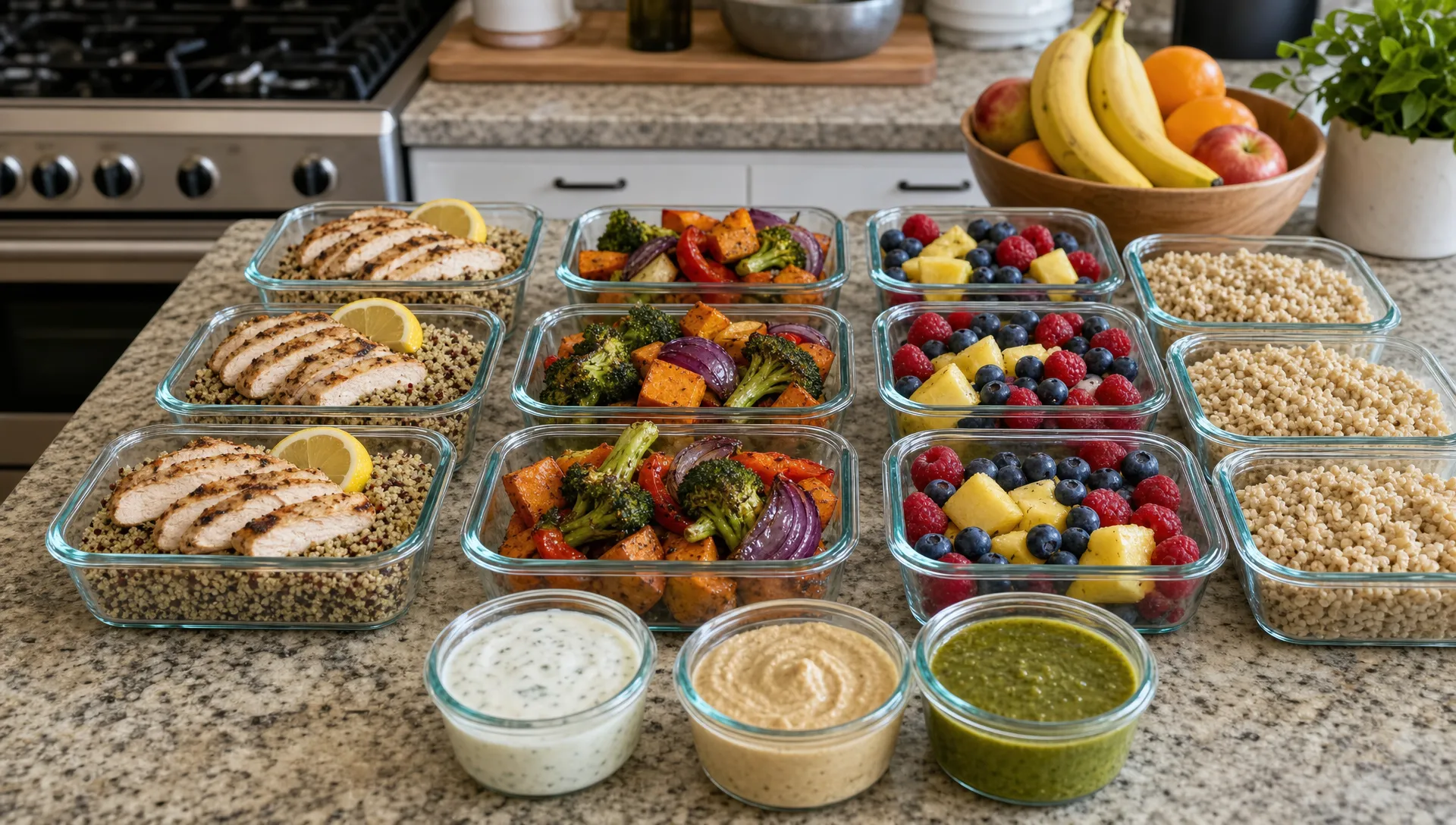
What a simplified eating week can look like
A simplified nutrition plan does not mean eating the same bland meal every day. It means creating enough structure that healthy choices become repeatable.
For a professional with early workouts, back-to-back calls and frequent dinners out, a coach might build the week around predictable anchors: a high-protein breakfast, a lunch that does not create an afternoon crash, a pre-planned snack and a flexible dinner framework.
| Decision point | Simple rule | Example |
|---|---|---|
| Breakfast | Start with protein and fiber | Eggs with fruit, Greek yogurt with berries, or tofu scramble with vegetables |
| Lunch | Choose a lean protein, colorful plants and a satisfying carbohydrate | Chicken bowl, salmon salad with grains, or lentil soup with a side salad |
| Snack | Prevent late-day overeating | Cottage cheese, protein smoothie, hummus with vegetables, or edamame |
| Restaurant dinner | Decide the anchor first | Protein entree, vegetable side, shared appetizer if desired |
| Training day | Fuel around performance | More carbohydrates before or after harder sessions |
| Travel day | Protect the first meal | Pack or pre-order a protein-forward breakfast |
The portions, timing and food choices should change based on the person. A client training for endurance performance will not eat the same way as someone focused on fat loss, improving blood markers or preserving muscle during a demanding work season. The simplifying principle is the same: remove guesswork before the stressful moment arrives.
Why human coaching beats more app notifications
Food tracking apps can be useful for awareness, but they often stop at data collection. They can tell you what happened. They usually do not tell you why it happened, what to change first, or how to adapt when life gets complicated.
That is where human coaching becomes valuable. If your lunches are inconsistent because you are moving between clinics, meetings or school pickups, the solution may not be a stricter macro target. It may be a short list of dependable nearby meals and a realistic backup snack. If your dinners are strong but weekends undo your progress, the answer may be a social eating strategy rather than more weekday restriction.
Custom Fit has covered this distinction in more depth in its article on when a personal nutritionist makes more sense than an app. The short version is simple: apps track inputs, but coaches help you interpret patterns and change behavior.
Accountability also matters. Not the harsh, all-or-nothing kind. Productive accountability turns broad intentions into specific weekly actions, then adjusts when the plan meets reality. If consistency is your biggest challenge, the breakdown in Custom Fit’s guide to how a nutrition accountability coach helps you stay consistent is a useful companion to this topic.
Precision does not mean perfection
One of the biggest misconceptions about precision nutrition coaching is that it requires perfect compliance. In reality, precision often creates more flexibility because you know what matters most.
If your week includes dinner in Hayes Valley, a client lunch downtown and a weekend brunch in the Marina, the plan should make space for that. A coach can help you decide where to be structured, where to be flexible and how to return to baseline without turning one indulgent meal into a three-day slide.
This is especially useful for high-income professionals, physicians, founders and executives whose schedules change quickly. A rigid plan breaks under pressure. A precise plan adapts because the priorities are clear.
For example, a fat loss client may focus on protein, high-fiber meals and alcohol strategy. A strength-focused client may focus on total energy intake, protein distribution and carbohydrates around training. A longevity-focused client may emphasize visceral fat trends, blood sugar stability, lean mass preservation and cardiovascular fitness. Each plan is different, but each should feel simpler after coaching, not more burdensome.
How to know if your plan is working
The best nutrition plan produces more than a cleaner-looking food log. It should improve the way you function.
Useful signs include steadier energy, better workout recovery, fewer uncontrolled cravings, improved digestion, more consistent meals, changes in body composition and a calmer relationship with food. For some clients, lab markers or DEXA trends may also help track progress. For others, the biggest win is finally having a repeatable system that survives travel, restaurants and stressful workweeks.
Healthy eating becomes sustainable when the plan is specific, measurable and livable. That is the real promise of precision nutrition coaching: not more rules, but better decisions made easier.
Frequently Asked Questions
Is precision nutrition coaching the same as macro tracking? No. Macro tracking can be one tool, but coaching is broader. It may include meal timing, food quality, body composition goals, hunger patterns, training demands, medical considerations, restaurant strategy and behavior change.
Do I need DEXA or VO2 max testing to benefit from nutrition coaching? Not always. Many people can make major progress through habit change and better meal structure. Testing can be helpful when you want more objective data about body composition, fitness or metabolic health.
Can coaching work if I eat out often? Yes. A good plan should include restaurants, work events and travel. The goal is to build ordering strategies and meal anchors that keep you consistent without requiring every meal to be home-cooked.
How long does it take to see results? Some changes, such as steadier energy or better hunger control, can happen within weeks. Body composition, performance and metabolic changes usually take longer and depend on consistency, training, sleep and the starting point.
Make healthy eating easier with a smarter plan
If you are tired of starting over every Monday, the problem may not be discipline. It may be that your nutrition plan is too complicated for your life.
Custom Fit SF combines nutrition coaching, personal training, recovery services and advanced testing to help clients build health plans that are both data-informed and realistic. With precision nutrition coaching, healthy eating becomes less about willpower and more about having the right system in place.