Starting Training While Taking Weight-Loss Medication
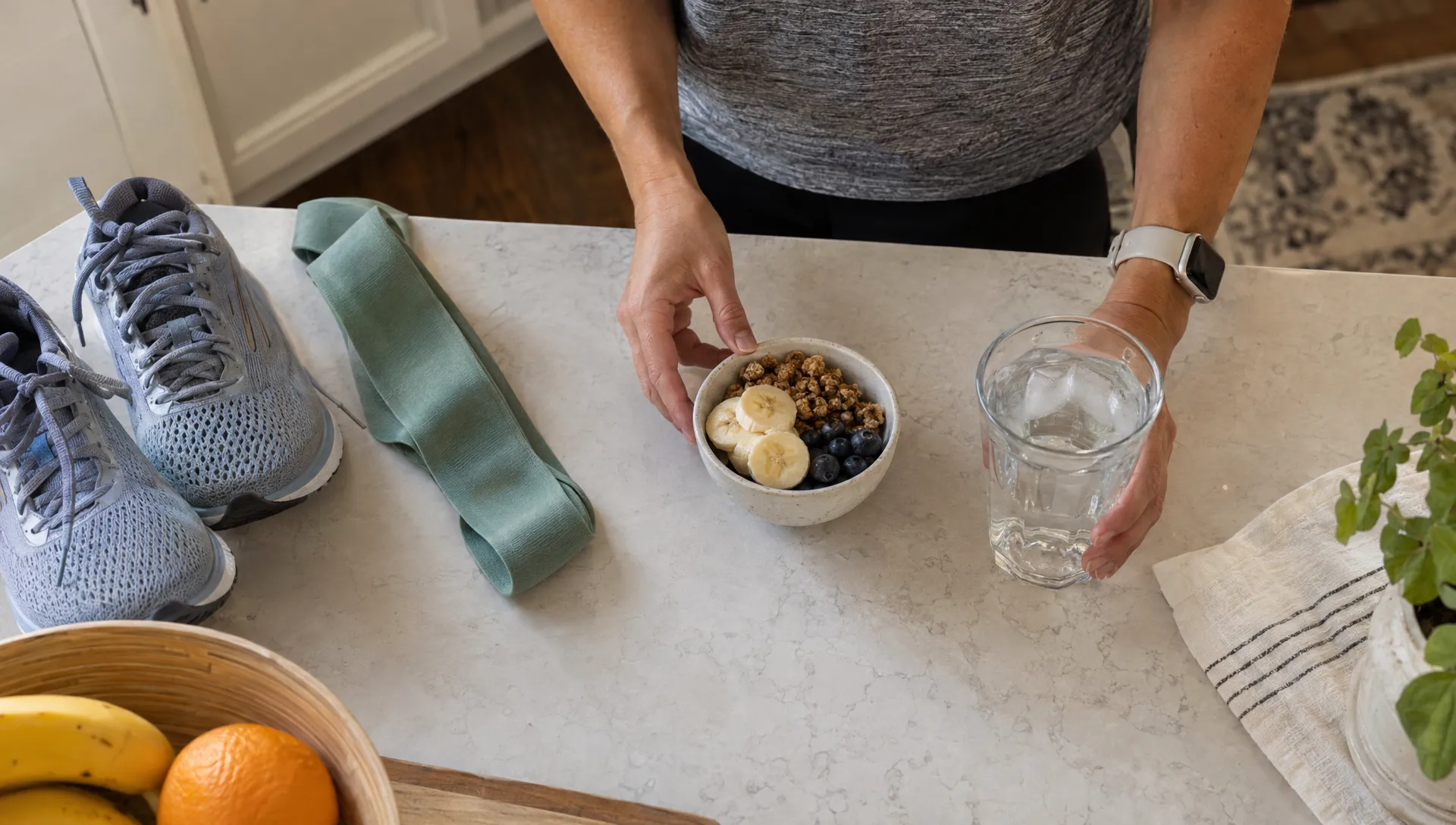


If you’re starting training while taking weight-loss medication, focus first on building strength, tolerating exercise comfortably and recovering well. A smaller appetite can make it harder to eat enough for demanding workouts, while nausea or dehydration may change what feels manageable. The answer is not to avoid exercise, but to begin with a plan that accounts for your medication, health history and current fitness.
This guide focuses on beginner strength training alongside medications such as semaglutide or tirzepatide, with walking and other aerobic activity added gradually. Your prescriber manages medication decisions; a qualified trainer and registered dietitian can help adapt exercise and nutrition around that treatment.
Why strength training belongs alongside medication
Weight loss and improved fitness are related, but they are not the same outcome. Resistance exercise gives you a way to improve strength and everyday function while your weight changes. Getting out of a chair, carrying groceries and climbing stairs are useful measures of progress that a scale cannot provide.
Research supports combining exercise with medical weight management. A randomized trial published in the New England Journal of Medicine studied exercise, liraglutide and their combination after diet-induced weight loss. The findings supported combining structured exercise with medication for weight-loss maintenance. Because the study used liraglutide, it should not be treated as a guarantee of identical results with newer medications.
For someone starting training, the practical takeaway is straightforward: build a repeatable exercise habit rather than using workouts to accelerate weight loss at any cost. Exhaustion, persistent soreness and rapidly increasing exercise volume are not requirements for progress.
Check these things before your first workout
You do not necessarily need extensive testing to begin light activity. However, discuss your exercise plans with your prescribing clinician if you have cardiovascular disease, diabetes complications, significant joint limitations, recent surgery or symptoms that interfere with normal eating and drinking.
Before starting training, make sure your coach knows which medication you take, whether the dose recently changed and whether you also use insulin or a sulfonylurea. Those combinations can increase the risk of low blood glucose, which may require an individualized exercise and monitoring plan. GLP-1-based medication alone generally has a lower hypoglycemia risk.
Share practical details too: dizziness when standing, constipation, vomiting, reduced fluid intake and unusually low energy all affect session planning. A trainer should adjust the workout, not advise you to change your dose.
You do not have to wait until you reach a goal weight to exercise. You do need a manageable starting point and enough symptom control to participate safely. If you cannot keep fluids down or are repeatedly lightheaded, address that with your clinician before attempting a hard session.
A first-month plan for starting training
Begin with two nonconsecutive strength sessions per week, leaving at least a day between them. On other days, use short walks or another comfortable activity rather than immediately adding intense cardio.
When starting training, a 25- to 40-minute session is enough to practice the main movements without making recovery unnecessarily difficult.
Your first strength session
Warm up with about five minutes of comfortable walking or cycling. Follow with a few easy repetitions of the movements you will use, such as standing from a chair and pushing against a wall.
Choose equipment that feels stable. Machines, resistance bands, a sturdy chair and light dumbbells can all work; barbells are not a prerequisite.
| Movement | Beginner option | Initial amount | Technique priority |
|---|---|---|---|
| Squat pattern | Sit-to-stand from a sturdy chair | 1 set of 8 to 12 | Use a comfortable depth and stand without rushing |
| Pull | Seated machine row or securely anchored band row | 1 set of 8 to 12 | Keep the torso steady and avoid shrugging |
| Push | Wall push-up or elevated push-up | 1 set of 8 to 12 | Choose a height that allows controlled repetitions |
| Hip extension | Glute bridge | 1 set of 8 to 12 | Move through a comfortable range without arching the back |
| Trunk control | Supine heel slide | 1 set of 5 to 8 per side | Breathe normally and keep the movement slow |
Rest roughly 60 to 120 seconds between sets, or longer if needed. Finish with a few minutes of easy movement.
The last repetition should require attention, but you should feel capable of several more. Avoid breath-holding and stop movements that cause sharp, radiating or worsening pain. A qualified coach can substitute an exercise rather than asking you to push through it.
How to progress during weeks two through four
Repeat the same basic movements long enough to become comfortable with them. If the first sessions cause only manageable soreness and your energy returns before the next workout, add a second set to selected exercises.
Next, build repetitions within the suggested range. Increase resistance by the smallest available amount only when you can complete the upper end with consistent technique and several repetitions still in reserve.
For people starting training during a medication adjustment, holding the same workload for another week can be appropriate. Progress means doing more when you are ready, not increasing weight on a fixed deadline.
Walking can build gradually too. Start with a duration you can repeat comfortably, even if that is only five or ten minutes. San Francisco hills may turn a short walk into a demanding session, so choose flatter routes when you want an easier recovery day.
Adapt the workout to symptoms, not just the calendar
Medication side effects can fluctuate, particularly around dose changes. Some people notice a predictable pattern after an injection; others do not. Record your own response rather than assuming everyone needs the same workout schedule.
If you are starting training while your appetite and digestion are changing, use this simple adjustment framework:
| How you feel | Reasonable training response |
|---|---|
| Mild nausea, but eating and drinking normally | Try a shorter, easier session and avoid movements that aggravate symptoms |
| Unusually tired after poor sleep or very little food | Reduce sets or choose an easy walk instead of a demanding workout |
| Dizzy, weak or showing signs of dehydration | Stop exercising and seek clinical advice if symptoms persist or recur |
| Shaky, sweaty or confused, especially when using insulin or a sulfonylurea | Stop, follow your prescribed low-glucose plan and check glucose if available |
Persistent vomiting or severe abdominal pain requires urgent medical assessment, not an exercise modification. Chest pain, fainting or severe unexpected shortness of breath warrants emergency care.
You also do not need to train until soreness disappears completely, but soreness that changes your movement or interferes with daily activities is a reason to reduce the next session. Custom Fit’s guide to aligning training and recovery explains how to balance workload with your ability to recover.
Eat enough to support the work you are doing
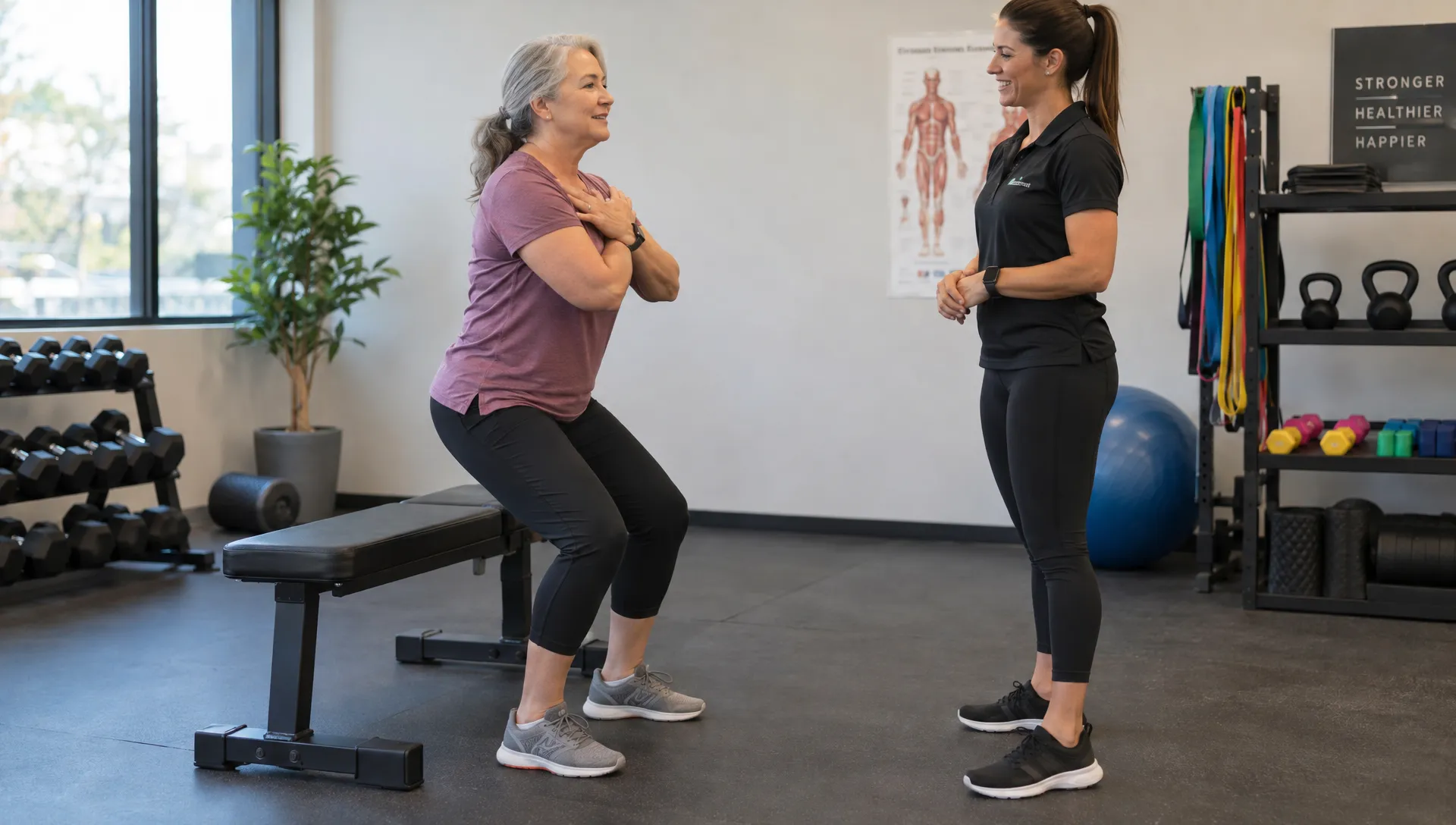
Starting training with a markedly reduced appetite takes planning. Waiting until you feel hungry may leave you arriving at the gym after eating very little all day.
Rather than forcing large meals, discuss smaller meals or snacks with your dietitian. A tolerable pre-workout option might be yogurt and fruit, toast with an egg or a small smoothie. Large, high-fat meals close to exercise can worsen discomfort for some people taking these medications.
Make protein practical and individualized
Protein supports adaptation to resistance exercise. A systematic review and meta-analysis in the British Journal of Sports Medicine found that protein supplementation improved resistance-training outcomes in healthy adults, with benefits leveling off around a total intake of 1.6 grams per kilogram per day. That research does not establish a universal prescription for people using weight-loss medication.
Ask your registered dietitian whether a range around 1.2 to 1.6 grams per kilogram is appropriate and which reference weight to use. Simply multiplying a high current body weight can produce an unnecessarily large target. Kidney disease and other medical conditions also require individualized advice.
Distributing protein across meals may be more comfortable than trying to consume most of it at dinner. Custom Fit’s guide to nutrition for lifting and recovery provides more detail on organizing meals around training.
Do not overlook fluids and total food intake
Sip fluids regularly rather than trying to catch up immediately before a workout. Fluid needs vary with sweat losses, weather and medical conditions; people with prescribed fluid restrictions should follow their clinical guidance.
Protein alone will not compensate for consistently inadequate energy intake. If strength declines, recovery worsens or eating becomes difficult, bring those changes to your dietitian and prescriber. Do not respond automatically by exercising harder or restricting food further.
Make two sessions fit your workweek
A realistic schedule usually beats an ambitious one that depends on a quiet week. Choose two recurring appointments and define a shorter backup workout for travel or deadline-heavy days.
For a real estate professional, using Diane’s AI real estate video platform to prepare listing content is one example of delegating a recurring marketing task. Other professionals might batch administrative work or protect a lunch break. The useful principle is to give exercise a specific place in the calendar rather than whatever time remains.
When starting training alongside medical treatment, consistency is more useful than squeezing in occasional punishing sessions. A shortened workout can preserve the routine without adding excessive fatigue.
Track strength and function, not just weight
Record the exercises, repetitions and resistance you use, along with energy, symptoms and recovery. Over several weeks, look for steadier technique, easier daily activities and gradually improving capacity. These observations help distinguish a productive plan from one that is simply tiring.
Body composition testing can add context when it will inform a decision. DEXA estimates fat and lean soft tissue, but lean tissue is not a direct measurement of muscle strength, and hydration can affect comparisons. A single scan cannot tell you whether your training program is working.
Custom Fit DEXA scans are performed by Registered Dietitians or Exercise Physiologists. Clients work with professionals who understand nutrition, exercise physiology and body composition, rather than simply receiving an automated scan report. That interpretation matters when evaluating changes during medication-assisted weight loss.
Testing is optional, not an entry requirement. For someone starting training, the first priority is a tolerable routine. If you do use repeat scans, discuss an appropriate interval and consistent testing conditions with the professional interpreting them.
Frequently asked questions
How many days should I lift while taking weight-loss medication? Two nonconsecutive full-body sessions per week are a reasonable beginner starting point. Add a third only when your symptoms, nutrition and recovery support it.
Should I avoid exercise on injection day? There is no universal rule. Track your symptoms and place harder sessions when you usually feel best. Ask your prescriber about persistent side effects rather than changing medication timing yourself.
Can I begin at home? Yes. A sturdy chair, a wall, resistance bands and optional light dumbbells can cover basic movement patterns. Check that equipment and band anchors are secure, and seek coaching if technique or balance is a concern.
Is cardio enough? Aerobic activity supports fitness, but it does not replace progressive resistance exercise for building strength. Start with manageable amounts of both rather than treating them as competing choices.
Build a plan around your treatment and your life
Starting training while taking weight-loss medication should not mean following a generic fat-loss workout. It means choosing manageable exercises, eating enough to recover and adjusting when symptoms or capacity change.
Explore personal training and nutrition coaching at Custom Fit to discuss support that complements your prescribing clinician’s care. Bring your medication list, current symptoms and realistic weekly availability so the conversation begins with what you actually need.