How to Choose a Nutrition Coach in San Francisco
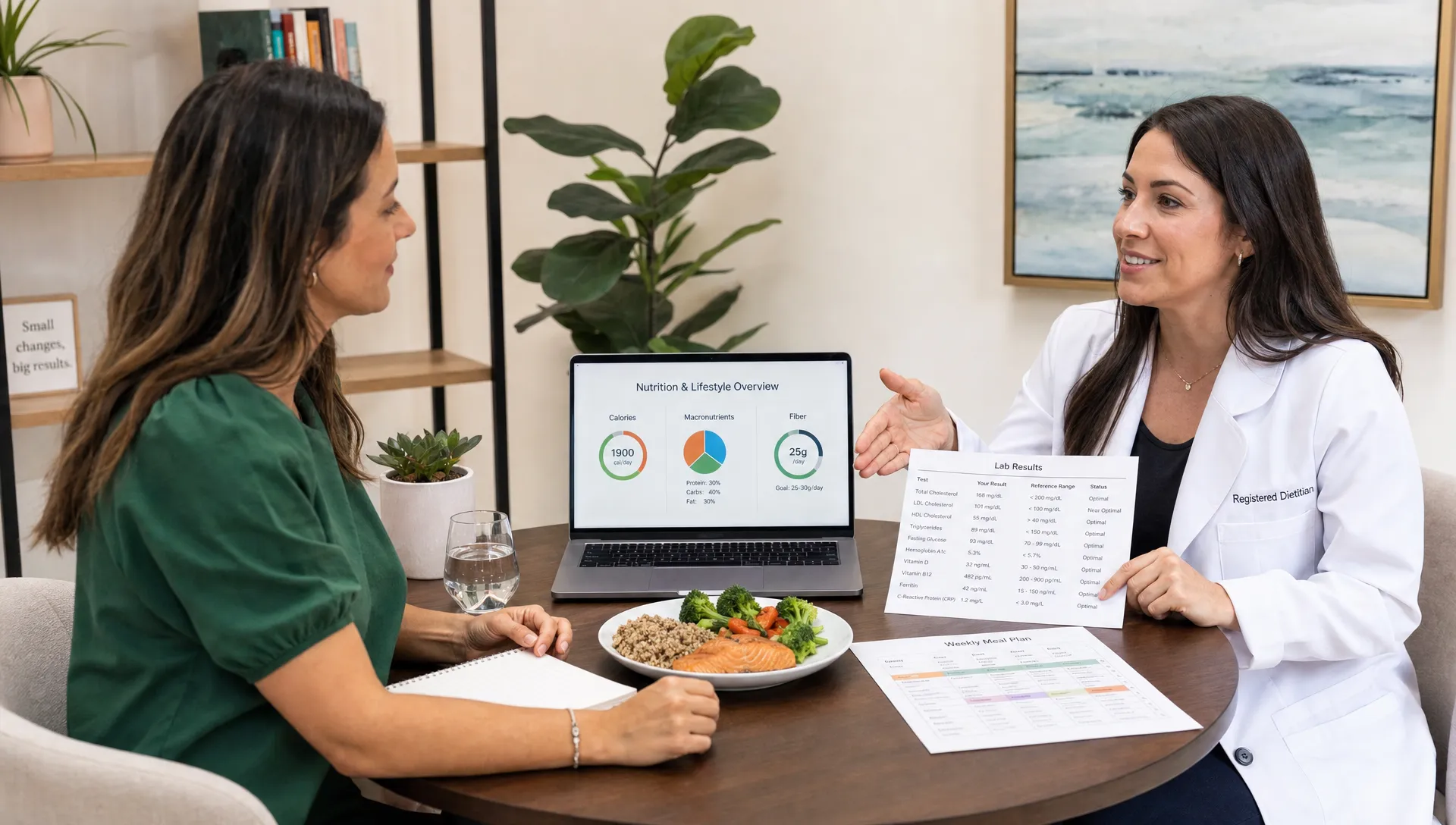


Choosing a nutrition coach in San Francisco is not the same as buying a meal plan. The right person should help you make better decisions in the middle of a real week, with meetings, dinners out, training sessions, travel, stress and health goals that may be more complex than eat less and move more.
If you searched for nutrition coach near me, proximity matters. You are more likely to follow through when coaching fits your commute and schedule. But location should be only one filter. Credentials, assessment quality, communication style and the coach's ability to connect nutrition with your training, lab work and lifestyle will determine whether the relationship actually works.
San Francisco has plenty of fitness studios, diet apps, wellness clinics and independent coaches. This guide will help you separate polished marketing from useful support so you can choose a nutrition coach who is qualified, practical and aligned with your goals.
Start with the outcome you actually want
Before comparing coaches, get clear about what you want nutrition coaching to change. A good coach for fat loss may not be the right fit for endurance performance, prediabetes prevention, strength gains, gut symptoms or executive health optimization.
For many busy professionals, the goal sounds simple at first: lose body fat, build muscle, improve energy or stop yo-yo dieting. Underneath that goal, though, are more specific questions. Do you need help with restaurant choices because most meals happen away from home? Are you training hard but under-eating protein? Are you trying to improve blood markers before your next physical? Are you navigating perimenopause, injury recovery or a demanding travel schedule?
The clearer your target, the easier it is to evaluate whether a coach has the right background. A coach who mainly sells fixed meal plans may be fine for a short reset. A coach who can interpret food patterns, training demands, body composition trends and medical context is a better fit for long-term change.
Check credentials and scope of practice
The title nutrition coach can mean many things. Some coaches have strong academic training and years of applied experience. Others have completed a short online certificate. That does not automatically make them ineffective, but it does mean you need to ask what they are qualified to do.
A Registered Dietitian, also called an RD or RDN, has completed accredited education, supervised practice, a national exam and continuing education. If you have a diagnosed medical condition, take prescription medication, have a history of disordered eating or want nutrition guidance tied to bloodwork, an RD is usually the safer and more appropriate choice.
| Provider type | Best suited for | What to verify |
|---|---|---|
| Nutrition coach | Habit change, food tracking, general wellness support | Certification, experience, referral process for medical issues |
| Personal trainer with nutrition education | Basic fueling habits connected to training | Whether advice stays within general nutrition guidance |
| Registered Dietitian or RDN | Medical nutrition therapy, metabolic health, performance nutrition, complex goals | Active credential, specialty experience, collaboration with physicians when needed |
| Sports nutrition specialist | Athletic performance, muscle gain, endurance fueling, recovery | Formal nutrition credential, athlete experience, ability to individualize by sport and training phase |
If a coach dismisses credentials completely, be cautious. You do not need someone with every possible certification, but you do need someone who understands the limits of their scope and refers out when a client needs medical care.
Ask how the coach assesses you before giving advice
A serious nutrition coach should not hand every client the same calorie target, macro split or food list. The first step should be assessment. That can include your medical history, training routine, weight history, food preferences, schedule, sleep, stress, digestion, medications, supplements, goals and previous attempts.
For metabolic health, the quality of assessment matters even more. The Diabetes Prevention Program, published in the New England Journal of Medicine, found that intensive lifestyle intervention reduced progression to type 2 diabetes by 58 percent compared with placebo over an average follow-up of 2.8 years. The takeaway for coaching is not that every person needs the same program. It is that structured, evidence-based lifestyle support can change health outcomes when it is specific and sustained.
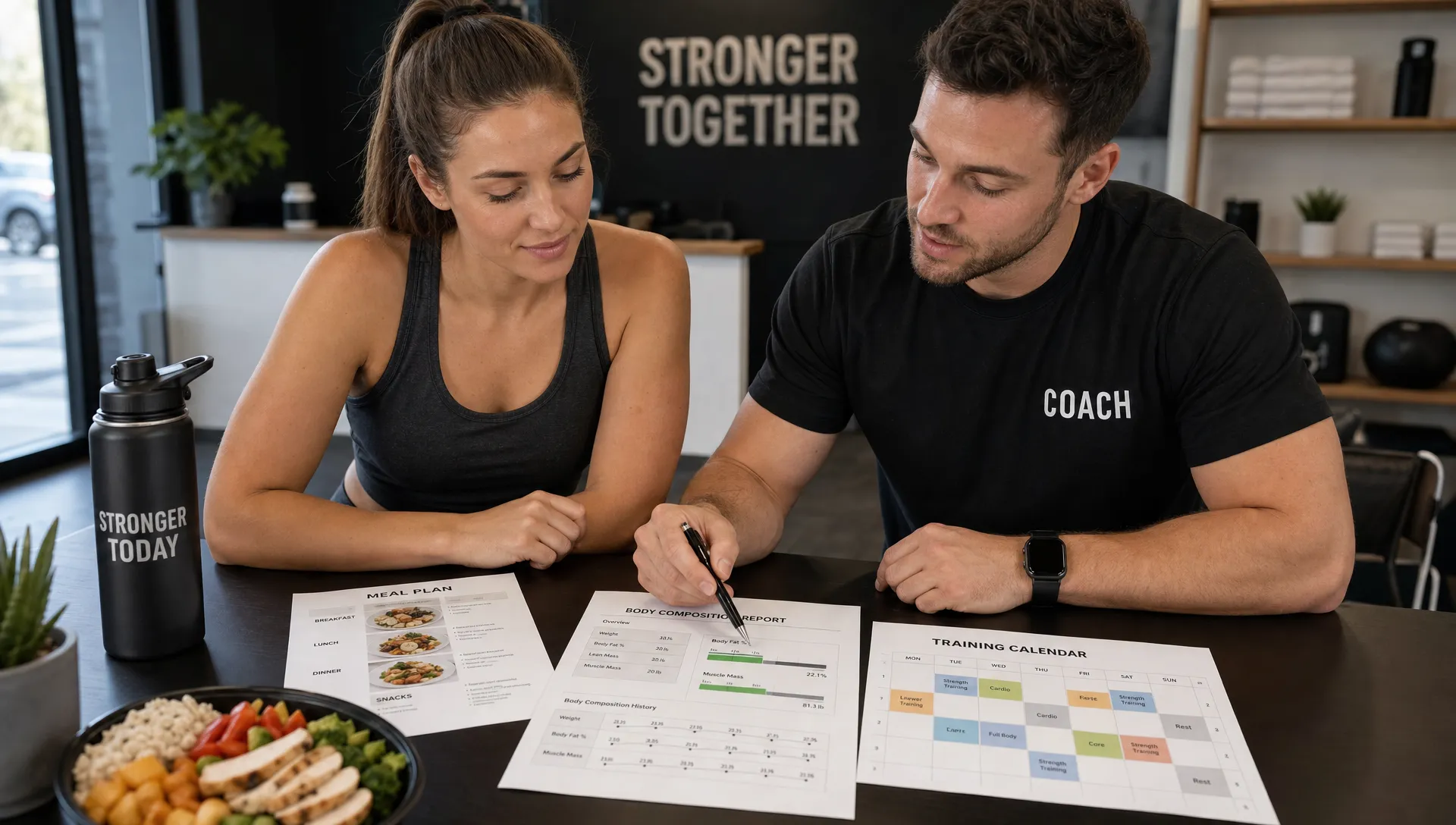
Objective testing can also make coaching more precise. DEXA scans, VO2 max testing and bloodwork can help separate guesses from measurable trends. For example, if body weight is stable but muscle mass is increasing and visceral fat is decreasing, the plan may be working even if the scale is not moving much.
When DEXA, body composition, body fat, muscle mass or visceral fat are part of the conversation, interpretation matters. Custom Fit DEXA scans are performed by Registered Dietitians or Exercise Physiologists, so clients are working with professionals who understand nutrition, exercise physiology and body composition, not simply receiving an automated scan report. Research has also examined DXA as a method for quantifying visceral fat, which can be useful when health risk is part of the goal.
If you are interested in deeper health data, Custom Fit has a useful explanation of how working with a registered dietitian in San Francisco becomes more effective when bloodwork changes the conversation.
Look for a plan built for San Francisco life
A nutrition plan that ignores your actual environment will probably fail. In San Francisco, that environment may include early meetings in the Financial District, long clinical or biotech days in Mission Bay, client dinners, rideshare commutes, boutique fitness classes, weekend hikes and a social calendar built around great restaurants.
Ask how the coach handles eating out, catered office meals, conferences, late nights and travel. If the plan depends on cooking every meal from scratch, but you usually leave home before 7 a.m., it is not personalized enough. The best plan is often the one that reduces decision fatigue rather than adding another demanding task to your day.
Environment matters too. In a controlled inpatient study published in Cell Metabolism, Kevin Hall and colleagues found that participants ate about 500 more calories per day on an ultra-processed diet than on an unprocessed diet, despite meals being matched for presented calories, sugar, fat, fiber and macronutrients. Food environment, convenience and satiety are not minor details.
That is why a practical coach may talk about your kitchen, office snacks, grocery defaults, gym bag and morning routine. For some clients, setup is as simple as clear meal-prep containers and a better grocery list. For others, it includes home systems like space-saving closet hangers from MORALVE so workout clothes and work outfits are easier to grab on rushed mornings. Small friction points can decide whether healthy plans survive a busy week.
Clarify what coaching looks like week to week
A beautiful initial plan is not the same as coaching. Real coaching includes feedback, adjustment and problem-solving when life gets messy. Before committing, ask how often you will communicate and what the coach reviews between sessions.
Good nutrition coaching should answer questions like these:
- How often do check-ins happen, and are they live, virtual or message-based?
- What data do you review, such as meals, hunger, energy, training, sleep, weight trends, body composition or bloodwork?
- How do you adjust the plan when progress stalls?
- How do you handle restaurant meals, alcohol, travel and high-stress weeks?
- Do you coordinate with personal trainers, physicians, Registered Dietitians or other providers when needed?
- What happens if I am compliant but the plan is not working?
The strongest answer is not always the most intense program. A founder, physician or executive with limited bandwidth may do better with a concise weekly review and a few high-impact behavior targets than a daily tracking protocol they cannot sustain.
Compare personalization, not polish
Many coaching programs look personalized because they use your name, ask for your goals and calculate a calorie target. True personalization goes deeper. It adapts to your physiology, preferences, training volume, food access, health markers and the kind of accountability you respond to.
| Generic coaching | Better personalization |
|---|---|
| Uses a calculator to assign calories | Adjusts intake based on progress, hunger, training and metabolic data |
| Gives a fixed meal plan | Builds flexible options for home, restaurants and travel |
| Tracks only scale weight | Reviews body composition, performance, energy, sleep and health markers when relevant |
| Relies on motivation | Designs systems for busy weeks and predictable obstacles |
| Treats all workouts the same | Aligns fueling with strength, endurance, recovery and body composition goals |
If building or preserving muscle is part of your goal, the coach should understand protein and resistance training. A large meta-analysis in the British Journal of Sports Medicine found that protein supplementation can improve gains in muscle mass and strength during resistance training, with benefits plateauing around a certain intake level for many adults. The practical point is not to chase one universal protein number. It is to match nutrition to training, age, body size, goal and tolerance.
Watch for red flags
Nutrition coaching should make your life more understandable, not more extreme. Be careful with anyone who relies on fear, shame or certainty that goes beyond the evidence.
Common red flags include:
- Promises of dramatic body fat loss in a very short period without explaining tradeoffs
- Required supplement stacks before food habits are addressed
- Elimination of entire food groups without a medical or preference-based reason
- No intake assessment before recommendations are given
- Ignoring medications, lab results, eating disorder history or medical diagnoses
- Treating hunger, fatigue, poor sleep or menstrual changes as proof that you are not disciplined enough
- No maintenance plan after the initial goal is reached
Also be careful with coaches who make every problem about willpower. Consistency is often a design issue. Your schedule, food environment, stress load, training plan and recovery habits all affect nutrition decisions.
Decide whether you need standalone coaching or an integrated studio
Some people only need nutrition coaching. Others do better when nutrition, training and testing happen in one coordinated setting. If your goals include fat loss while maintaining muscle, improving VO2 max, returning to training after time off or changing cardiometabolic risk markers, integration can save time and reduce conflicting advice.
At a data-driven wellness studio, a coach can connect the dots between what you eat, how you train, how you recover and what your assessments show. If DEXA shows low lean mass relative to your goal, the conversation may shift toward progressive strength training and adequate protein. If bloodwork reveals a nutrition-related concern, a Registered Dietitian can help guide the next step within their scope and coordinate with a physician when appropriate.
For people comparing apps against human support, Custom Fit's article on when a personal nutritionist makes more sense than an app is a helpful companion to this decision.
Ask these questions before you commit
Use the consultation to evaluate fit. A good coach should welcome specific questions because the answers reveal how they think.
| Question | Why it matters |
|---|---|
| What credentials and experience do you have with my goal? | Confirms whether the coach is qualified for fat loss, performance, metabolic health or complex nutrition needs |
| How do you personalize recommendations? | Shows whether the plan is based on assessment or templates |
| What do you track besides weight? | Helps you avoid overreacting to normal scale fluctuations |
| How often do we adjust the plan? | Clarifies whether coaching is active or just a one-time handoff |
| How do you handle meals out and travel? | Tests whether the plan fits San Francisco professional life |
| When would you refer me to a Registered Dietitian, physician or therapist? | Reveals scope awareness and safety |
| How do you define success after the first month? | Encourages realistic milestones beyond quick weight loss |
If you are a concierge physician, longevity clinic or employee benefits manager evaluating a nutrition partner, the same questions apply. You may also want to ask how the provider communicates progress, handles referrals and integrates nutrition coaching with testing or training services. The best partner is not simply charismatic with clients. They should be consistent, data-literate and clear about scope.
What the right fit feels like
The right nutrition coach should make you feel more capable, not more dependent. You should understand why changes are being made and what to do when your week is imperfect. Over time, coaching should build skill: better meal decisions, better fueling around training, better recovery habits and a more accurate understanding of your own body.
For San Francisco clients, the best fit is often someone who can combine precision with practicality. You may want advanced testing and a high-performance plan, but you still need a strategy for sushi dinners, airport meals, back-to-back meetings and weekends in wine country. A qualified coach will not pretend those things do not exist. They will build them into the plan.
Frequently Asked Questions
What is the difference between a nutrition coach and a Registered Dietitian? A nutrition coach typically helps with general habits, accountability and food choices. A Registered Dietitian has formal clinical nutrition training, supervised practice and a national credential. If you have medical conditions, abnormal lab values, medication considerations or a history of disordered eating, look for an RD or a program that includes RD support.
How often should I meet with a nutrition coach? Many clients do well with weekly or biweekly check-ins at the start, then less frequent follow-ups once habits are stable. The right cadence depends on your goal, timeline, need for accountability and how much data you are tracking.
Should a nutrition coach use DEXA scans? Not everyone needs DEXA, but it can be useful when body composition matters, especially for fat loss, muscle gain, performance or longevity goals. At Custom Fit, DEXA scans are performed by Registered Dietitians or Exercise Physiologists, which means the results are interpreted by professionals who understand nutrition, exercise physiology and body composition.
Can nutrition coaching help if I already use a food tracking app? Yes, especially if you know what to log but struggle with decisions, consistency, interpretation or plateaus. Apps can collect information. A skilled coach helps turn that information into better choices and adjusts the plan when your body or schedule changes.
How long does it take to see results? Some clients notice better energy, digestion or training performance within a few weeks. Body composition and lab changes usually need more time. A credible coach should set early process goals and medium-term outcome goals rather than promising a fixed result for everyone.
Ready to choose with better data?
If you want nutrition coaching that connects food, training, recovery and objective testing, Custom Fit's San Francisco fitness and wellness studio brings personal training, nutrition coaching, DEXA scans, VO2 max testing, recovery programs and Registered Dietitian support into one data-driven environment.
Start with the question that matters most: what do you want your nutrition plan to help you do in real life? From there, choose the coach who can assess, explain, adjust and support that goal with the level of professionalism your health deserves.