What Group Fitness Personal Training Should Cost
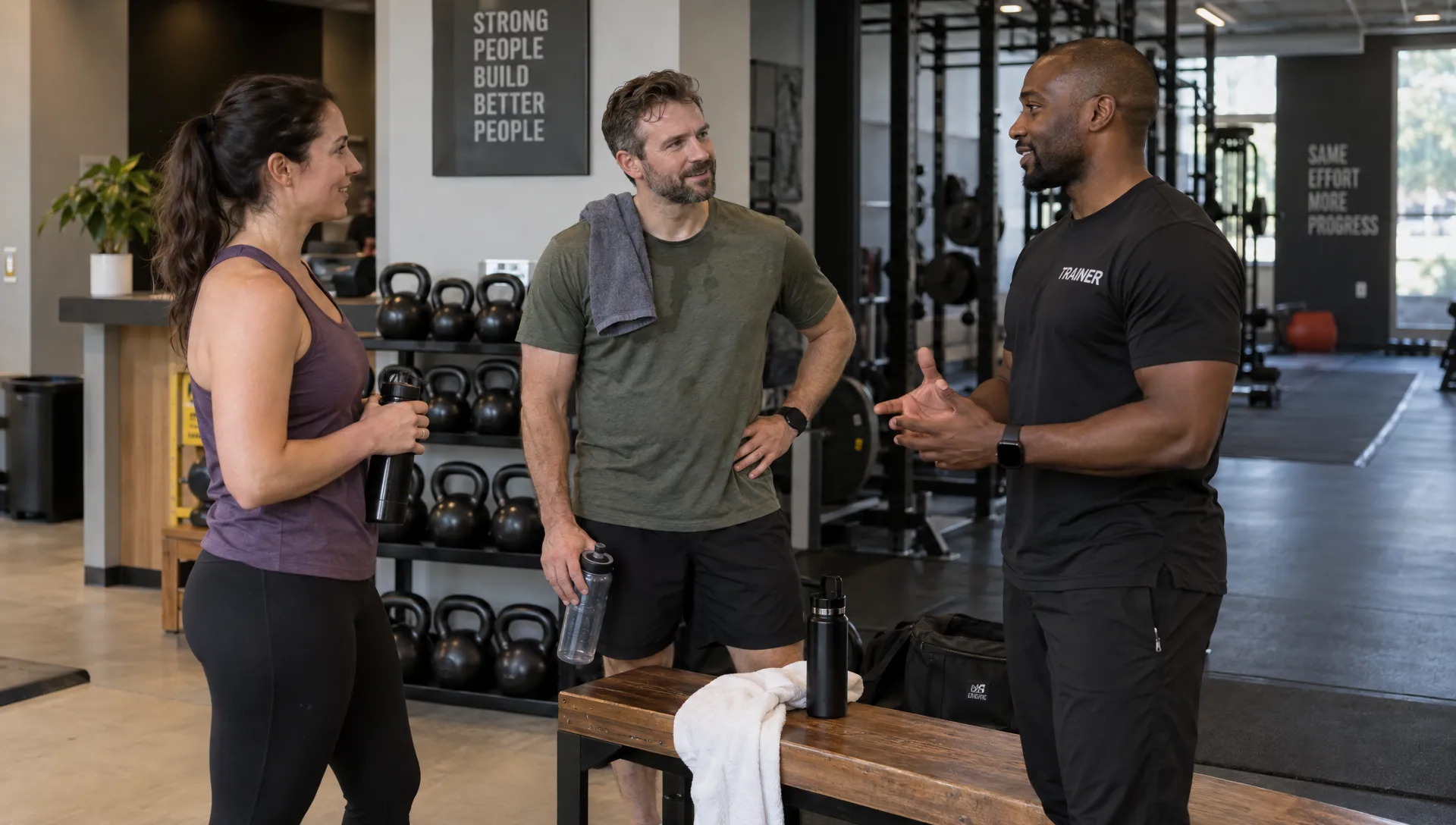


What you should pay for group fitness personal training depends on how much coaching you actually receive, not just how many people share the room. At eight sessions per month, a $40 session costs $320 and a $60 session costs $480, before any additional fees. The higher price needs a clear justification: more individual feedback, better programming or a schedule you can consistently use.
The examples below are hypothetical budgeting scenarios, not verified San Francisco market averages or Custom Fit prices. Use them to compare quotes without confusing a group workout with personalized coaching.
First, identify what you are buying
Studios sometimes use similar language for very different services. Before comparing prices, establish the format.
Group fitness classes generally follow a shared workout. An instructor demonstrates movements, manages the room and offers modifications, but you may not receive an individual training plan.
Small-group personal training should provide more individualized coaching within a shared session. Participants might use different loads, exercise variations or progressions based on their needs.
Partner training usually means two clients sharing a trainer. It can offer more coaching time per person than a larger group, although compatible goals and schedules help.
Private training dedicates the session to one client. You are paying for exclusive attention and greater flexibility in programming, rather than automatically buying a harder workout.
These distinctions matter more than the label on the booking page. Custom Fit’s explanation of how small-group training can provide individual attention offers useful criteria for separating shared exercise from actual coaching.
A group fitness personal training quote is meaningful only when you know which of these services it describes.
What group fitness personal training should cost
There is no universal fair rate. A useful starting point is to compare several price scenarios at the same monthly attendance level, then ask what additional coaching each increase buys.
| Format | Hypothetical price per person, per session | Cost for eight monthly sessions | What to verify |
|---|---|---|---|
| Group class | $30 | $240 | Instruction, modifications and booking access |
| Small-group personal training | $50 | $400 | Individual feedback, progression and group-size cap |
| Partner training | $75 | $600 | Coaching shared between two clients |
| Private training | $150 | $1,200 | Dedicated programming and one-to-one attention |
These numbers illustrate the comparison, not what any particular studio charges. They exclude additional fees and assume you attend all eight sessions.
A lower quote can be appropriate when you already understand technique and mainly want structured exercise. A higher quote becomes easier to justify when the coach adapts exercises, records your progress and helps you train around relevant limitations.
For any quote above your budget, ask the studio to explain the difference in deliverables. “Premium” is not a deliverable. A smaller coaching group, documented progression or a dedicated assessment is something you can evaluate.
The right group fitness personal training price is the lowest price that reliably delivers the level of coaching you need, not necessarily the lowest advertised session rate.
What should justify a higher fee?
Individual decisions during the workout
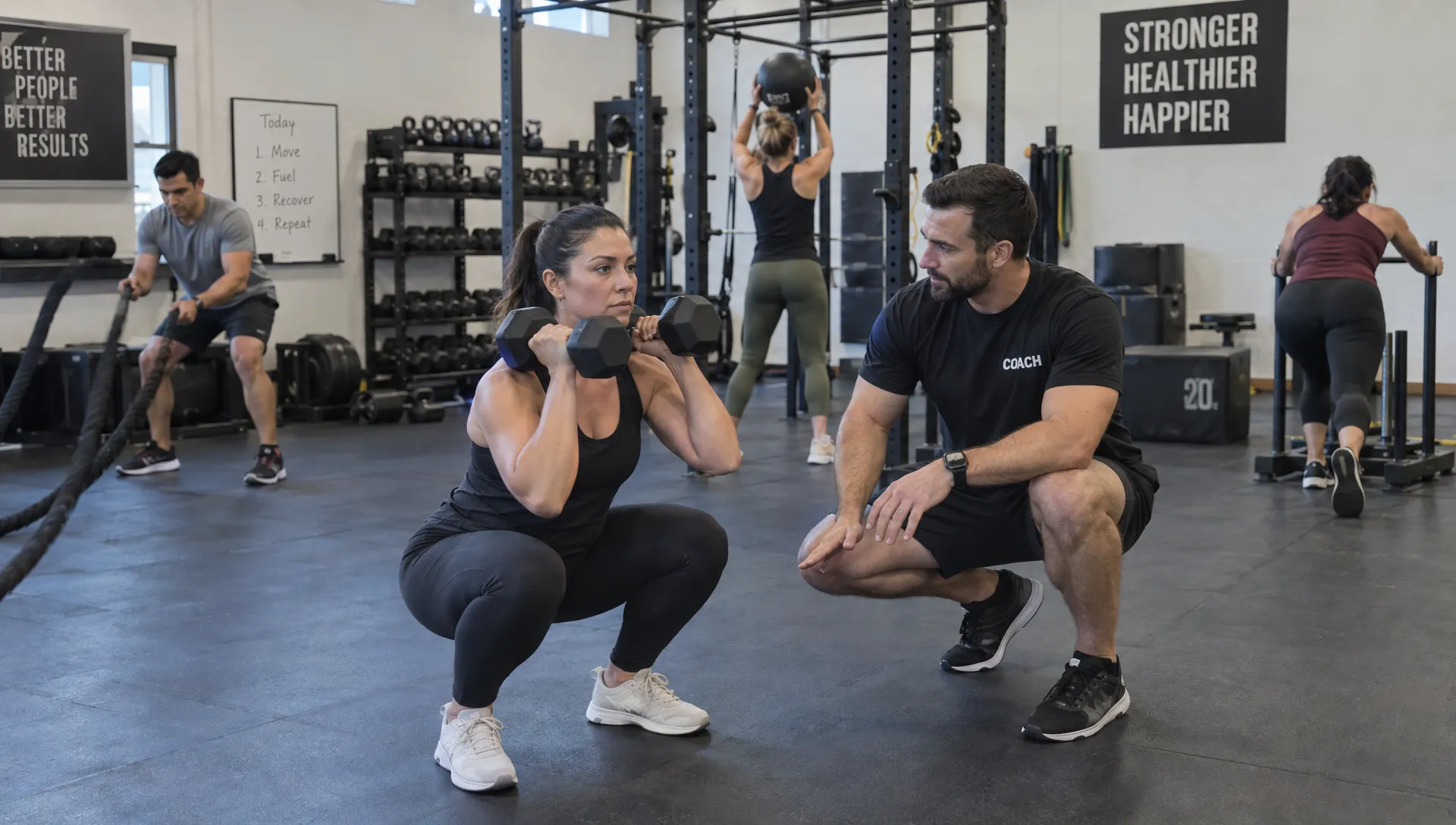
Personalization should be visible. A coach might change your squat variation, adjust the load after observing your technique or give you a different rest interval from another participant.
Simply offering an easier and harder version of every exercise does not necessarily amount to personal training. Ask how the coach decides which version is appropriate and when you should progress.
A plan that continues between sessions
A varied workout can be enjoyable, but constant novelty is not the same as progression. You should be able to understand how today’s session connects to your goals.
The American College of Sports Medicine’s position stand on resistance-training progression describes adapting training to a person’s experience, goals and capacity. It supports looking for a method of progression rather than assuming that exhaustion proves a workout’s value.
Useful records could include exercise selection, repetitions, training loads or changes in movement quality. They do not require an elaborate app.
Relevant qualifications and experience
Ask about the trainer’s certification, current CPR/AED training and experience coaching people with needs similar to yours. A credential alone does not establish coaching quality, but neither should an energetic personality substitute for preparation.
With group fitness personal training, the premium should pay for better decisions and feedback, not just nicer equipment or a more exclusive atmosphere.
Calculate the cost per session you actually attend
Divide your required monthly spending by your realistic attendance, rather than by the maximum number of visits advertised.
Effective cost per attended session = required monthly spending ÷ sessions attended.
Consider two hypothetical eight-session packages:
| Cost factor | Option A | Option B |
|---|---|---|
| Advertised session price | $35 | $50 |
| Eight-session package | $280 | $400 |
| Required monthly facility fee | $60 | Included |
| Total monthly spending | $340 | $400 |
| Sessions you realistically attend | 6 | 8 |
| Effective cost per attended session | $56.67 | $50 |
Here, Option A assumes two visits go unused because its timetable does not fit your schedule. Option B costs more per month but delivers more attended sessions and a lower effective rate. Different attendance assumptions would change the result.
For an enrollment fee, show both the first-month cost and the ongoing cost. If you spread that fee across a contract term for comparison, keep the upfront cash payment visible too.
This calculation makes group fitness personal training easier to assess without pretending that attendance or coaching quality is identical across programs.
Get the terms behind the advertised price
Before purchasing, confirm whether the quote includes facility access, an initial assessment and any programming outside supervised sessions. Find out whether optional nutrition coaching or testing is separate from the training fee.
Clear scope matters in other services too: iPhone Werkstatt Marktredwitz’s fixed-price repairs pair a defined repair with approval before additional work. A fitness agreement should be equally explicit about what is included and what triggers another charge.
Cancellation and expiration rules deserve the same attention as the session rate. Ask whether unused visits roll over, how much notice a cancellation requires and what happens when the studio cancels. Confirm how to pause or end recurring billing.
A written description of what a personal training package should include can help you identify missing details before signing. Keep those answers alongside the quote so you can compare equivalent services.
Price the schedule you will actually use
For a busy San Francisco professional, a convenient session can be worth more than a cheaper session that requires leaving work early or making an unreliable connection.
Check the timetable against your normal week, including the trip from work, changing time and the journey home. If you rely on Muni, test the route at the hour you expect to travel rather than judging distance on a map.
Booking access matters too. An unlimited membership has limited value if your usable time slots are consistently full. Ask whether sessions require advance reservations, how waitlists operate and whether recurring bookings are possible.
Evaluate group fitness personal training against a realistic month that includes late meetings or work travel, not an unusually quiet week. Two dependable weekly sessions may be a better purchase than a larger allowance you rarely use.
Use a trial session to test the coaching
A trial or introductory visit is an opportunity to assess the service, not just decide whether you enjoyed the atmosphere. Observe how the trainer divides attention, particularly when several people need help at once.
Use a short checklist:
- Capacity: What is the maximum number of participants, and how many coaches supervise them?
- Individual feedback: Does the coach notice and correct your technique without waiting for you to ask?
- Progression: Can someone explain how your exercises or training loads will change over time?
- Adaptation: Are alternatives selected for your needs, rather than assigned at random?
- Continuity: If another coach covers the session, can they access the information needed to coach you appropriately?
A smaller group creates more opportunity for feedback, but it does not guarantee better coaching. Watch what happens in practice.
Before committing to group fitness personal training, ask the coach to explain what they would prioritize for you during the first month. The answer should be specific enough to evaluate without promising guaranteed results.
When a fitness class is not the right first purchase
General fitness coaching does not replace medical evaluation or physical therapy. New or worsening pain, recent surgery, unexplained exercise intolerance or an injury that changes how you move may warrant clinical guidance before joining.
A trainer should work within their qualifications and respect any restrictions from your treating clinician. Paying more does not expand a trainer’s clinical scope.
If you have been cleared to exercise but need frequent adjustments or close supervision, private sessions may be a more suitable starting point. You can reconsider a shared format once your needs are clearer.
Frequently asked questions
Is $300 a month a lot for personal training? It depends on the format and attendance. At eight visits, $300 equals $37.50 per session before additional fees. At four visits, it equals $75. Assess the coaching delivered at that rate rather than judging the monthly number alone.
Should small-group training cost less than private training? Usually, sharing a coach should reduce the per-person price compared with an equivalent private service. Compare session length, trainer experience and inclusions before deciding whether the difference represents good value.
How many people should be in a training group? There is no single number that guarantees quality. Exercise complexity, participant experience and the number of coaches all matter. For group fitness personal training, ask for the maximum group size and observe whether everyone receives useful feedback.
Do I need unlimited sessions? Only if the schedule and your recovery needs support using them. Compare a realistic attendance level with a smaller package first. Unlimited access is not automatically the cheaper option.
Request a quote you can compare
Custom Fit offers personal training, partner training, group classes and nutrition coaching in San Francisco. Ask which current format fits your goals and what is included in its price, without assuming that classes and personal training provide the same service.
When you contact Custom Fit, bring your weekly availability, preferred coaching format and monthly budget. Request the full cost, attendance terms and expected level of individual feedback before choosing a package.