Choosing a Personal Fitness Trainer During Menopause
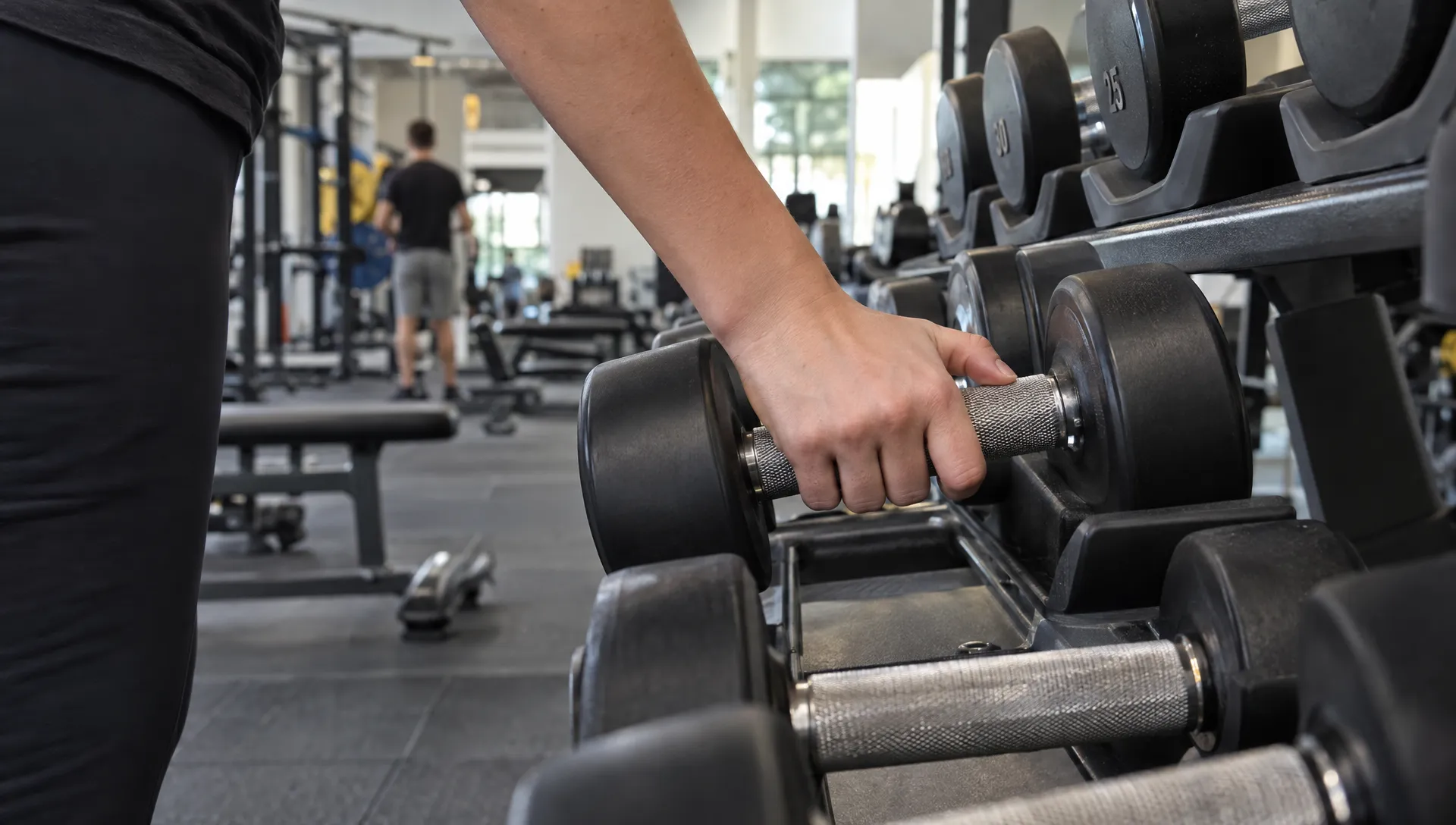


A search for “trainer personal fitness” can turn up plenty of credentials and transformation photos. During menopause, the more useful question is whether a coach can build effective training around your symptoms, health history and changing capacity to recover. You need someone who takes strength seriously without treating every difficult workout as a motivation problem.
This guide explains what to verify before hiring, what a thoughtful assessment should include and how to distinguish menopause-informed coaching from unsupported hormone claims.
Why menopause changes the hiring decision
Perimenopause, the transition leading up to menopause, can bring irregular periods, disrupted sleep, hot flashes and changes in how exercise feels. Menopause is generally identified after 12 consecutive months without a menstrual period, when another cause does not explain the absence. Symptoms and their impact vary considerably.
That variability matters when choosing a coach. Someone managing night sweats and fatigue may need different session timing or workload adjustments than someone who feels well and wants to lift heavier. Neither person needs an automatic downgrade to gentle exercise simply because of menopause.
A good training relationship supports strength, cardiovascular fitness, bone health and everyday function. It does not promise to eliminate symptoms, reverse menopause or replace medical treatment. The hiring decision should center on whether the coach can translate your priorities into a progressive plan that remains workable when your week changes.
What “trainer personal fitness” searches cannot tell you
A polished profile does not establish competence. Start with a recognized personal-training credential, then ask for details you can verify directly with the issuing organization.
Useful checks include:
- Current qualifications: Ask about certifications from organizations such as ACSM, NSCA, ACE or NASM and confirm that the credential is active.
- Emergency readiness: Verify current CPR/AED training and ask about the facility’s emergency procedures.
- Relevant experience: Request an anonymized example of how the coach adapted training for a client experiencing menopause-related sleep disruption or joint discomfort.
- Professional boundaries: Ask when they refer clients to a physician, Registered Dietitian or pelvic health physical therapist.
A menopause-focused course can add useful knowledge, but it does not authorize a trainer to diagnose hormonal conditions or prescribe medication. Likewise, a strong general certification does not prove experience with your particular concerns.
Look for a personal fitness trainer who can explain both the original plan and the reasoning behind an adjustment. “We reduced the number of challenging sets after several nights of poor sleep, then rebuilt gradually” is more informative than “I specialize in balancing hormones.”
Evaluate the assessment before the workout
The first appointment should involve more than a weigh-in and a hard circuit. Expect a conversation about your training background, current activity, injuries, medications that may affect exercise and any relevant medical guidance.
You should also have room to discuss symptoms privately, without pressure to disclose more than you want. Sleep disruption, dizziness, urinary leakage, persistent pain and heat intolerance can affect exercise choices. They should not be dismissed as inevitable or embarrassing.
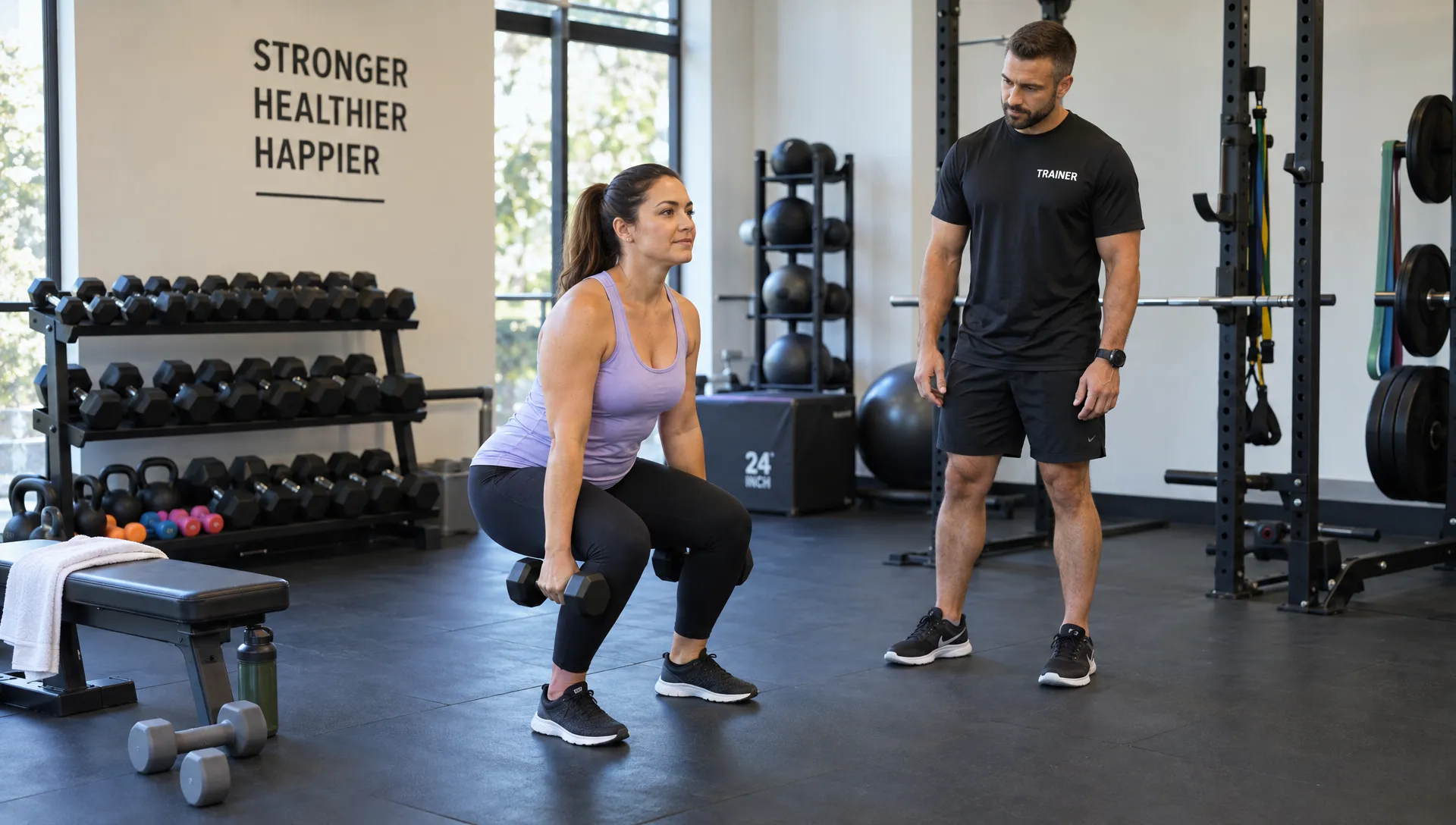
A practical movement assessment might examine comfortable squat and hinge patterns, pushing and pulling technique, balance and your response to moderate effort. Tests should answer a programming question, not simply generate impressive-looking numbers.
Before committing, ask what the findings will change. Your personal fitness trainer should be able to connect an observation to a decision, such as choosing a supported exercise while you learn a movement or allowing longer rest between demanding sets.
Set two or three meaningful outcomes together. Examples include carrying groceries more comfortably, completing regular strength sessions or walking a familiar hill with less effort. For a broader interview framework, Custom Fit’s guide to questions to ask during a personal training consultation can help you organize the conversation.
Look for progressive strength, not a menopause-branded boot camp
A suitable program should include resistance training that becomes more challenging as your ability improves. Progress might mean better technique, additional repetitions, a heavier load or greater control through a comfortable range of motion. It does not require finishing every session exhausted.
There is relevant research behind taking strength training seriously. The LIFTMOR randomized controlled trial found improvements in bone mineral density and physical function with supervised high-intensity resistance and impact training in selected postmenopausal women with low bone density. That finding supports appropriately supervised loading, not copying a demanding protocol without screening or instruction.
Ask a prospective personal fitness trainer how they introduce challenging exercise and decide when you are ready to progress. Known osteoporosis, previous fractures or persistent pain require additional consideration rather than a generic lifting prescription.
The program should cover more than lifting
Strength is a priority, but it is not the entire plan. Aerobic activity, balance and appropriate mobility work also contribute to fitness and daily function.
The World Health Organization’s physical activity guidelines recommend that adults work toward 150 to 300 minutes of moderate-intensity aerobic activity weekly, or 75 to 150 minutes of vigorous activity, plus muscle-strengthening activity on at least two days. These are general targets, not a required starting workload for someone returning to exercise.
Use this framework to discuss programming rather than treating it as a prescription:
| Component | What to ask the coach |
|---|---|
| Resistance training | How will exercises, loads and progression reflect my experience? |
| Aerobic activity | How will walking, cycling or other activities fit my current capacity? |
| Balance and mobility | Which limitations affect my goals, and how will we address them? |
| Recovery | What changes when sleep, soreness or symptoms interfere? |
Your weekly plan should account for activity outside the gym. A long weekend hike is training stress too, even if it does not appear in a booking calendar.
Ask how the plan changes after poor sleep
Adaptation should be specific. After a difficult night, a coach might reduce the number of challenging sets, extend rest periods or replace a technically demanding exercise with a more stable option. On another day, the best adjustment may simply be a longer warm-up.
The right personal fitness trainer will avoid both extremes: pushing through every symptom and assuming you must stop progressing because you are menopausal. Ask how they distinguish an occasional difficult session from a pattern that deserves a broader review.
Everyday activity should remain manageable too. A personal perspective on simple fitness habits alongside 2026’s wellness trends offers a useful reminder that walking and consistency do not need to disappear when structured training begins. It is a lifestyle account rather than clinical evidence, but its emphasis on repeatable habits fits a sustainable plan.
Check the boundaries between coaching and healthcare
A trainer can observe how you move, adjust exercise and help you follow a program. They should not diagnose the cause of fatigue, interpret every symptom as a hormone imbalance or advise you to start or stop hormone therapy.
Ask how they handle concerns beyond their scope. Urinary leakage or pelvic pressure may warrant a pelvic health physical therapy referral rather than instructions to brace harder. Persistent joint pain deserves assessment rather than repeated reassurance that discomfort is normal.
New chest pain, fainting or severe shortness of breath warrants urgent medical assessment, not a modified workout. Vaginal bleeding after menopause also needs medical evaluation rather than an exercise explanation.
A personal fitness trainer should welcome relevant guidance from your healthcare team and communicate with them when appropriate and with your permission. That does not mean every client needs extensive medical testing before exercising. It means the coach recognizes when an individual concern changes the safest next step.
Be cautious if a trainer sells a supplement package as the necessary solution to symptoms or claims that a particular workout will “reset” your hormones.
Know when nutrition support and testing add value
Nutrition support should help you fuel training and build workable eating habits, not introduce a restrictive “menopause detox.” Ask who provides the advice and what qualifications they hold.
A trainer may offer general healthy-eating education within their training and applicable professional rules. Individualized medical nutrition care belongs with an appropriately qualified clinician, such as a Registered Dietitian. This distinction matters when dietary advice must account for a medical condition, medication, digestive symptoms or a history of disordered eating.
At Custom Fit, nutrition coaching and Registered Dietitians are available alongside personal training. Ask how those services could support your particular goals rather than assuming every client needs the same package.
Your personal fitness trainer should also recognize that adding harder workouts while eating too little can undermine training quality and recovery. More restriction is not automatically the answer when progress stalls.
Use DEXA only when it answers a useful question
Body composition testing can provide additional information, but it is optional, not a prerequisite for starting exercise or a measure of your worth.
Custom Fit DEXA scans are performed by Registered Dietitians or Exercise Physiologists. Clients work with professionals who understand nutrition, exercise physiology and body composition, rather than simply receiving an automated scan report. That professional context helps turn results into a discussion about appropriate next steps.
Before scheduling, ask what the scan measures, what decision it could change and when repeating it would be useful. Results can be affected by measurement conditions, so small differences should not automatically trigger a new diet or training plan.
If the concern is osteoporosis, ask your healthcare clinician about appropriate diagnostic bone-density testing. Do not assume a wellness-focused scan is equivalent to a clinician-ordered osteoporosis evaluation. Your coach should also track practical outcomes such as strength, exercise tolerance and consistency.
Compare the real cost and fit of the service
There is no single meaningful price for menopause-informed coaching. Compare what a written quote actually includes: session length, supervision, programming between appointments, reassessments and any communication outside sessions.
Ask whether nutrition appointments, testing, facility access or recovery services carry separate fees. Confirm cancellation rules, package expiration dates, trainer substitution policies and whether recurring payments renew automatically. These details can matter more than a small difference in the advertised session rate.
When comparing a personal fitness trainer with another option, distinguish one-to-one coaching from partner training, group sessions and online programming. None is automatically best. Individual sessions may offer more privacy and immediate feedback, while a shared format may better suit your preferences or budget.
For a busy San Francisco schedule, test the logistics at the time you would actually train. Check the trip from work, transit connections and whether the session leaves enough time for your next commitment. If hot flashes are disruptive, ask about ventilation, temperature control and access to water.
Avoid buying a large package solely because it is discounted. First establish that the coaching style, available appointments and training environment work for you.
Use a trial session to judge the coaching
A consultation tells you what a coach says they do. A trial session shows you how they behave.
Notice whether instructions are clear, whether the coach asks before using hands-on cues and whether they respond constructively when you report discomfort. You should understand the purpose of an exercise without receiving a lecture full of unexplained terminology.
Ask for an example of the first month’s priorities. A useful answer might focus on learning several movement patterns, establishing a repeatable schedule and gradually increasing training demand. Exact outcomes cannot be guaranteed, but the process should be understandable.
A personal fitness trainer worth hiring will also explain how progress is reviewed. Look for a combination of performance, attendance, symptom tolerance and your own experience of the program, not just appearance-based feedback.
You should leave feeling appropriately challenged and listened to. Being unusually sore for several days is not evidence that the session was better.
Frequently asked questions
Do I need a trainer with a menopause-specific certification? It can be helpful, but it is not enough by itself. Prioritize an active foundational credential, relevant coaching experience, current CPR/AED training and clear referral boundaries. Ask how additional menopause education changes actual programming decisions.
Is heavy strength training safe during menopause? Menopause alone does not rule it out. Appropriate loading depends on your experience, technique, symptoms and health history. Start at a suitable level and progress with supervision. Osteoporosis, fractures or other medical concerns may require specific clinical guidance.
How often should I work with a trainer? The right frequency depends on how much instruction and accountability you need, your schedule and what you can do independently. Ask how supervised appointments fit into the full week rather than assuming every workout must be coached.
Can exercise replace treatment for hot flashes or other symptoms? No. Exercise supports health and fitness, but a trainer should not promise symptom relief or advise you to replace medical care. Discuss bothersome symptoms and treatment options with a qualified healthcare professional.
Find coaching that fits your current needs
Choosing a personal fitness trainer during menopause is less about finding a special workout label and more about finding sound judgment: verified qualifications, progressive programming, responsive coaching and respect for medical boundaries.
Explore personal training and wellness services at Custom Fit to discuss your goals, scheduling needs and whether nutrition support or testing would add value. Bring your questions about symptoms, recovery and previous training experiences. The next step should be a plan you understand, not pressure to commit before your concerns are heard.