Are Kettlebell Classes Right for Your Strength Goals?
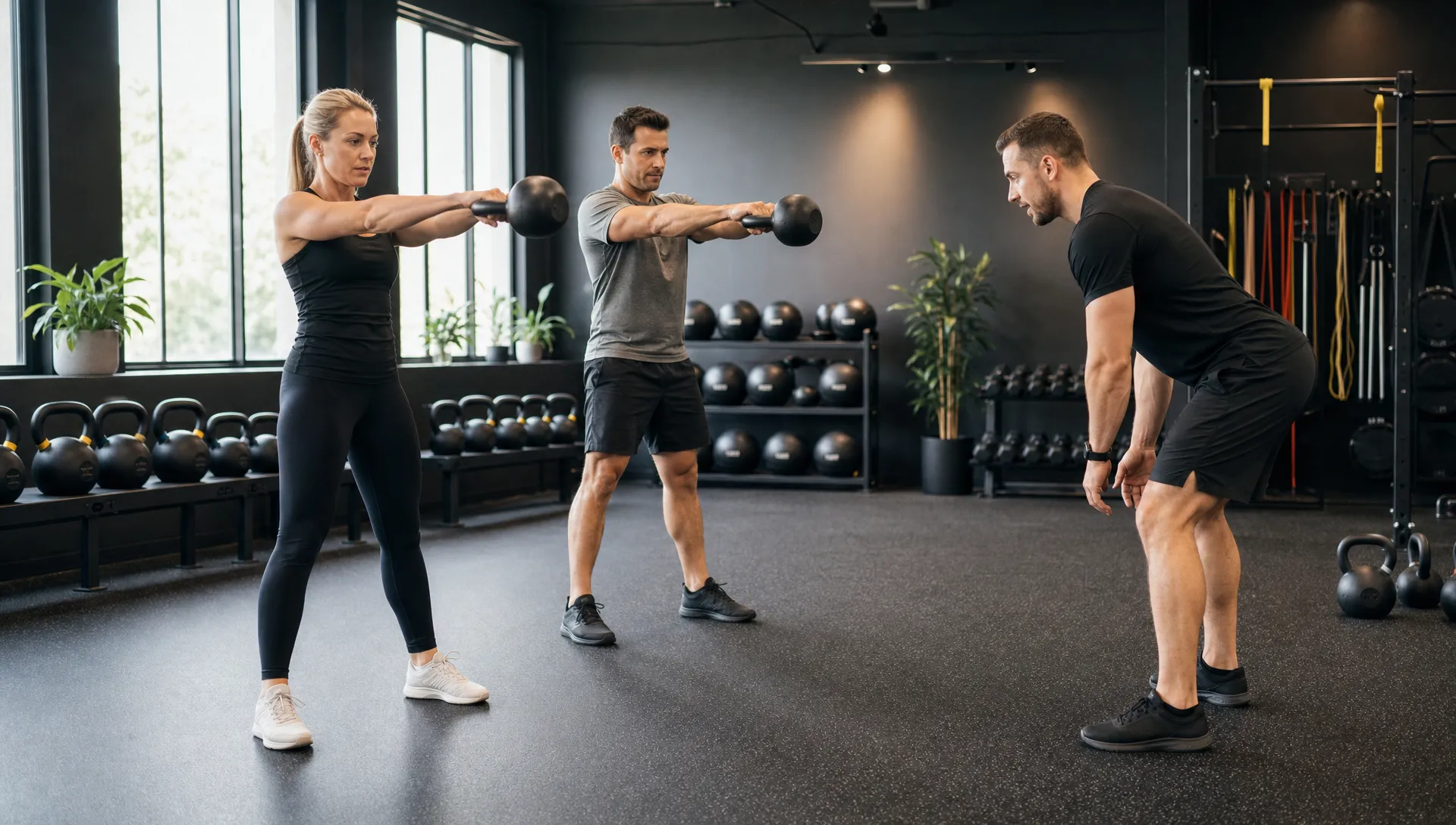


Kettlebell classes can be an efficient way to build strength, especially if you want training that feels athletic, time-efficient and structured. A single session can challenge your legs, hips, core, grip, shoulders and cardiovascular system without requiring a crowded weight room or a long list of machines.
They are not magic, though. Whether they are right for your strength goals depends on what kind of strength you want, how much coaching you need and whether the class is programmed with real progression rather than random sweat.
For busy San Francisco professionals moving between SoMa, the Financial District and home, the appeal is obvious: kettlebells offer a lot of training density in a compact session. The key is choosing a class that matches your goal instead of assuming every kettlebell workout is built for strength.
What kettlebell classes actually train
Kettlebells are most useful because they sit between traditional strength training and conditioning. A well-designed class can include ballistic movements like swings, cleans and snatches, plus slower strength movements like presses, goblet squats, rows, lunges, carries and Turkish get-ups.
That variety matters. A barbell back squat is excellent for maximal lower-body strength, but it does not train breathing under fatigue, rotational control, grip endurance or single-arm stability in the same way. A kettlebell swing, on the other hand, teaches hip power and trunk stiffness while raising your heart rate quickly.
Research supports this mixed demand. In a 2012 paper in the Journal of Strength and Conditioning Research, Lake and Lauder found that kettlebell swing training improved maximal and explosive strength in participants after a structured training block. Another study by Farrar, Mayhew and Koch found that kettlebell swings created substantial oxygen demand, which helps explain why many people feel both strong and breathless during a good class.
So if your goal is general strength, power, work capacity and better movement, kettlebell classes can be a strong match. If your only goal is to deadlift 500 pounds or maximize muscle size in one specific body part, kettlebells can help but probably should not be your only tool.
When kettlebell classes are a good fit
Kettlebell classes work best for people who want practical strength they can feel in daily life. That might mean carrying groceries up a steep San Francisco hill without feeling gassed, getting stronger for hiking or cycling, improving posture after long desk days or building enough muscle and conditioning to feel more capable in and out of the gym.
They can also be helpful if you struggle with consistency. A class gives you a start time, a coach, a plan and a group environment. For many people, that removes the biggest barrier: deciding what to do once they arrive. If consistency is the main challenge, this is one reason fitness group classes help busy professionals stay on track better than unstructured solo workouts.
Kettlebell classes may be right for you if:
- You want full-body strength without spending 90 minutes in the gym.
- You like learning skill-based movements and getting coaching feedback.
- You want strength and conditioning in the same session.
- You need accountability because your calendar fills up quickly.
- You prefer a smaller, coached environment over a big-box gym floor.
- You want a training style that carries over to hiking, travel, sports and daily life.
This format can be especially useful for high-output professionals because it reduces decision fatigue. Many business owners already use systems and tools to remove repetitive decisions at work, from scheduling automation to AI-powered marketing workflows that help teams execute campaigns more efficiently. Fitness works the same way: when the structure is handled by a coach, you can focus on showing up and training well.
When kettlebell classes may not be enough
Kettlebell training has limits. If your goal is maximum absolute strength, especially in the squat, bench press or deadlift, you will eventually need heavier loading than most class formats provide. Kettlebells are excellent for hip power, unilateral strength and conditioning, but the jumps between kettlebell sizes can be too large for precise progressive overload in some lifts.
They may also be the wrong starting point if you are recovering from an injury, dealing with significant shoulder pain or unsure how to hinge, brace or control your spine under load. Swings and cleans are safe when coached well, but they are fast movements. Fast movement plus poor technique is not a good combination.
A class can still be part of your plan, but you may want private coaching first. If you need individualized programming, faster technical correction or a more specific strength progression, working with a personal trainer for strength training can be a better entry point than jumping straight into group sessions.
What a good kettlebell class should include
Not all kettlebell classes are created equal. A strong class is not just a circuit with kettlebells placed around the room. It should teach technique, progress loading over time and give you clear options based on experience level.
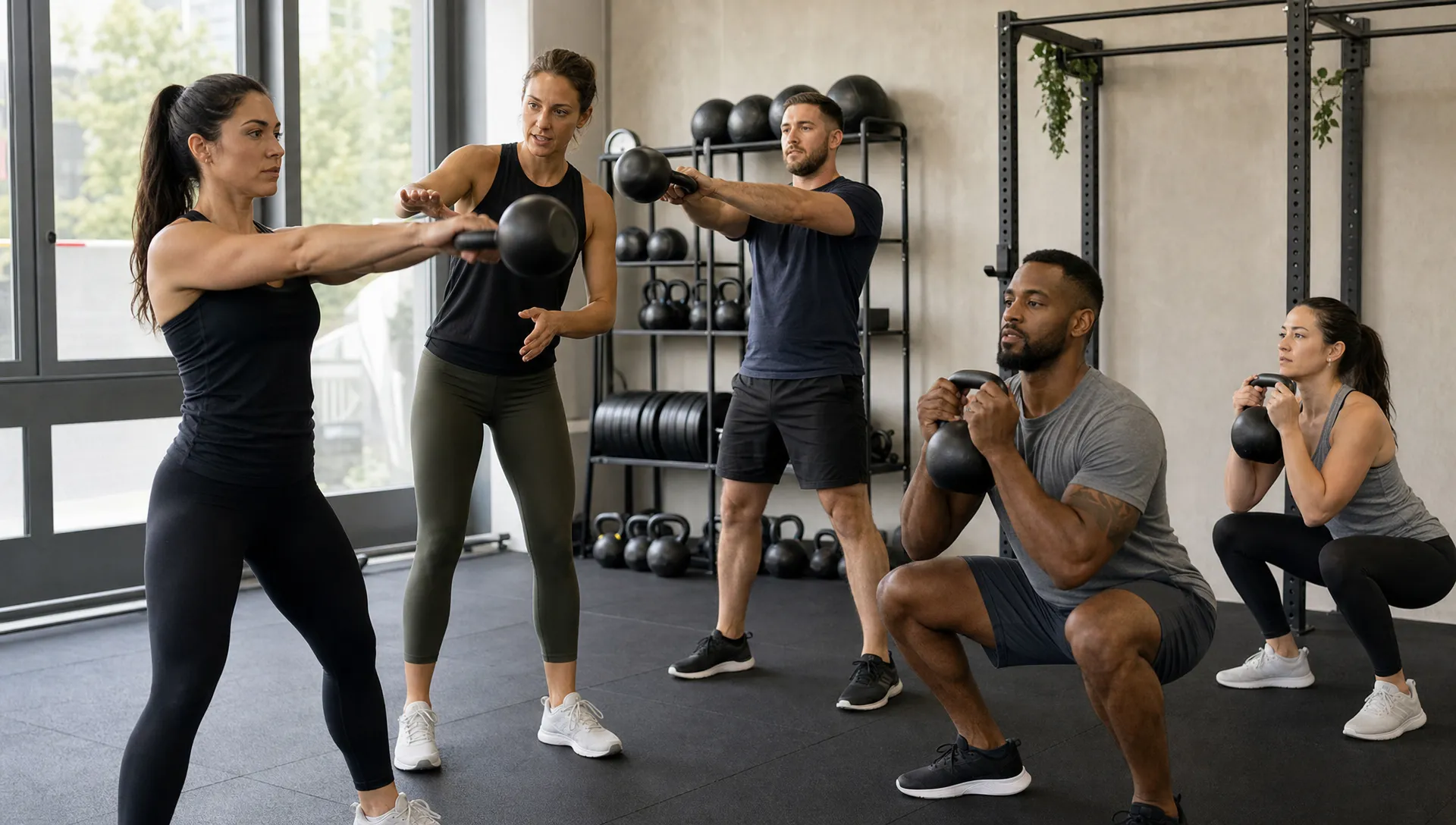
A well-coached session usually includes a warm-up that prepares the hips, shoulders and trunk, not just five minutes of generic cardio. The coach should explain the purpose of the main movements and watch how participants move. You should see corrections for hinge mechanics, rib position, shoulder control, breathing and safe hand transitions.
Look for these qualities before committing:
- Clear instruction on foundational skills like the deadlift, swing, clean, press and carry.
- Load options that let beginners and experienced lifters train appropriately.
- Progressions and regressions instead of one-size-fits-all programming.
- Enough coaching attention to catch technique issues before fatigue takes over.
- Balanced programming that includes strength, power, mobility and recovery.
- A culture that rewards quality movement, not just heavier bells or more reps.
The best classes leave you feeling trained, not wrecked. Some fatigue is normal, but soreness should not be the only sign of progress. Over time, you should notice better control, heavier loads, smoother technique, improved breathing and more confidence.
Matching kettlebell classes to specific strength goals
Your goal should shape how you use kettlebell training. The same class can produce different outcomes depending on load, exercise selection, rest periods and frequency.
If you are new to strength training, kettlebell classes can build a strong foundation. Goblet squats teach depth and bracing. Deadlifts teach hip hinging. Carries develop grip, posture and trunk stability. These are valuable basics before moving into more complex barbell or power movements.
If your goal is muscle gain, kettlebells can help most when the class includes enough volume and progressive loading. You will want controlled reps, challenging loads and exercises that bring muscles close to fatigue. Swings alone are not a complete hypertrophy plan. Pairing kettlebell classes with personal training, nutrition coaching or traditional strength sessions may work better.
If your goal is body composition, kettlebells can support both sides of the equation: preserving or building muscle and increasing energy expenditure. The scale, however, can be misleading. Strength training may increase lean mass while fat decreases, which means body weight does not always tell the full story.
For clients who want more precise measurement, Custom Fit DEXA scans are performed by Registered Dietitians or Exercise Physiologists. That matters because you are not simply receiving an automated scan report. You are reviewing muscle mass, body fat and visceral fat with professionals who understand nutrition, exercise physiology and body composition in context.
If your goal is conditioning or longevity, kettlebell classes can be valuable because they blend strength with cardiovascular demand. Swings, carries and complexes can improve work capacity when programmed intelligently. For people who want a more data-driven view, VO2 max testing can help show whether conditioning is improving beyond how hard a workout feels.
Kettlebells versus dumbbells, barbells and machines
Kettlebells are not better than every other tool. They are better for certain jobs.
Compared with dumbbells, kettlebells often feel more dynamic because the weight sits below the handle. This makes movements like swings and cleans more fluid, but it also requires more wrist, shoulder and core control. Dumbbells may be easier for strict hypertrophy work because they are simpler to stabilize.
Compared with barbells, kettlebells are more versatile for conditioning and unilateral work. Barbells are still superior for loading maximal strength in small, measurable jumps. If your goal is to increase a heavy deadlift or squat, kettlebells can support the plan but should not replace the main lifts forever.
Compared with machines, kettlebells require more coordination and whole-body control. Machines can be useful for isolating muscles and training safely around certain limitations. Kettlebells ask your body to stabilize, breathe and move as an integrated system.
The smartest approach is not choosing one tool forever. It is matching the tool to the adaptation you want.
How often should you take kettlebell classes?
Most people can make progress with two to three well-coached kettlebell sessions per week, especially if they are also walking, doing mobility work or adding lower-intensity cardio. Beginners may start with one to two sessions while they learn the movements.
More is not always better. Because kettlebell classes can be metabolically demanding, recovery matters. If every session includes high-rep swings, presses and loaded carries, your grip, back, hips and shoulders need time to adapt. Poor recovery can turn a productive class into nagging soreness or stalled progress.
A good weekly rhythm might include kettlebell classes for strength and conditioning, one private training session for individualized progression and dedicated recovery work if stress, sleep or travel are affecting performance. For people deciding between training formats, this guide on group classes versus private coaching can help clarify which option fits your personality, schedule and goals.
What to ask before joining a kettlebell class
Before signing up, ask how the class is coached. Does the instructor teach the swing from a deadlift pattern first? Are beginners given lighter bells and simpler progressions? Does the program track strength over time or change randomly every session? How are shoulder limitations handled? Are there options for people who want strength without high-impact conditioning?
These questions matter because kettlebells reward precision. A good coach will not rush you into snatches before you can swing cleanly. They will not treat fatigue as a substitute for programming. They will help you choose a load that is challenging without turning technique into a negotiation.
For San Francisco professionals, logistics matter too. If a class is hard to reach from Market Street, the Embarcadero or your commute home, consistency will suffer. The best workout is not only the one that looks good on paper. It is the one you can actually attend, recover from and repeat. You can explore Custom Fit’s broader approach to training, coaching and testing at its San Francisco studio.
Frequently Asked Questions
Are kettlebell classes good for beginners? Yes, if the class teaches foundational movements and offers appropriate progressions. Beginners should learn the deadlift, goblet squat, carry and basic swing mechanics before moving into cleans or snatches.
Can kettlebell classes build real strength? They can build meaningful full-body strength, especially in the hips, legs, core, grip and shoulders. For maximal barbell strength or highly specific muscle growth, kettlebell classes may work best alongside private coaching or traditional strength training.
How heavy should my kettlebell be? The right weight depends on the movement, your experience and your technique. A bell that is appropriate for a goblet squat may be too heavy for a strict press or too light for a two-hand swing. A coach should help you choose based on movement quality.
Are kettlebell swings safe for your back? Swings can be safe when they are taught as a hip hinge with good bracing and neutral spine control. They are not ideal if you are actively dealing with back pain and have not been assessed by a qualified professional.
Can kettlebell classes help with fat loss? They can support fat loss by building muscle, increasing training intensity and improving consistency. Nutrition, recovery and total activity still play major roles, so body composition goals usually benefit from both coaching and objective measurement.
The bottom line
Kettlebell classes are a smart choice if your strength goals include full-body power, athletic conditioning, better movement and a training schedule you can stick to. They are less ideal as a stand-alone plan if you need highly individualized rehab, maximal barbell strength or a precise hypertrophy program.
The right class should teach skill, progress intelligently and fit your life. If you want a more personalized path, Custom Fit combines personal training, group classes, nutrition coaching, recovery services and advanced testing to help you train with more clarity and less guesswork.