Why a Dietitian and Personal Trainer Make a Stronger Team
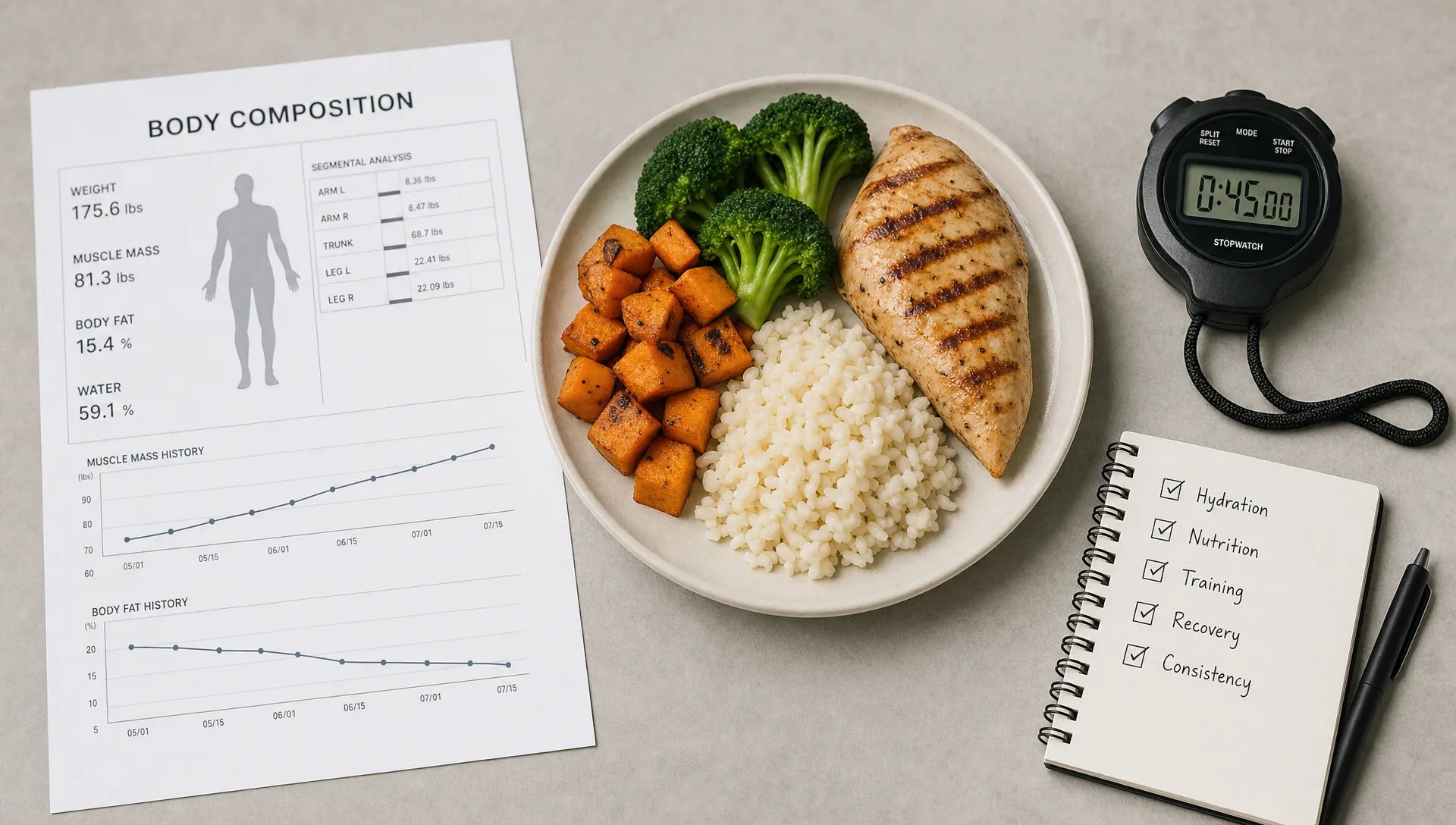


Most people do not fail because they lack motivation. They fail because their fitness plan and nutrition plan are built in separate rooms.
A trainer may be programming heavier lifts, more intervals or a higher weekly training volume. At the same time, the client may be eating too little protein, skipping meals between meetings or following nutrition advice that does not match the training goal. The result is familiar: sore workouts, flat energy, slow body composition change and the feeling that effort is not converting into results.
That is why a registered dietitian and personal trainer can be such a strong pairing. One professional shapes the training stimulus. The other makes sure your fueling, recovery and nutrition habits support the adaptation you are trying to create. When they communicate, the plan becomes more precise and much easier to sustain.
The problem with separating workouts from nutrition
Training and nutrition are often sold as separate services, but the body does not treat them separately. Strength training creates a stimulus. Nutrition supplies the energy, protein and micronutrients needed to recover from that stimulus. Sleep, stress and overall workload influence whether the plan feels manageable or punishing.
When those pieces are disconnected, small conflicts add up. A fat loss plan can become too aggressive for the training volume. A strength program can stall because meals are inconsistent. A client who wants to build muscle may focus only on workouts while underestimating protein, total calories or recovery.
A trainer can see movement quality, fatigue and performance trends in the gym. A dietitian can see food patterns, nutrient gaps, energy availability and how nutrition choices fit the client’s medical history or lifestyle. Together, they can spot what a single professional might miss.
What each professional brings to the plan
A personal trainer is responsible for turning a goal into a progressive training program. That includes exercise selection, technique coaching, load management, session structure and accountability. The best trainers also know when to push, when to pull back and how to adjust a session when travel, soreness or stress changes the day’s readiness.
A registered dietitian brings a different skill set. RDs are credentialed nutrition professionals trained to translate nutrition science into practical plans. They can help with protein targets, meal timing, digestive tolerance, performance fueling, body composition goals and nutrition strategies that fit real schedules. For athletes and high-output professionals, Custom Fit has covered this in more detail in its guide to registered dietitian sports nutrition in San Francisco.
The strongest team does not blur those roles. It respects them. The trainer is not trying to provide medical nutrition therapy, and the dietitian is not trying to coach every squat rep. Instead, each professional uses their specialty to support a shared outcome.
That division of labor matters because exercise adaptation is specific. The American College of Sports Medicine’s paper on progression models in resistance training describes how variables such as load, volume, rest and exercise selection shape strength and hypertrophy outcomes. Nutrition has to match that stimulus. The 2016 joint position statement from the Academy of Nutrition and Dietetics, Dietitians of Canada and the American College of Sports Medicine on nutrition and athletic performance emphasizes that appropriate fueling supports training, recovery and performance.
Why the team works better than either expert alone
A registered dietitian and personal trainer team is stronger because it reduces guesswork. Instead of asking the client to interpret two separate streams of advice, the professionals coordinate the plan around the same goal.
- The goal becomes clearer: Losing weight is not the same as losing fat while maintaining muscle. Getting fitter is not the same as improving VO2 max, strength or metabolic health. A shared plan defines the target before changing the routine.
- Plateaus are easier to diagnose: If strength is not improving, the trainer can evaluate programming and technique while the dietitian evaluates protein, calories, hydration, meal timing and recovery habits.
- Fat loss can be more protective of muscle: The dietitian can build a realistic energy deficit while the trainer prioritizes resistance training, progression and recovery.
- The plan fits the client’s actual life: A busy professional may need a breakfast strategy before early meetings, a travel workout template and a dinner plan that works with client events.
- Accountability becomes more specific: Instead of vague reminders to “eat better” or “work harder,” the client receives targeted adjustments tied to measurable outcomes.
Your training, nutrition and recovery plans should work together. Communication between your trainer and dietitian can help align advice with your goals and circumstances.
Body composition gives the team a shared scoreboard
The bathroom scale is a blunt tool. It can tell you that body weight changed, but it cannot tell you whether the change came from fat mass, muscle mass, water shifts or normal daily variation. That is where body composition testing becomes useful.
DEXA can help estimate body fat, lean mass and visceral fat, giving the dietitian and trainer a more detailed view of what is changing. This is especially helpful for clients who want to lose fat without sacrificing muscle, build lean mass or track longevity-focused metrics over time.
At Custom Fit, DEXA scans are performed by Registered Dietitians or Exercise Physiologists. That matters. Clients are working with professionals who understand nutrition, exercise physiology and body composition, not simply receiving an automated scan report. A scan can show numbers, but a qualified professional can help translate those numbers into better training and nutrition decisions.
For example, if weight is down but lean mass is also dropping, the response may include a less aggressive calorie deficit, higher protein, a revised strength program or more recovery. If visceral fat is improving but strength has stalled, the next phase might shift toward performance and muscle retention. The value is not the scan alone. The value is the interpretation and the plan that follows.
What coordinated coaching looks like in practice
Consider a client who wants to reduce body fat, improve strength and feel better during long workdays. A disconnected plan might start with a generic calorie target and three hard workouts per week. That may work briefly, but it often breaks down when work travel, dinners, poor sleep or soreness enter the picture.
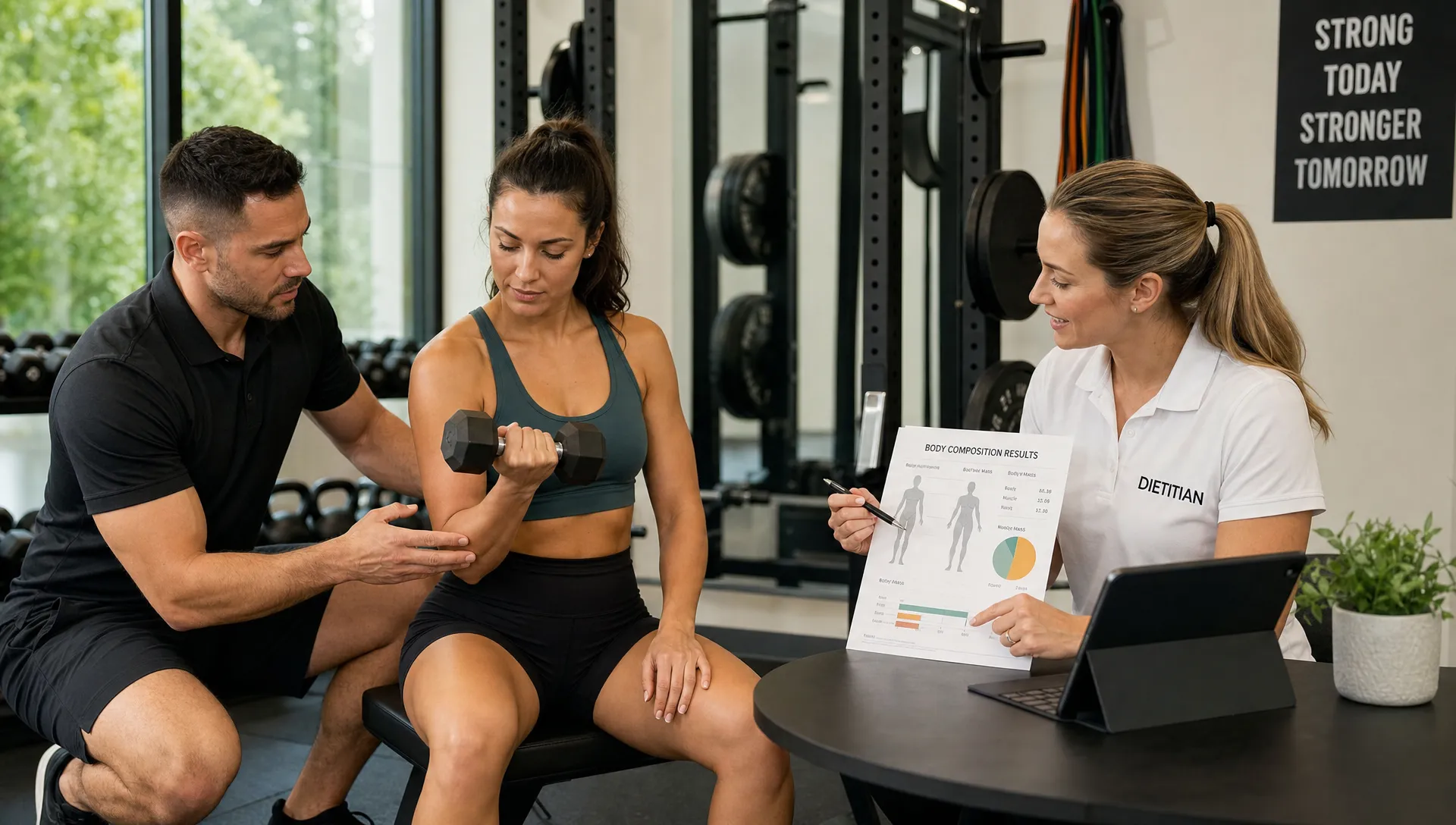
A coordinated team starts differently. The trainer assesses movement, strength, training history and schedule. The dietitian assesses food patterns, protein intake, meal timing, alcohol frequency, digestion and lifestyle constraints. If testing is part of the process, body composition and metabolic data can help set a more realistic baseline.
From there, the plan becomes practical. The trainer may build three focused strength sessions with a progression model that fits the client’s calendar. The dietitian may create a protein strategy, restaurant guidelines and pre-workout fueling options. If the client trains early, nutrition support may focus on the night before and post-workout breakfast. If the client trains after work, the plan may focus on lunch composition and an afternoon snack that prevents low-energy sessions.
This is especially valuable in San Francisco, where schedules can be intense and inconsistent. For someone moving between SoMa meetings, a Financial District commute and late dinners, a San Francisco personal training and nutrition studio can reduce the friction of keeping training, testing and food decisions in one place.
The research favors combining diet and exercise
The combined approach is not just intuitive. It is supported by research.
A randomized trial by Villareal and colleagues, published in the New England Journal of Medicine, found that a combined diet and exercise intervention improved physical function more than diet or exercise alone in older adults with obesity. The study population is specific, but the principle is useful: body composition, function and performance respond best when nutrition and exercise are aligned.
For muscle and strength goals, protein matters, but it works best in the context of progressive training. A large meta-analysis by Morton and colleagues in the British Journal of Sports Medicine found that protein supplementation enhanced gains in muscle mass and strength during resistance training, with benefits influenced by total daily protein intake. In real life, that means the training program and nutrition plan should be adjusted together, not treated as separate checklists.
This is where a team approach becomes more efficient. If a client is not progressing, the trainer does not have to guess whether nutrition is the issue. The dietitian does not have to guess whether the training plan is appropriate. They can compare notes and make a sharper adjustment.
Who benefits most from a dietitian and trainer team?
Almost anyone can benefit from better coordination, but the team model is especially useful when the goal is more complex than “exercise more.”
It is a strong fit for professionals who have limited time and want a high return on each session. If three hours per week is all someone can realistically commit to training, the nutrition plan needs to make those sessions count. Custom Fit has explored this from the training side in its article on why a personal trainer for strength training can work faster.
It is also useful for clients pursuing longevity, metabolic health or body composition goals. These clients often care about muscle mass, visceral fat, aerobic capacity, strength and recovery, not just weight loss. A trainer can build the physical capacity. A dietitian can support the nutrition behaviors that make those adaptations more likely.
For private practice physicians, concierge medicine facilities and longevity clinics, this model can also make referrals more actionable. Testing may identify a need for improved body composition, cardiovascular fitness or nutrition habits, but patients still need implementation support. A qualified fitness and nutrition team can help turn recommendations into a structured plan while staying within appropriate professional scope.
Employee benefits managers may see a similar advantage. Many wellness programs create awareness, but employees often need individualized coaching to change behavior. Pairing nutrition coaching with personal training can make wellness support more tangible for high-performing teams that want measurable progress.
How to tell whether a team is truly integrated
Hiring a dietitian and a trainer is not automatically the same as having an integrated team. The difference is communication, shared metrics and a clear process for adjusting the plan.
Before committing, ask questions like these:
- Do the dietitian and trainer use the same goals and baseline data? If one is focused on scale weight while the other is focused on strength, the plan can become conflicted.
- How are progress reviews handled? Good coaching should include periodic reassessment, not an endless repeat of the same workouts and food targets.
- Are credentials clear? Look for registered dietitians for nutrition guidance and qualified trainers or exercise physiologists for training and testing support.
- Does the plan account for schedule, stress and recovery? A technically perfect plan that does not fit your life will not last.
- Are testing results interpreted by a professional? Body composition data should lead to informed recommendations, not confusion or overreaction.
The best teams make the client feel less overwhelmed, not more. You should understand what you are doing, why it matters and how each piece supports the next phase of progress.
Frequently Asked Questions
Is a registered dietitian better than a nutrition coach? A registered dietitian has formal clinical nutrition training and a nationally recognized credential. Some nutrition coaches are helpful for general habits, but an RD is the stronger choice when goals involve body composition, performance, medical considerations or more advanced nutrition planning.
Can a personal trainer give nutrition advice? A trainer can usually discuss general healthy habits, but detailed nutrition planning is better handled by a registered dietitian. The safest and most effective setup is for the trainer to manage exercise programming while the dietitian manages nutrition strategy.
Do I need DEXA testing to work with a dietitian and trainer? No. You can make progress without DEXA, but body composition testing can give the team better information about muscle mass, body fat and visceral fat. At Custom Fit, DEXA scans are performed by Registered Dietitians or Exercise Physiologists who can help interpret the results in context.
How often should the dietitian and trainer adjust the plan? It depends on the goal, but most clients benefit from regular check-ins and periodic reassessment. Training variables may change weekly or monthly, while nutrition targets may shift based on energy, recovery, body composition and adherence.
Is this approach only for athletes? No. Athletes benefit from integrated coaching, but so do busy professionals, people pursuing fat loss, clients focused on longevity and anyone who wants a more structured path to better health.
Build a plan where training and nutrition work together
A stronger body is not built by workouts alone, and it is not built by food tracking alone. It comes from matching the right training stimulus with the right nutrition support, then adjusting both as your body responds.
Custom Fit brings personal training, nutrition coaching, DEXA scans, VO2 max testing and recovery services into a data-driven wellness environment. If you want a plan guided by professionals who understand both performance and body composition, connect with Custom Fit and ask about current membership or new client options.