Choosing Personal Trainer Coaching for Your First Pull-Up
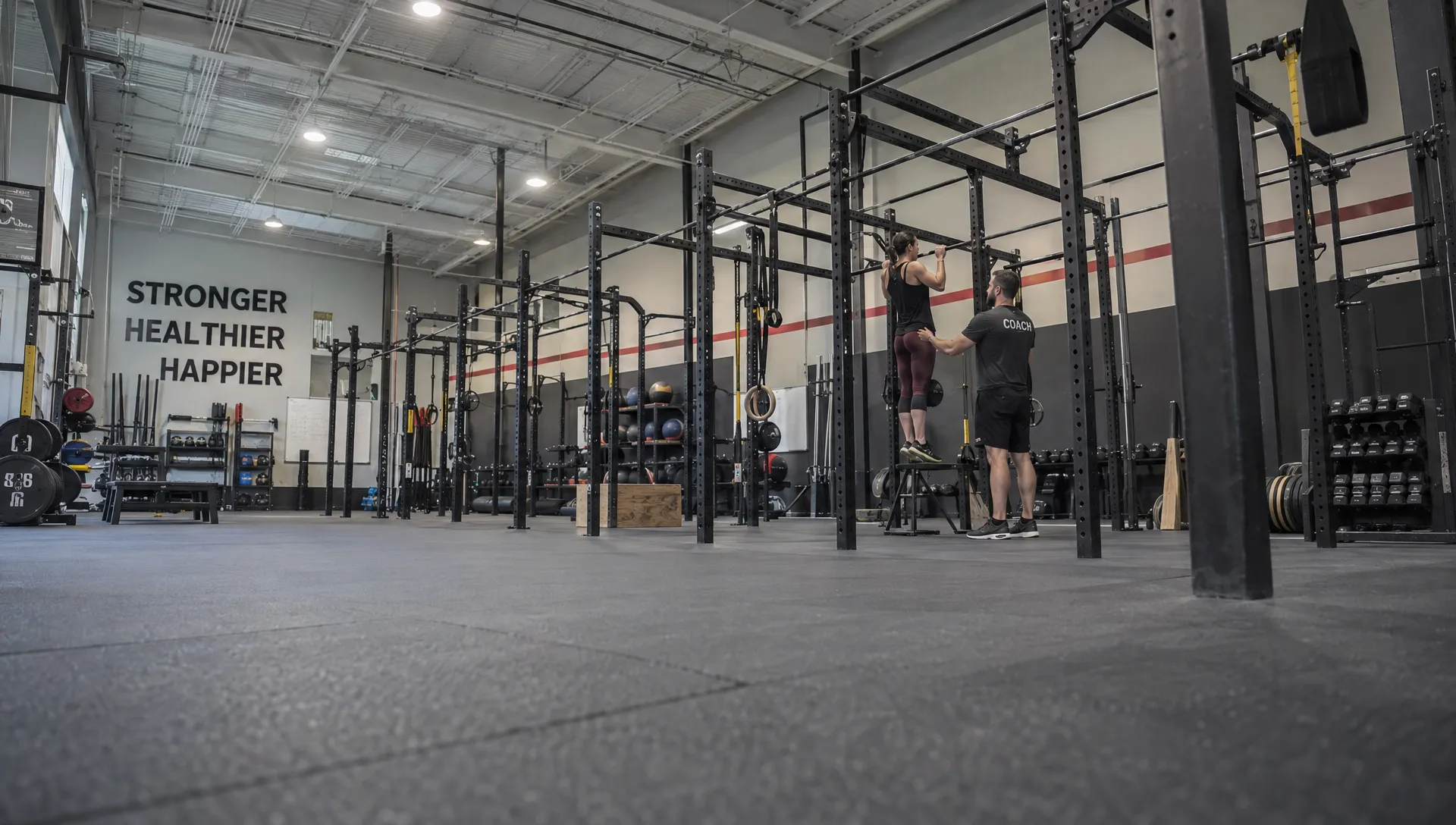


Your first pull-up is a specific goal, but choosing personal trainer coaching to get there can feel surprisingly vague. One trainer promises accountability, another offers a workout app and another says you simply need to keep trying. What you actually need is someone who can identify your starting point, select manageable progressions and explain how you will know they are working.
For a busy San Francisco professional, that also means a plan that survives meetings, travel and limited gym time. Use the criteria below to choose coaching that builds toward an unassisted repetition rather than just making your upper-body workouts harder.
Define what your first pull-up will look like
Before comparing trainers, agree on the movement you want to achieve. A pull-up usually uses an overhand grip, while a chin-up uses an underhand grip. A neutral grip, with palms facing each other, is another option. These variations are related, but progress in one does not make them interchangeable.
A useful goal is one controlled repetition from an agreed starting position, without jumping or swinging, with your chin clearing the bar and a controlled return. The starting position should accommodate your shoulder comfort and available range of motion rather than force a painful passive hang.
Ask the trainer to document the grip, bar setup and technique standard. Otherwise, an apparent breakthrough might simply reflect a shorter range of motion or more momentum. A clear definition makes progress easier to recognize and keeps testing consistent.
What should personal trainer coaching include for a first pull-up?
The initial assessment should establish what you can do safely, not become a prolonged test of what you cannot do yet. A trainer should discuss your training history, previous shoulder or elbow problems, available equipment and realistic weekly schedule.
Depending on your experience, they might observe a supported hang, a row and an assisted pull-up. These movements help them decide whether your starting priority is grip tolerance, pulling strength, movement coordination or a combination of factors. You do not need to repeatedly attempt an unsupported pull-up to prove you need help.
Ask the trainer to explain their findings in plain language: “You can control the assisted movement, but we need more strength through the upper portion” is more useful than “Your back is weak.”
If you want a broader framework for that conversation, Custom Fit’s guide to questions to ask during a personal training consultation can help you prepare.
A strong assessment ends with a starting exercise, a reason for choosing it and a plan for reassessment. It does not need to end with exhaustion.
Ask how the progression will change over time
Useful personal trainer coaching connects each exercise to your goal and gives you a clear reason to progress, hold steady or reduce difficulty. A list of back exercises is not enough.
Different starting points call for different tools:
| Training option | What it can help practice | What the coach should track |
|---|---|---|
| Foot-assisted pull-up | The pulling pattern with adjustable support | Foot position, range of motion and consistency of assistance |
| Assisted pull-up machine | Repeated practice with a recorded assistance setting | Machine setting, repetitions and control |
| Band-assisted pull-up | Practice on a bar when other assistance is unavailable | Band, setup and movement quality |
| Controlled lowering | The lowering phase when it is appropriate and tolerated | Support used to reach the top, lowering control and recovery |
| Rows and pulldowns | Supporting pulling strength | Load, repetitions and technique |
Bands provide different assistance through the movement, so changing bands is not a precise measure of strength gain. Machine settings also should not be compared across different machines.
Controlled lowerings, sometimes called negatives, are an option rather than a mandatory beginner exercise. Too much unfamiliar lowering work can leave you sore enough to disrupt subsequent sessions.
Ask: “What would make you reduce assistance, and what would make you keep it the same?” A thoughtful answer should reference repeatable technique and performance, not just the calendar.
Choose the coaching format around your feedback needs
In-person sessions offer immediate observation, equipment setup and adjustments during the movement. That can be particularly useful when you are learning how much assistance to use or cannot tell whether you are swinging.
Online personal trainer coaching can work when you have suitable equipment, can record useful video and are comfortable following instructions independently. Ask whether feedback comes through live sessions, recorded reviews or written messages. Those are different services.
Hybrid coaching combines some supervised practice with independent sessions. It can suit a demanding schedule, but only if responsibilities are clear. You should know what to do between appointments and how to get help when an exercise does not feel right.
Before choosing, ask how the coach will observe your full movement. A video should show the bar, your starting position and the complete repetition rather than only your upper torso.
If you are unsure how much supervision to book, consider how many personal training sessions you may need alongside your confidence, equipment access and ability to train independently. More appointments are not automatically better if the plan leaves no room to recover or practice consistently.
Verify qualifications and professional boundaries
When evaluating personal trainer coaching, check the trainer’s credentials with the issuing organization rather than relying on a badge in a social media profile. Recognized qualifications may include certifications from organizations such as ACSM, ACE, NASM or NSCA. Ask about current CPR/AED training as well.
A certification is a starting point, not proof of expertise in your goal. Ask whether the trainer has coached beginners to their first pull-up and how they adapt training when someone cannot comfortably hang from a bar.
They should be able to describe their process without promising that your experience will match another client’s timeline. Client examples are more useful when they explain adjustments and setbacks, not just show a successful final repetition.
Professional boundaries matter, too. A trainer can modify exercise and recommend that you seek assessment, but should not diagnose a shoulder injury or promise to treat a medical condition. Sharp pain, numbness or persistent joint pain warrants stopping the aggravating activity and seeking appropriate clinical guidance.
Choose someone who can explain both what they can help with and when another professional should be involved.
Clarify what the fee actually covers
Two packages with the same price can provide very different levels of support. One might cover supervised appointments only, while another includes independent workouts, video feedback and scheduled plan updates.
Before paying for personal trainer coaching, get a clear explanation of what happens outside the session. Ask about the program you will follow, how often it is reviewed and which communication channels you can use. “Message anytime” is less helpful than an agreed response window and a clear description of what questions the coach handles.
Also confirm session length, cancellation terms, package expiration and whether gym access or required equipment costs extra. For online support, ask whether video reviews are included or billed separately.
A first-pull-up goal does not automatically require a large bundle of additional services. The trainer should be able to explain why each proposed component is relevant to your starting point and schedule.
Compare the total support you will actually use, not just the advertised cost per appointment. Paying for frequent sessions you cannot attend is poor value, while a cheaper written plan may be insufficient if you need hands-on instruction. Avoid committing to a long package before you understand the coaching process and feel comfortable asking questions.

Make sure the plan fits your working week
Effective personal trainer coaching should produce a schedule you can repeat during an ordinary week, not only during a quiet one. Ask how pull-up practice fits alongside your other strength training, recreational activities and travel.
The American College of Sports Medicine’s position stand on progression in resistance training recommends resistance training two to three days per week for novices. That is general guidance, not a requirement to practice hard pull-ups at every session.
A coach might begin with two nonconsecutive strength sessions, placing assisted pulling early enough that fatigue does not dominate the practice. Your actual frequency should reflect your starting capacity and the rest of your training.
Ask for a reduced version of the plan for unusually busy weeks and an alternative for travel when a pull-up bar is unavailable. A missed appointment should not leave you guessing until the next one.
Keep some downtime genuinely low-demand. Reading, listening to music or tending a small ant farm are examples of leisure that need not turn into another physical challenge. Those preferences are personal; adequate sleep and a manageable training workload remain the relevant recovery priorities.
Judge progress before the first successful repetition
The best personal trainer coaching makes progress visible before you clear the bar. Your first unassisted repetition is an important milestone, but it should not be the only evidence that the plan is working.
Useful indicators include completing the same repetitions with less assistance, controlling a greater comfortable range of motion or performing more consistent repetitions at the same setting. Better tolerance of the planned workload can also matter, provided it is not masking persistent pain.
Keep comparisons consistent. Record the grip, equipment, assistance, repetitions and any discomfort. A brief video can help distinguish improved control from a change in technique.
You should also know when the coach plans to reassess. Occasional unassisted attempts may be appropriate, but repeated maximal attempts at every workout can turn practice into a frustrating pass-or-fail test.
Watch for a trainer who cannot explain a plateau, changes exercises constantly without a reason or responds to every setback by adding more work. A useful review considers attendance, exercise difficulty, technique, recovery and whether the original progression still fits.
The plan should change in response to your performance, not simply because another week has passed. Ask your coach to explain that decision so you learn how to train more independently over time.
Frequently asked questions
How long does personal trainer coaching take to produce a first pull-up? There is no reliable universal timeline. Starting strength, training history, comfortable movement range, consistency and recovery all affect progress. A responsible coach can set review points and interim targets without guaranteeing a first repetition by a particular date.
Should I learn a chin-up before a pull-up? Some people find an underhand or neutral grip more manageable, but that is not universal. Your coach should consider comfort, available equipment and your actual goal. If you specifically want an overhand pull-up, the program should eventually include appropriate practice with that grip.
Do I need to train to failure? Not on every set. Ask how the trainer selects effort and preserves technique across the session. Repeated unsuccessful attempts are not a substitute for choosing an assistance level that lets you practice controlled repetitions.
Can online coaching work if I cannot do any pull-ups yet? Yes, provided the coach can assess suitable starting movements, review your technique and offer progressions that match your equipment. If you need help setting up assistance or interpreting discomfort, in-person assessment may be a better starting option.
What if my shoulder or elbow hurts? Stop the movement that provokes the pain and tell your trainer. Persistent or concerning symptoms need appropriate clinical assessment, not instructions to push through them. Your coach should respect any guidance from your treating clinician.
Take a clear goal into your first conversation
If you are considering personal trainer coaching in San Francisco, start with a specific request: “I want my first controlled pull-up. How would you assess my starting point, structure practice and measure progress?”
Custom Fit offers personal training and wellness services in San Francisco. Discuss your goal, schedule and preferred level of supervision with the team. Before committing, make sure you understand the proposed starting point, what support is included and when you will review the plan.