What Customized Personal Training Programs Should Include
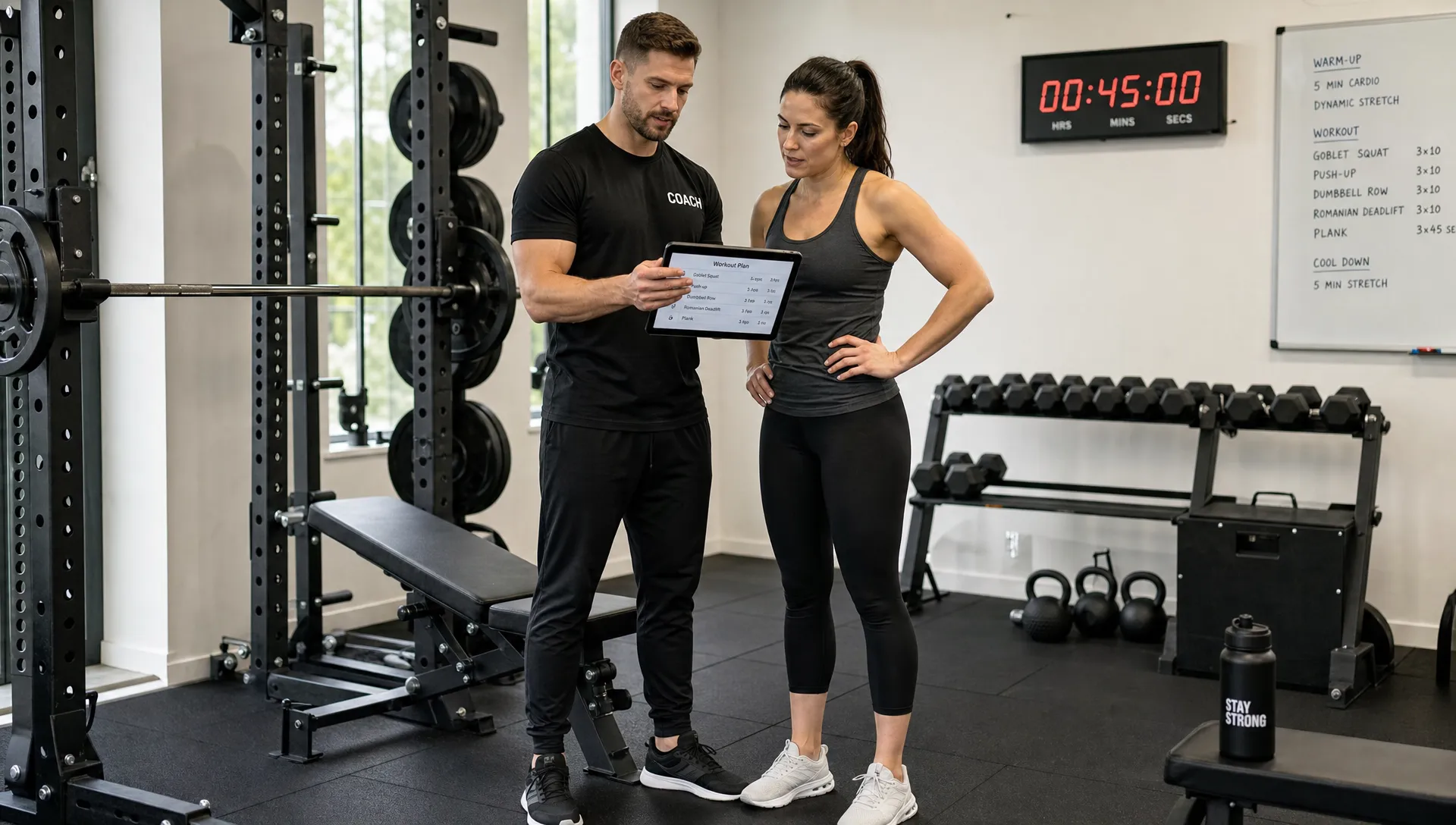


Strong customized personal training programs are not just a set of private workouts with your name on the calendar. A truly custom plan should connect your goals, training history, schedule, body composition, recovery capacity, nutrition habits and measurable progress into one coherent system.
That matters even more for busy San Francisco professionals, physicians, founders and wellness teams who do not have time for guesswork. If your training plan is custom in name only, it may still feel productive, but it will usually leave too many variables unmanaged.
What customized personal training programs should include at intake
The intake is where a program becomes personal. A trainer should understand what you want to change, what has worked before, what has failed and what your body can safely tolerate right now. That includes injuries, medications that affect exercise response, travel demands, sleep patterns, stress load and any recent lab or body composition data you are comfortable sharing.
A good intake should also clarify the difference between your stated goal and the training goal. “Get in shape” may translate into lower visceral fat, higher lean mass, better VO2 max, stronger hips, less back pain or simply a more consistent weekly routine.
Health history, movement and lifestyle constraints
A safe plan starts with context. A trainer should ask about orthopedic limitations, cardiovascular risk factors, training experience, pain triggers and any clinical guidance from your physician. This is especially relevant for clients returning after a long break, executives with high stress loads or people referred by concierge medicine and longevity clinics.
Movement screening does not need to be overly complicated, but it should reveal how you squat, hinge, push, pull, rotate and stabilize. This is where customized personal training programs become more precise than generic templates, because the exercise selection reflects what your body can perform well today.
Baseline testing, body composition and performance data
A quality program should establish a baseline before promising outcomes. Depending on the client, that may include strength testing, mobility checks, resting metrics, conditioning tests, DEXA body composition assessment and VO2 max testing.
DEXA can be especially useful when goals involve body fat, muscle mass, bone density or visceral fat. At Custom Fit, DEXA scans are performed by Registered Dietitians or Exercise Physiologists, so clients are working with professionals who understand nutrition, exercise physiology and body composition, not simply receiving an automated scan report.
Cardiorespiratory fitness also deserves attention. A large cohort study published in JAMA Network Open found that higher cardiorespiratory fitness was associated with lower long-term mortality risk. For longevity-focused clients, VO2 max is not just a performance metric, it is a useful marker for how well the body uses oxygen under stress.
Goals that translate into programming decisions
Well-built customized personal training programs define both outcome goals and process goals. The outcome might be losing fat, gaining muscle, improving VO2 max, returning to tennis or reducing low back flare-ups. The process goal defines what will actually happen each week.
Without this translation, goals stay motivational but not operational. A trainer should be able to explain how each phase of training supports the result you want.
| Client goal | Program decision | Useful tracking method |
|---|---|---|
| Reduce body fat | Strength training plus nutrition coaching and conditioning | DEXA trends, waist measurement, food consistency |
| Build muscle | Progressive resistance training and protein targets | Lean mass, strength logs, recovery quality |
| Improve longevity markers | Aerobic base work, VO2 max training and strength | VO2 max, resting metrics, functional strength |
| Train around pain | Exercise modifications and graded exposure | Pain notes, range of motion, movement quality |
| Improve consistency | Schedule design and accountability | Weekly attendance, habit tracking, missed-session patterns |
The point is not to test everything all the time. The point is to choose a few metrics that match the goal, then make the program accountable to those metrics.
A training plan that adapts to your data
The advantage of customized personal training programs is not that every workout is different. It is that every workout has a reason. A custom plan should use progressive overload, appropriate exercise variation and planned recovery so that your body receives enough stimulus to adapt without being pushed into unnecessary fatigue.
The American College of Sports Medicine position stand outlines evidence-based recommendations for aerobic exercise, resistance training, flexibility and neuromotor training. A personal trainer does not need to turn every client into an athlete, but the program should still reflect established principles: frequency, intensity, time, type, progression and recovery.
Custom Fit covers this idea in more detail in its guide on how personal training programs should evolve with your data, especially as strength, conditioning, body composition and recovery signals change over time.
Strength, mobility and conditioning each have a role
A balanced custom plan usually includes strength training, mobility work and conditioning, but the ratio should vary by person. A 42-year-old executive trying to reduce visceral fat may need a different mix than a physician training for a ski trip or a postnatal client rebuilding core strength.
Strength work should target major movement patterns. Mobility should address actual limitations rather than random stretching. Conditioning should match the client’s goal, whether that means low-intensity aerobic work, intervals, VO2 max development or improved work capacity for sport.
Nutrition and recovery belong in the plan
For body composition goals, customized personal training programs should connect training with nutrition. Muscle gain, fat loss and improved metabolic health are hard to separate from protein intake, energy balance, meal timing, hydration, alcohol patterns and weekend habits.
Research supports the importance of protein for people who train. The International Society of Sports Nutrition position stand notes that protein needs are often higher for exercising individuals than for sedentary adults, especially when the goal is to build or preserve lean mass.
This is where registered dietitians can change the quality of the plan. Rather than giving generic meal advice, they can help interpret body composition trends, align nutrition with training volume and make the plan workable for real schedules.
Recovery should be prescribed, not hoped for
Recovery is not just foam rolling after a hard session. A strong program should account for sleep, stress, training frequency, soreness, travel and readiness. For high-performing clients in neighborhoods like SoMa, Pacific Heights or the Marina, life stress can be as influential as exercise selection.
If recovery is poor, the plan should change. That may mean lowering volume, shifting a hard conditioning day, emphasizing mobility or coordinating nutrition support. Progress usually improves when recovery is treated as a program variable rather than a personal weakness.
Coaching, accountability and personalization in real life
In real life, customized personal training programs succeed because they fit the client’s actual week. A great plan on paper is useless if it depends on a schedule, energy level or food routine that does not exist.
For a busy professional, that may mean two coached strength sessions, one independent conditioning session and nutrition check-ins. For someone returning from injury, it may mean shorter sessions, more technique work and communication with a clinician. For a company wellness leader, it may mean creating a structure that supports consistency across employees without pretending every participant has the same needs.
If you are weighing private coaching against other formats, Custom Fit’s article on who benefits most from custom personal training can help clarify when individualized attention is worth the investment.
The best programs communicate between sessions
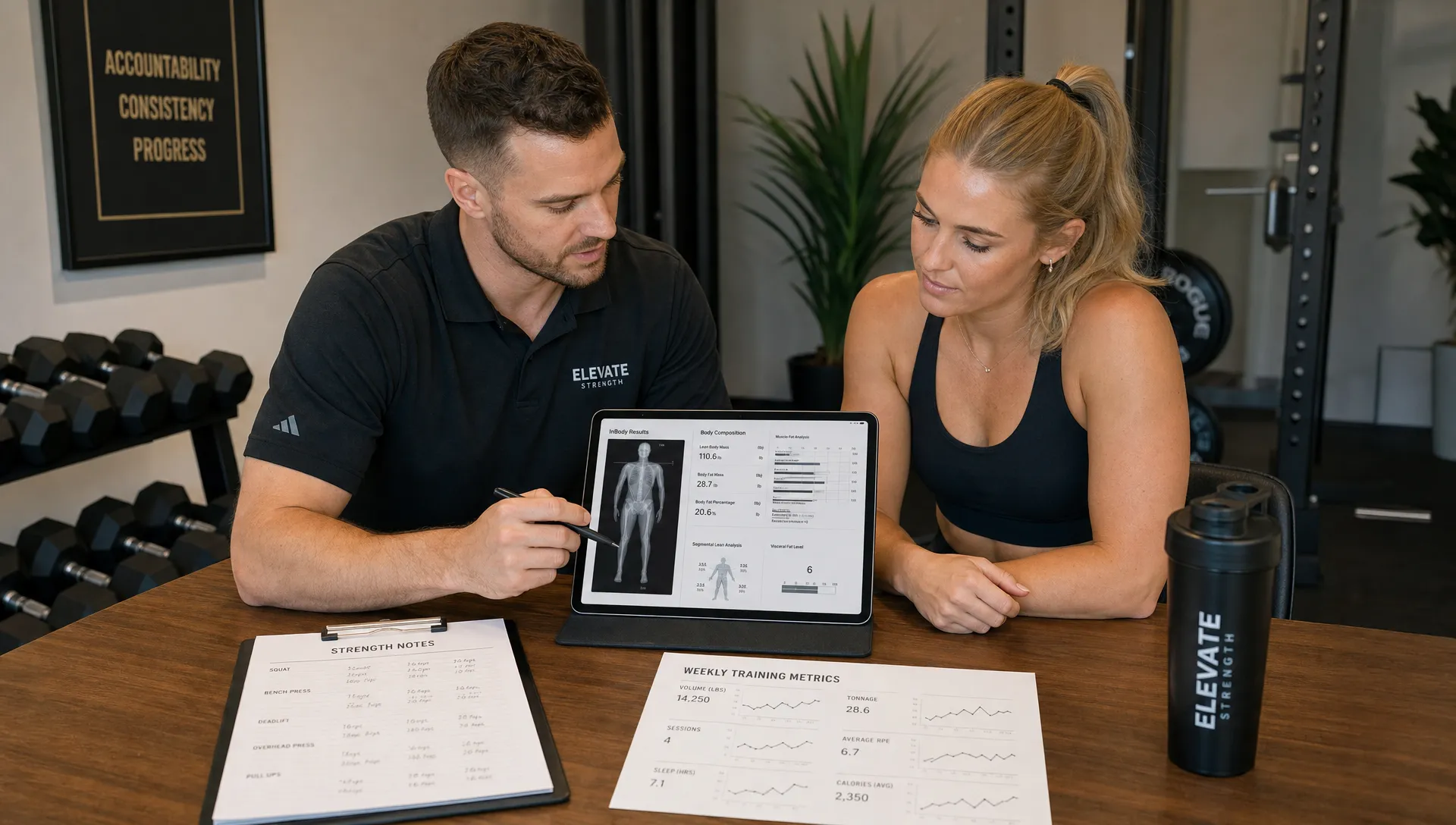
Personalization should not stop when the session ends. Your coach should know whether you completed independent workouts, how your body responded and whether life disrupted the plan. This does not require constant messaging, but it does require a feedback loop.
For clinics, employers and wellness teams, the same principle applies at the systems level. If your organization is building smarter referral, reporting or member-support workflows, working with a custom AI agency for internal tools can be one way to reduce administrative friction while keeping human expertise at the center.
What to look for in a San Francisco training environment
A custom program also depends on the facility. Equipment variety matters because it gives trainers more options for progression, regression and exercise selection. Privacy matters for clients who do not want a crowded gym experience. Testing access matters when goals involve measurable changes in body composition, VO2 max or long-term health.
At a San Francisco wellness studio like Custom Fit, the value is the combination of coaching, testing, nutrition and recovery support in one environment. That can be especially useful for people who train before work downtown, commute from nearby neighborhoods or need a premium setting where every session is planned.
Custom Fit’s perspective on what personalized fitness training should look like in 2026 also explains why data-informed coaching is becoming the standard for serious clients, not a luxury add-on.
Red flags when a program is only “custom” in name
If customized personal training programs do not change based on your progress, schedule or feedback, they are probably not custom. The same is true when every client receives the same warm-up, the same circuit and the same nutrition talking points.
Watch for these signs that a program may be too generic:
- No meaningful intake beyond basic goals
- No baseline testing or movement assessment
- No explanation of why exercises were chosen
- No progress tracking beyond sweat and soreness
- No nutrition or recovery strategy when body composition is a goal
- No adjustment when travel, sleep, pain or stress changes
A good trainer should be able to explain what you are doing, why you are doing it now and what would cause the plan to change.
Frequently Asked Questions
How long should a customized personal training program run? Most clients need at least 8 to 12 weeks to see meaningful trends in strength, conditioning or body composition. The exact timeline depends on the goal, training history, nutrition consistency and baseline health.
Should customized personal training programs include nutrition coaching? Yes, if the goal involves fat loss, muscle gain, performance or metabolic health. Training creates the stimulus, but nutrition strongly influences whether the body adapts in the desired direction.
Is DEXA necessary for everyone? No. DEXA is most useful when body composition, visceral fat, lean mass or bone density are important to the goal. When used at Custom Fit, scans are performed by Registered Dietitians or Exercise Physiologists who can interpret the data in the context of training and nutrition.
How often should a custom program be updated? Small adjustments may happen weekly, while larger program changes often occur every 4 to 8 weeks. Updates should be based on performance, recovery, schedule adherence and measurable outcomes.
Build a program that fits your body and your life
The best training plan is not the hardest plan. It is the plan that uses the right assessment, the right coaching, the right data and the right level of support for your goals.
If you want personal training that integrates fitness, body composition testing, nutrition coaching and recovery, Custom Fit can help you build a smarter path forward in San Francisco.