What a Luxury Gym in San Francisco Should Actually Offer



A high-end fitness space can look impressive and still fail at the thing that matters most: helping you train better, recover smarter and make measurable progress. In San Francisco, where many people are balancing demanding careers, tight schedules and high expectations, luxury should mean more than marble counters and clean locker rooms.
A true luxury gym San Francisco professionals can justify should combine expert coaching, useful testing, personalized nutrition, recovery support and a level of privacy that makes consistency easier. The best experience is not just comfortable. It is precise, accountable and built around outcomes.
Luxury should start with professional expertise, not aesthetics
When people search for a luxury gym San Francisco has no shortage of beautiful spaces. Design matters, but it should not be the main reason you join. A premium gym should make it easy to answer practical questions:
- What should I train today based on my goal and readiness?
- How do I know whether I am gaining muscle, losing fat or just changing scale weight?
- Is my nutrition supporting my training and health markers?
- Am I recovering enough to keep progressing?
- Can this program fit into a demanding San Francisco schedule?
That requires qualified people, not just polished equipment. Personal trainers should understand progression, movement quality, injury considerations and behavior change. Nutrition guidance should come from professionals with the right scope and training, especially when the goal involves body composition, performance, metabolic health or longevity.
For high-income professionals, private practice physicians, concierge medicine teams and employee benefits managers, the standard should be even higher. A gym that claims to be luxury should be able to communicate clearly, respect privacy and support decisions with data rather than vague motivational language.
A real premium gym measures what matters
The right luxury gym San Francisco experience should include objective testing, because effort alone does not tell the whole story. Two people can work equally hard and get different results based on sleep, stress, nutrition, training age, hormone status, recovery capacity and baseline fitness.
Useful testing may include DEXA scans, VO2 max testing, strength benchmarks and mobility assessments. These tools should not replace coaching. They should make coaching more specific.
DEXA is especially useful because it can help separate body weight into more meaningful categories, including fat mass, lean mass, bone density and visceral fat estimates. At Custom Fit, DEXA scans are performed by Registered Dietitians or Exercise Physiologists. That matters because clients are not simply receiving an automated scan report. They are working with professionals who understand nutrition, exercise physiology and body composition, so the results can be translated into a realistic training and nutrition plan.
VO2 max is another valuable metric for people focused on longevity and performance. A large 2018 study published in JAMA Network Open found that higher cardiorespiratory fitness was associated with lower long-term mortality risk among adults undergoing treadmill testing, which is one reason VO2 max has become a common benchmark in serious health and performance programs. You can read the study on cardiorespiratory fitness and long-term mortality.
Testing should always lead to action. If a scan shows low lean mass, the program should address strength training, protein intake and recovery. If VO2 max is below target for the client’s age and goals, conditioning should be prescribed with more specificity than “do more cardio.”
Personal training should be private, planned and progressive
Luxury in fitness often comes down to the quality of attention. A personal training session should not feel improvised. It should be part of a larger plan that accounts for the client’s goals, schedule, testing results, training history and current capacity.
For an executive in the Financial District, a founder in SoMa or a physician moving between clinic hours and family commitments, consistency is usually the constraint. A strong training plan removes friction. It gives the client a clear reason for each session, a path for progression and adjustments when life gets busy.
This is where private or semi-private coaching can outperform a traditional crowded gym. You are not waiting for equipment, guessing what to do next or trying to interpret generic programming. You are working in a setting designed for focus.
If you are still comparing formats, Custom Fit has a helpful guide on how to find the right gym in San Francisco for your goals, including how to think about fat loss, strength, endurance and longevity priorities.
Nutrition coaching should be integrated with training
A luxury gym should not treat nutrition as an afterthought. Most body composition goals depend on the relationship between training stimulus, energy intake, protein, sleep and recovery. Even performance goals are limited when fueling is inconsistent.
The International Society of Sports Nutrition’s position stand on protein and exercise explains that protein needs vary based on training status, body composition goals and total energy intake. In practice, that means nutrition guidance should be individualized rather than handed out as a generic meal plan.
For clients pursuing fat loss, the goal is rarely just a lower number on the scale. A better target is usually reducing fat mass while preserving or increasing lean mass. For clients focused on longevity, nutrition may also support metabolic health, muscle maintenance and training capacity as they age.
This is another place where professional interpretation matters. If DEXA results show changes in muscle mass or visceral fat, a Registered Dietitian or Exercise Physiologist can help connect those changes to training adherence, dietary intake, recovery and realistic next steps.
The facility should support precision, not distraction
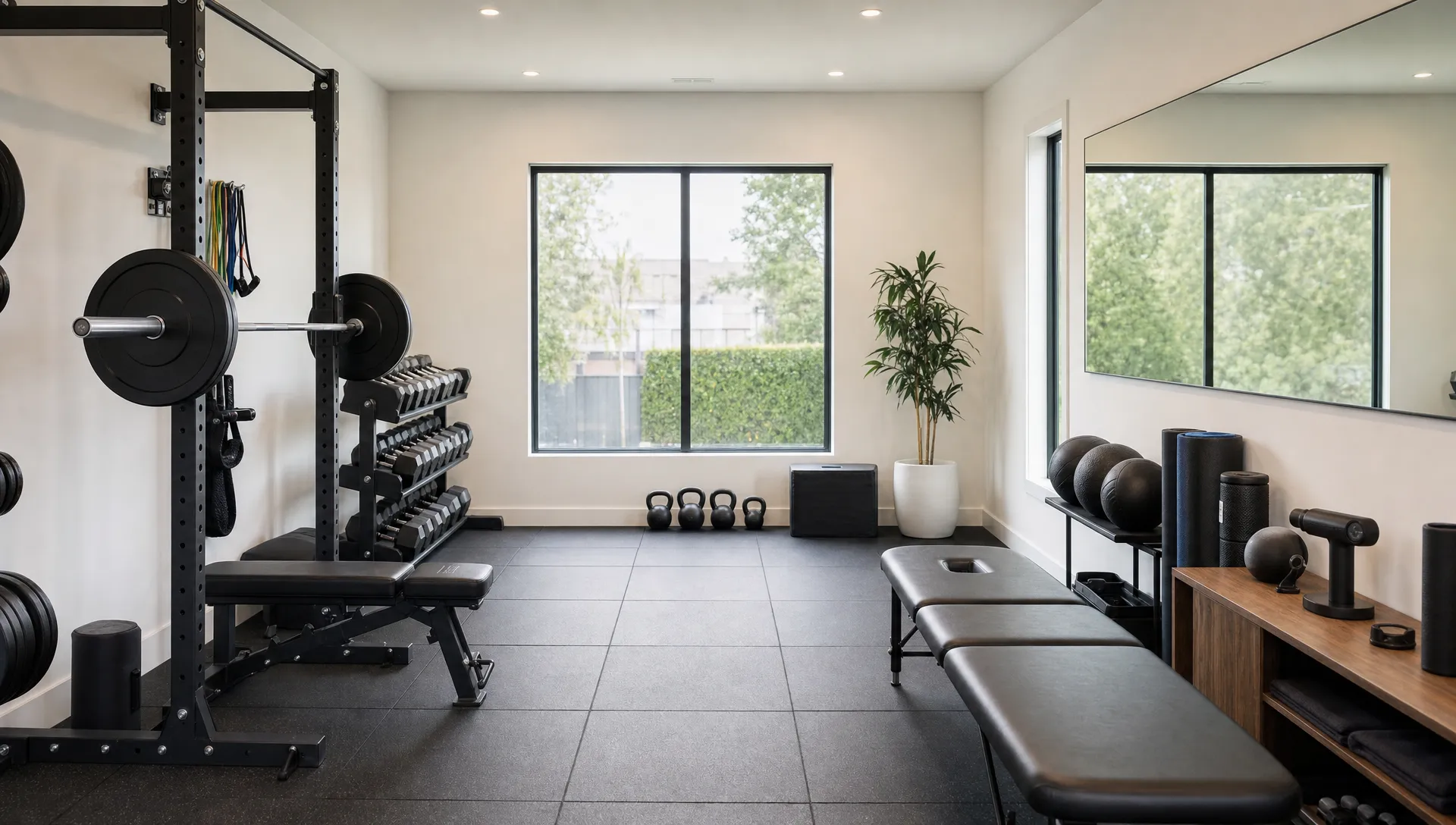
A premium gym does not need to be flashy to be excellent. It needs the right equipment, enough space to train well and an environment that makes focus easier. For many San Francisco clients, privacy is not a vanity perk. It is what allows them to train without interruptions, crowds or the low-level stress of a packed commercial floor.
| What a luxury feature looks like | What it should actually deliver |
|---|---|
| Private training areas | Better focus, fewer distractions and more efficient sessions |
| Advanced testing | Clear baselines for body composition, fitness and progress |
| Expert coaching | Programming that adapts to goals, readiness and results |
| Nutrition support | Practical guidance connected to training and health outcomes |
| Recovery services | Better consistency, less avoidable soreness and smarter workload management |
| Premium environment | Clean, calm and professional space that clients want to return to |
In other fields, premium quality comes from precision behind the scenes. A specialized manufacturer such as Jakom, known for custom shafts and rollers, demonstrates that real quality is built through material knowledge, tolerances and inspection, not surface appearance alone. A fitness facility should be judged in a similar way. The visible space matters, but the system underneath is what determines results.
Recovery should be part of the training model
Busy professionals often treat recovery as optional until soreness, poor sleep or stalled progress forces the issue. A better gym builds recovery into the plan from the beginning.
Recovery support can include mobility work, soft tissue strategies, guided warmups, cooldowns and access to recovery services. More important, the training plan itself should manage stress. A hard workout is not automatically a productive workout if it exceeds what the client can adapt to.
For people training before work in Pacific Heights, after meetings downtown or between appointments across the city, recovery planning can be the difference between a program that lasts six weeks and one that becomes part of life. If recovery is a major part of your decision, this article on choosing a recovery gym that supports better training breaks down what to look for.
Longevity services should be practical, not performative
Longevity has become a crowded wellness category. A serious gym should not overpromise or reduce longevity to trendy interventions. The foundation remains clear: strength, aerobic fitness, healthy body composition, mobility, nutrition, sleep and recovery.
Testing can help make longevity work more concrete. DEXA can track lean mass and visceral fat trends. VO2 max testing can provide insight into aerobic fitness. Nutrition coaching can support muscle maintenance, weight management and training output. Recovery programming can help clients stay consistent without burning out.
For concierge medicine facilities and longevity clinics, the value of a testing partner is not just the equipment. It is professional interpretation, client experience and the ability to translate results into behavior. A scan, score or lab value only becomes useful when someone can explain what it means and what to do next.
Corporate wellness should feel like a benefit, not another app
Employee benefits managers in San Francisco are often asked to improve wellness engagement with limited attention from employees. A luxury fitness partner should offer more than discounted access. It should feel credible enough for executives, approachable enough for busy employees and structured enough to support measurable participation.
The best corporate wellness gym experience may include personal training, small group options, recovery access, nutrition support and testing pathways for employees who want deeper insight. It should also respect different starting points. Not every employee is chasing peak performance. Some want lower stress, better energy, improved strength or a more sustainable routine.
If your company is evaluating options, Custom Fit’s article on a full-service corporate wellness gym in San Francisco offers a closer look at how premium gym access, recovery and data-driven services can fit into a benefits strategy.
What to look for before joining
If you are evaluating luxury gym San Francisco options, use a standard that goes beyond amenities. A gym can be expensive without being effective. The strongest signal is whether the team can explain how your plan will be built, measured and adjusted.
Look for evidence of a complete model: assessment, coaching, nutrition, testing, recovery and ongoing progress review. Ask who interprets body composition results. Ask how training plans change when goals shift or data changes. Ask whether the environment will help you stay consistent during your actual week, not an ideal week that never happens.
A premium gym should also be honest about the work required. No scan, trainer or recovery tool eliminates the need for consistency. The difference is that a well-designed environment makes the right actions easier to repeat.
Frequently Asked Questions
What should a luxury gym in San Francisco include? It should include expert coaching, a private or focused training environment, objective testing, nutrition support and recovery services. The key is integration. Each service should inform the others rather than existing as separate amenities.
Are DEXA scans worth it for fitness goals? DEXA scans can be valuable when you want a clearer view of body composition, including fat mass, lean mass, bone density and visceral fat estimates. At Custom Fit, DEXA scans are performed by Registered Dietitians or Exercise Physiologists, so clients receive professional interpretation instead of only an automated report.
How should I compare luxury gym San Francisco options? Compare the quality of coaching, the level of personalization, the testing available, the privacy of the facility and whether the gym can support your schedule. A beautiful facility is a bonus, but the program design is what drives results.
Is a data-driven gym only for athletes? No. Data-driven training can help beginners, busy professionals, executives, older adults and people returning to fitness. Testing and tracking simply help make the plan more specific.
Can a premium gym support corporate wellness or concierge medicine partnerships? Yes, if the facility has professional staff, credible testing, clear communication and a client experience that reflects well on the referring partner or employer. For B2B partners, interpretation and follow-through are just as important as the services themselves.
A better standard for luxury fitness
The right luxury gym San Francisco clients choose should make health feel more personal, not more complicated. It should give you qualified guidance, meaningful data and a calm environment where the work can actually happen.
If you want a premium fitness and wellness experience built around personal training, nutrition coaching, DEXA scans and VO2 max testing, recovery and longevity support, explore Custom Fit’s San Francisco studio and see how a data-driven approach can fit your goals.