Is Partner Personal Training Right for You?
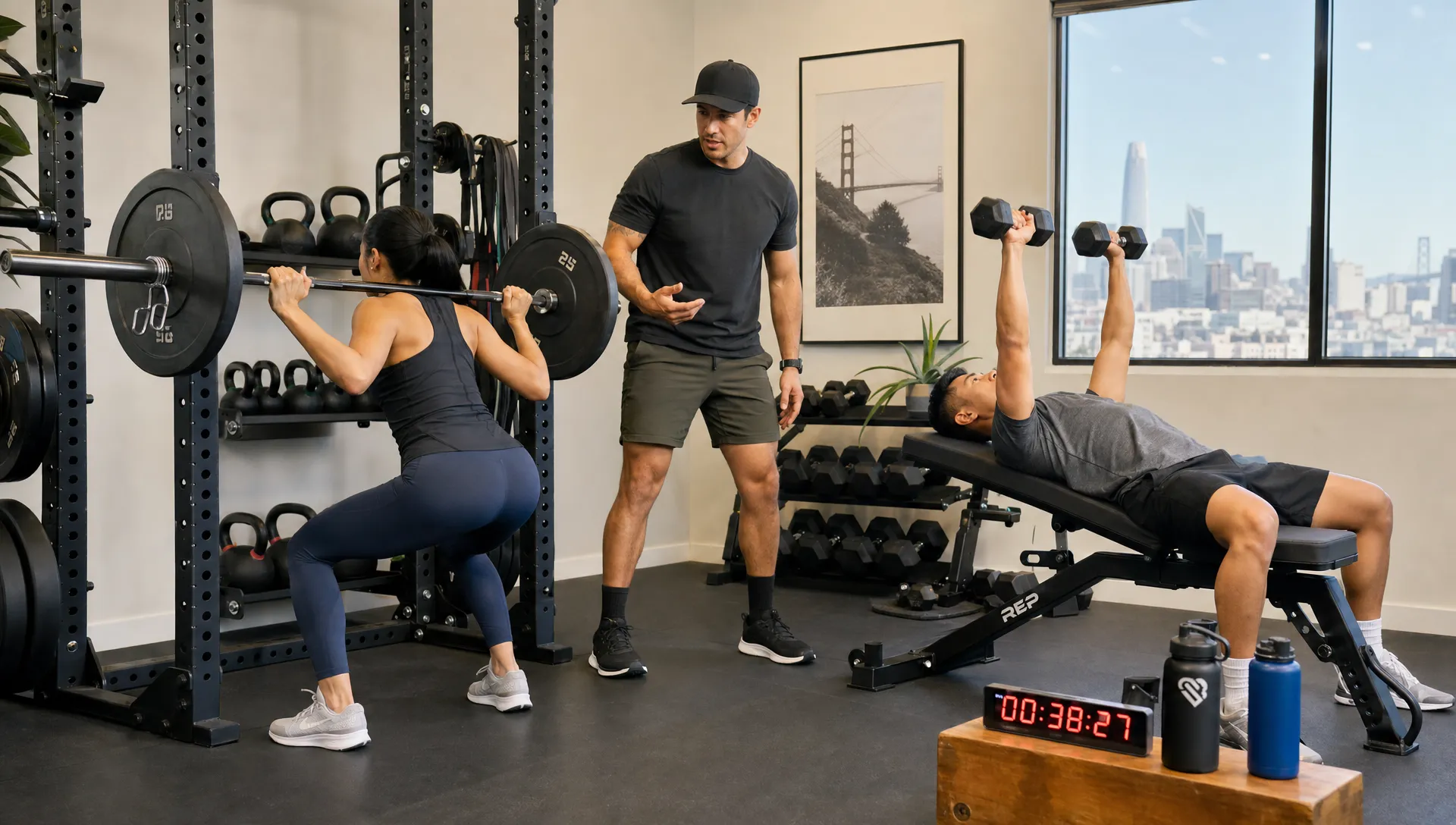


If you are curious whether partner personal training is right for you, the real question is not whether training with another person is “better” than training alone. It is whether the structure, accountability and shared energy of a two-person format match your goals, schedule and personality.
For busy San Francisco professionals, couples, friends and colleagues, the appeal is obvious: you get expert coaching without feeling like every session depends only on your own motivation. Still, the fit matters. The right partner can make training more consistent and enjoyable. The wrong setup can create mismatched pacing, distraction or frustration.
What partner personal training actually is
Partner training is a coached session for two people who work with the same trainer at the same time. It is not a large group class and it should not be a generic workout copied for both people. A good coach still adjusts exercises, loads, rest periods and progressions to each client.
The format usually works best when both people can train at the same time each week, share a broad goal and respect that their programs may not look identical. One person may be focused on strength after years at a desk, while the other wants better conditioning for weekend hikes in Marin. The session can still work if the coach knows how to individualize within a shared plan.
The value of the format comes from three things: coaching quality, partner accountability and intelligent programming. If any one of those is missing, a two-person session can feel like a compromise instead of a benefit.
When partner personal training works especially well
Partner personal training is often a strong fit when consistency is your biggest obstacle. If you cancel solo workouts easily but rarely want to let someone else down, having a standing session with a partner can help you show up.
Social support has a real behavioral effect. In a randomized trial published in the Journal of Consulting and Clinical Psychology, Rena Wing and Robert Jeffery found that recruiting participants with friends and building social support improved weight-loss maintenance compared with recruiting participants alone. The study was not about personal training specifically, but it supports a practical point: people often adhere better when healthy behavior is shared.
This format can be especially helpful for:
- Couples who want a shared health habit that is not another dinner reservation
- Friends who want expert coaching without joining a crowded class
- Colleagues who need a scheduled reset before work, at lunch or after office hours
- Parents with limited training windows who want accountability built into the calendar
- Employees in wellness programs who benefit from a structured, social fitness option
For many clients, partner personal training works because it makes exercise feel scheduled, supported and less isolating. You still need a well-designed plan, but the social layer can make the plan easier to follow.
Where the two-person format can fall short
The most common problem is a mismatch. If one person wants slow strength work and the other wants a high-sweat conditioning session every time, the trainer has to reconcile competing expectations. That can work, but only if both people agree on the purpose of the session.
Another issue is emotional dynamics. Some couples thrive with light competition. Others do better when workouts feel completely separate from the relationship. Friends may encourage each other, but they may also spend too much time talking unless the trainer keeps the session focused.
| Potential issue | Why it matters | What to ask before starting |
|---|---|---|
| Different fitness levels | One person may feel held back or rushed | Can the trainer scale exercises individually? |
| Different goals | Programming may become too generic | What is the shared goal of the session? |
| Uneven attendance | The consistent person may lose momentum | What happens if one partner misses a session? |
| Competitive tension | Motivation can turn into pressure | How will the coach manage pacing and feedback? |
| Injury history | One plan may not suit both bodies | Will each person receive an individual assessment? |
If these questions are addressed early, the format can still be highly effective. If they are ignored, partner training may become a social appointment with exercise attached.
What to look for in a strong partner training program
A serious program should begin with individual goals and baseline information for each person. Even if you train together, your mobility, strength, injury history, conditioning and recovery capacity may be very different.
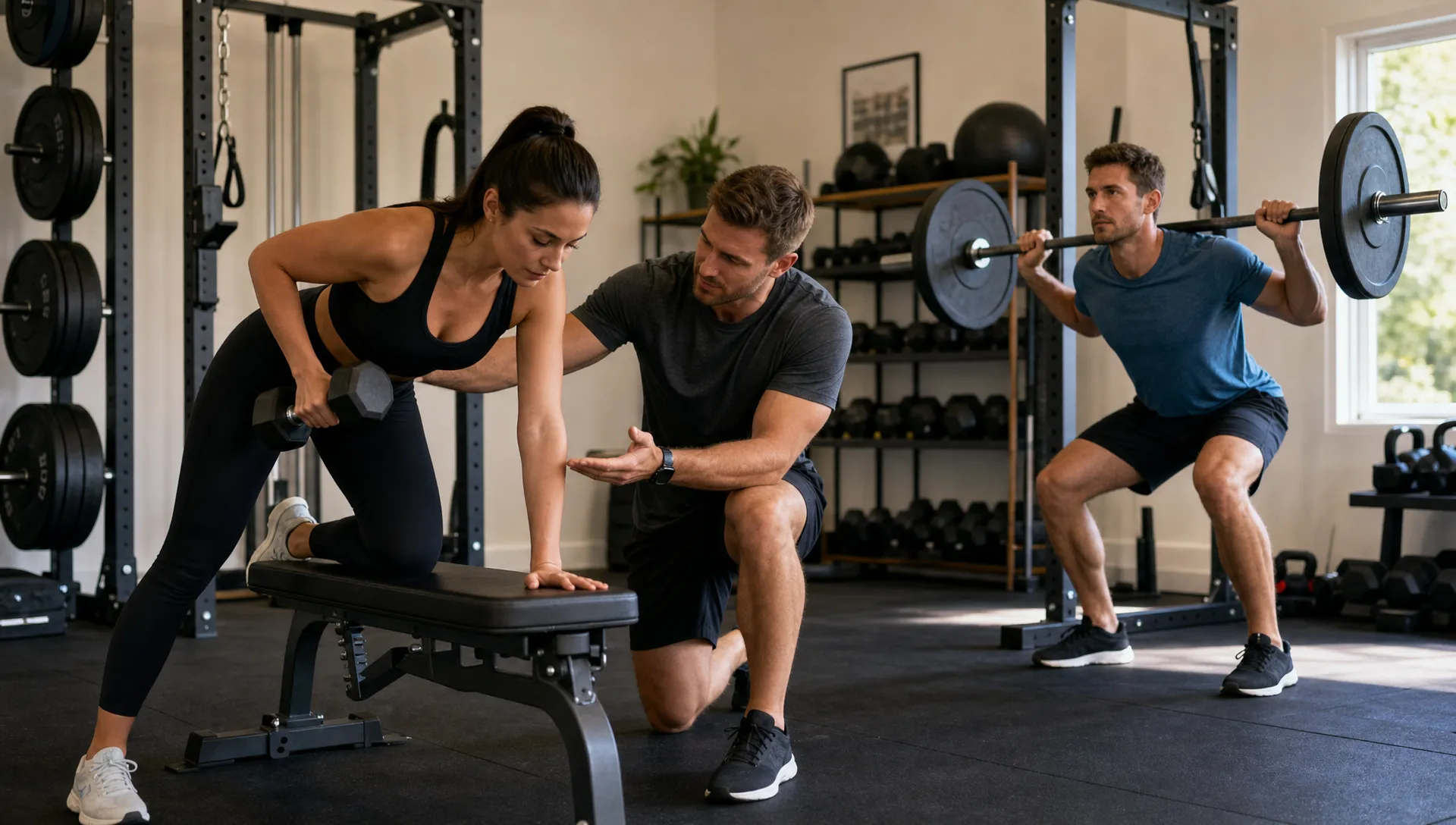
This is where coaching matters more than the format. A trainer should be able to run the session so both people are active, supervised and progressing. That may mean alternating exercises, using different loads or giving one person a corrective movement while the other performs a main lift.
If your goals include body composition, body fat, muscle mass or visceral fat, ask how those data are collected and interpreted. At Custom Fit, DEXA scans are performed by Registered Dietitians or Exercise Physiologists. Clients are not simply handed an automated scan report. They work with professionals who understand nutrition, exercise physiology and body composition, which matters when two people need different strategies inside the same training structure.
If you are evaluating options, this guide to what should be included in a personal training package can help you separate a thoughtful coaching plan from a bundle of sessions.
Partner training versus one-on-one training versus group classes
Partner personal training sits between one-on-one coaching and group fitness. It gives you more personal attention than a class, but it is more social than training alone. The right choice depends on how much individualization, privacy and accountability you want.
| Training format | Best for | Main limitation |
|---|---|---|
| One-on-one personal training | Highly specific goals, complex injuries, maximum privacy | Less social accountability unless you already self-motivate well |
| Partner training | Shared accountability, similar schedules, couples or friends | Requires compatible goals and consistent attendance |
| Small group or class | Energy, variety, community | Less individualized coaching and progression |
| Independent gym membership | Self-directed exercisers with clear plans | Easy to plateau or skip sessions without structure |
If you are still weighing whether coaching is worth the investment at all, Custom Fit’s article on personal training for busy professionals goes deeper into time savings, decision fatigue and consistency.
From a training science standpoint, the structure should still respect progressive overload. A systematic review and meta-analysis by Brad Schoenfeld and colleagues found a dose-response relationship between weekly resistance-training volume and muscle hypertrophy, which is one reason random workouts are less useful than a plan that progresses over time.
How to know if your partner is the right partner
The best training partner is not always the person closest to you. It is the person whose behavior supports the process. Reliability is more important than identical strength levels. A good partner arrives on time, communicates clearly and understands that both people deserve coaching attention.
Before starting, have a candid conversation about goals, schedule and expectations. Decide whether the session is meant to be serious, social or somewhere in between. Agree on how you will handle travel, missed sessions and days when one person has less energy.
That is why partner personal training should start with a consultation for both participants. The trainer can identify whether you are compatible for the same session or whether you would be better served by separate plans.
A useful consultation should cover:
- Current training experience and injury history
- Short-term and long-term goals for each person
- Schedule reliability and preferred training times
- Comfort with coaching feedback in front of the other person
- How progress will be measured over time
Employee benefits managers considering partner sessions should define who the program is for, listen to participants’ feedback and refine the arrangements as needed.
San Francisco lifestyle factors to consider
In San Francisco, logistics can make or break a fitness plan. If one person is coming from the Financial District and the other from Pacific Heights, the right time and location matter as much as the workout itself. A 7 a.m. session may be perfect for one schedule and unrealistic for another.
Look at commute patterns, parking, public transit, workday intensity and recovery needs. High-performing professionals often underestimate how much calendar friction affects consistency. If the session requires too many decisions, it is easier to cancel when the week gets busy.
A private, appointment-based environment can help because it reduces waiting, crowding and uncertainty. At Custom Fit’s San Francisco fitness and wellness studio, partner training can also be considered alongside nutrition coaching, recovery services, DEXA scans and VO2 max testing when those tools are relevant to your goals.
If you are comparing partner personal training options locally, ask whether the facility can support both people at the same time without compromising coaching quality. Two people should not mean half the attention.
A simple decision framework
Partner training is probably a good fit if you want structure, enjoy shared accountability and have someone whose schedule aligns with yours. It is also a strong option if you like the idea of professional coaching but want a more social experience than solo training.
One-on-one training may be better if you have a complex injury history, prefer privacy or need a highly specific plan that changes frequently. Group classes may be better if you mainly want variety and community rather than detailed coaching.
The decision is less about personality type and more about fit. Ask yourself whether a partner will make you more consistent, more focused and more likely to follow through outside the gym. If the answer is yes, the format is worth exploring.
Frequently Asked Questions
Is partner personal training as effective as one-on-one training? It can be, especially when both people have compatible goals and the trainer individualizes the session. One-on-one training is usually better for highly specific needs, complex injuries or clients who want maximum privacy.
Do both partners need to be at the same fitness level? No. A skilled trainer can scale exercises, loads and rest periods for each person. Similar commitment matters more than identical ability.
Can couples do partner training together? Yes, couples can be a great fit if they communicate well and respect each other’s pace. It works best when both people view the session as shared support, not a competition.
What happens if one person misses a session? Ask the studio or trainer before starting. Some programs allow the attending partner to train solo, while others have specific policies for cancellations or schedule changes.
Is partner training good for body composition goals? Yes, if it includes progressive strength training, nutrition support and appropriate measurement. When DEXA is used at Custom Fit, scans are performed by Registered Dietitians or Exercise Physiologists who can interpret the results in the context of nutrition, training and body composition.
Ready to see if it fits?
If you want accountability, expert coaching and a training appointment you are more likely to keep, partner training may be a smart next step. The key is choosing the right partner, the right coach and a program that still treats each person as an individual.
Custom Fit can help you decide whether partner training, one-on-one coaching or another structure best matches your goals, schedule and baseline data. Start with a consultation and use the first conversation to clarify what success should look like for both people.