How Strength Classes Build Muscle Without Boring Workouts
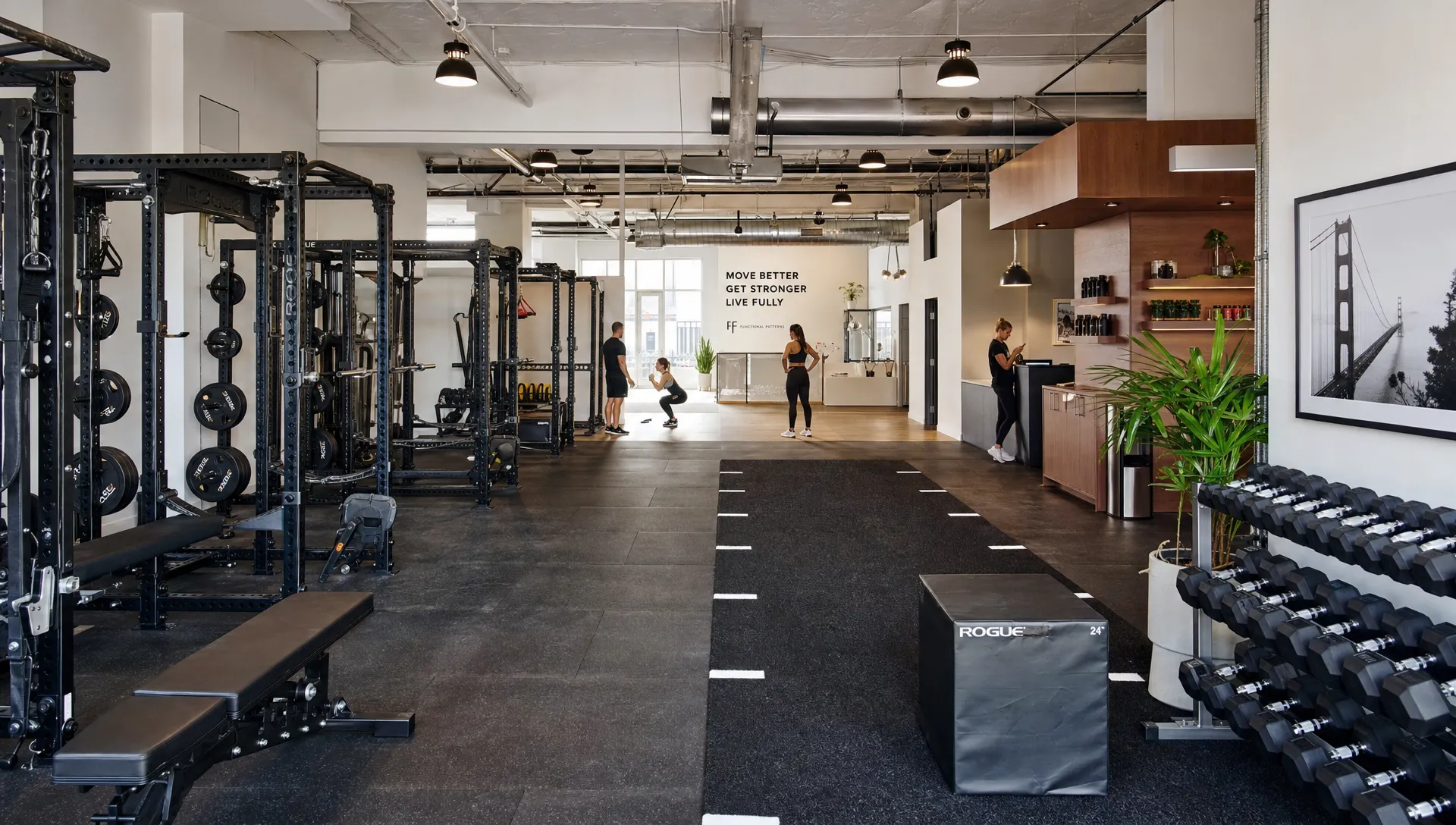


Building muscle has a reputation problem. Many people picture repetitive sets alone on a gym floor, counting down minutes until the workout is over. Strength classes change that experience by adding coaching, structure, energy and variety without abandoning the fundamentals that actually make muscle grow.
The key is design. A good strength class is not random circuit training with loud music. It is a coached resistance training session that uses progressive overload, smart exercise selection and enough recovery to help your body adapt. For busy San Francisco professionals who want results but do not want to become amateur program designers, that combination can be the difference between exercising occasionally and training consistently.
Muscle Growth Does Not Require Monotonous Training
Muscle building depends on a few principles, not on one specific exercise or one perfect routine. Your muscles need enough mechanical tension, enough weekly work and a reason to adapt over time. That can happen with dumbbells, kettlebells, cables, machines, barbells or bodyweight progressions, as long as the program is planned well.
The American College of Sports Medicine outlines this clearly in its progression model for resistance training: strength and hypertrophy improve when training variables like load, volume, exercise selection and rest periods are adjusted over time. In plain English, your workouts need to become gradually more challenging, but they do not need to feel identical every week.
That distinction matters. Boredom usually comes from a lack of engagement, not from strength training itself. When a coach rotates movement variations while keeping the goal consistent, you can train the same muscle groups effectively without repeating the same session endlessly. A squat pattern might show up as a goblet squat one week, a split squat another week and a tempo squat the next. Your legs still receive the stimulus, but your brain gets a new task to solve.
What Makes Strength Classes Effective for Building Muscle
The best strength classes blend the science of resistance training with the practicality of a coached group setting. They give you enough structure to make progress and enough variety to stay interested.
A muscle-building class should include:
- Progressive overload: The workout should create opportunities to increase weight, reps, range of motion, control or density over time.
- Balanced movement patterns: A week of training should cover squatting, hinging, pushing, pulling, carrying and core stability.
- Appropriate intensity: Sets should be challenging enough to create adaptation, not so easy that they become warmups with music.
- Technique coaching: Form cues help you target the intended muscles and reduce wasted effort.
- Recovery built into the plan: Muscle grows between sessions, not during the hardest rep.
In a 2017 meta-analysis in the Journal of Sports Sciences, Brad Schoenfeld and colleagues found a dose-response relationship between weekly resistance training volume and muscle mass gains, meaning more hard sets per muscle group can support more growth up to a point (PubMed). A well-programmed class helps you accumulate that useful work without turning each workout into a long, draining grind.
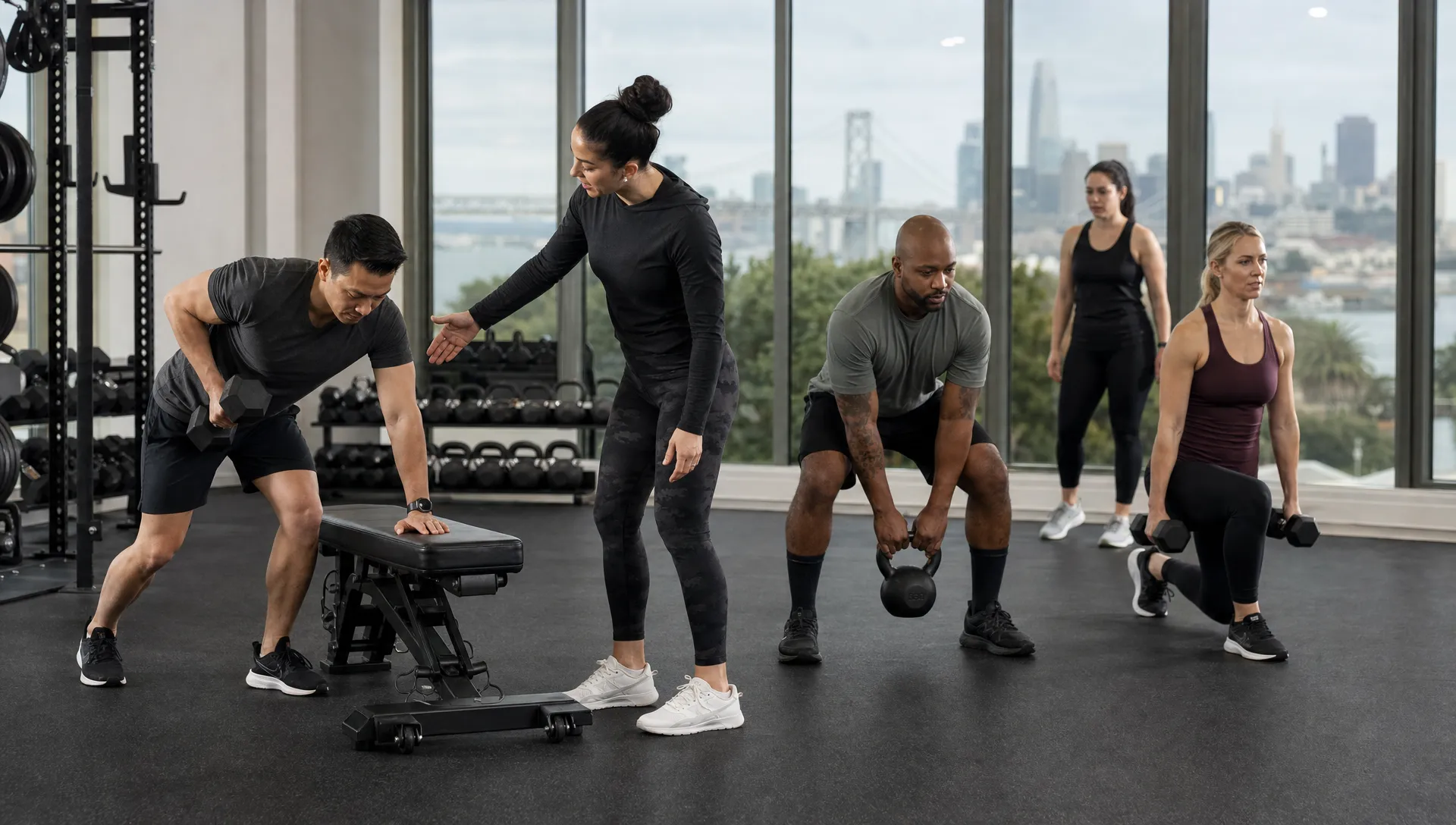
This is where coaching matters. Many people train hard but not effectively. They rush through reps, choose weights that are too light, avoid challenging movements or push every session to exhaustion. A coach can keep the class focused on quality effort, not just sweat.
The same principle applies across health and performance fields: complex skills improve faster when trained with expert guidance and feedback. You can see that multidisciplinary coaching model in settings far beyond fitness, including Bridges Speech Center’s rehabilitation and therapy services, where progress depends on individualized support rather than generic instructions.
Why Classes Feel Less Boring Than Solo Strength Workouts
Solo lifting can work extremely well, but it asks a lot from the person doing it. You have to choose the exercises, remember the plan, monitor form, select the right loads, manage rest periods and motivate yourself after a full workday. For many people, that decision load is the real barrier.
Strength classes remove much of that friction. You show up, the session has a purpose and the coach guides the flow. That matters for time-crunched professionals coming from SoMa, the Financial District or anywhere else in the city where a workout has to fit between meetings, commutes and family obligations.
The social environment also changes the experience. You are still training your own body, but you are not isolated. A class creates a pace, a shared standard and a reason to finish the last set with focus. If consistency is your main challenge, Custom Fit has explored how gym classes help busy adults stay consistent by reducing decision fatigue and turning workouts into scheduled commitments.
Variety helps too, but the right kind of variety matters. Randomness can make a workout entertaining in the short term and ineffective in the long term. Effective classes use planned variation, where the session feels fresh but still supports a larger training goal. That is how you avoid the two common extremes: boring repetition on one side and chaotic workouts on the other.
The Difference Between “Hard” and “Muscle-Building”
A workout can be hard without being ideal for muscle growth. Endless burpees, rushed circuits and minimal rest may leave you exhausted, but exhaustion is not the same as hypertrophy. Muscle-building work requires enough tension on the target muscles and enough control to make each rep productive.
Strength classes that build muscle usually slow things down more than people expect. You may rest longer between challenging sets. You may repeat a movement for several weeks. You may spend time learning how a hip hinge should feel before loading it heavily. These details can feel less flashy than a nonstop sweat session, but they are often what makes the workout work.
That does not mean conditioning has no place. Many people benefit from a mix of strength and cardio, especially when the goal includes health, energy and longevity. The issue is balance. If every class becomes a high-intensity conditioning workout, strength progress may stall because you never create the right strength stimulus or recover enough to adapt.
For people who enjoy kettlebell work, for example, the tool can support both strength and conditioning depending on how it is programmed. Custom Fit’s guide on whether kettlebell classes fit your strength goals explains how the same equipment can be used for power, endurance or muscle-building outcomes.
How Strength Classes Support Longevity and Everyday Performance
Muscle is not only about appearance. It supports glucose control, joint function, posture, bone health and the ability to keep doing normal life well. For professionals who spend long hours at desks, resistance training can counter some of the physical consequences of sitting, including reduced hip strength, poor trunk endurance and upper back weakness.
The health case for strength training is strong. A 2022 systematic review and meta-analysis in the British Journal of Sports Medicine linked muscle-strengthening activities with lower risk of all-cause mortality, cardiovascular disease, total cancer, diabetes and lung cancer (BJSM). The review does not mean more is always better, but it reinforces a practical point: strength work belongs in a long-term health plan.
Classes make that easier because they turn strength into a repeatable weekly habit. You do not have to wait for motivation or reinvent the workout every session. The structure is already there, which is especially useful for people who want the benefits of lifting but do not want fitness to become another full-time project.
This is also why strength classes can appeal to people across ages and goals. A young professional may want more lean muscle and better posture. A physician may want measurable health markers and efficient training. A parent may want the strength to lift, carry and move without aches. An older adult may want to preserve independence. The class format can serve all of those goals when exercises are scaled appropriately.
Tracking Muscle Gain Without Guesswork
If the goal is to build muscle, you need a way to know whether the plan is working. Feeling sore is not a reliable metric. Sweat is not a reliable metric either. Better indicators include performance, body measurements, recovery patterns and body composition over time.
Useful signs that your strength class is moving you in the right direction include:
- You can lift heavier weights with the same technique.
- You can complete more quality reps at a given weight.
- Your clothes fit differently around the shoulders, legs or waist.
- Your energy and posture improve outside the gym.
- Your body composition changes in a way that matches your goals.
This is where testing can add clarity. DEXA scans can help track muscle mass, fat mass and regional body composition changes more objectively than a scale alone. At Custom Fit, DEXA scans are performed by Registered Dietitians or Exercise Physiologists, which matters. Clients are working with professionals who understand nutrition, exercise physiology and body composition, not simply receiving an automated scan report.
That professional interpretation is especially helpful when scale weight is misleading. Someone may gain muscle while losing fat, meaning the scale changes only slightly even though health, shape and performance are improving. A dietitian or exercise physiologist can connect the scan results to training volume, protein intake, recovery and next steps.
Nutrition matters here as much as training. The International Society of Sports Nutrition’s position stand on protein and exercise explains that protein intake supports muscle repair and adaptation when combined with resistance training. For many clients, building muscle is not about adding extreme supplements or complicated meal plans. It is about getting enough total protein, distributing it well through the day and eating enough to support training.
What to Look for in Strength Classes in San Francisco
Not every class labeled “strength” is designed to build muscle. Some are cardio classes with weights. Others are boot camps where the main goal is fatigue. Those may have value, but they are not the same as structured resistance training.
When evaluating strength classes, look for signs of real programming. The coach should be able to explain the purpose of the day’s lifts. The workout should include warmup sets, technique cues and a logical order of exercises. You should have options to scale movements up or down without feeling like you are doing a completely different workout from everyone else.
Class size also matters. If the group is too large for meaningful coaching, your technique may not improve much. Small group settings often offer a useful middle ground: more energy than solo training, but more attention than a packed studio class.
For high-performing San Franciscans, convenience is part of adherence. A class you can actually attend near your workday or commute will beat the perfect program across town that you skip. If you are looking for a data-driven approach that combines training, nutrition, recovery and testing, Custom Fit’s San Francisco wellness studio brings those pieces together in one setting.
How to Get More Muscle-Building Value From Every Class
Once you are in the right class, your habits determine how much progress you get from it. Treat the session like training, not entertainment. That means paying attention to load selection, rep quality and the coach’s feedback.
Choose weights that make the final reps challenging while still allowing control. If you finish every set feeling like you could do ten more reps, you are probably not creating enough stimulus. If your form breaks down early, the load is too heavy or the movement needs adjusting.
Track a few lifts when possible. You do not need an elaborate spreadsheet, but knowing that your split squat, deadlift variation or row is improving gives you useful feedback. It also makes classes more engaging because you start chasing performance, not just completion.
Recovery is the other half. Sleep, protein, hydration and stress management all influence adaptation. Busy professionals often underestimate this because they are used to pushing through fatigue. Strength training rewards effort, but it also rewards readiness. A better recovered body can train harder and adapt faster.
Frequently Asked Questions
Can strength classes really build muscle? Yes, strength classes can build muscle when they include progressive overload, challenging resistance, good technique and enough weekly training volume. The class format itself is not the issue. The quality of the programming is what matters.
Are strength classes better than lifting alone? They can be better for people who need structure, coaching and accountability. Solo lifting works well for self-directed trainees, but classes reduce decision fatigue and make consistency easier.
How many strength classes per week should I take to build muscle? Many people do well with two to four strength sessions per week, depending on training history, recovery, nutrition and goals. Beginners may progress with fewer sessions, while experienced lifters often need more planned volume.
Will strength classes make me bulky? Building large amounts of muscle takes years of progressive training, sufficient calories and consistency. Most people who take strength classes develop a leaner, stronger and more athletic build rather than becoming bulky.
How do I know if a class is strength-focused or just cardio with weights? A strength-focused class uses controlled reps, appropriate rest, progressive loading and technique coaching. A cardio class with weights usually prioritizes nonstop movement, elevated heart rate and fatigue over load progression.
Build Muscle Without Dreading Your Workouts
You do not need to choose between effective training and enjoyable workouts. Well-designed strength classes can build muscle, improve fitness and keep you engaged by combining structure with variety.
If you want a more personalized path, Custom Fit offers personal training, group classes, nutrition coaching, recovery services and advanced testing under one roof. The goal is not just to work harder. It is to train with better information, better coaching and a plan you can actually sustain.