How Personal Coaching Fitness Plans Improve Follow Through
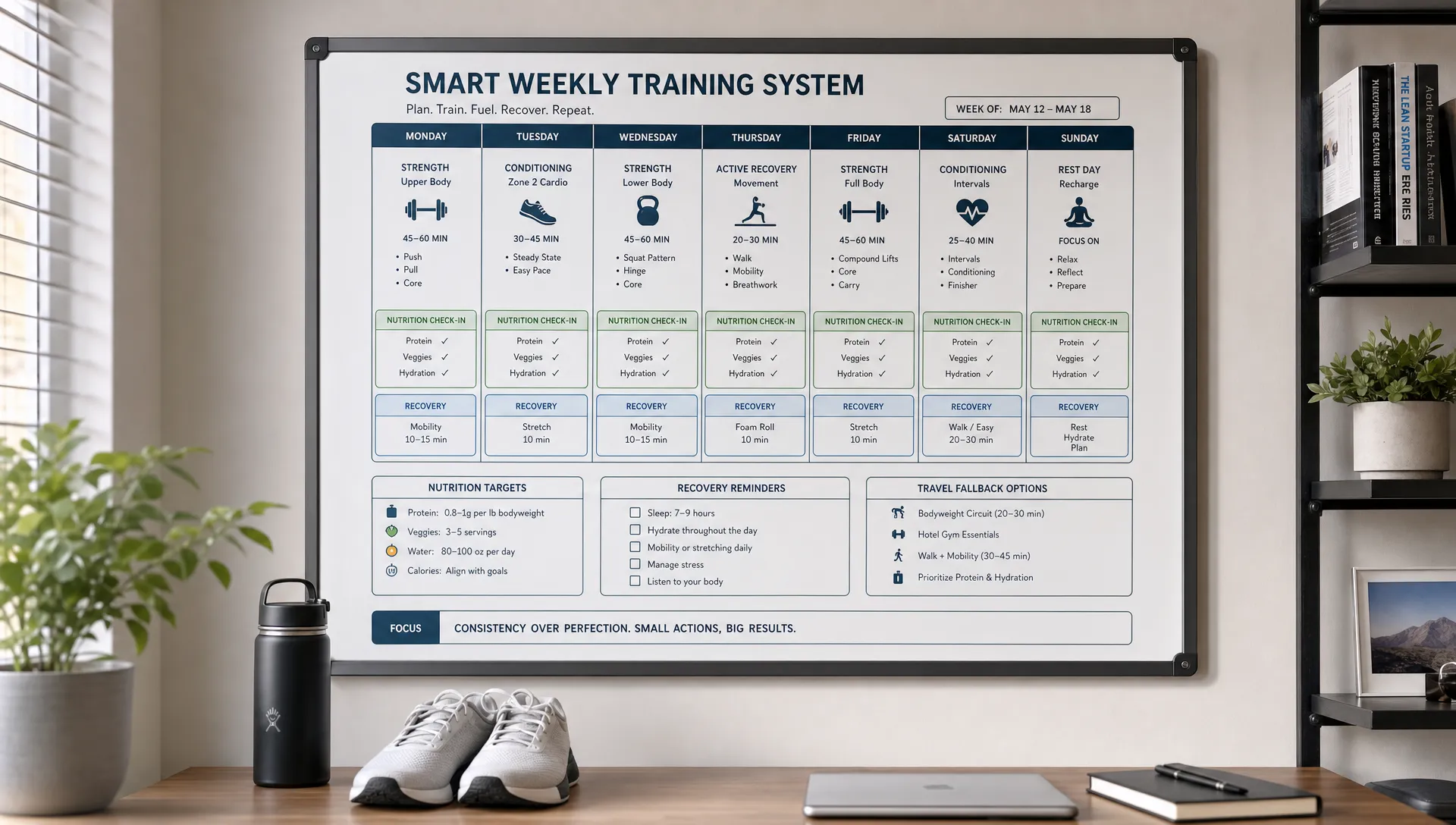


Most people do not abandon fitness because they lack discipline. They abandon it because the plan was not built for their real life.
A generic workout template can look perfect on Sunday night and fall apart by Wednesday afternoon, especially if your week includes client dinners, surgery days, school drop-offs, long commutes, travel, or back-to-back meetings. The real value of a personal coaching fitness plan is not just better exercises. It is better follow-through.
Personal coaching turns fitness from a vague intention into a structured operating system. It helps you know what to do, when to do it, how hard to push, when to recover, and how to adjust when life gets complicated. For busy professionals in San Francisco, that difference often determines whether fitness becomes a short-term project or a long-term habit.
Follow-through is the missing variable in most fitness plans
Most people already know that exercise matters. The Physical Activity Guidelines for Americans recommend at least 150 to 300 minutes of moderate-intensity aerobic activity per week, plus muscle-strengthening activities on two or more days. The gap is rarely awareness. The gap is execution.
That execution gap shows up in predictable ways. You miss one workout, then the next one feels harder to restart. You push too aggressively after a stressful week, get sore, then lose momentum. You follow a nutrition plan for a few days, then a business dinner or travel day breaks the pattern. Soon, the plan feels like another obligation competing for attention.
This is where personal coaching fitness plans improve adherence. They are designed around the person, not just the goal. A strong coach accounts for your baseline fitness, training history, schedule, stress, recovery, injury considerations, preferences, and desired outcomes. Instead of asking, “What is the best workout?” the better question becomes, “What is the best plan you can actually repeat?”
If you want a deeper look at building a plan that fits your actual life, Custom Fit SF has a helpful guide on how to build a personal fitness program you can stick to.
Information helps, but implementation changes outcomes
Health and fitness information is everywhere. General wellness publications, medical sites, podcasts, and health, nutrition, and lifestyle resources like health and fitness guidance can all provide useful ideas. But information alone does not create consistency.
The problem is that advice must be translated into decisions. Should you lift heavy today or do Zone 2 cardio? Should you reduce volume because your sleep was poor? Should you cut calories, add protein, increase steps, or focus on strength first? What should you do when you have only 30 minutes instead of 60?
A coach helps convert general guidance into a specific plan. That matters because follow-through improves when decisions are made in advance. You are not relying on willpower at 6 p.m. after a demanding day. You are following a plan that already anticipated friction.
Personal coaching creates accountability without relying on guilt
Accountability is often misunderstood. It is not about being pressured, shamed, or micromanaged. Good coaching accountability is a feedback system.
A coach helps you notice patterns you might miss on your own. Maybe you train consistently when sessions are scheduled before work, but miss evening workouts. Maybe your strength progress stalls after business travel. Maybe you undereat protein during busy weekdays and overcorrect on weekends. These observations make the plan smarter.
Research supports the role of self-monitoring and feedback in behavior change. A well-known meta-regression published in Health Psychology found that interventions using self-monitoring, especially when combined with other behavior-change techniques, were more effective for improving healthy eating and physical activity behaviors. You can review the PubMed abstract for the study on effective techniques in healthy eating and physical activity interventions.
In practice, this means a coaching plan does not simply ask, “Did you work out?” It asks better questions:
- Did the plan match your calendar this week?
- Were the workouts hard enough to produce adaptation, but not so hard that they disrupted recovery?
- Did your nutrition support the training goal?
- Are your measurements, energy, strength, and recovery trending in the right direction?
- What adjustment would make next week easier to execute?
That kind of accountability reduces all-or-nothing thinking. A missed workout becomes data, not failure.
A coaching plan reduces decision fatigue
Decision fatigue is one of the biggest enemies of follow-through, especially for high-responsibility professionals. If your day is already full of decisions, you are less likely to spend mental energy designing a workout, choosing exercises, calculating intensity, or planning meals.
A personal coaching fitness plan removes unnecessary decisions. You know the training focus for the day. You know the session length. You know the warm-up, main work, and recovery target. If time is short, your coach can help define the minimum effective version of the session so you can still keep the habit alive.
This is especially powerful because consistency is built through repeatable defaults. The plan does not need to be perfect every day. It needs to be clear enough that you can act even when motivation is low.
For example, a busy executive might have three versions of a strength session: a full 60-minute workout, a compressed 40-minute version, and a 20-minute travel fallback. A physician with unpredictable hours might have training blocks organized by energy level rather than rigid days of the week. A parent might use recurring appointment slots and shorter sessions that preserve consistency without requiring a total schedule overhaul.
The more the plan fits your reality, the less discipline it requires.
Personalization makes the plan feel relevant
People follow plans more consistently when the plan feels connected to what they actually care about. “Get in shape” is vague. “Increase lean mass, improve VO2 max, reduce visceral fat, and feel strong enough for weekend skiing” is much more actionable.
This is one reason assessment matters. A personal coaching plan can be built from baseline data such as movement quality, strength levels, aerobic capacity, body composition, training age, recovery habits, and nutrition patterns. At Custom Fit SF, available services include personal training, nutrition coaching, DEXA scans, VO2 max testing, recovery programs, and longevity testing, which can help make a plan more specific when those tools are appropriate for the client.
That specificity improves follow-through because progress becomes visible in multiple ways. The scale is only one metric, and often not the best one. A client may be losing fat while gaining lean mass, improving aerobic capacity, lifting more weight, sleeping better, or recovering faster between sessions.
When progress is measured more intelligently, motivation becomes less fragile.
The best coaching plans build a repeatable feedback loop
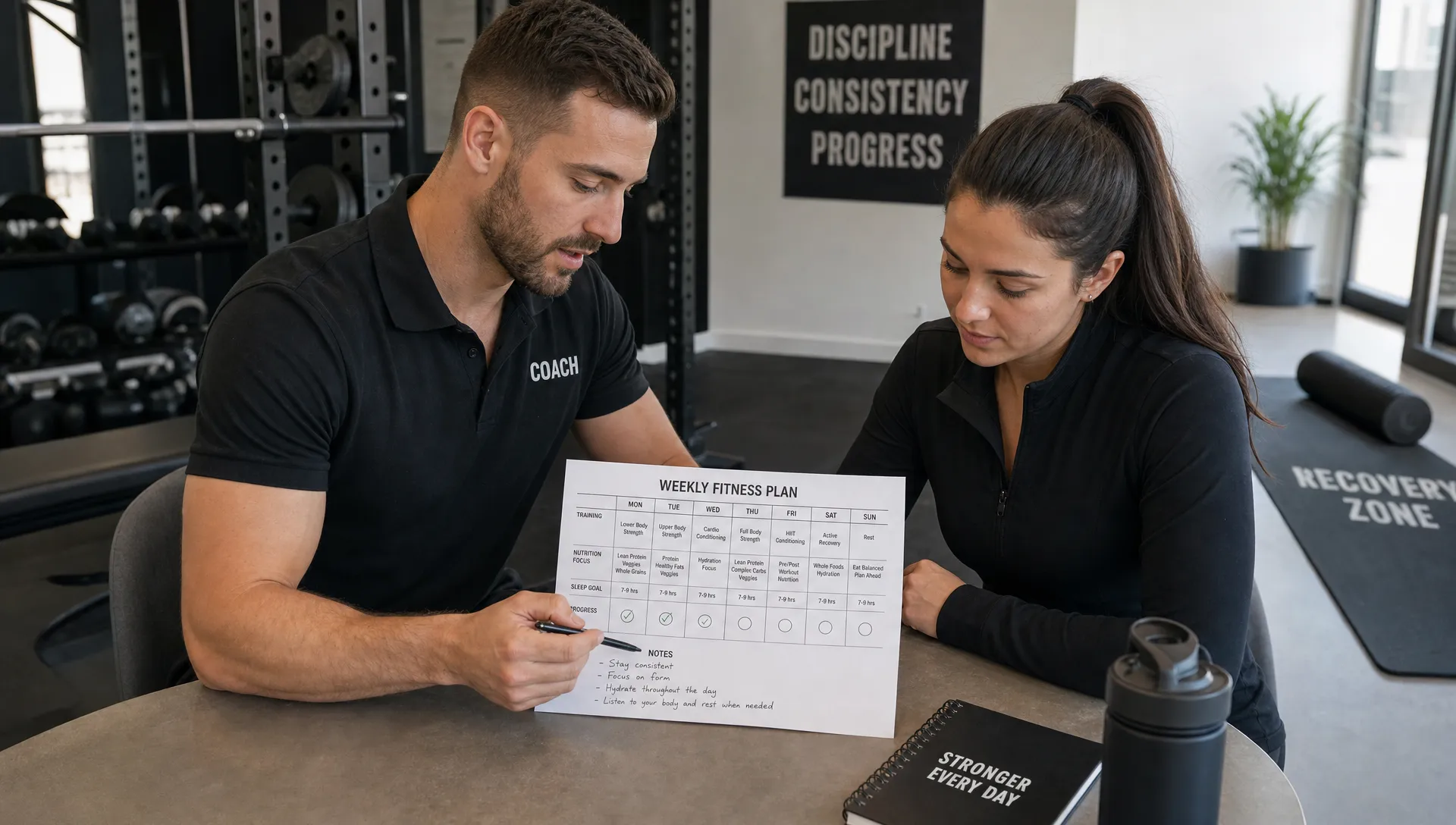
A fitness plan should not be static. Your body adapts, your schedule changes, and your goals evolve. Personal coaching improves follow-through by creating a loop that keeps the plan current.
A simple coaching loop looks like this:
- Assess your starting point and define the outcome that matters most.
- Plan training, nutrition, and recovery around your schedule.
- Execute the plan with coaching support and clear expectations.
- Review performance, consistency, energy, and measurable progress.
- Adjust the next block based on what the data and your life are showing.
This loop is one of the reasons a well-designed personal training package should include more than workouts. It should include assessment, goal-setting, progression, communication, and a way to measure results. If you are comparing options, it is worth reviewing what should be included in a personal training package before you commit.
Without review and adjustment, even a good plan can become outdated. With coaching, the plan can evolve before frustration builds.
Coaching helps you train at the right dose
Many people fail to follow through because their plan is either too aggressive or too vague.
If the plan is too aggressive, it creates soreness, fatigue, schedule disruption, or injury risk. If it is too vague, it does not create enough progress to stay motivating. Personal coaching helps find the productive middle, enough challenge to drive adaptation, with enough recovery to keep you coming back.
This is especially important for strength training and metabolic fitness. Progress depends on applying the right stimulus repeatedly over time. Too little stimulus and nothing changes. Too much stimulus and recovery breaks down. Coaching helps manage variables like volume, intensity, exercise selection, progression, rest periods, and deloads.
It also helps prevent the common mistake of treating every workout like a test. Not every session should be maximal. Some sessions build skill, some build capacity, some build strength, and some support recovery. When clients understand the purpose of each session, they are more likely to follow the plan instead of chasing random intensity.
Nutrition and recovery make follow-through easier
A workout plan is harder to follow when nutrition and recovery are ignored. If you are under-fueled, underslept, dehydrated, or chronically stressed, even a well-written training plan can feel impossible.
This is why personal coaching fitness plans often work best when training is connected to nutrition and recovery. A coach or registered dietitian can help align eating patterns with the goal, whether that goal is fat loss, muscle gain, better energy, metabolic health, or performance. Recovery planning can support sleep, mobility, soreness management, and readiness for the next session.
This integrated approach matters because your body does not separate training, food, sleep, and stress into different departments. They interact constantly. A hard workout after four hours of sleep is not the same as a hard workout after a full night of rest. A calorie deficit during a high-stress workweek feels different than a calorie deficit during a stable week.
Custom Fit SF has also written about why wellness and fitness work best as one plan, which is a useful lens for anyone who wants results that last beyond a short challenge.
Why busy San Francisco professionals benefit from coaching structure
San Francisco professionals often operate in high-pressure environments. Long workdays, commute variability, client obligations, travel, and intense cognitive demands can make fitness inconsistent. The issue is not laziness. It is competing priorities.
Personal coaching helps protect fitness from being treated as optional. Sessions become scheduled commitments. Training blocks are designed around known constraints. Nutrition strategies account for restaurants, meetings, and travel. Recovery is treated as part of performance, not an afterthought.
For physicians, founders, attorneys, executives, and finance professionals, this can be especially valuable. Their work often rewards intensity, but fitness rewards consistency. A coach helps translate ambition into sustainable behavior.
For concierge medicine practices, longevity clinics, and employee benefits leaders, the same principle applies at a program level. People are more likely to engage when wellness feels personalized, measurable, and supported. Testing can identify a starting point, but coaching helps turn those insights into action.
How to choose a personal coaching fitness plan that improves follow-through
Not every coaching plan is equally effective. If your main goal is consistency, look for a plan that is built around adherence, not just intensity.
A strong plan should include:
- A meaningful intake process that covers goals, schedule, training history, injuries, nutrition, sleep, and stress.
- Baseline measurements that match the goal, such as strength, movement, body composition, aerobic capacity, or other relevant markers.
- A realistic weekly structure that includes full sessions and fallback options for busy days.
- Clear progression so workouts change for a reason, not randomly.
- Nutrition and recovery guidance when those factors are limiting progress.
- Regular check-ins so the plan can be adjusted before motivation drops.
- A coaching relationship that feels supportive, professional, and specific to you.
The best question to ask is not, “Will this plan challenge me?” It should. The better question is, “Can I see myself following this plan during a normal, imperfect week?”
If the answer is yes, follow-through becomes much more likely.
Frequently Asked Questions
Is personal coaching fitness only for beginners? No. Beginners benefit from structure and technique, but experienced exercisers also benefit from better programming, objective feedback, testing, and accountability. Coaching is useful whenever you want a plan that adapts to your goals and constraints.
How often should I meet with a personal coach? It depends on your goals, baseline fitness, schedule, and how much support you need. Some people benefit from multiple coached sessions per week, while others use coaching for programming, periodic assessments, and accountability. The right cadence is the one that improves consistency without overwhelming your schedule.
Does a personal coaching fitness plan include nutrition? It can, and for many goals it should. Training results are strongly influenced by protein intake, total energy intake, meal timing, hydration, and recovery. When nutrition is a limiting factor, working with a qualified nutrition coach or registered dietitian can improve follow-through and results.
How long does it take to improve follow-through? Many people notice better consistency within the first few weeks because appointments, structure, and clear expectations reduce friction. Physical results vary by goal, but the first win is often behavioral: fewer missed sessions and less guesswork.
What should be tracked in a coaching plan? Useful metrics may include workout completion, strength progress, cardio capacity, body composition, sleep, energy, soreness, nutrition habits, and recovery. The best metrics are the ones that connect directly to your goal and help your coach make better decisions.
Ready to make fitness easier to follow?
A plan you can follow beats a perfect plan you abandon. Personal coaching fitness works because it combines structure, accountability, data, and adaptation into one practical system.
If you want a fitness plan built around your real schedule, goals, and health markers, Custom Fit SF offers personal training, nutrition coaching, recovery services, DEXA scans, VO2 max testing, longevity testing, memberships, and group classes in San Francisco. The right plan should not just help you start. It should help you keep going.