How Many Personal Training Sessions Do You Really Need?
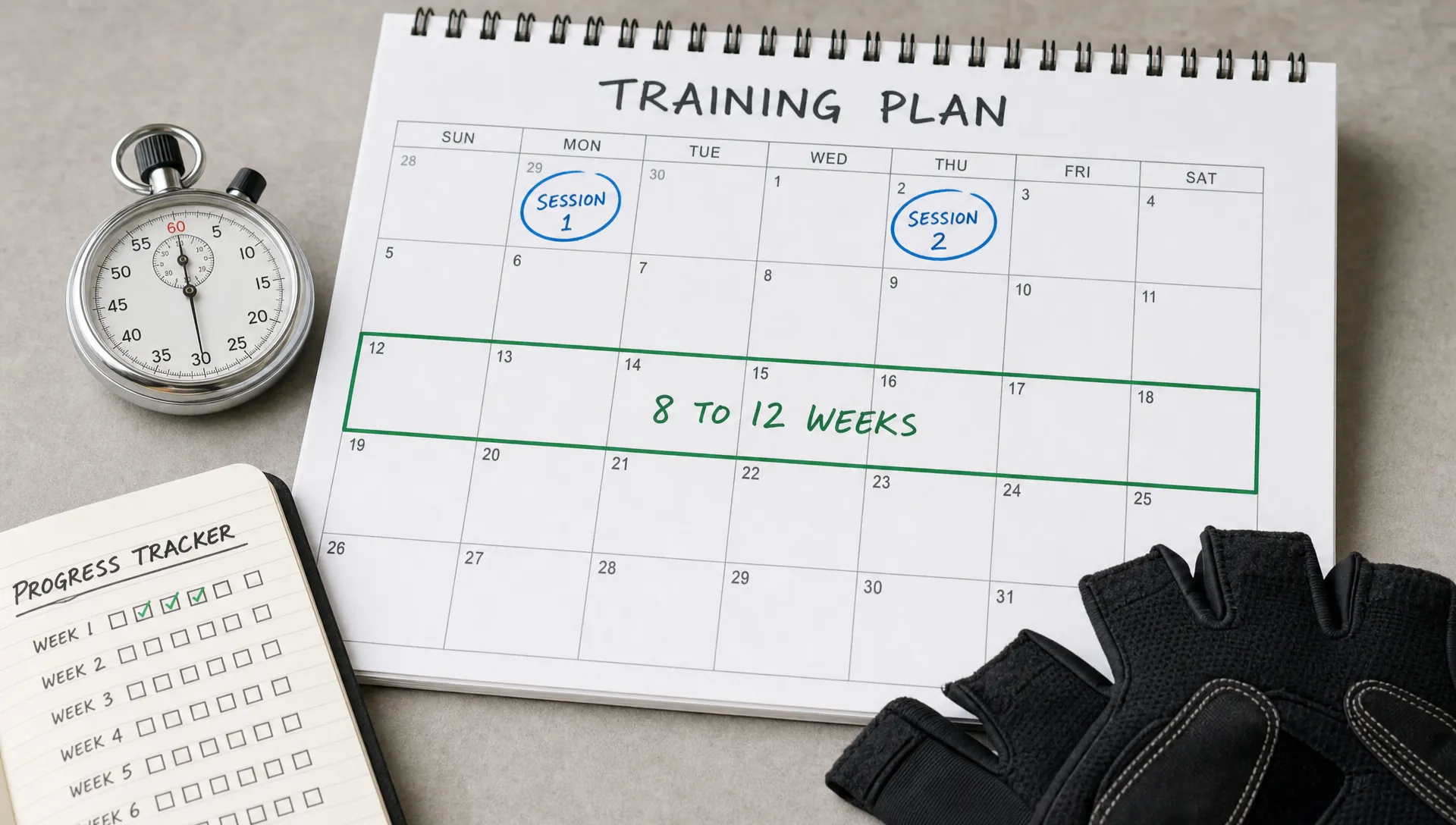


The honest answer is that most people do not need a trainer forever, but they do need enough coaching to build skill, consistency, and measurable momentum. For many adults, a strong starting point is two personal training sessions per week for 8 to 12 weeks, paired with realistic workouts on the other days.
That said, the right number depends on your goal, training history, injury history, schedule, sleep, stress, nutrition, and how much accountability you want. A busy San Francisco executive trying to regain strength after years of desk work may need a different cadence than a recreational athlete preparing for a race or a physician who already trains consistently but wants better body composition data.
A practical way to think about it is this: the fewer sessions you do, the more independent and consistent you must be between appointments. The more ambitious your goal or the less experience you have, the more useful frequent coaching becomes.
The quick answer: start with the outcome, then choose the session count
If you are new to structured training, returning after time off, or dealing with a packed calendar, one or two random sessions will rarely change much. They can be useful for orientation, but they usually are not enough to create a repeatable system.
Here is a realistic starting framework:
- 1 to 4 sessions: Best for an assessment, technique review, or a short-term plan refresh, but not enough for major body composition or strength changes.
- 6 to 8 sessions: Enough to learn foundational movements, understand your program, and build early confidence.
- 8 to 12 sessions: A strong minimum for most beginners who want visible progress, better consistency, and measurable fitness improvements.
- 12 to 24 sessions: Often appropriate for strength gain, fat loss, performance goals, or rebuilding a routine after a long layoff.
- Ongoing weekly sessions: Best for people who value accountability, complex programming, technique refinement, or a high-touch wellness strategy.
The goal is not simply to buy workouts. The goal is to build a repeatable process that you can sustain when work gets busy, travel interrupts your week, or motivation dips.
Think in phases instead of chasing a perfect number
The question is not only how many personal training sessions you need. It is also when you need them most.
Phase 1: Assessment and strategy
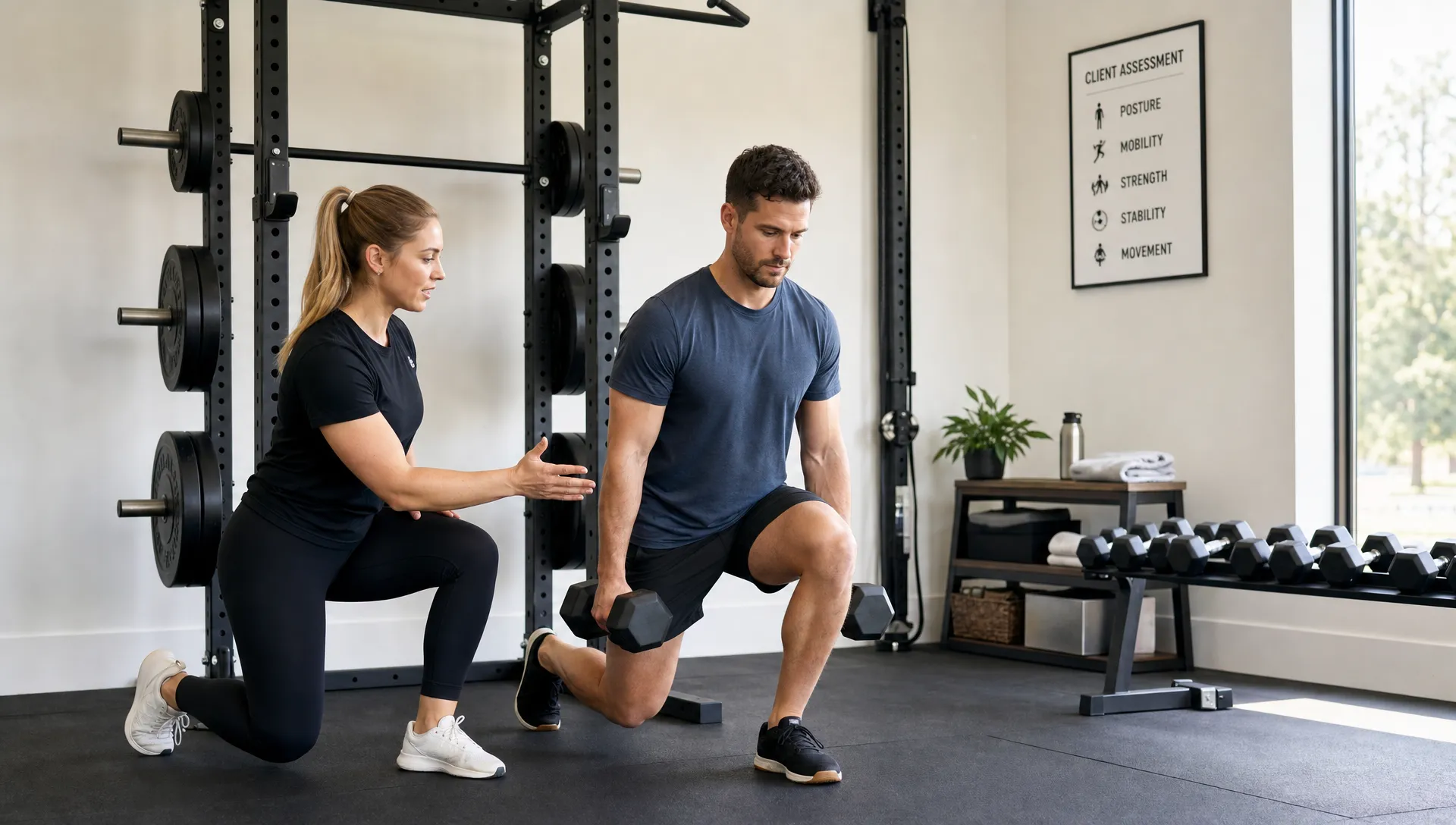
Your first one or two sessions should clarify what you are training for, what your body can currently tolerate, and what needs to be measured. A smart coach should look beyond exercises and ask about schedule, stress, sleep, health history, prior injuries, nutrition, and baseline fitness.
This is where data matters. Body composition, movement quality, resting metrics, strength benchmarks, and conditioning markers help prevent guesswork. If you want a deeper look at what belongs in the beginning of the process, Custom Fit has a helpful guide on what a gym fitness trainer should measure first.
Phase 2: Skill building and habit formation
For the first four to six weeks, most people benefit from more frequent coaching. Two sessions per week is often the sweet spot because it provides enough repetition for technique, progression, and accountability without overwhelming the schedule.
Three sessions per week can be useful if you are a beginner who wants faster skill acquisition, you have a specific deadline, or you know you will not train effectively alone. One session per week can work, but only if you are willing to complete independent workouts with good effort and consistency.
Phase 3: Progressive training
Once you understand the movements and your coach knows how you respond, the work becomes more strategic. This is where progressive overload, recovery, nutrition, and adherence matter more than novelty.
At this stage, you might continue with two sessions per week, scale to one session per week, or use a hybrid model with personal training, independent workouts, and group classes. The right choice depends on whether your results are still moving.
Phase 4: Maintenance or performance
After 12 weeks, many clients have enough confidence to reduce their frequency. Others keep weekly or twice-weekly sessions because the return on time is high. For demanding professionals, the value is often not only exercise instruction. It is also having someone adjust the plan before travel, manage fatigue, and keep training aligned with the rest of life.
Match your personal training sessions to your goal
If your goal is general fitness
For general health, one to two personal training sessions per week is usually enough if you are also walking, doing cardio, or completing short independent workouts. Your trainer can teach efficient full-body strength sessions, help you avoid common technique mistakes, and keep your program realistic.
The Physical Activity Guidelines for Americans recommend that adults get 150 to 300 minutes of moderate-intensity aerobic activity per week, or 75 to 150 minutes of vigorous activity, plus muscle-strengthening activities on two or more days per week. A trainer can help translate those guidelines into a schedule that works in real life.
If your goal is strength or muscle gain
Most strength-focused clients do well with two to three coached sessions per week, especially in the first 8 to 12 weeks. Technique matters, and small errors in squats, deadlifts, pressing, or pulling can limit progress or create unnecessary irritation.
Frequency also depends on training volume. A meta-analysis on resistance training frequency and hypertrophy found that training frequency can influence muscle growth largely through how it distributes weekly volume, rather than because more days are automatically better in isolation. In plain English, your weekly plan needs enough high-quality work, and it needs to be recoverable.
If strength is your main priority, it is worth reading why a personal trainer for strength training can help results happen faster, especially when programming and form are limiting factors.
If your goal is fat loss or body composition change
For fat loss, two to three sessions per week can be extremely helpful, but training is only one part of the equation. Nutrition, daily movement, sleep, alcohol intake, stress, and consistency determine whether the plan works.
The American College of Sports Medicine has noted that greater amounts of physical activity are often needed for clinically significant weight loss and weight-loss maintenance, but exercise programming should be paired with sustainable nutrition and behavior change. This is where personal training plus nutrition coaching can be more effective than workouts alone.
For body composition goals, objective data helps. DEXA scans can show changes in lean mass and fat mass that the scale may hide. That matters because a client gaining muscle and losing fat may not see dramatic scale movement, even when the plan is working.
If your goal is longevity or performance
Longevity-focused training usually requires a broader lens. Strength, power, balance, mobility, aerobic capacity, and recovery all matter. If you are using tools like VO2 max testing, DEXA scans, and nutrition coaching, the number of sessions should support the data, not replace it.
A client with low aerobic capacity may need a different weekly plan than someone with solid cardio but low lean mass. A client with high work stress may need more recovery-focused programming than someone sleeping eight hours per night. For longevity goals, the best session count is the one that improves the right metrics without creating burnout.
What research says about supervision and results
Research does not give a universal number of sessions because people vary too much. It does, however, support a few principles that matter when deciding how much coaching you need.
First, supervision can improve training quality. A study comparing supervised, periodized training with self-directed training in health club members found that the supervised group achieved better improvements in several fitness outcomes over 12 weeks. That does not mean everyone needs constant supervision, but it does suggest that expert programming and feedback can make the same time in the gym more productive.
Second, consistency beats intensity spikes. Many people overestimate what they can sustain for two weeks and underestimate what they can accomplish in three months. If two sessions per week keeps you consistent for 12 weeks, it is usually better than three sessions per week that you abandon after week three.
Third, progression needs feedback. You need enough load, volume, and effort to adapt, but not so much that recovery suffers. This is one reason data-driven coaching is valuable. When your program is adjusted based on performance, sleep, body composition, soreness, and energy, your session count becomes part of a larger strategy rather than a fixed rule.
When you probably need more sessions
You may need more personal training sessions if your current plan is not producing progress or if your schedule is too chaotic to train effectively alone.
Common signs include repeated missed workouts, uncertainty about what to do in the gym, stalled strength numbers, poor exercise technique, recurring aches, inconsistent nutrition, or a pattern of restarting every few months. More frequent coaching can also help if you are training for a deadline, such as a wedding, a major trip, a medical goal, or a performance event.
Some people also benefit from external milestones. A visible reminder, whether it is a calendar streak, new training gear, or a durable everyday accessory like minimalist stainless steel jewelry from LUMOIR Jewelry, can reinforce identity change. The object itself is not the strategy, but a meaningful cue can help you remember that your routine is becoming part of who you are.
When you can scale back
You can likely reduce session frequency when your habits are stable, your technique is solid, and your results are still trending in the right direction. Scaling back does not mean stopping support. It may mean moving from twice weekly to once weekly, or from weekly sessions to periodic check-ins.
Good signs include completing independent workouts without confusion, understanding your warm-ups and progressions, recovering well, maintaining nutrition habits, and feeling confident adjusting around travel or work obligations.
For many clients, the best long-term model is seasonal. You might train more frequently during a focused 8 to 12 week block, then scale back during maintenance. Later, you can increase sessions again when a new goal appears.
Three realistic session plans
The busy professional rebuilding fitness
Start with two sessions per week for 8 weeks. Use the sessions to learn full-body strength training, improve movement quality, and build a schedule that survives demanding workdays. Add one or two short independent cardio or mobility sessions between appointments.
After 8 weeks, review progress. If consistency is strong, reduce to one session per week. If work stress is still disrupting the routine, stay at two sessions until the habit is automatic.
The strength-focused client
Start with two to three sessions per week for 12 weeks. Use coaching time to refine form, manage progressive overload, and build confidence with heavier lifts. If you train independently, your coach can assign accessory work and conditioning that supports the main lifts without interfering with recovery.
After 12 weeks, decide whether you need ongoing technique feedback or simply updated programming. Some lifters continue weekly coaching because it keeps effort high and prevents drift.
The body composition client
Start with two sessions per week plus nutrition support. If available, use objective assessments such as DEXA scans to measure fat mass and lean mass rather than relying only on the scale. This approach helps you see whether weight changes are coming from the right places.
After the first 8 to 12 weeks, adjust based on adherence and data. If training is consistent but nutrition is off, adding more sessions may not solve the problem. If nutrition is strong but training lacks intensity, more coaching may help.
How to decide your number before you commit
Before choosing a package or schedule, ask yourself what problem you are really trying to solve. Is it lack of knowledge, lack of accountability, lack of time, lack of measurable progress, or lack of a complete plan?
If you simply need exercise ideas, a few sessions may be enough. If you need a full system, you will likely need at least 8 to 12 sessions. If you want a high-touch approach that combines personal training, nutrition, testing, and recovery, ongoing coaching may be the highest-value option.
This is where Custom Fit’s approach is different from generic workouts. With data-driven personal training in San Francisco, the goal is to match your plan to your baseline, your schedule, and your measurable progress, not to force everyone into the same cadence.
Frequently Asked Questions
Is one personal training session per week enough? Yes, one session per week can be enough if you are consistent between sessions and already have some training experience. Beginners often progress faster with two sessions per week at the start because they get more practice, feedback, and accountability.
How long should I work with a personal trainer before seeing results? Many people feel better within two to four weeks, especially in energy, confidence, and movement quality. Visible strength or body composition changes usually require 8 to 12 weeks of consistent training, nutrition, and recovery.
Do I need personal training sessions forever? Not necessarily. Some people use personal training to learn, build momentum, and then transition to independent workouts. Others continue because they value accountability, expert programming, and efficient use of time.
Are two or three sessions per week better for weight loss? Two or three sessions per week can both work, but weight loss depends heavily on nutrition, daily activity, sleep, and consistency. If nutrition is not aligned, simply adding more workouts may not produce the result you want.
What should my first personal training session include? A strong first session should include goals, health history, movement assessment, baseline measurements, discussion of schedule and constraints, and a clear plan for what happens next.
Find the right number for your body, schedule, and goals
The best number of personal training sessions is the number that gets you moving consistently, progressing safely, and measuring what matters. For most people, that means starting with two sessions per week for 8 to 12 weeks, then adjusting based on results.
At Custom Fit SF, personal training can be paired with nutrition coaching, DEXA scans, VO2 max testing, recovery programs, and expert guidance, so your plan is built around real data instead of guesswork. If you are ready to train with more clarity, start by finding the cadence that fits your life and your goals.