How Gym Memberships With Personal Trainers Actually Work
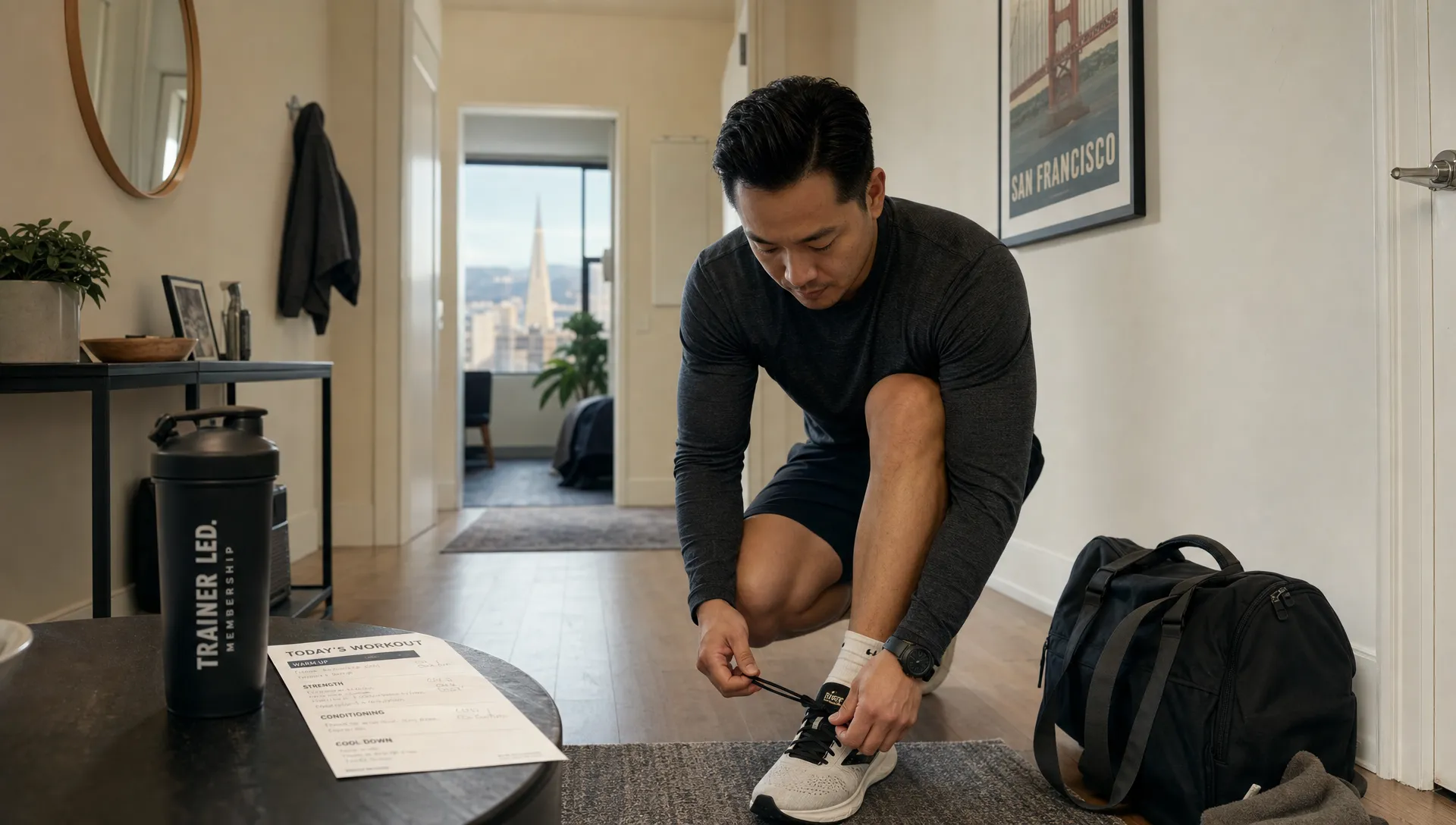


A gym membership with personal trainer access is not just a regular gym pass with a few coaching sessions added on. At its best, it is a structured fitness relationship: you get access to the facility, scheduled coaching, a plan for what to do between sessions and a way to measure whether your body is actually changing.
That matters because most people do not fail from lack of information. They fail because their week is crowded, their workouts are inconsistent or their plan does not adapt when travel, stress, soreness or plateaus show up. A coach-led membership is designed to remove as many of those decisions as possible.
What a gym membership with personal trainer actually includes
The membership side usually covers the right to use the gym, equipment, locker rooms and sometimes recovery amenities or group classes. The personal training side covers scheduled time with a coach who evaluates your goals, teaches technique, manages progression and helps you stay accountable.
The best versions make those two parts work together. Instead of treating training as an occasional add-on, the coach uses your membership access to build a week that includes supervised sessions, independent workouts and recovery days. If you travel, your trainer may adjust the week. If your schedule gets compressed, the plan can shift without losing the larger direction.
A gym membership with personal trainer support also changes the gym experience itself. You are not walking into a room full of equipment and guessing whether today should be strength, intervals, mobility or cardio. You are following a plan that someone qualified has built around your body, your goals and your available time.
The onboarding process: from goals to baseline data
Most coach-led memberships start with a conversation before the first workout. A trainer will ask about your training history, injuries, medications or health limitations, schedule, sleep, nutrition patterns and what success would look like. For one person, success may mean losing visceral fat. For another, it may mean gaining muscle, improving VO2 max or staying strong enough to ski, run and travel without pain.
A good gym will not jump straight into hard training without context. The first phase may include movement screening, strength baselines, cardiovascular testing or body composition assessment. The goal is not to judge your starting point. It is to choose the right starting load, movement variations and weekly rhythm.
For the client, a gym membership with personal trainer access should feel more like a professional assessment than a sales tour. The trainer is learning what your body can do now, what it tolerates well and what needs to improve before intensity increases.
Where DEXA, VO2 max and body composition fit
Some memberships include or offer advanced testing such as DEXA scans and VO2 max testing. DEXA can help estimate body fat, lean mass, bone density and fat distribution, including visceral fat. VO2 max testing helps assess aerobic capacity, which is relevant for performance, longevity and metabolic health.
DEXA is widely used in clinical and research settings for body composition assessment, with medical references such as StatPearls on dual-energy X-ray absorptiometry explaining how the technology is used. The important part is interpretation. A scan is most useful when a professional can connect the numbers to training, nutrition and recovery decisions.
At Custom Fit, DEXA scans are performed by Registered Dietitians or Exercise Physiologists. That means clients are working with professionals who understand nutrition, exercise physiology and body composition, not simply receiving an automated scan report with no context.
A gym membership with personal trainer support becomes more precise when testing is used this way. If your lean mass is not increasing despite consistent training, nutrition may need adjustment. If visceral fat is trending down but scale weight is stable, the plan may be working better than the bathroom scale suggests.
What happens during a typical training week
Your weekly structure depends on your goals and membership type, but most personal training memberships combine coached sessions with independent work. Coached sessions are where technique, progression and accountability are strongest. Independent sessions help you build volume and consistency without needing a trainer beside you every time you exercise.
A strength-focused week might include two personal training sessions, one independent lift and one or two cardio or mobility sessions. A fat loss or metabolic health plan may include resistance training, zone two cardio, nutrition targets and recovery habits. Someone preparing for an event may have a more performance-specific split.
A gym membership with personal trainer support should make the week easier to execute, not more complicated. If you are a busy professional, the real value is often that someone else has already decided what belongs in the program, how hard it should be and when to change it.
The American College of Sports Medicine position stand on progression models in resistance training highlights the importance of manipulating variables such as load, volume, rest and frequency over time. In plain English, workouts need to progress intelligently. Random hard workouts may make you tired, but they do not always produce better results.
How membership pricing and commitments are usually structured
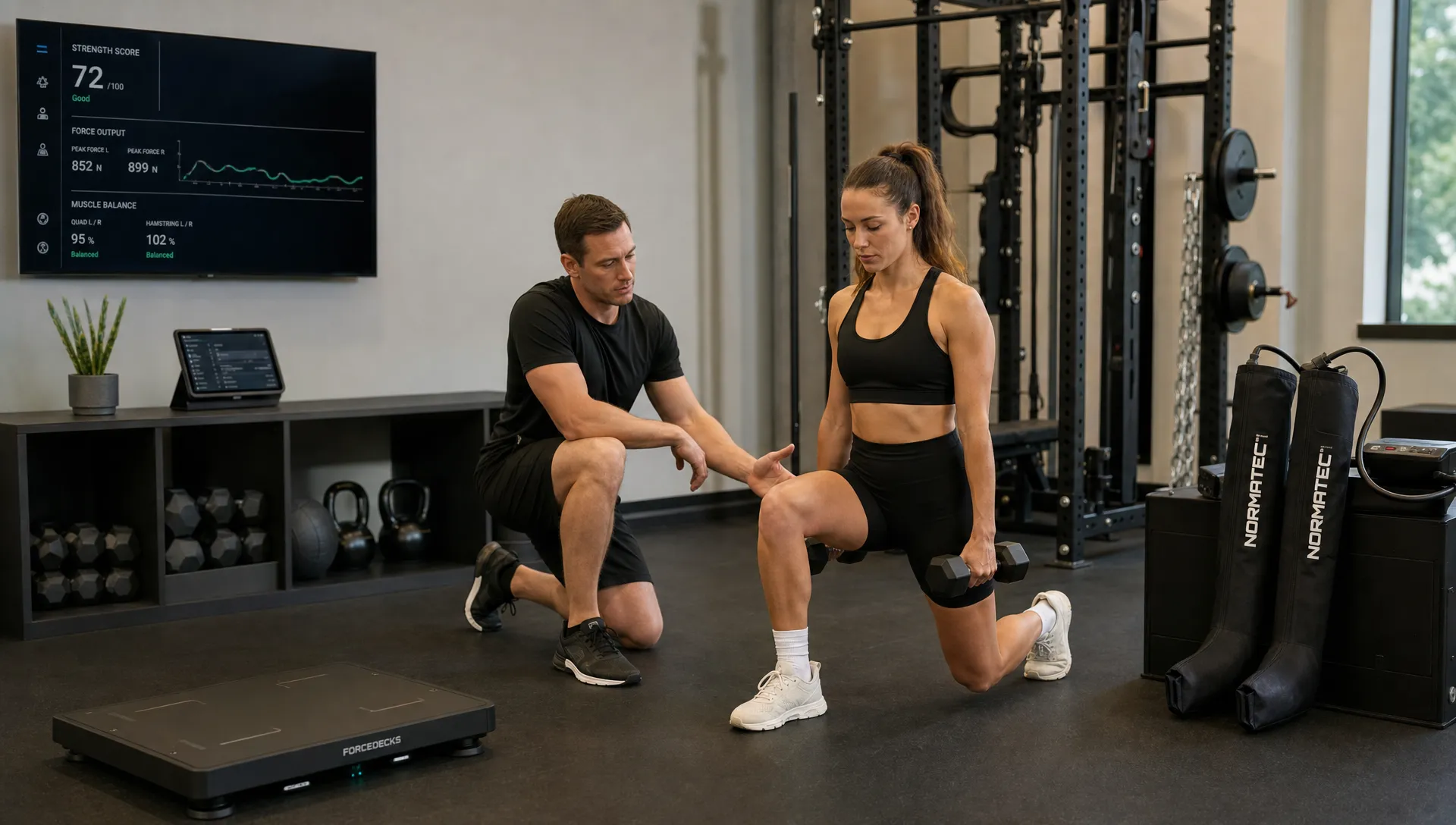
Pricing varies widely because not all memberships include the same level of coaching, testing or facility access. Some gyms sell open gym access separately, then sell personal training in packages. Others bundle a certain number of training sessions into a monthly membership. Premium studios may combine training, nutrition coaching, body composition testing and recovery services.
You should understand what is included before comparing prices. A cheaper membership may include little more than equipment access. A higher-priced membership may include coaching, program design, check-ins, testing and professional interpretation. Those are not the same product.
| Membership model | How it usually works | Best fit | What to clarify |
|---|---|---|---|
| Open gym plus training package | You pay for gym access and buy sessions separately | People who mostly train independently | Whether sessions expire and how programming works between sessions |
| Monthly training membership | Coaching sessions are bundled into a recurring plan | Busy clients who want structure | How many sessions, what happens if you travel and how progress is tracked |
| Semi-private or small group training | A coach trains a small number of clients at once | People who want coaching at a lower cost than private training | How individualized the exercises and progressions are |
| Integrated wellness membership | Training is combined with nutrition, testing or recovery services | Clients focused on body composition, performance or longevity | Which professionals interpret the data and how often the plan is updated |
The value of a gym membership with personal trainer access depends less on the number of perks and more on whether the service changes your behavior. If it gets you training consistently, lifting safely, eating in alignment with your goals and measuring the right outcomes, it can be worth more than a larger gym you rarely use.
If you are deciding whether the commitment fits your life, Custom Fit has a deeper breakdown of when a personal training membership is worth the commitment.
What your trainer does outside the session
A common misconception is that you are only paying for the hour you spend with the trainer. In a well-run coaching model, the trainer is also planning progressions, reviewing your response to sessions, adjusting workouts, coordinating around soreness or injury history and keeping the broader goal in view.
Coaching can provide a structure for planning, completing and reviewing your training, so you do not have to manage every part of the process alone.
For many San Francisco professionals, a gym membership with personal trainer support is valuable because it reduces decision fatigue. You still do the work, but you do not have to reinvent the plan every Sunday night or wonder if your workouts are aligned with your goals.
How nutrition coaching changes the outcome
Training creates the stimulus, but nutrition strongly affects the adaptation. If you want to gain muscle, lose fat or improve metabolic markers, your food intake has to support that goal. This is especially true for clients who train hard but under-eat protein, skip meals during workdays or rely on restaurant meals several nights per week.
Nutrition coaching can include meal structure, protein targets, hydration habits, alcohol awareness, travel strategies and interpretation of body composition trends. It should not be a generic meal plan handed to everyone. A founder working late, a physician between patient blocks and a parent training before school drop-off may all need different strategies.
Custom Fit offers nutrition coaching and works with Registered Dietitians. That matters because advice about fat loss, muscle gain and metabolic health should be grounded in physiology, not trends. The Physical Activity Guidelines for Americans also emphasize combining aerobic activity with muscle-strengthening work, which is easier to sustain when training and nutrition are planned together.
If you want more context on how coaching complements broader exercise habits, this article on how fitness and personal training work better together explains the relationship in more depth.
What to ask before joining
A gym membership with personal trainer access works best when expectations are clear from the start. Before you sign, ask how the gym assesses new clients, who builds the program, how progress is measured and what happens if your schedule changes.
Useful questions include:
- Who will be my trainer, and what credentials or experience do they have?
- Is my program individualized or based on a template?
- How often will my plan be updated?
- What data do you track besides weight?
- Are nutrition coaching, DEXA, VO2 max testing or recovery services available?
- How do cancellations, travel weeks and missed sessions work?
- Will I have workouts to do on days when I am not with my trainer?
The answers will tell you whether the membership is built around coaching or simply selling sessions. If privacy, assessment quality and a quieter training environment matter to you, Custom Fit's guide to what to look for in a private training gym can help you compare options.
Who this model is best for
Coach-led memberships are especially useful for people who have clear goals but limited time. That includes executives, physicians, attorneys, parents, founders and anyone who has tried to stay consistent with a standard gym membership but keeps losing momentum.
They also work well for people who want objective feedback. If you are tracking body fat, muscle mass, visceral fat, VO2 max or strength, you need someone to interpret changes and adjust the plan. A normal scale cannot tell the full story, and a random workout plan cannot explain why progress stalled.
Concierge medicine practices, longevity clinics and employee benefits managers may also look for training environments that can support measurable health outcomes. In that setting, the quality of testing, coaching communication and professional interpretation matters as much as the facility.
Common misconceptions about trainer-led memberships
One misconception is that you need to be fit before joining. In reality, a well-designed membership should meet you at your current level. The starting point may be mobility, basic strength, walking consistency or learning how to hinge and squat safely.
Another misconception is that more sessions automatically mean better results. Frequency helps, but only if recovery, nutrition and progression are managed. For some clients, two focused training sessions plus independent work and nutrition coaching can outperform four unfocused workouts.
A final misconception is that trainer-led memberships remove personal responsibility. They do not. The coach provides structure, instruction and accountability, but the client still has to show up, communicate honestly and practice the habits that support the goal.
Frequently Asked Questions
How is a gym membership with a personal trainer different from buying training sessions? A membership usually combines facility access with an ongoing coaching relationship, while session packages may only cover the time you spend with a trainer. The membership model is often better for people who want structure across the full week.
Do I need DEXA or VO2 max testing to start? Not always. Testing is most useful when you want objective baselines for body composition, cardiovascular fitness or longevity-related goals. If you do use DEXA at Custom Fit, scans are performed by Registered Dietitians or Exercise Physiologists who can explain what the results mean.
How many times per week should I train with a personal trainer? Many clients do well with one to three coached sessions per week, depending on goals, training age, schedule and budget. The key is what happens across the whole week, including independent workouts, nutrition and recovery.
Is a personal training membership worth it if I am already motivated? Yes, if your goal requires better programming, safer technique or more precise feedback. Motivation helps you show up, but coaching helps you use that effort productively.
Can this work for body fat loss and muscle gain at the same time? It can, especially for beginners or people returning after a layoff. A trainer and nutrition professional can help align strength training, protein intake, calorie targets and recovery so the plan supports both outcomes.
The bottom line
A coach-led membership works when it turns access into action. You get a place to train, a professional to guide the process, a plan for the days between sessions and better ways to measure progress than guesswork.
If you are comparing options in San Francisco, look beyond the equipment list. Ask who will coach you, how they assess your starting point, how nutrition and recovery fit in and whether body composition data is interpreted by qualified professionals. To explore personal training, nutrition coaching, DEXA, VO2 max testing and membership options, visit Custom Fit.