Is a Personal Training Membership Worth the Commitment?



A personal training membership is worth the commitment when it gives you more than workouts. The real value is structure, measurement, coaching quality and fewer decisions between where you are now and the results you want.
For many San Francisco professionals, the hard part is not knowing that exercise matters. It is making training happen consistently between long workdays, client dinners, family obligations and the commute between neighborhoods like the Financial District and SoMa. A good membership turns fitness from another task on your calendar into a supported system.
That does not mean every membership is worth it. A commitment only makes sense if the coaching, environment and accountability match your goals. The question is not simply whether personal training is good. The better question is whether a personal training membership gives you enough measurable value to justify the time, money and routine change.
A personal training membership is not just a block of sessions
Buying a few sessions can be helpful if you need a form check, a program refresh or a short burst of accountability. A membership is different. It usually signals an ongoing relationship built around progression, habit formation and repeated feedback.
A strong membership should help answer questions that casual workouts rarely solve: What should you prioritize this month? How hard should you train today? Are you gaining muscle, losing fat, improving conditioning or just staying busy? What should change if sleep, travel or stress derails your week?
That is why the details matter. If you are comparing options, it helps to know what should be included in a personal training package, from baseline assessments and programming to nutrition support and progress tracking. The membership itself is only valuable if it contains the right components.
Why commitment can make fitness work better
The main advantage of a personal training membership is continuity. Results usually come from repeated, well-managed exposure to the right stimulus, not from occasional heroic workouts.
The World Health Organization recommends regular aerobic activity and muscle-strengthening work for adults, yet many people struggle to meet those guidelines without structure. A membership creates recurring appointments, which reduces the amount of weekly negotiation required to train.
Strength training also has a strong health case. A 2022 systematic review and meta-analysis in the British Journal of Sports Medicine found that muscle-strengthening activities were associated with lower risk of all-cause mortality and major chronic diseases. That does not mean any gym membership automatically improves health. It means consistent, appropriate strength work is worth taking seriously.
Commitment also helps because training needs progression. The American College of Sports Medicine position stand on progression models in resistance training emphasizes variables like load, volume, exercise selection, rest and frequency. Most people do not have the time or interest to manage those variables well on their own, especially when work and stress are high.
A coach can make those decisions faster and adjust them when life intervenes. That is often the point of a membership: not motivation in the abstract, but a reliable process that keeps moving even when your week is imperfect.
Who gets the most value from a membership?
A personal training membership tends to be most valuable for people who need structure, personalization or accountability to make exercise sustainable.
Common high-value scenarios include:
- Busy professionals with limited decision bandwidth: If you spend your day making complex decisions, a coach removes the need to design your own plan at 6 p.m.
- Beginners who want to build confidence safely: Early coaching can prevent poor habits and make the gym feel less intimidating.
- Experienced exercisers who have plateaued: If you already train but results have stalled, better programming and objective tracking may matter more than more effort.
- People focused on body composition: If your goal involves fat loss, muscle gain or visceral fat reduction, measurement quality becomes important.
For body composition goals, DEXA can be useful because scale weight alone does not tell you whether you are losing fat, preserving lean mass or improving regional fat distribution. At Custom Fit, DEXA scans are performed by Registered Dietitians or Exercise Physiologists, so clients are working with professionals who understand nutrition, exercise physiology and body composition, not simply receiving an automated scan report.
If your main challenge is time, schedule pressure or consistency, you may also find it useful to read Custom Fit’s guide on whether personal training is worth it for busy professionals. A membership makes the most sense when it directly solves the friction that has kept you from getting results.
What a worthwhile membership should include
A good personal training membership should feel personalized, not generic. You should be able to see why your program exists, how it is being progressed and how the coach is evaluating whether it is working.
Baseline assessment and clear goals
Before you commit, the facility should take time to understand your current fitness level, health history, movement quality, schedule and goals. Depending on the studio and your objective, this may include movement assessments, strength baselines, DEXA scans, VO2 max testing or nutrition review.
VO2 max can be especially relevant for longevity and performance goals. In a large cohort study published in JAMA Network Open, higher cardiorespiratory fitness was associated with lower long-term mortality. For clients who care about energy, endurance and long-term health, testing can clarify the starting point and make progress easier to interpret.
Individualized programming
Your workouts should not be improvised session by session. A thoughtful program accounts for training age, injury history, recovery capacity, goals and preferences. It should also evolve as you adapt.
This is where membership can outperform drop-in sessions. A coach who sees you consistently can notice patterns: which lifts progress quickly, where technique breaks down, how sleep affects performance and whether you recover better with more or less volume.
Professional coaching environment
The gym itself matters. Privacy, equipment quality, trainer attention and culture all affect whether you show up consistently. If you are deciding between facilities, Custom Fit’s article on what to look for in a private training gym gives a useful framework for evaluating the environment, not just the workout menu.
Nutrition and recovery support
Training is only one piece of the outcome. Nutrition, sleep, stress and recovery affect whether the work you do in the gym translates into strength, body composition or performance changes. A membership is stronger when it can connect coaching with nutrition guidance and recovery support, especially for clients with demanding schedules.
When a personal training membership may not be worth it
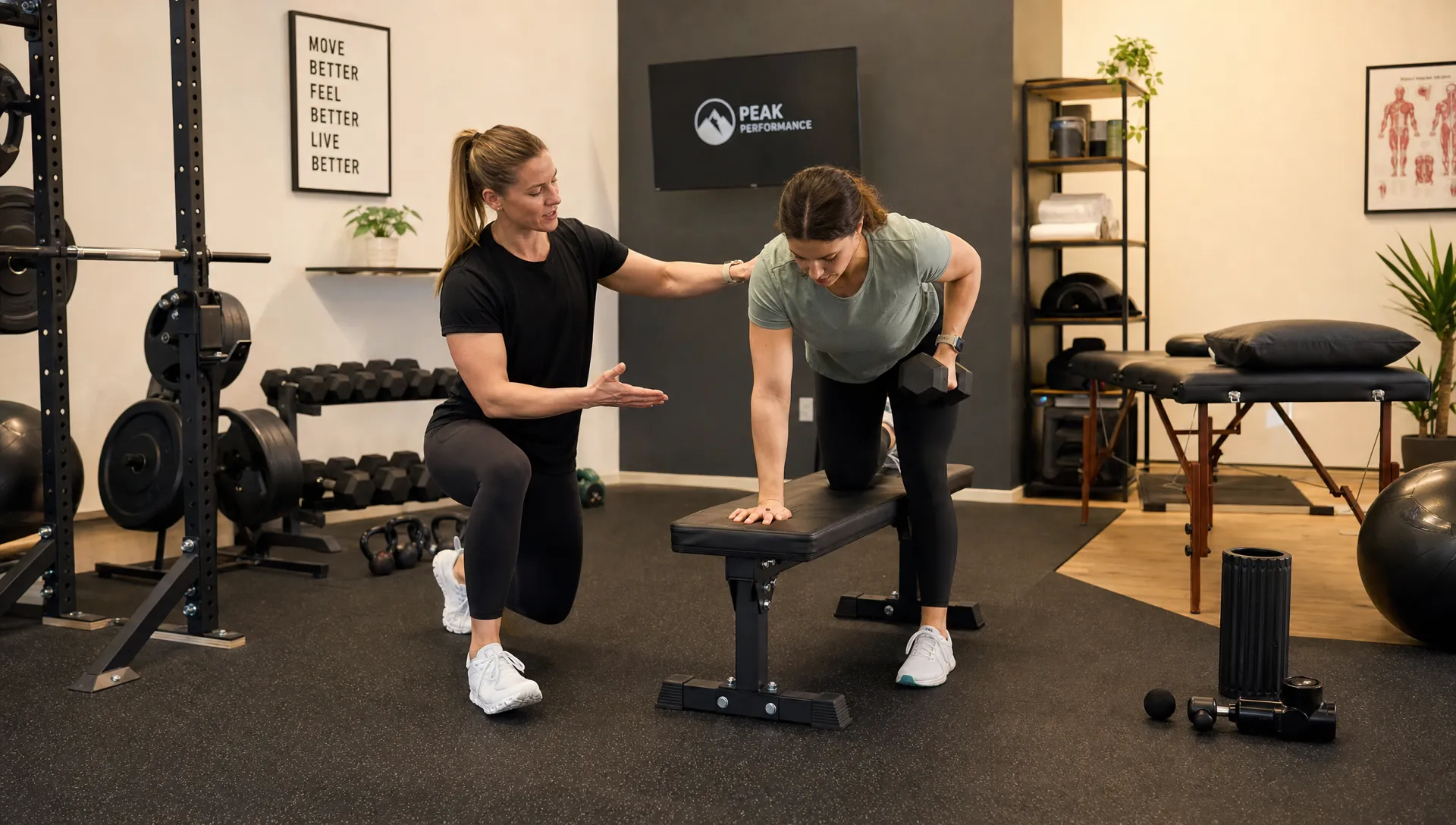
A membership is not automatically the right choice for everyone. If you already train consistently, know how to progress your program and have clear objective measures, you may only need occasional coaching or testing.
It may also be a poor fit if the facility offers little personalization. A recurring payment for generic workouts is not the same as a real coaching relationship. If no one assesses your baseline, tracks your progress or adjusts your plan, you are paying for access rather than coaching.
Terms matter too. If you travel frequently, have an unpredictable clinical schedule or work in a role where meetings change by the hour, ask how the membership handles scheduling and continuity. The best membership is not the most aggressive one. It is the one you can realistically follow.
A good test is whether the membership reduces friction or adds pressure. If it gives you clarity, accountability and better use of your limited time, it may be worth it. If it creates guilt without solving the underlying barriers, it probably is not.
How to judge the financial commitment
It is tempting to evaluate a personal training membership by dividing the monthly cost by the number of sessions. That can be useful, but it misses much of the value.
The better question is what the membership replaces. For some clients, it replaces years of inconsistent gym starts. For others, it replaces guesswork around nutrition, poorly structured workouts or the cost of chasing random programs that do not fit their body or schedule.
Evaluate the full service, including planning, feedback and follow-up, rather than judging a coaching membership only by the minutes spent in a session.
That does not mean cost is irrelevant. It means the membership should provide a clear return in consistency, objective progress, reduced decision fatigue and better confidence in what you are doing. If those outcomes are not visible after a reasonable period, the membership may need to be adjusted or reconsidered.
How long should you commit before judging results?
You can often judge the coaching fit within a few sessions. You should feel heard, coached and clear on the plan. You should not need months to know whether the trainer is attentive, professional and aligned with your goals.
Physical results take longer. Strength improvements may appear within weeks, but meaningful body composition changes usually require consistent training, nutrition and recovery over a longer period. For many people, 8 to 12 weeks is a more realistic window for evaluating early progress, especially if there are objective measures in place.
The right training frequency depends on your goal, experience and recovery. Some clients do well with one coached session per week plus independent workouts. Others need two or more sessions weekly for accountability, technique and momentum. If you are unsure, this guide on how many personal training sessions you really need can help frame the decision.
Membership should also adapt over time. A beginner might start with more coaching, then reduce frequency as confidence improves. A busy executive might need higher support during a high-stress season, then shift focus once the schedule stabilizes. The commitment should be structured, not rigid for its own sake.
Questions to ask before joining
Before you sign up for a personal training membership, ask questions that reveal whether the facility can deliver real coaching rather than just recurring workouts.
Useful questions include:
- Who performs the initial assessment and how is it used? The answer should connect directly to your program design.
- How will progress be measured? Look for more than scale weight or subjective effort.
- Who provides nutrition guidance? Registered Dietitians can be especially valuable when body composition, performance or health markers matter.
- How often does the program change? A strong plan evolves based on performance, recovery and goals.
- What happens when I travel or miss sessions? The answer should reflect the reality of your schedule.
- What services are included beyond training sessions? Testing, recovery and nutrition can increase value when they are relevant to your goals.
The answers do not need to be complicated. They should be specific. If a trainer or facility cannot explain how your membership will be personalized, that is a warning sign.
Frequently Asked Questions
Is a personal training membership better than buying sessions one at a time? It can be better if you want consistency, progression and accountability. Single sessions can help with a specific need, but membership usually works best for goals that require repeated coaching and ongoing adjustment.
How many times per week should I meet with a personal trainer? Many people start with one to three sessions per week depending on goals, experience, schedule and accountability needs. Beginners and clients with ambitious body composition or strength goals often benefit from more frequent coaching at first.
Do I need DEXA or VO2 max testing to make a membership worthwhile? Not always. Testing is most useful when it changes decisions. DEXA can help clarify fat mass, lean mass and visceral fat trends, while VO2 max testing can inform conditioning and longevity goals. At Custom Fit, DEXA scans are performed by Registered Dietitians or Exercise Physiologists, so the results are interpreted by professionals who understand nutrition, training and body composition.
What if I travel often for work? A membership can still work if the coaching team helps you plan around travel. Ask about scheduling flexibility, independent workouts and how your program is adjusted when you miss a week.
Is a personal training membership worth it if I already know how to lift? It can be, especially if you have plateaued, want objective testing or need a higher level of accountability. Experienced clients often benefit less from basic instruction and more from programming, progression and expert feedback.
The bottom line
A personal training membership is worth the commitment when it helps you train consistently, make better decisions and measure progress with more accuracy than you could on your own. It is not worth it if the coaching is generic, the facility does not assess you properly or the terms do not fit your life.
For busy San Franciscans, the right membership can be a practical way to protect your health in a schedule that will not naturally make room for it. If you want data-driven coaching, personal training, nutrition support, recovery services and advanced testing in one place, Custom Fit SF can help you evaluate the right starting point, including available memberships and a new client special.