How Gym and Wellness Programs Work Better Together



A gym and wellness program works best when training, nutrition, recovery and testing are connected instead of treated as separate services. Most people do not fail because they lack motivation. They fail because their plan gives them conflicting signals: train hard, eat randomly, sleep poorly, then judge progress only by the scale.
A better model gives each part of your health plan a job. Training creates the stimulus. Nutrition supports adaptation. Recovery protects consistency. Testing shows whether the plan is working. For busy professionals, medical partners and employee benefits teams in San Francisco, that coordination is the difference between a perk and a program.
Why Gym and Wellness Programs Work Better as One System
The clearest benefit of combining gym and wellness services is that every decision can be tied to the same goal. If someone wants to improve metabolic health, build muscle, reduce body fat or return to exercise after a stressful work season, the training plan should not be built in isolation.
Traditional gyms often measure success by attendance. Wellness programs often measure success by participation in screenings, coaching sessions or events. Those numbers matter, but they do not always show whether a person is getting fitter, stronger or healthier.
An integrated approach looks at the cause and effect chain. If body composition is not changing, the answer might not be more workouts. It might be inadequate protein, poor sleep, excessive training intensity or a schedule that makes consistency unrealistic. If energy is low, the fix might involve recovery or nutrition before adding another conditioning session.
| Separate services | Integrated program |
|---|---|
| Workouts, nutrition and testing happen independently | Training, food, recovery and metrics inform each other |
| Progress is judged by weight or attendance | Progress is judged by relevant health and performance markers |
| Advice can conflict across providers | Coaching is coordinated around one plan |
| Recovery is optional or reactive | Recovery is built into the training cycle |
| Employees or clients must interpret data alone | Professionals help translate data into action |
That is the practical advantage of a gym and wellness setup: the client does not have to become their own trainer, dietitian, exercise physiologist and data analyst.
The Feedback Loop: Test, Train, Fuel, Recover, Reassess
A strong program does not begin with random intensity. It begins with a baseline. The baseline does not need to be complicated, but it should be specific enough to guide decisions.
The Physical Activity Guidelines for Americans recommend a combination of aerobic activity and muscle-strengthening work for adults. That is a useful public health foundation, but individuals often need more detail. A 38-year-old executive training for longevity, a physician managing long clinic days and an employee rebuilding fitness after years of desk work will not benefit from the exact same plan.
Testing makes the plan more personal
In a gym and wellness program, DEXA scans, VO2 max testing and other assessments can help identify where to focus first. A DEXA scan can provide estimates of total body fat, lean mass, bone density and visceral fat, which is the fat stored around internal organs. VO2 max testing can help assess cardiorespiratory fitness, a marker strongly associated with long-term health outcomes. A meta-analysis published in JAMA found that higher cardiorespiratory fitness was associated with lower risk of all-cause mortality and cardiovascular events.
At Custom Fit, DEXA scans are performed by Registered Dietitians or Exercise Physiologists. That matters because clients are not simply handed an automated scan report and left to interpret it. They work with professionals who understand nutrition, exercise physiology and body composition, which makes the results more actionable and less confusing.
Training turns information into adaptation
Testing is only useful if it changes the plan. If a scan shows low lean mass relative to a client’s goals, training should emphasize progressive resistance work, appropriate volume and adequate recovery. If a VO2 max result shows poor aerobic capacity, the plan might include more structured Zone 2 work, intervals or a gradual conditioning progression.
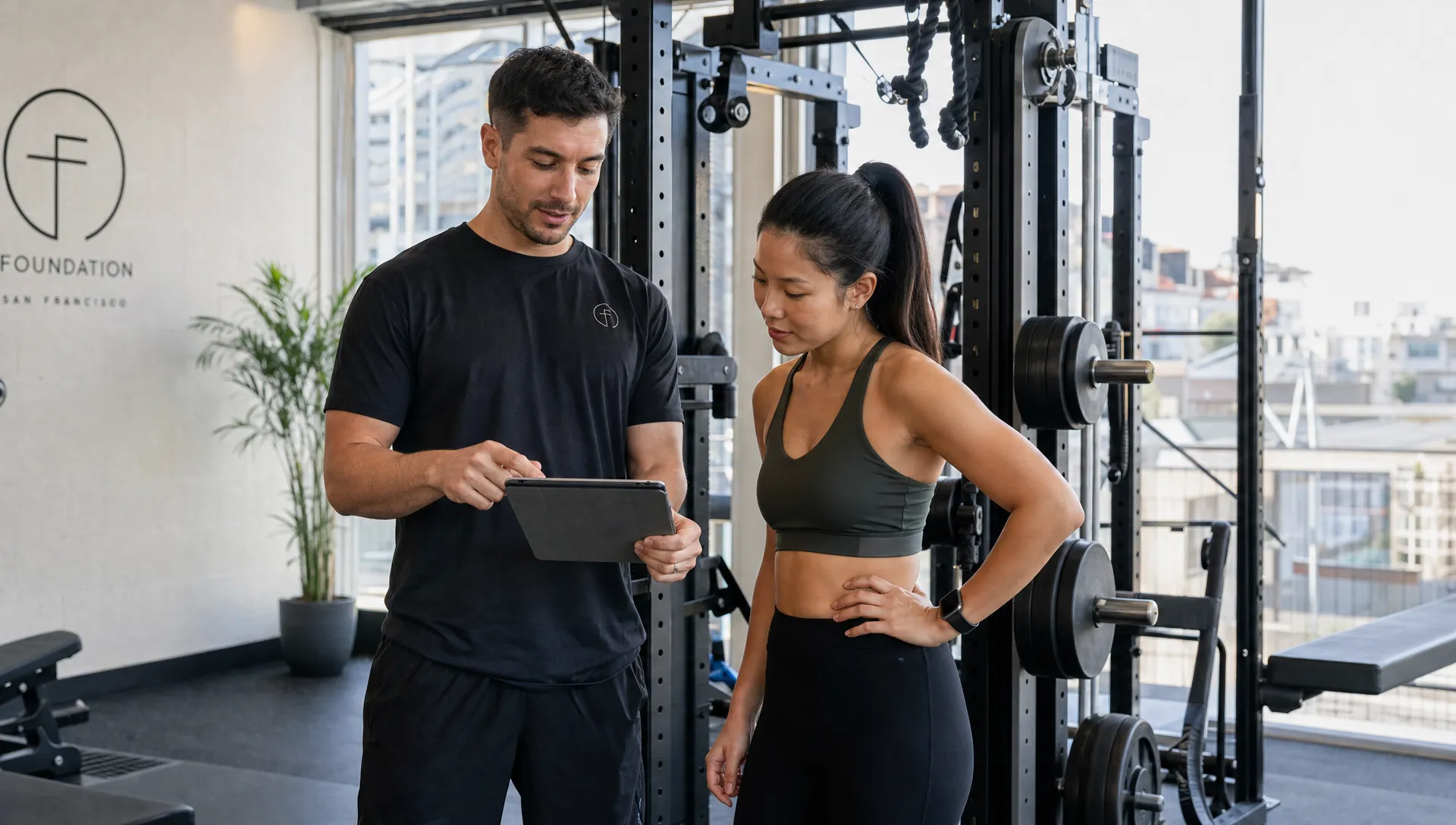
The training itself still has to be well coached. Form, load selection, exercise sequencing and weekly progression determine whether a person builds capacity or simply accumulates fatigue. This is where personal training, partner training or coached group sessions can outperform a self-directed routine, especially for people with demanding schedules.
Nutrition and recovery determine whether the work sticks
Nutrition is where many fitness plans break down. A client may train three times per week, but if they under-eat protein, skip meals during back-to-back meetings or rely on late-night takeout, the body may not have what it needs to build muscle and recover.
A 2018 meta-analysis by Morton and colleagues found that protein supplementation can support resistance training gains in muscle mass and strength, especially when total intake is insufficient. That does not mean everyone needs the same protein target or supplement. It means nutrition should match the training goal, body size, dietary preferences and medical context.
This is where gym and wellness coordination beats generic advice. A Registered Dietitian can connect food strategy to training demands, DEXA findings and real-life constraints such as travel, client dinners or long clinical shifts.
Recovery is not a luxury add-on. It is the period when adaptation occurs. Sleep quality, mobility, soft tissue work, stress management and active recovery can influence whether someone can train consistently over months rather than surge for two weeks and stop.
If recovery is a priority for you, Custom Fit has also outlined what to look for when choosing a recovery gym that supports better training, including how recovery tools should fit into the larger training plan.
How This Model Fits San Francisco Professionals
For busy San Francisco professionals, gym and wellness support has to fit the rhythm of the city. A program that requires long commutes, scattered appointments or unclear next steps will not last, even if the workouts are excellent.
Professionals moving between the Financial District, SoMa and Pacific Heights often need a plan that respects limited time and high cognitive load. A central, well-equipped San Francisco studio can make it easier to combine training, nutrition check-ins, testing and recovery without turning health into another full-time job.
This matters for high-income professionals who want measurable results, but it also matters for concierge medicine practices, longevity clinics and private practice doctors. When a medical team identifies a need for improved body composition, cardiorespiratory fitness or strength, the patient often needs a trusted fitness and nutrition partner to translate that recommendation into weekly behavior.
The same logic applies to companies. A gym stipend may reduce one barrier, but it rarely creates a complete behavior change system. Employees need access, guidance, trust and measurable follow-through. Custom Fit has written more about how employer gym access can support a healthier workforce when it is designed around consistency rather than novelty.
What Employers and Clinics Should Look For
A company gym and wellness benefit should do more than check a benefits box. It should reduce friction, protect privacy and connect employees to services they can actually use.
For employee benefits managers, the strongest programs are voluntary, clearly communicated and designed around confidentiality. Health assessments can be valuable, but they should never feel punitive or coercive. A useful outside perspective on this comes from Celto’s discussion of how health checks can support employee well-being, including the role of trust, early awareness and practical follow-up.
For medical and longevity partners, the key question is different: can the fitness provider work professionally with health data and client goals without overstepping? A good partner knows when to stay within scope, when to refer back to the clinician and how to communicate progress in a way that supports the broader care plan.
Look for a program that includes:
- Qualified coaching professionals who understand progression, injury history and behavior change
- Nutrition support from credentialed providers, especially when body composition is a central goal
- Objective testing such as DEXA or VO2 max when appropriate
- Recovery services that support the training cycle rather than distract from it
- Clear onboarding, goal-setting and reassessment points
- A practical schedule that matches the client’s work and life demands
The best gym and wellness programs feel structured, not scattered. They help clients understand what they are doing, why they are doing it and how progress will be evaluated.
Common Mistakes When Fitness and Wellness Are Separated
When services are disconnected, clients often receive advice that sounds reasonable but does not work together. A trainer might push for a calorie deficit to lose body fat while a client is also trying to gain muscle. A wellness screening might flag metabolic risk without offering a realistic training path. A recovery service might be used only after pain appears, instead of being part of the plan from the beginning.
Another common mistake is over-measuring without coaching. Data can motivate, but it can also overwhelm. Body composition, wearable metrics, bloodwork, sleep scores and performance tests all need interpretation. The goal is not to collect more numbers. The goal is to choose the numbers that will change decisions.
Custom Fit’s approach is closely aligned with the idea that wellness and fitness work best as one plan, but the operational point is just as important: integration only works when the professionals involved communicate, understand the client’s goals and adjust the plan over time.
Frequently Asked Questions
What is the difference between a gym and a wellness program? A gym typically focuses on exercise access, equipment or coaching. A wellness program may include nutrition, recovery, testing, education or preventive health initiatives. When combined, the program can connect daily training to broader health goals.
Who benefits most from an integrated program? Busy professionals, people with body composition goals, employees in corporate wellness programs, longevity-focused clients and patients referred by concierge or private practice clinicians can all benefit from coordinated support.
Do I need DEXA or VO2 max testing to start? Not always. Many people can begin with coaching, nutrition habits and a basic movement assessment. Testing becomes more valuable when you want objective baselines, more precise goals or clearer feedback on whether the plan is working.
Why does it matter who performs a DEXA scan? Body composition data can be misread without context. At Custom Fit, DEXA scans are performed by Registered Dietitians or Exercise Physiologists, so clients receive guidance from professionals who understand nutrition, training and body composition rather than only an automated report.
Can employers offer this without invading employee privacy? Yes, if the program is voluntary, confidential and clearly separated from performance management. Employers should focus on access, education and supportive follow-up rather than individual health surveillance.
Build a Program That Works in Real Life
A gym and wellness plan should make healthy action easier, not more complicated. When training, nutrition, testing and recovery reinforce each other, clients get clearer feedback and better support.
Custom Fit brings personal training, nutrition coaching, DEXA scans, VO2 max testing, recovery services, memberships and group classes together in one data-driven San Francisco wellness environment. If you are an individual, employer or clinical partner looking for a more coordinated approach, start with a conversation about the outcomes you want to improve and the support required to get there.