Fitness Training Habits That Deliver Better Long Term Results


The fitness plans that work for decades rarely depend on extreme discipline. They depend on repeatable habits, clear feedback, and a training structure that fits real life. For busy San Francisco professionals, that means fitness training has to survive travel, client dinners, long workdays, family responsibilities, and stress.
Long-term results come from building a system you can keep using. The goal is not to be perfect for 30 days. The goal is to become the kind of person who trains consistently, recovers intelligently, adjusts based on data, and avoids the injury cycles that derail progress.
Below are the habits that make fitness training more effective over the long run, especially if your goals include strength, body composition, energy, longevity, and performance.
Start with a baseline instead of a guess
A sustainable training plan should begin with answers, not assumptions. Many people start by copying a workout from a friend, a social feed, or a previous phase of life. That can work for a few weeks, but it often ignores the most important variables: current fitness, movement quality, body composition, injury history, schedule, sleep, nutrition, and recovery capacity.
A better habit is to establish a baseline before you increase intensity. This can include simple assessments like resting heart rate, workout history, range of motion, strength benchmarks, and consistency patterns. It can also include more advanced tools such as DEXA scans for body composition and VO2 max testing for cardiorespiratory fitness.
This matters because long-term progress is easier when you can compare results against objective markers. If your weight stays the same but lean mass increases and visceral fat decreases, your plan may be working better than the scale suggests. If your VO2 max improves, you may be reducing health risk even before visual changes are obvious.
Cardiorespiratory fitness is not just a gym metric. A large study published in JAMA Network Open found that higher cardiorespiratory fitness was strongly associated with lower long-term mortality risk, with no observed upper limit of benefit in the study population. You can review the research through the PubMed summary of the cardiorespiratory fitness and mortality study.
If you are unsure what to track first, this guide on what a gym fitness trainer should measure first explains why the starting point should include more than body weight.
Treat training like a recurring appointment
The most effective fitness training habit is also the least glamorous: put workouts on the calendar before the week gets crowded. People who wait to “find time” usually train only when life is calm. High-performing professionals need the opposite approach. Training should be scheduled the way you would schedule a standing meeting with a key client.
This does not mean every week will be perfect. It means your default is already decided. Instead of negotiating with yourself every day, you know which days are strength days, which days are conditioning days, and which days are recovery days.
A strong weekly rhythm might include:
- Two to four strength training sessions depending on experience, goals, and recovery
- One to three aerobic sessions for heart health and endurance
- Short daily movement breaks to reduce stiffness from desk time
- One deliberate recovery block for mobility, sleep, massage, sauna, or low-intensity movement
- A weekly review to adjust for travel, workload, and soreness
The key is not to create a perfect template. The key is to create a repeatable one. A 45-minute workout you complete three times per week beats a 90-minute program you abandon after two weeks.
Build your plan around progressive strength training
Strength training is one of the highest-return habits for long-term health. It supports lean mass, bone density, joint function, insulin sensitivity, posture, and everyday capacity. It also becomes increasingly important with age because muscle and strength naturally decline without training.
The habit that matters most is progressive overload. That means your training gradually becomes more challenging over time through heavier loads, more reps, better control, increased range of motion, improved density, or more difficult variations. You do not need to max out constantly. In fact, most people make better long-term progress by improving steadily without pushing every set to failure.
The American College of Sports Medicine has published progression models for resistance training that emphasize planned increases in intensity, volume, and exercise complexity based on training status. The ACSM resistance training progression model is a useful reference for understanding why structured progression beats random workouts.
For most adults, a well-rounded strength plan should train major movement patterns: squat, hinge, push, pull, carry, rotate, and resist rotation. Machines, cables, dumbbells, kettlebells, barbells, and bodyweight exercises can all be useful. The best tools are the ones that match your body, experience, and goals.
This is where coaching can accelerate results. A good coach helps you train hard enough to adapt, but not so hard that you constantly flare up old issues. If your main goal is strength, technique, and efficient progress, the article on why a personal trainer for strength training works faster explains how expert programming removes guesswork.
Train your heart without turning every workout into a grind
Many people separate strength and cardio as if they are competing goals. For long-term results, they should support each other. Strength helps you preserve muscle and function. Cardiovascular training improves endurance, heart health, recovery between sets, and metabolic flexibility.
The U.S. Physical Activity Guidelines recommend that adults do at least 150 to 300 minutes of moderate-intensity aerobic activity per week, or 75 to 150 minutes of vigorous-intensity activity, plus muscle-strengthening activity on two or more days per week. The Physical Activity Guidelines for Americans are a practical public health benchmark, not a ceiling.
For busy adults, the habit is to keep conditioning simple and repeatable. Zone 2 work, such as brisk incline walking, cycling, rowing, or jogging at a conversational pace, builds aerobic capacity without crushing recovery. Shorter interval sessions can be useful, but they should be dosed carefully. If every cardio session feels like a test, consistency usually drops.
A balanced week might include one longer moderate session and one shorter higher-intensity session, adjusted around your strength days. If you track VO2 max, resting heart rate, or heart rate recovery, you can make more informed changes instead of guessing whether your conditioning is improving.
Practice movement quality before chasing intensity
Long-term fitness training is not just about doing more. It is about earning the right to do more. The body adapts well to stress when that stress is applied with good mechanics, appropriate loading, and enough recovery. It adapts poorly when fatigue, poor form, and ego drive the plan.
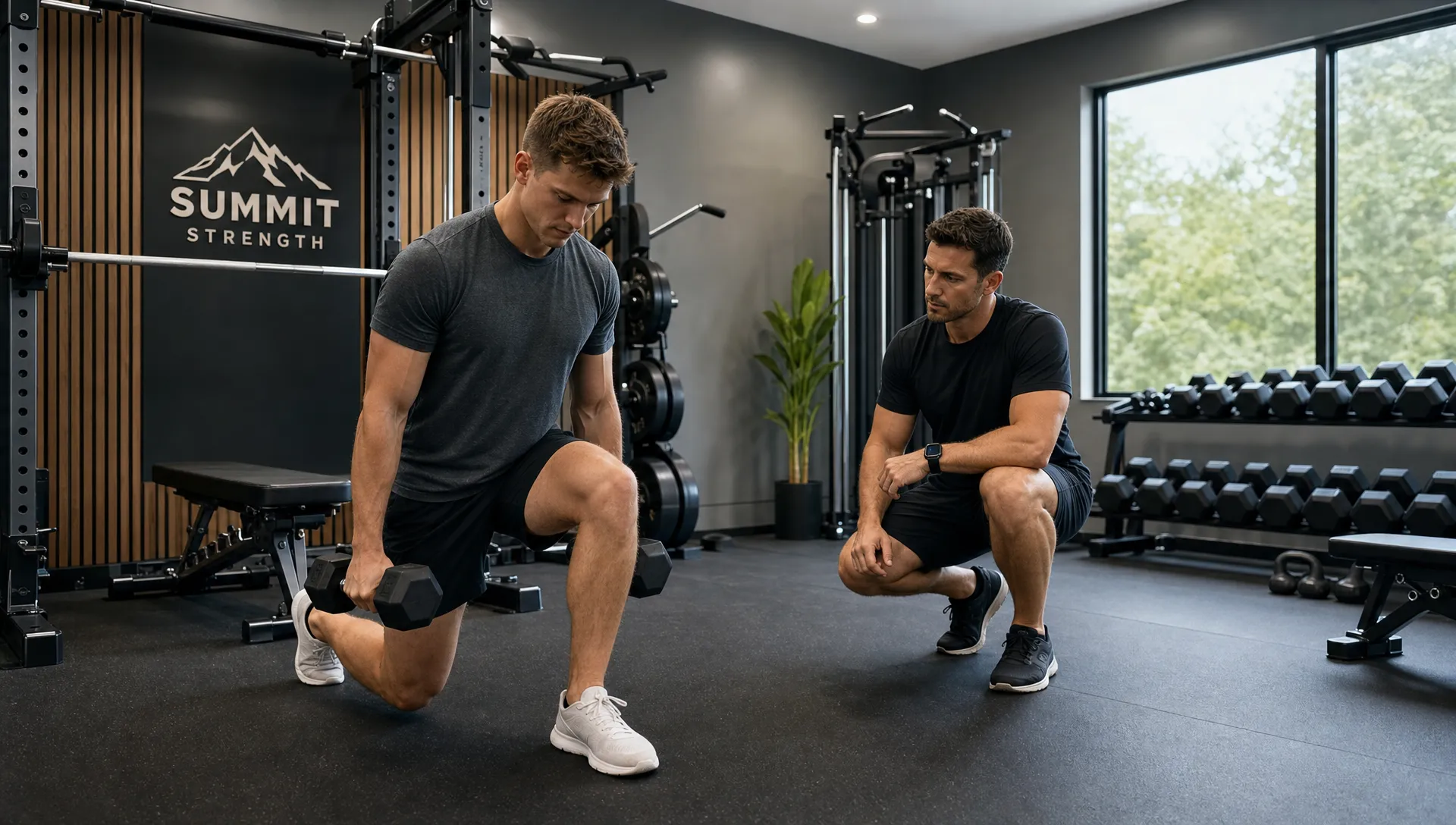
A useful habit is to treat warm-ups and first sets as movement checks. How do your hips, shoulders, ankles, and spine feel today? Does your squat look different than last week? Is one side compensating? Are you bracing well? These details matter because small breakdowns can become bigger problems when repeated under load.
Technique does not need to be perfect, but it should be intentional. Most people benefit from a few cues that they can repeat every session. Over time, this creates consistency in the way they lift, move, and manage intensity.
Make nutrition a support system, not a punishment
Training creates the signal for adaptation. Nutrition supplies the materials. If your eating habits are inconsistent, long-term results become harder to maintain, even with excellent workouts.
The most important nutrition habit for active adults is usually not a complicated meal plan. It is building reliable defaults. That may mean prioritizing protein at each meal, eating enough fiber-rich carbohydrates to support training, staying hydrated, and planning meals around your real schedule rather than an idealized one.
Protein is especially important for strength, lean mass, and recovery. The International Society of Sports Nutrition position stand notes that protein needs for exercising individuals are often higher than the standard recommended dietary allowance, depending on training status, goals, and energy intake. You can read the ISSN position stand on protein and exercise.
For many professionals, the real nutrition challenge is not knowledge. It is execution. Airport meals, late meetings, business dinners, and skipped breakfasts can create unpredictable intake. A registered dietitian or nutrition coach can help convert general advice into realistic defaults that fit your work life and preferences.
A sustainable approach might include a few simple rules: anchor breakfast with protein, keep a backup lunch option near work, plan dinner portions before you are exhausted, and avoid using intense workouts as permission to ignore recovery nutrition.
Recover like it is part of the program
Recovery is not the absence of training. It is the process that allows training to become progress. Without it, hard work turns into fatigue, soreness, irritability, poor sleep, stalled performance, and eventually injury.
The first recovery habit is sleep. Most adults need a consistent sleep schedule more than they need another supplement. Sleep affects appetite regulation, glucose control, motivation, muscle repair, and training readiness. If your schedule is demanding, protecting sleep may be the most performance-enhancing behavior available.
The second habit is managing weekly stress. Your body does not separate work stress from workout stress as neatly as your calendar does. A brutal workweek may require a lighter training week, more mobility, or lower volume. This is not weakness. It is smart load management.
The third habit is using recovery tools strategically. Massage, mobility work, sauna, compression, and light therapy may help some people feel better and stay consistent when used as complements to sleep, nutrition, and intelligent programming. For people who want clinic-style recovery options at home, professional-grade compression and red light therapy tools can be a practical way to support a consistent recovery routine between training sessions.
The goal is not to collect recovery gadgets. The goal is to recover well enough that you can train again with quality.
Review your plan every four to eight weeks
Long-term results require adaptation. A plan that worked in January may not be the right plan in March. Your schedule changes, your body adapts, your goals evolve, and your recovery capacity fluctuates. That is why one of the most valuable habits is a regular review.
Every four to eight weeks, look at your data and ask better questions. Are your lifts improving? Is your energy stable? Are you sleeping enough? Are you losing fat while preserving muscle? Is your aerobic fitness improving? Are you showing up consistently? Are aches increasing or decreasing?
This review does not need to be complicated. It should help you decide whether to progress, maintain, deload, or change direction. If you have access to DEXA scans, VO2 max testing, or metabolic testing, these tools can add clarity. If not, strength logs, measurements, performance markers, and subjective readiness still provide useful feedback.
The habit is to adjust based on evidence rather than emotion. People often change programs too quickly when they are impatient, then stick with poor habits too long when they are busy. A scheduled review solves both problems.
Use accountability without becoming dependent on motivation
Motivation is useful, but it is unreliable. Accountability is more durable. That may come from a trainer, a training partner, a class, a coach, or a standing appointment that creates external structure.
The best accountability systems reduce decision fatigue. You do not have to design the workout, negotiate the start time, or wonder whether you are doing enough. You simply show up and execute the plan.
For some people, that means personal training. For others, it means partner training, small group classes, or a hybrid approach. If classes fit your personality and schedule, this article on how gym classes help busy adults stay consistent explains why structure and social commitment can improve follow-through.
Accountability should not make you feel controlled. It should make the right behavior easier to repeat.
A practical long-term training rhythm
There is no single perfect schedule, but most sustainable plans share a few traits: they include strength, cardiovascular training, mobility, recovery, and enough flexibility to survive real life.
Here is a simple framework that works for many busy adults:
- Monday: Full-body strength training with emphasis on lower body and pushing movements
- Tuesday: Zone 2 cardio or mobility work
- Wednesday: Full-body strength training with emphasis on hinging and pulling movements
- Thursday: Rest, walking, recovery, or light conditioning
- Friday: Strength training or higher-intensity conditioning depending on goals
- Saturday: Longer aerobic session, recreational sport, hike, or active recovery
- Sunday: Rest, meal planning, walking, and weekly review
This is only a starting point. Someone training for a marathon, rebuilding after injury, pursuing fat loss, or preparing for a demanding work season may need a different structure. The principle remains the same: make the week repeatable, then progress it intelligently.
When data-driven coaching makes the biggest difference
You can build strong fitness training habits on your own, but support becomes valuable when you want faster clarity, safer progression, or a more complete picture of your health. Coaching is especially helpful if you have specific body composition goals, a history of injury, limited time, inconsistent nutrition, or interest in longevity metrics.
At Custom Fit, the advantage is combining personal training, nutrition coaching, recovery services, and advanced testing in one environment. That creates a clearer loop: assess, train, recover, measure, and adjust. For people who value efficiency, this can reduce trial and error while keeping the plan grounded in real data.
The long-term win is not just looking better for a season. It is building a body that performs well, feels resilient, and supports the life you actually want to live.
Frequently Asked Questions
How often should I do fitness training for long-term results? Most adults do well with two to four strength sessions per week plus one to three cardiovascular sessions. The best frequency depends on your goals, training history, schedule, and recovery capacity.
Is strength training or cardio more important for long-term health? Both matter. Strength training supports muscle, bone density, and function, while cardio supports heart health, endurance, and metabolic fitness. The strongest long-term plans include both.
How long should I follow a workout plan before changing it? Many people benefit from following a structured plan for four to eight weeks before making major changes. Small adjustments can happen weekly, but changing everything too often makes progress harder to measure.
Do I need DEXA or VO2 max testing to get results? You do not need advanced testing to start, but it can make your plan more precise. DEXA can clarify body composition changes, while VO2 max testing can help assess aerobic fitness and guide conditioning.
What is the biggest mistake people make with fitness training? The biggest mistake is relying on intensity without consistency. Hard workouts help only when they are part of a sustainable plan that includes progression, recovery, nutrition, and regular reassessment.
Build fitness habits around your real life
Better long-term results come from training habits that are measurable, repeatable, and adaptable. If you want a plan that combines expert coaching with data-driven testing, nutrition support, and recovery strategies, Custom Fit can help you create a fitness training system built for your goals and schedule.
Explore personal training, nutrition coaching, DEXA scans, VO2 max testing, recovery programs, and membership options at Custom Fit SF.