DEXA Scan Body Fat vs BMI: Which Metric Matters More?
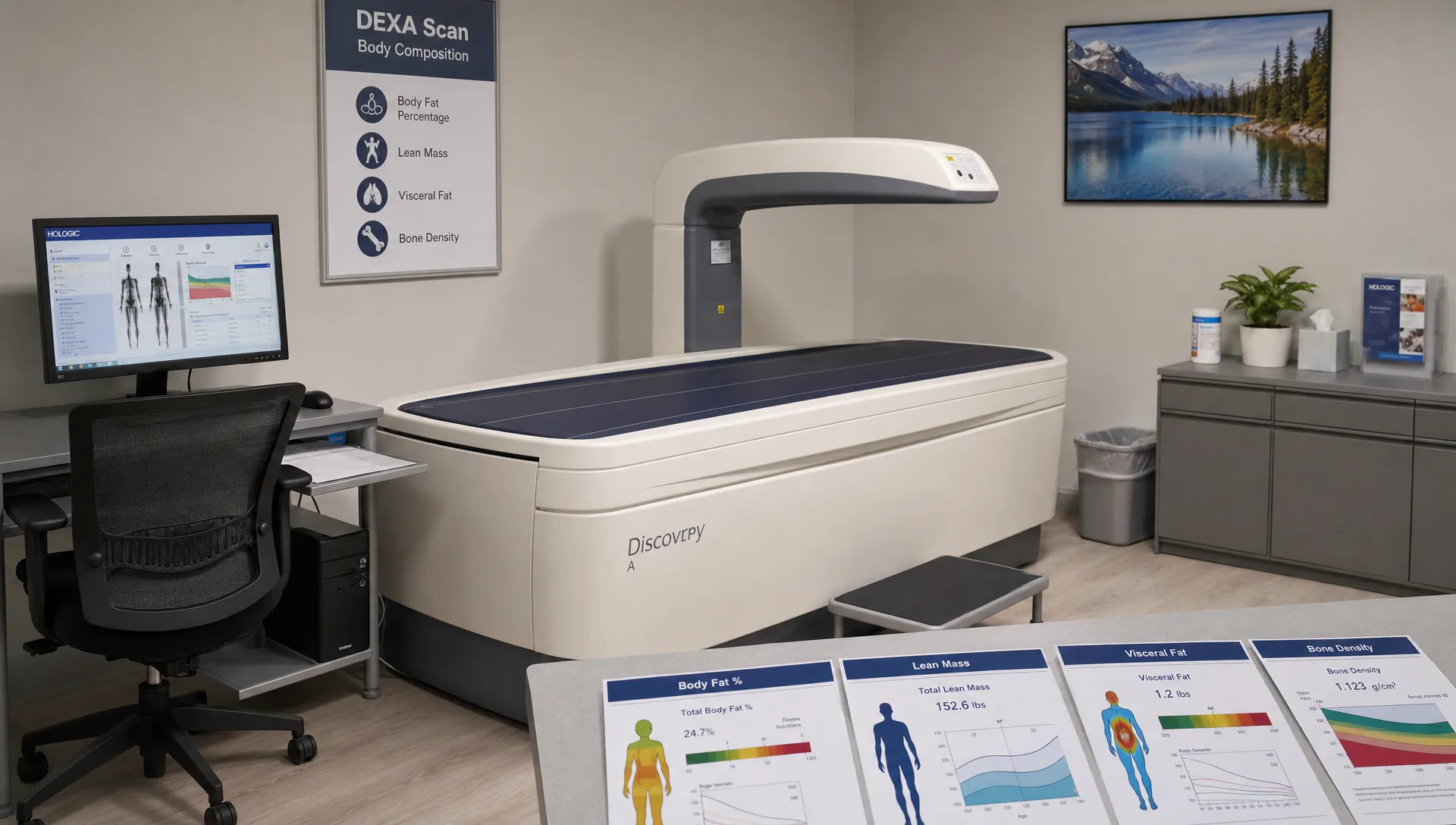


BMI is convenient. It takes seconds, costs nothing, and gives a rough screening category based on height and weight. But if you are trying to lose fat, build muscle, improve metabolic health, or track longevity-focused changes, BMI can leave out the details that matter most.
That is where DEXA scan body fat testing changes the conversation. A DEXA scan does not just ask how much you weigh. It estimates how much of your body is fat mass, lean mass, and bone mineral content, plus where that tissue is distributed. For an individual making training, nutrition, and health decisions, that extra context can be the difference between guessing and making a targeted plan.
So, which metric matters more? The short answer: BMI is useful for broad screening, but DEXA scan body fat data usually matters more for personal fitness, body composition, and performance decisions. The best approach is understanding what each metric can and cannot tell you.
What BMI Actually Measures
BMI, or body mass index, is a calculation based on weight divided by height squared. In the United States, it is commonly used to classify adults as underweight, normal weight, overweight, or obese. The CDC describes adult BMI as a screening tool, not a diagnostic measurement of body fat or health.
That distinction matters. BMI was built to describe population-level weight trends, not to precisely assess an individual athlete, executive, patient, or wellness client. It can help flag potential risk at scale because it is simple and standardized, but it cannot tell you what your weight is made of.
A 190-pound person with high muscle mass and low body fat can have the same BMI as a 190-pound person with low muscle mass and high visceral fat. On paper, they may land in the same category. In real life, their health risks, nutrition needs, training priorities, and performance potential may be completely different.
Research has repeatedly pointed out these limitations. A critical review published in Nutrition Today notes that BMI is widely used because it is practical, but it does not directly measure adiposity, body composition, or fat distribution (Nuttall, 2015). A systematic review and meta-analysis in the International Journal of Obesity found that BMI has high specificity but limited sensitivity for identifying excess body fat when compared with body composition methods (Okorodudu et al., 2010). In plain English, BMI can miss people who have unhealthy levels of body fat, especially if their scale weight does not look extreme.
BMI does not measure:
- Body fat percentage
- Lean muscle mass
- Bone mineral density
- Visceral fat around the organs
- Regional fat distribution
- Muscle imbalances between limbs
- Body recomposition when fat decreases and muscle increases
This is why BMI can be frustrating for people who train consistently, are returning to fitness, or are working with a physician or coach on measurable health improvements.
What a DEXA Scan Body Fat Test Measures
DEXA stands for dual-energy X-ray absorptiometry. In body composition testing, DEXA uses low-dose X-ray technology to estimate three main tissue compartments: fat mass, lean mass, and bone mineral content.
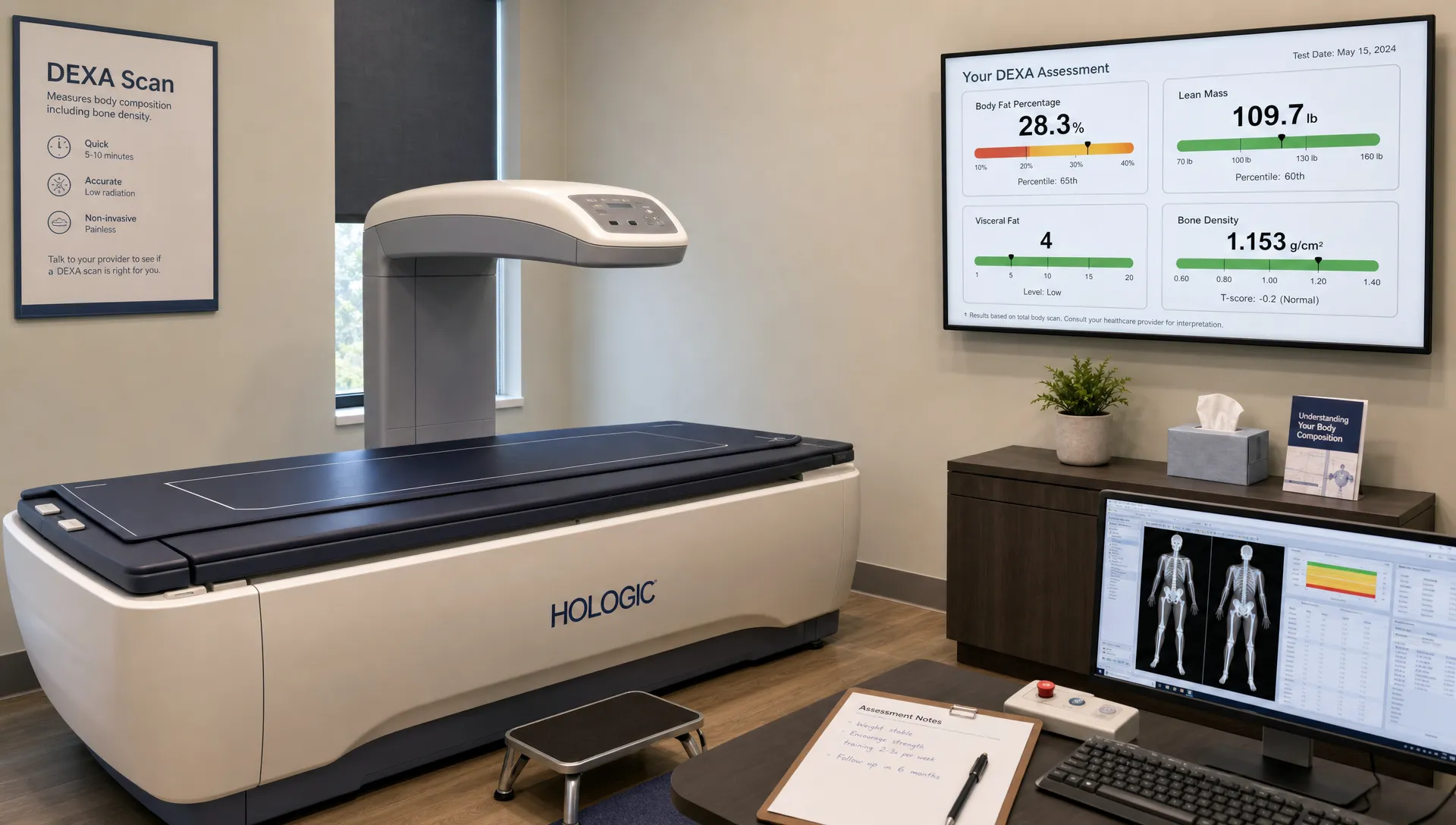
Instead of reducing your health profile to one height-to-weight ratio, a DEXA scan can show a more complete picture of your body composition. A typical report may include total body fat percentage, total fat mass, lean mass, bone mineral density, regional body composition, and an estimate of visceral adipose tissue.
That makes DEXA especially useful when the goal is not simply to weigh less, but to change what the body is made of. For example, someone may lose five pounds of fat and gain five pounds of lean mass during a strength training and nutrition program. Their scale weight and BMI may not change at all. A DEXA scan can reveal that meaningful progress.
For a deeper breakdown of the report itself, Custom Fit explains the major sections in this guide on how to read your DEXA scan results.
DEXA is often used in research and clinical settings because it provides more direct body composition data than height and weight alone. It is still an estimate, not a perfect measurement, and it should be interpreted in context. But compared with BMI, it answers a much more practical question: what is changing inside the number on the scale?
DEXA Scan Body Fat vs BMI: Which Metric Matters More?
The answer depends on the decision you are trying to make.
If you are looking at broad population health trends, BMI still has value. It is inexpensive, accessible, and easy to compare across large groups. That is why public health agencies, researchers, insurers, and many clinical guidelines continue to use it as a starting point.
If you are making personal decisions about training, fat loss, muscle gain, longevity, or performance, DEXA body composition data is usually more useful. It gives you information BMI cannot provide, and that information can change the plan.
For fat loss, DEXA helps separate true fat loss from water weight or muscle loss. This is critical because a rapid drop on the scale is not always a win if lean tissue is dropping too.
For muscle gain, DEXA can show whether a strength program is increasing lean mass in the trunk, arms, or legs. This matters for athletes, active professionals, and anyone focused on healthy aging.
For metabolic health, DEXA can help estimate visceral fat, which is the fat stored deeper in the abdomen around internal organs. Visceral fat is more strongly associated with cardiometabolic risk than subcutaneous fat stored under the skin. A review in Nature Reviews Endocrinology discusses the role of visceral adipose tissue in insulin resistance and cardiometabolic disease risk (Tchernof and Després, 2013).
For longevity and aging, DEXA adds bone mineral density and lean mass data. That matters because maintaining muscle and bone becomes increasingly important with age, especially for strength, mobility, fall risk, and independence.
Why Body Fat Percentage Alone Is Not the Full Story
A DEXA scan body fat percentage is helpful, but it is only one part of the picture. Two people can have the same body fat percentage and very different health profiles depending on where fat is stored and how much lean mass they carry.
For example, a person with more fat stored around the abdomen may have a different risk profile than someone with the same total body fat percentage but more fat stored around the hips and thighs. This is one reason waist circumference and waist-to-height ratio are often discussed alongside BMI in medical research.
Lean mass also matters. Muscle is metabolically active tissue, and preserving or increasing it can support strength, glucose regulation, functional capacity, and long-term resilience. For high-performing professionals, athletes, and people investing in longevity, the goal is often not simply to be lighter. It is to be stronger, leaner, and more metabolically healthy.
That is where BMI falls short. BMI may improve when weight drops, but it cannot tell whether that weight came from fat, muscle, or water. A DEXA scan can make a plan more precise by showing whether the intervention is moving the right tissue in the right direction.
When BMI Can Be Misleading
BMI is most misleading when body composition differs from the population average. That includes people with high muscle mass, older adults losing muscle, individuals with normal scale weight but higher body fat, and people going through body recomposition.
A muscular person may be classified as overweight by BMI despite having healthy body fat. An older adult may have a normal BMI while carrying low muscle mass and elevated body fat. Someone starting strength training may see no BMI improvement even though their DEXA scan shows fat loss and lean mass gain.
This is why BMI should not be treated as a final verdict. It is a screening signal. A high BMI may suggest that more evaluation is useful, but it does not explain body composition. A normal BMI may look reassuring, but it does not guarantee low body fat, strong muscle mass, or low visceral fat.
For physicians, concierge medicine practices, longevity clinics, and employee wellness teams, this distinction is important. BMI can be a quick front-end screen, but DEXA can provide more actionable information for individualized coaching, risk discussion, and progress tracking.
DEXA Is Better for Body Composition, But It Still Has Limits
DEXA is far more informative than BMI for body composition, but it is not magic. Like every testing method, it has variables.
Results can vary slightly between machines, software versions, and testing protocols. Hydration status, recent meals, intense training, and changes in glycogen can influence lean mass estimates. The best way to track progress is to repeat scans under similar conditions, ideally using the same location and similar pre-test routines.
DEXA also does not replace a comprehensive medical evaluation. It does not measure blood pressure, cholesterol, glucose control, hormone status, cardiovascular fitness, sleep quality, or inflammatory markers. It should be viewed as one powerful data point within a broader health and performance picture.
It is also different from consumer scales or bioelectrical impedance analysis devices. BIA tools estimate body composition by sending a small electrical current through the body, which makes them sensitive to hydration and other short-term variables. If you are comparing testing options, this Custom Fit article on InBody vs DEXA accuracy explains why the methods can produce different results.
For most people, the key is not chasing a perfect number. It is using consistent, high-quality measurement to identify trends and guide better decisions.
How to Use BMI and DEXA Together
The most practical approach is not BMI or DEXA. It is BMI plus DEXA, used for different purposes.
BMI can provide a quick starting point. It can tell you whether your height-to-weight ratio falls into a category associated with higher population-level risk. But once you want to take action, DEXA provides better direction.
A smart process looks like this:
- Use BMI as a basic screening metric, not a personal identity or diagnosis.
- Get a DEXA scan to establish body fat percentage, lean mass, visceral fat, and bone density baselines.
- Align your training and nutrition plan with the specific result you want, such as fat loss, muscle gain, visceral fat reduction, or bone health support.
- Retest at a reasonable interval, often every 8 to 12 weeks during an active program or every 3 to 6 months for longer-term tracking.
- Interpret the trend, not just one isolated scan.
This is especially valuable for people who are already doing the work but are not sure if the work is producing the right adaptation. A scale may say nothing has changed. BMI may say nothing has changed. DEXA may show that fat mass is down, lean mass is up, and visceral fat is moving in the right direction.
That is the kind of feedback that can keep a plan focused and sustainable.
What Matters More for Your Goal?
If your goal is broad health screening, BMI still matters. It is quick, familiar, and supported by decades of population data.
If your goal is to understand your actual body composition, DEXA matters more.
If your goal is fat loss, DEXA matters more because it can show whether fat mass is actually decreasing.
If your goal is strength, performance, or healthy aging, DEXA matters more because it can track lean mass and bone density.
If your goal is metabolic health or longevity, DEXA matters more than BMI alone because it adds visceral fat and regional distribution data, though it should still be combined with labs, blood pressure, clinical history, and lifestyle assessment.
For most motivated individuals, the conclusion is simple: BMI can start the conversation, but DEXA helps guide the plan.
Frequently Asked Questions
Is DEXA body fat more accurate than BMI? Yes, for body composition. BMI estimates risk based only on height and weight, while DEXA estimates fat mass, lean mass, and bone mineral content. DEXA is still an estimate, but it is much more informative for individual fitness and body composition decisions.
Can BMI be wrong if I have a lot of muscle? BMI is not exactly wrong, but it can be misleading. A muscular person may have a high BMI because muscle adds weight, even if body fat is low. DEXA can clarify whether higher weight is coming from lean mass or fat mass.
Can someone have a normal BMI but high body fat? Yes. This is sometimes described as normal-weight obesity or hidden adiposity. A person can fall into a normal BMI range while still having elevated body fat or low lean mass. DEXA can help identify that pattern.
Does DEXA measure visceral fat? Many DEXA body composition reports estimate visceral adipose tissue in the abdominal region. This can be useful because visceral fat is more closely tied to cardiometabolic risk than total body fat alone.
How often should I get a DEXA scan? It depends on your goal. During an active fat loss or muscle-building phase, every 8 to 12 weeks can be useful. For general wellness or longevity tracking, every 3 to 6 months may be enough. Try to test under similar conditions each time.
Should doctors and wellness teams still use BMI? Yes, but as a screening tool, not a complete assessment. BMI is useful for population-level comparisons and quick risk stratification, while DEXA can provide more personalized body composition data.
Turn Better Data Into a Better Plan
If you are serious about changing your body composition, BMI alone is not enough. A DEXA scan can show whether you are losing fat, preserving muscle, reducing visceral fat, and building a stronger foundation for long-term health.
Custom Fit offers DEXA scans in San Francisco along with personal training, nutrition coaching, registered dietitian support, recovery services, and advanced testing. If you want a more precise body fat test and expert guidance on what to do with the results, learn why clients choose Custom Fit for an SF body fat test.