How Training and Fitness Goals Change in Your 30s and 40s
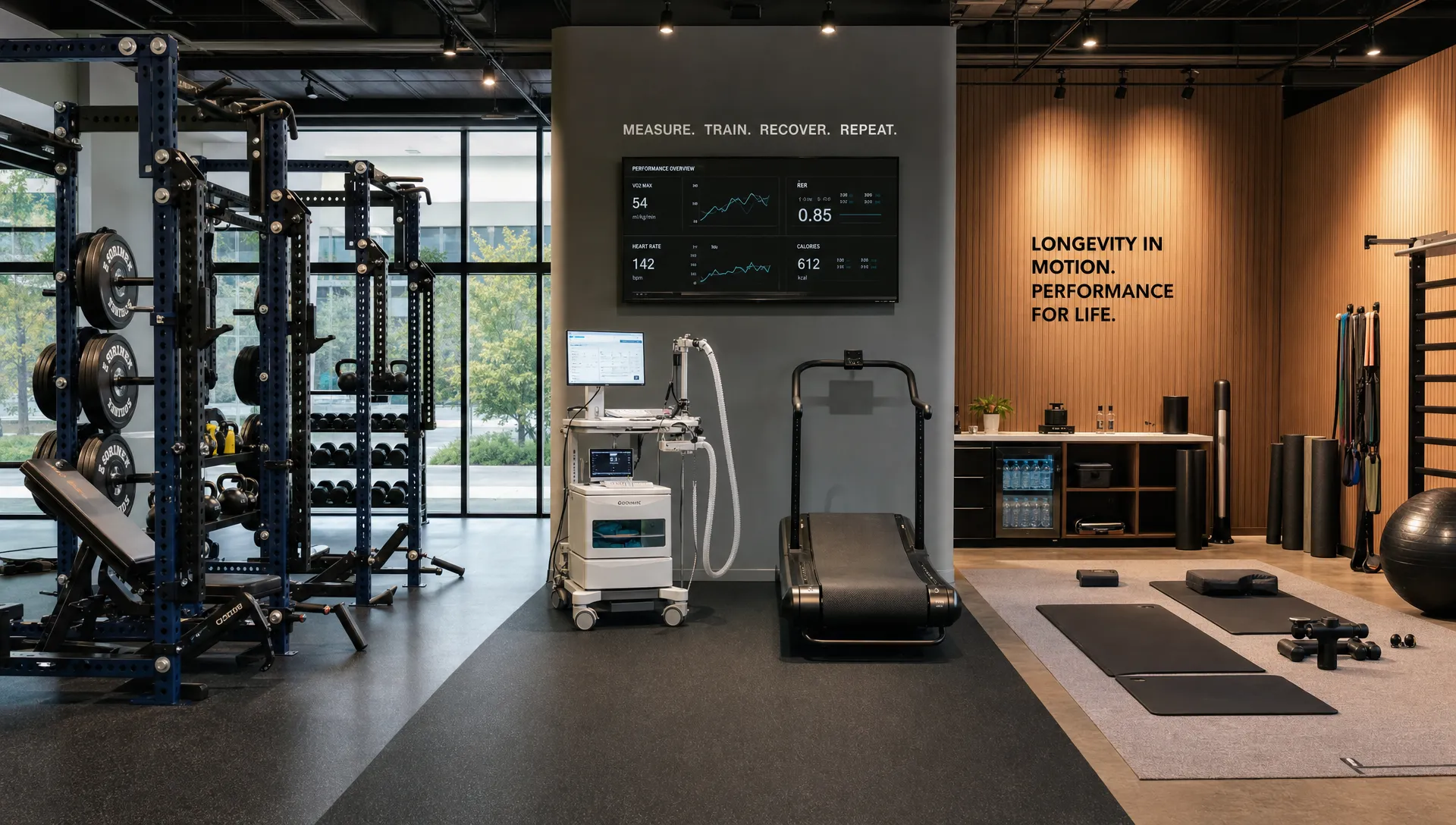


In your 20s, training often feels forgiving. You can miss sleep, take a last-minute class, lift hard without a plan, and still see progress. By your 30s and 40s, that approach usually stops working as well. Not because you are “old,” but because your physiology, schedule, stress load, and recovery capacity have changed.
The good news is that these decades can be some of the most productive years of your fitness life. You likely have more discipline, more clarity, and more reason to train for the long game. The goal is no longer just to look fit for the next event. It is to build strength, metabolic health, aerobic capacity, mobility, and resilience that carry into the next 30 years.
For busy San Francisco professionals, parents, founders, physicians, and anyone balancing demanding work with health goals, the smartest plan is not more random intensity. It is better measurement, better programming, and a more strategic definition of progress.
Why training goals change after 30
Your 30s and 40s bring a shift from “How hard can I go?” to “How consistently can I improve?” That change is partly lifestyle and partly biology.
Lean muscle mass and strength become more important with each decade. The major age-related muscle losses associated with sarcopenia are usually discussed in older adults, but the habits that prevent those losses need to start earlier. The revised European consensus on sarcopenia emphasizes strength as a key marker of muscle health, not just muscle size, which is why resistance training becomes a non-negotiable part of fitness planning as you age.
Aerobic fitness also deserves more attention. A well-known longitudinal study in Circulation found that aerobic capacity declines with age and that the decline can accelerate in later decades, especially without consistent training. Another large cohort study published in JAMA Network Open found that higher cardiorespiratory fitness was strongly associated with lower long-term mortality risk. In plain English, your VO2 max is not just a performance number. It is a meaningful health marker.
At the same time, your real life is probably less flexible than it was at 25. Workdays are longer. Travel may be frequent. Family responsibilities increase. Sleep can become less predictable. Stress is less episodic and more chronic. Your training has to respect those constraints, or it will not last.
That is why the best training and fitness goals in your 30s and 40s are built around sustainability, measurable progress, and recovery.
In your 30s: build the foundation you want to age with
Your 30s are the ideal decade to build a strong base. You can still gain muscle, improve conditioning, learn better movement patterns, and change body composition effectively. But you need to stop treating workouts as isolated events and start treating them as a program.
The priority is to establish baseline numbers. That might include strength markers, movement quality, resting heart rate, body composition, training history, nutrition habits, and aerobic fitness. If you are unsure where to start, Custom Fit’s guide on what a gym fitness trainer should measure first explains why goals, constraints, health history, and objective testing should come before a generic workout plan.
In your 30s, strong goals often include:
- Building or maintaining lean muscle through progressive strength training
- Improving movement quality before loading heavier weights
- Establishing a realistic weekly training rhythm
- Improving aerobic capacity, not just burning calories
- Learning how nutrition affects energy, recovery, and body composition
- Reducing pain points from desk work, travel, or old injuries
This is also the decade when many people benefit from learning proper technique. Squats, hinges, presses, pulls, carries, lunges, and rotational work become long-term movement investments. Done well, they build capacity. Done poorly, they can accumulate irritation over time.
Aesthetics can still matter, of course. Wanting to look leaner, stronger, or more athletic is valid. The difference is that physique goals should now sit inside a broader health strategy. The goal is not just a smaller number on the scale. It is better body composition, better performance, and better energy.
In your 40s: protect strength, power, and metabolic health
Your 40s are not a time to retreat from training. They are a time to train more intelligently.
This is often when people notice that the old formula no longer works. High-intensity workouts with poor sleep start to feel draining. Long cardio sessions may not change body composition the way they used to. Minor aches linger longer. Weight gain can happen even when habits seem “mostly the same.”
For men and women, hormonal shifts, career stress, sleep disruption, and reduced daily movement can all influence training response. For women, perimenopause may also affect recovery, body composition, sleep quality, and temperature regulation. For men, changes in muscle mass, stress resilience, and recovery may become more noticeable. These changes do not mean progress is over. They mean the plan needs to be more precise.
In your 40s, training goals should usually prioritize:
- Preserving and building muscle mass
- Maintaining power, balance, and athletic coordination
- Improving insulin sensitivity and metabolic health
- Keeping joints strong through full ranges of motion
- Protecting cardiovascular fitness with structured conditioning
- Matching training intensity to recovery capacity
Strength training becomes especially valuable because muscle is metabolically active tissue. More muscle supports glucose regulation, daily function, and long-term independence. The American College of Sports Medicine’s resistance training position stand supports progressive resistance training as a core method for improving strength, hypertrophy, power, and muscular endurance in healthy adults.
Power also matters. Many people keep slow strength work in their program but abandon speed, jumping, throwing, or quick directional changes. Not everyone needs advanced plyometrics, but most healthy adults benefit from some safe expression of power, such as medicine ball throws, controlled kettlebell work, step-ups with intent, or short accelerations when appropriate.
The biggest shift: from scale weight to body composition
In your 30s and 40s, scale weight can become misleading. Two people can weigh the same but have very different levels of lean mass, visceral fat, bone density, and metabolic risk.
That is why body composition testing can be so useful. DEXA scans, when appropriate, can help separate fat mass from lean mass and provide a clearer picture than weight alone. For someone who is strength training consistently, the scale may barely move while muscle increases and fat decreases. Without better data, that progress can be easy to miss.
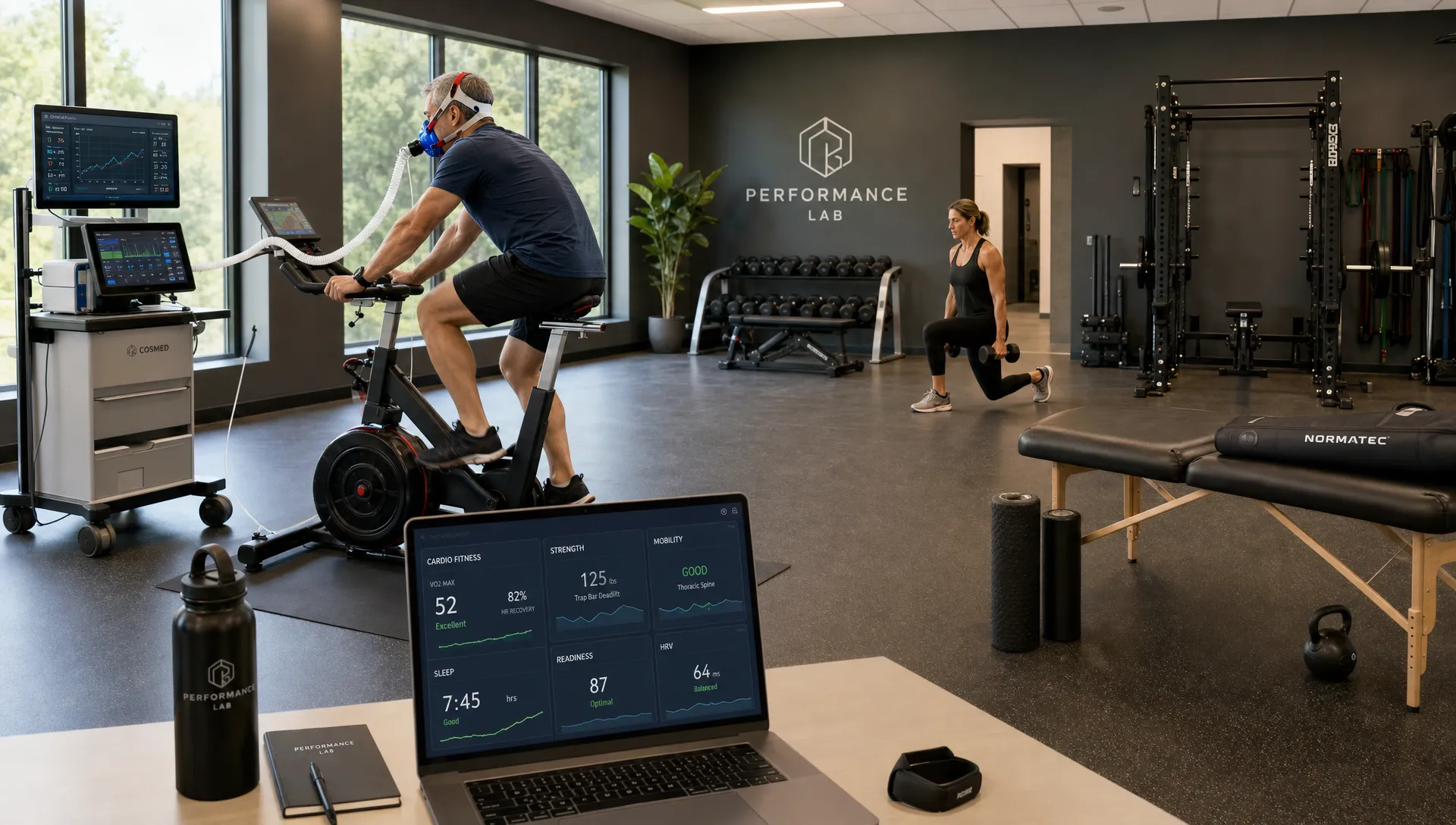
VO2 max testing can play a similar role for conditioning. Instead of guessing whether your cardio is “working,” you can measure aerobic capacity, set better training zones, and retest over time. For high-achieving professionals who like data, this can turn fitness from a vague effort into a measurable performance system.
The broader lesson is simple: what gets measured can be managed. The right numbers help you make better decisions about training volume, nutrition, recovery, and goal timelines.
What a smart training week looks like in your 30s and 40s
There is no perfect weekly template for everyone. A physician with a packed clinic schedule, a founder traveling twice a month, and a parent training before school drop-off all need different plans. Still, most effective programs share the same building blocks.
A smart week often includes two to four strength sessions, one to three aerobic sessions, daily walking or general movement, and dedicated recovery. The exact mix depends on your starting point and goals.
Strength sessions should focus on progressive overload, meaning you gradually increase challenge through load, reps, sets, tempo, range of motion, or exercise complexity. You do not need to max out every week. In fact, most adults in their 30s and 40s do better with consistent submaximal training that leaves room for recovery.
Cardio should include more than random intervals. Zone 2 training, usually a sustainable conversational pace, helps build aerobic capacity without excessive stress. Higher-intensity intervals can be useful too, but they should be programmed carefully, especially if you are under-slept, new to training, or managing health conditions.
Mobility should not be an afterthought. The goal is not circus-level flexibility. It is usable range of motion, joint control, and the ability to move well under load. Hips, ankles, thoracic spine, shoulders, and neck often need attention for people who sit, commute, travel, or spend long hours in focused work.
If consistency is your biggest challenge, it may help to build a plan around realistic minimums. Custom Fit’s article on how to build a personal fitness program you can stick to is a useful framework for making training fit your actual life rather than an idealized calendar.
Nutrition goals become more specific
In your 20s, you might have gotten away with vague nutrition habits. By your 30s and 40s, nutrition needs to become more intentional, especially around protein, fiber, hydration, and alcohol.
Protein is particularly important because it supports muscle repair and retention. The International Society of Sports Nutrition’s position stand on protein and exercise notes that active individuals often benefit from protein intakes above the basic recommended dietary allowance, depending on training status and goals. That does not mean everyone needs the same target, but it does mean protein should be planned rather than left to chance.
For many professionals, the biggest nutrition challenge is not knowledge. It is execution. Business dinners, late meetings, travel days, and stress snacking can quietly undermine progress. A registered dietitian or nutrition coach can help translate goals into practical defaults, such as protein-forward breakfasts, travel-friendly meals, better restaurant ordering strategies, and recovery nutrition after training.
Body composition goals also need patience. Aggressive dieting can backfire if it reduces training performance, sleep, mood, or lean mass. In midlife, the better target is often a modest calorie deficit paired with strength training, adequate protein, and enough carbohydrates to support hard sessions.
Recovery is now part of the program, not a reward
Recovery becomes one of the biggest differentiators in your 30s and 40s. The people who keep progressing are not always the ones who train the hardest. They are the ones who can repeat quality training week after week.
Sleep is the foundation. Poor sleep affects appetite regulation, glucose control, motivation, coordination, and perceived exertion. If sleep is consistently short, your program may need lower intensity, fewer hard sessions, or more recovery work until your baseline improves.
Stress management matters too. High work stress and high training stress draw from the same recovery budget. A hard workout can be productive, but if it is layered on top of poor sleep, long workdays, and under-fueling, it can become another stressor rather than a stimulus.
Recovery services, mobility work, lower-intensity conditioning and better scheduling can all have a place in a training plan. During demanding work or travel weeks, adjust the plan to protect time for sleep and recovery.
Common mistakes to avoid
The most common midlife fitness mistake is trying to train exactly like you did 15 years ago. That usually means too much intensity, not enough progression, and no clear recovery strategy.
Other common mistakes include:
- Doing only cardio while neglecting strength training
- Chasing soreness instead of measurable improvement
- Cutting calories too aggressively while trying to build muscle
- Ignoring mobility until pain appears
- Training hard for three weeks, then disappearing for three weeks
- Using scale weight as the only measure of progress
The better approach is to set goals across multiple categories. Track strength, conditioning, body composition, energy, sleep, mobility, and adherence. If several of those markers are improving, you are probably on the right path.
When a coach becomes more valuable
A good coach is useful at any age, but the value often increases in your 30s and 40s because the margin for error gets smaller. You may not have time for months of guessing. You may also need a plan that accounts for work stress, old injuries, travel, nutrition, and measurable health markers.
Personal training can help with exercise selection, progression, technique, accountability, and recovery management. It can also help you avoid doing too much too soon, which is one of the main reasons adults stop training. If you are weighing how often to train with support, Custom Fit’s guide on how many personal training sessions you really need can help you think through the right starting point.
For people who want a more data-driven approach, combining coaching with DEXA scans, VO2 max testing, nutrition coaching, and recovery planning can create a clearer path. This is especially relevant if your goals include longevity, metabolic health, performance, or sustainable body composition change.
Frequently Asked Questions
Is it harder to get fit in your 30s and 40s? It can be harder to rely on random workouts and quick fixes, but it is not too late to get strong, lean, and well-conditioned. Most people make excellent progress when they follow a structured plan, train consistently, and recover properly.
Should training in your 40s be less intense? Not necessarily. Intensity can still be valuable, but it needs to be dosed intelligently. Many people do best with a mix of strength training, moderate aerobic work, occasional higher-intensity sessions, mobility, and planned recovery.
What is the most important fitness goal after 30? Strength is one of the highest-value goals because it supports muscle mass, metabolism, joint health, and long-term function. Aerobic fitness, mobility, and body composition are also important, so the best plan balances all of them.
How often should I lift weights in my 30s or 40s? Many adults do well with two to four strength sessions per week, depending on experience, recovery, and goals. Beginners may start with two focused sessions, while experienced trainees may benefit from three or four.
Should I get DEXA or VO2 max testing? If you want objective data, both can be useful. DEXA can clarify body composition, while VO2 max testing can help assess aerobic fitness and guide conditioning. Testing is most valuable when paired with a plan and periodic retesting.
Build a fitness plan for the decade you are actually in
Your 30s and 40s are not a downgrade. They are an opportunity to train with more purpose.
Instead of chasing every trend, focus on the markers that matter: strength, lean mass, aerobic capacity, mobility, nutrition, recovery, and consistency. With the right testing and coaching, you can stop guessing and start building a program that matches your body, your schedule, and your long-term health goals.
Custom Fit SF offers personal training, nutrition coaching, DEXA scans, VO2 max testing, recovery programs, and advanced longevity testing for people who want a more precise approach to fitness. If you are ready to train smarter for your 30s, 40s, and beyond, explore Custom Fit and take the next step toward a stronger, more resilient body.