When Should You Get a Bone Density Scan?
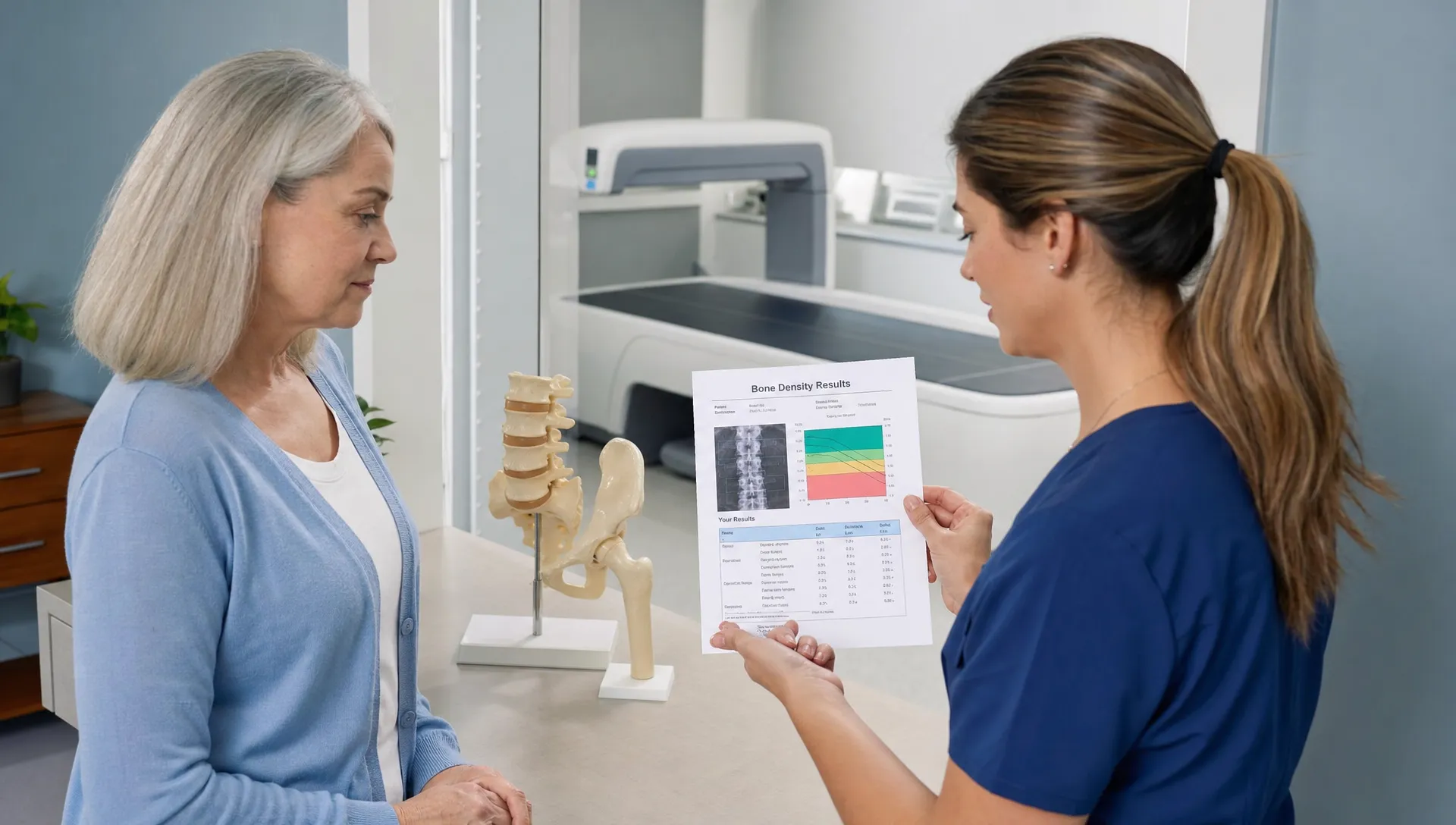


A bone density scan is one of those tests many people postpone because they feel healthy, active or “too young” to worry about bone loss. That is exactly why timing matters. Osteoporosis usually develops without symptoms, and for many adults the first warning sign is a fracture after a fall that should not have caused serious damage.
The right time to get a bone density scan depends on your age, sex, hormone status, fracture history, medications, medical conditions and training background. For some people, screening starts at 65. For others, especially those with specific risk factors, it should happen much earlier.
The quick answer: when should you get a bone density scan?
A DEXA scan, also written as DXA, is the most common bone density scan. It uses low-dose X-ray technology to estimate bone mineral density, usually at clinically relevant sites such as the hip and spine. Many modern DEXA assessments can also provide body composition data, including fat mass, lean mass and visceral fat estimates, depending on the scan type and facility.
Here is a practical starting point for when to ask your physician or qualified health professional about getting screened.
| Situation | When to consider a bone density scan |
|---|---|
| Women age 65 and older | Get screened, even if you feel healthy |
| Postmenopausal women under 65 with risk factors | Ask about screening now rather than waiting |
| Men age 70 and older | Ask about a baseline scan |
| Men age 50 to 69 with risk factors | Ask whether earlier screening makes sense |
| Adults over 50 with a low-trauma fracture | Get evaluated soon after the fracture |
| Anyone taking long-term glucocorticoids or certain hormone therapies | Ask about baseline and follow-up testing |
| People with conditions linked to bone loss | Discuss screening timing with your clinician |
| Athletes with recurrent stress fractures, low energy availability or menstrual disruption | Consider evaluation earlier, especially with a sports medicine or endocrine specialist |
The U.S. Preventive Services Task Force recommends osteoporosis screening for women 65 and older, and for postmenopausal women younger than 65 who are at increased risk. The Bone Health and Osteoporosis Foundation Clinician’s Guide also supports bone density testing for women 65 and older, men 70 and older, adults over 50 with fractures and younger postmenopausal women or men 50 to 69 with risk factors.
Those guidelines are a starting point, not a substitute for medical judgment. If you have a fracture history, chronic condition or medication exposure that affects bone, your personal timeline may be different.
Why bone density testing is often needed before symptoms appear
Bone loss rarely announces itself. You do not feel your bone mineral density dropping, and a bathroom scale cannot tell you whether your hip or spine is losing strength. You can look lean, train hard and still have low bone density if your nutrition, hormones, recovery or medication history has worked against your skeleton.
That silent progression is why screening is valuable. A bone density scan can identify low bone mass before a hip, wrist or vertebral fracture forces the issue. It can also create a baseline, which is useful if you are starting a medical treatment, changing your training plan or working on nutrition strategies to support bone health.
For high-performing professionals in San Francisco, this often becomes relevant sooner than expected. Long work hours, frequent travel, inconsistent meals, low vitamin D exposure, under-fueling during intense training or years of weight-focused dieting can all affect bone health. None of these factors guarantee low bone density, but they can make a baseline scan worth discussing.
What a bone density scan actually measures
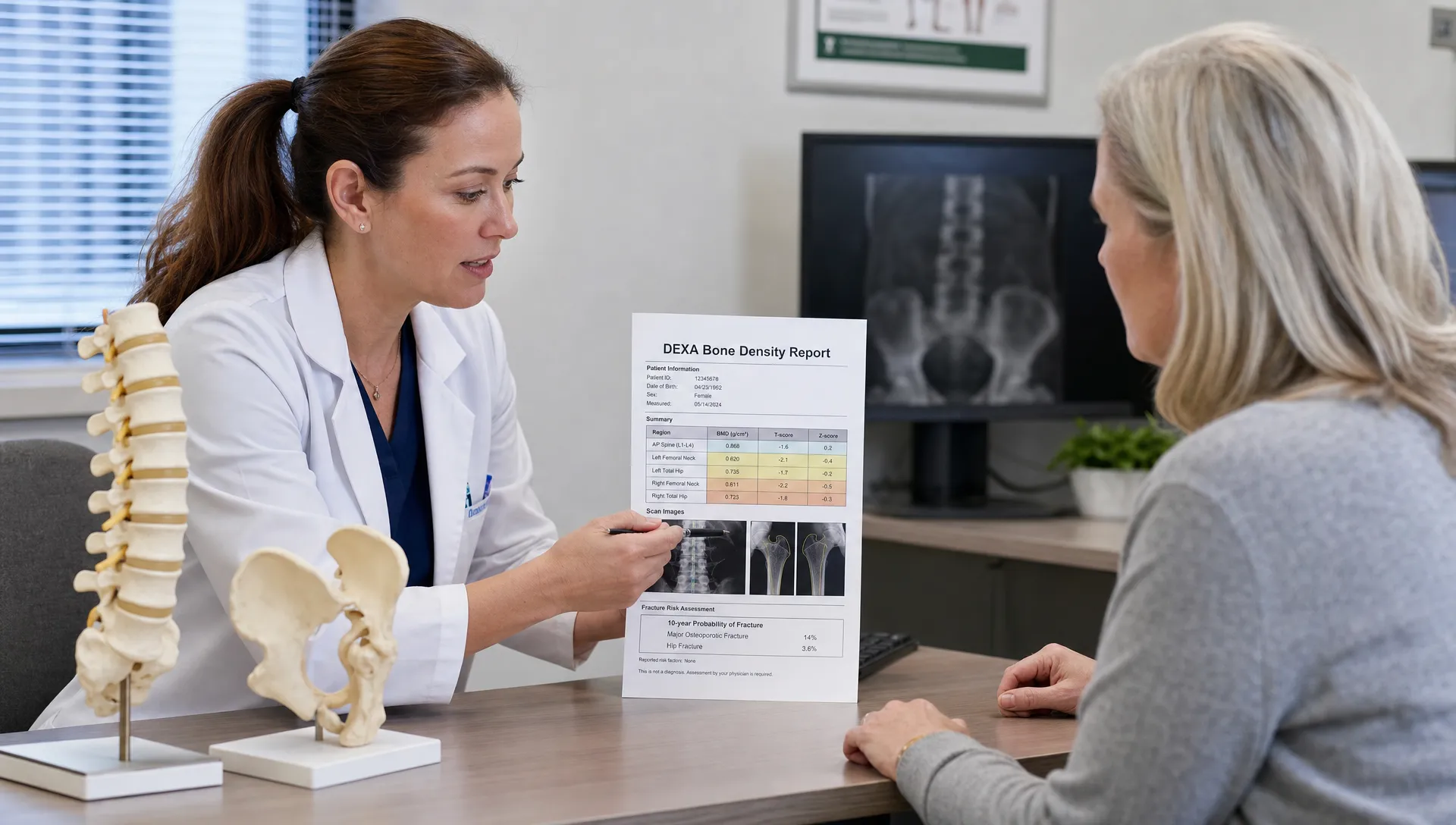
A bone density scan estimates bone mineral density, often reported with two scores:
- T-score: Your bone density compared with a healthy young adult reference population. A T-score of -1.0 or above is generally considered normal, between -1.0 and -2.5 is considered low bone mass, often called osteopenia, and -2.5 or lower meets the bone density threshold for osteoporosis.
- Z-score: Your bone density compared with what is expected for someone your age, sex and body size. This can be especially useful for younger adults, premenopausal women and athletes.
A clinician may also use your age, fracture history, family history and other risk factors to estimate fracture risk. Tools such as FRAX are commonly used in medical settings to estimate 10-year fracture probability, though they do not replace a clinician’s assessment.
If you are getting a DEXA scan for body composition, you may receive additional metrics beyond bone density, such as regional lean mass, body fat percentage and visceral fat. At Custom Fit, DEXA scans are performed by Registered Dietitians or Exercise Physiologists, which matters because you are not simply receiving an automated scan report. You are working with professionals who understand nutrition, exercise physiology and body composition, and who can help you interpret what the numbers may mean in the context of your goals.
You should not wait until age 65 if you have major risk factors
Age-based screening is useful, but risk-based screening catches people who fall outside the standard timeline. If any of the following apply, it is worth asking about a bone density scan earlier.
You have had a low-trauma fracture
A fracture from a standing-height fall, a minor trip or an impact that would not normally break a bone deserves attention, especially after age 50. Wrist, hip, spine and shoulder fractures can all signal underlying skeletal fragility.
Even if the fracture has healed, a scan can help determine whether low bone density contributed. This is also the moment to review vitamin D status, calcium intake, protein intake, fall risk, medications and whether pharmacologic treatment is appropriate.
You are postmenopausal or had early menopause
Estrogen plays a major role in maintaining bone density. Bone loss often accelerates during the menopause transition and in the years after menopause. Women who enter menopause early, have surgical menopause or have prolonged periods of low estrogen may need earlier evaluation.
For women under 65, risk factors such as low body weight, smoking, parental hip fracture, certain medications or previous fracture can move screening earlier. The USPSTF recommendation specifically calls out postmenopausal women under 65 who are at increased risk.
You take medications known to affect bone
Long-term glucocorticoid use, such as prednisone, is one of the best-known medication-related risks for bone loss. Other medications and treatments may also affect bone health, including aromatase inhibitors for breast cancer, androgen deprivation therapy for prostate cancer, some anti-seizure medications and certain treatments that alter sex hormones.
If you are starting one of these therapies, ask whether you should get a baseline scan before or soon after treatment begins. A baseline makes future changes easier to interpret.
You have a medical condition linked to low bone density
Several conditions can reduce bone density directly or indirectly. Examples include rheumatoid arthritis, celiac disease, inflammatory bowel disease, hyperthyroidism, chronic kidney disease, liver disease, eating disorders, malabsorption, bariatric surgery history and low testosterone.
This is where personalized judgment matters. Two people with the same age and sex may need different screening schedules because their medical histories are completely different.
You are an endurance athlete or very active adult with warning signs
Exercise is generally good for bone, especially resistance training and impact loading. But more training is not always better if it comes with chronic under-fueling, menstrual irregularity, low testosterone, recurrent stress fractures or poor recovery. Runners, cyclists, triathletes and aesthetic-sport athletes can be at risk if energy availability stays too low for too long.
A bone density scan may be appropriate if you have recurrent bone stress injuries, missed periods, a history of eating disorder behavior or unexplained performance decline paired with fatigue and poor recovery. In these cases, the scan is only one piece of the picture. Nutrition, hormones, training load and recovery need to be evaluated together.
When a bone density scan is useful for longevity and performance tracking
Not every bone density scan is ordered because someone suspects osteoporosis. Many adults use DEXA as part of a broader longevity or performance baseline, especially when they want objective information about lean mass, fat distribution and bone health.
For example, a professional training before work in the Financial District or fitting sessions around a commute from Pacific Heights may not have time for guesswork. A scan can help clarify whether a strength program is building lean mass, whether weight loss is preserving muscle and whether bone density deserves closer attention. If you want a local testing option with professional interpretation, Custom Fit in San Francisco offers a data-driven setting for DEXA testing and related wellness services.
Clinical bone-density examinations and body-composition scans answer different questions. Custom Fit offers body-composition DEXA scans, performed and analyzed by Registered Dietitians or Exercise Physiologists. This service does not diagnose osteoporosis or replace a medical bone-density examination. Discuss clinical screening and treatment decisions with your healthcare clinician.
How often should you repeat a bone density scan?
The answer depends on why you scanned in the first place. Bone density changes slowly, so repeating too soon may not add much unless you are monitoring a high-risk condition or treatment response.
Many people with diagnosed osteoporosis, new medication use or significant risk factors are retested every 1 to 2 years, depending on the clinician’s plan. Lower-risk adults with normal results may not need another scan for several years. If you are using DEXA for body composition or longevity tracking, the cadence may be different because lean mass and fat distribution can change faster than bone density.
For a more detailed breakdown by goal, Custom Fit has a separate guide on how often to get DEXA scans for tracking, including fat loss, muscle gain, longevity tracking and bone density monitoring.
Whenever possible, compare results from the same machine or facility, and pay attention to whether the same regions were measured. Small differences in positioning or equipment can make tiny changes look more meaningful than they are.
What happens if your scan shows low bone density?
Low bone density is not a reason to panic, but it is a reason to act. The next step depends on the severity of the result, your age, fracture history and overall risk profile.
A physician may recommend lab work to look for secondary causes, such as vitamin D deficiency, thyroid abnormalities, parathyroid issues, kidney disease, celiac disease or hormone changes. They may also discuss medications that reduce fracture risk if your results or fracture history meet treatment criteria.
Lifestyle changes can be powerful, but they need to be specific. “Exercise more” is too vague. Bone responds best to appropriate loading, which may include progressive resistance training, impact work when safe and balance training to reduce fall risk. Nutrition should cover adequate protein, calcium, vitamin D and total energy intake. For people who have dieted aggressively or under-fueled training, eating enough can be as important as eating the right nutrients.
If your scan includes body composition metrics, it is worth reviewing them with someone who can distinguish between fat loss, muscle loss and meaningful changes in regional lean mass. If you are unsure how to interpret your report, this guide to reading your DEXA scan results can help you understand the main sections before you discuss next steps with a professional.
Be careful with generic online interpretations
Bone density results can look simple, but the decisions around them are not always simple. A T-score, Z-score or body composition result should be interpreted alongside your history, medications, training, nutrition and fracture risk.
Online wellness content can help explain terms, but it should not replace clinical guidance. Check health claims against medical guidelines, research and qualified professionals rather than relying on polished wording alone.
This is especially true if your scan suggests osteoporosis, if you have had a fracture or if you are considering supplements or medications. Bring your results to your physician, and if you are using DEXA for fitness or longevity, work with professionals who understand both the testing technology and the behavior change required to improve outcomes.
How to prepare for your appointment
A bone density scan is usually quick and noninvasive. Preparation varies by facility and scan type, so follow the instructions you receive when booking. In general, wear comfortable clothing without metal hardware, tell the facility if you might be pregnant and ask whether you need to pause calcium supplements before a diagnostic scan.
If you want a step-by-step preview, Custom Fit explains what happens during a bone density test, including what the appointment looks like and how to prepare.
It can also help to bring or list the following: recent fractures, current medications, supplement use, menopause history, hormone therapy, relevant diagnoses, recent lab work and your main reason for testing. The more context your provider has, the more useful the scan becomes.
For clinicians, concierge practices and longevity teams
For private practice physicians, concierge medicine groups and longevity clinics, DEXA can be a practical referral tool when a patient’s risk profile extends beyond routine annual labs. It is particularly useful for postmenopausal women, men with hormone concerns, patients on bone-impacting medications, adults with unexplained fractures and clients pursuing aggressive body composition changes.
A strong testing partner should offer more than a printout. For patients focused on prevention, performance or metabolic health, professional interpretation helps connect bone density with lean mass, nutrition status and training behavior. At Custom Fit, scans are performed by Registered Dietitians or Exercise Physiologists, which supports a more informed conversation around exercise physiology, nutrition and body composition.
Frequently Asked Questions
At what age should I get a bone density scan? Women should generally be screened at 65 and older. Many guidelines also support testing men at 70 and older, and earlier testing for adults with risk factors such as fractures, long-term steroid use, low body weight, early menopause or conditions associated with bone loss.
Is a DEXA scan the same as a bone density scan? DEXA is the most common type of bone density scan. It measures bone mineral density and may also provide body composition data depending on the scan and facility.
Should I get scanned if I lift weights and feel healthy? Strength training is excellent for bone health, but it does not rule out low bone density. If you have risk factors, a history of stress fractures, hormone changes, under-fueling or a family history of osteoporosis, it is worth asking about a scan.
How often should I repeat a bone density scan? Many higher-risk adults repeat testing every 1 to 2 years under medical guidance. Lower-risk adults with normal results may wait longer. If you are tracking body composition, your retesting schedule may be different from your bone density schedule.
Can a bone density scan diagnose osteoporosis? A DEXA scan can provide bone density scores that help identify osteoporosis, but diagnosis and treatment decisions should be made by a qualified medical professional who can review your full history and fracture risk.
Is a bone density scan safe? DEXA uses low-dose X-ray technology and is generally considered safe for appropriate candidates. Tell the facility if you are pregnant or might be pregnant, and follow any preparation instructions you receive.
Get a clearer baseline for bone health and body composition
If you are wondering whether now is the right time for a bone density scan, start with your age, fracture history, medications and risk factors. If you also want deeper insight into body composition, lean mass and visceral fat, DEXA can provide a more complete baseline than weight or BMI alone.
Custom Fit offers DEXA scans in San Francisco performed by Registered Dietitians or Exercise Physiologists, so your results are reviewed by professionals who understand nutrition, exercise physiology and body composition. If you are ready to pair objective testing with expert interpretation, explore Custom Fit’s DEXA scan purchase options or speak with your healthcare provider about the best screening timeline for you.