Is a High-Intensity Class the Right Fit for You?
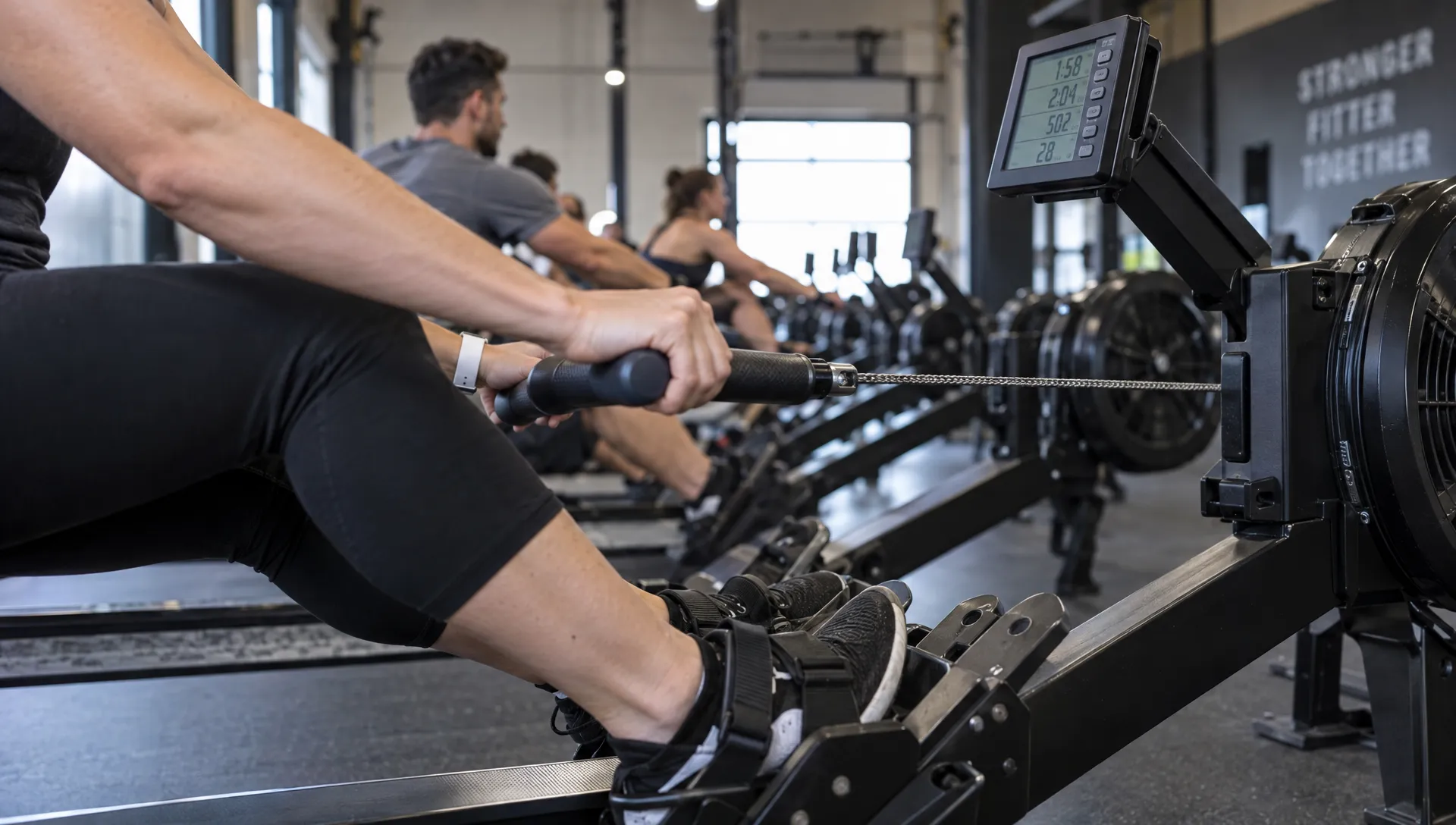


A high-intensity class can be the right fit for you if its demands match your current fitness, the instructor offers meaningful modifications and you recover well enough to keep training consistently. Sweating heavily or finishing exhausted does not tell you whether those conditions are met.
For busy San Francisco professionals, the appeal is clear: a scheduled session, energetic coaching and a challenging workout without planning every exercise yourself. But efficiency depends on what the class helps you accomplish, not just how hard it feels. Here is how to evaluate the format before committing, then use your first session to make a better decision.
What “high intensity” actually means
High-intensity interval training, or HIIT, alternates hard efforts with easier activity or rest. A class might use bikes, rowing machines, bodyweight movements or resistance exercises. Not every fast-paced circuit is structured HIIT, even when the marketing uses that label.
Intensity is also relative. The same cycling resistance might feel manageable to a regular rider and overwhelming to someone returning after a long break. The CDC’s guidance on measuring physical activity intensity describes vigorous effort as a level at which you cannot say more than a few words without pausing for breath.
That does not mean every interval should be an all-out test. A useful class provides a warm-up, explains the work and recovery periods and lets you adjust the challenge without losing the purpose of the exercise.
An interval class is more likely to be a good fit for you when “hard” means a controlled personal effort, rather than keeping pace with the strongest person in the room.
What you can reasonably expect to gain
HIIT can improve cardiovascular fitness. A systematic review and meta-analysis published in Sports Medicine found that both interval training and continuous endurance training improved maximal oxygen uptake, with greater average improvements from interval training across the included controlled trials.
That finding supports HIIT as an effective option, not a requirement. Study protocols differ from commercial classes, and average research results cannot predict how a particular session will work for you.
The format may also suit people who enjoy variety, clear work periods and an instructor setting the pace. Shorter bouts can make demanding exercise feel more approachable than one long sustained effort.
However, a sweaty circuit does not automatically replace dedicated strength training or all your weekly aerobic activity. The Physical Activity Guidelines for Americans recommend 150 to 300 minutes of moderate aerobic activity or 75 to 150 minutes of vigorous activity weekly, plus muscle-strengthening activity on at least two days.
High intensity may be a good fit for you as one part of that mix, rather than the centerpiece of every workout.
Check your starting point before choosing the pace
New to exercise or returning after a break
Being a beginner does not automatically rule out an interval class. What matters is whether the instructor can reduce the workload and simplify movements while preserving useful practice.
Look for options such as shorter work periods, longer recovery, lighter resistance and low-impact alternatives. You should be able to learn a squat or hinge without racing a countdown. If the class combines unfamiliar lifting movements with rapid transitions, a slower introduction or individual coaching may be more productive.
Previous fitness is not the same as current readiness. After months away, start with what you can comfortably manage now, not the pace you remember.
Managing symptoms, an injury or a health condition
If you have known heart or lung disease, symptoms during exertion, a significant injury or recent surgery, ask your treating clinician about appropriate intensity and restrictions before joining. Pregnancy and postpartum recovery can also call for individualized exercise guidance.
Stop exercising and seek urgent medical care for chest pain, fainting or severe, unexplained shortness of breath. Sharp pain, dizziness and loss of movement control are not challenges to push through.
A modified class may still be a fit for you, but the modification needs to address your situation. “Just take it easy” is not a substitute for a clear plan.
How to tell whether a class is a fit for you
Ask about the class before buying a package. The answers should explain how the session works, not simply promise that everyone can participate.
| What to check | A useful sign | A reason to pause |
|---|---|---|
| Intensity options | Participants can change resistance, pace or work duration | Everyone is expected to match one pace |
| Exercise instruction | Movements are demonstrated and coached | Technique explanations are skipped |
| Impact modifications | Jumping has a clear low-impact alternative | Jumping is treated as mandatory |
| Recovery periods | Rest is planned and can be extended when needed | Extra rest is discouraged or mocked |
| Instructor attention | The coach watches movement and responds to questions | The coach mainly performs their own workout |
| First-visit process | You can discuss experience, limitations and goals | No one asks about your starting point |
Check practical details too: current class times, booking rules, cancellation fees and whether you can try a session before making a longer commitment. For a San Francisco workday, include the actual commute, changing time and return trip in your calculation.
If your main uncertainty is how much individual attention you need, comparing group classes with private coaching can help you choose the setting before choosing the intensity.
Use your first class as a trial, not a test
Before and during the session
Tell the instructor that it is your first visit, even if you exercise elsewhere. Mention relevant limitations and ask which movements have alternatives. Arrive early enough to understand the equipment rather than learning every adjustment during a timed interval.
For the first session, choose a workload that leaves room to increase later. Extend a recovery period when necessary and reduce speed before your movement becomes uncontrolled. You should not need to earn permission to stop.
The class is more likely to be a sustainable fit for you if you can follow the instructions, maintain control and adjust the effort without feeling pressured to ignore warning signs.
Over the following day or two
Notice more than soreness. Can you walk, take stairs, concentrate at work and sleep reasonably well? Do you feel ready for your next planned activity, or does the session disrupt the rest of your week?
Some temporary fatigue or soreness can follow unfamiliar exercise. Neither proves the workout was effective, and severe soreness is not a goal. If discomfort changes how you move, scale back and seek professional guidance if it persists or concerns you.
One class in your first week can provide useful information. Avoid placing another hard session immediately afterward while you learn how you respond.

Recovery determines whether the schedule works
A class that fits an open calendar slot may still exceed your recovery capacity. Poor sleep, demanding workdays and other training all affect how much additional intensity you can tolerate.
Start by considering your whole week. If you already have challenging runs or heavy lifting sessions, another demanding class adds to that workload. An easier walk, moderate bike ride or rest day may serve you better between hard sessions.
Support recovery with adequate sleep, regular meals containing carbohydrate and protein and fluids appropriate to your activity and conditions. You do not need an elaborate post-workout ritual to benefit from exercise.
Wellness products are optional rather than recovery essentials. If you are considering warm-air herbal vaporization from Air Tea, distinguish it from drinking tea and do not assume it improves breathing or exercise recovery. People with asthma or airway sensitivity should discuss inhaled products with a clinician.
The weekly routine is a better fit for you when hard sessions leave enough capacity for ordinary life and your other training. If performance, sleep or motivation repeatedly deteriorates, reduce the workload rather than treating the struggle as proof of commitment.
For help arranging the practical side, consider how workout classes can fit into a busy week without making every available slot a hard workout.
When individual coaching or testing adds value
Personal training can help when you need more time to learn movements, have specific restrictions or struggle to choose an appropriate starting workload. It can also complement classes rather than replace them.
VO2 max testing measures aerobic capacity and can help inform cardiovascular training. Custom Fit offers VO2 max testing alongside personal training, group classes and nutrition coaching. Ask how the results would inform your exercise plan and whether testing is appropriate for your goals.
Testing is not required before every beginner joins a class, and a fitness test does not replace medical evaluation when symptoms or health conditions warrant it. Useful data should help answer a practical training question, not create another hurdle to getting started.
Frequently asked questions
Can a beginner take a high-intensity class? Yes, if the session offers appropriate instruction, adjustable effort and usable modifications. A class may be a fit for you even when you skip jumping, use lighter resistance or take longer rests. A rigid pace with little coaching is a less suitable starting point.
Is low-impact exercise still high intensity? It can be. Impact describes forces such as landing from a jump, while intensity describes how demanding the activity is. Cycling intervals can be vigorous without jumping, although low impact does not automatically mean appropriate for every injury.
How many high-intensity classes should I take each week? There is no single number that suits everyone. Start with your current activity, health and recovery. A first-week trial of one class lets you evaluate the response before adding sessions. Account for other demanding workouts too.
Should I be sore after a good class? No. Soreness often reflects unfamiliar exercise rather than workout quality. Better indicators include controlled movement, appropriate effort and gradual improvement across repeated sessions. Persistent pain or soreness that disrupts normal activity calls for reassessment.
Choose the challenge you can repeat
The right class should challenge you without making modification feel like failure. Before committing, confirm the coaching approach, try a manageable session and evaluate how you feel afterward.
To explore whether high-intensity training is the right fit for you, contact Custom Fit about current class formats and personal training options. Share your exercise history, goals and weekly demands so the conversation starts with your needs, not simply the hardest workout available.