What Makes Group Training More Effective Than Going Solo?
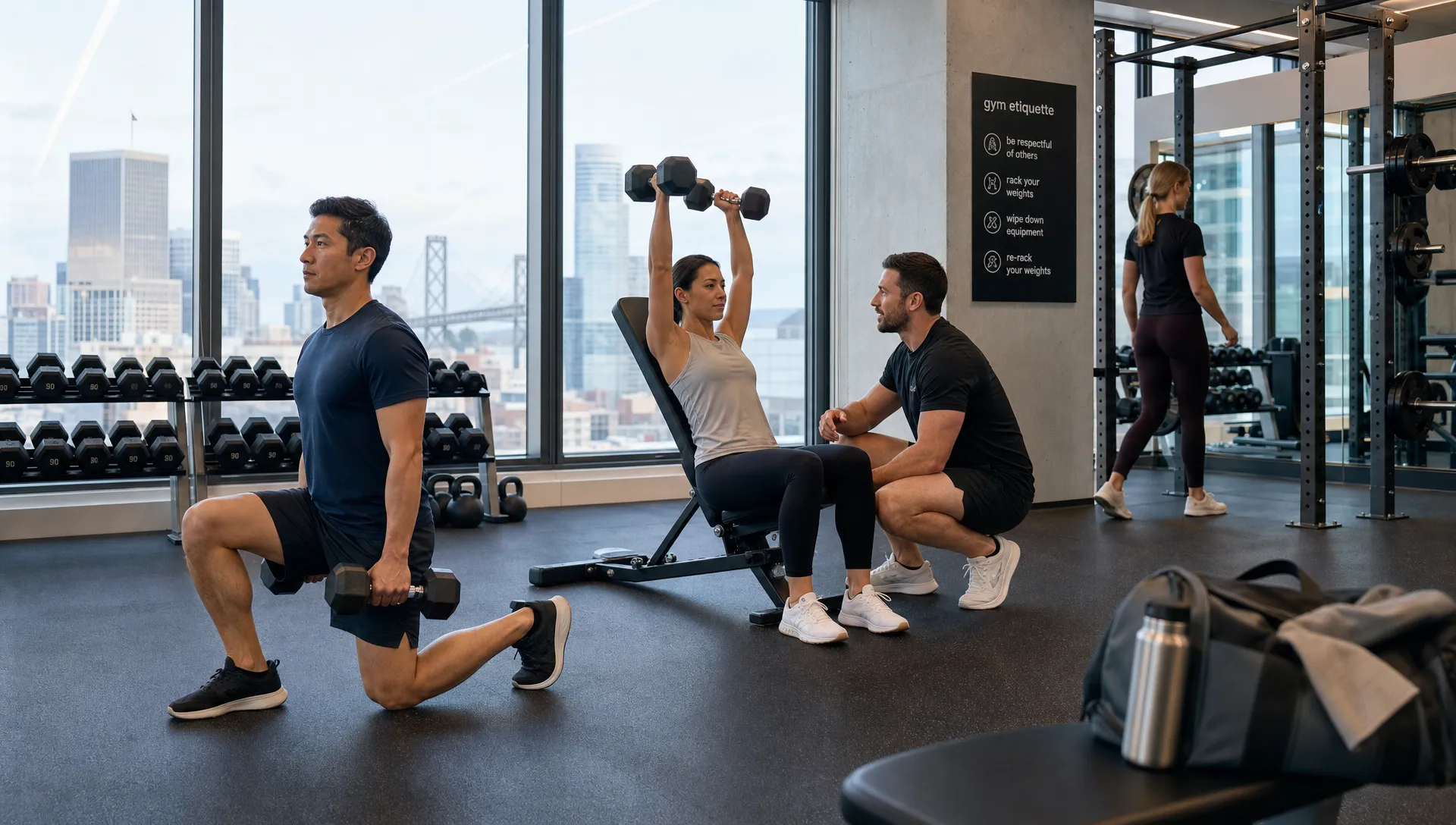


For many busy San Francisco professionals, group training works because it solves the two problems solo workouts rarely solve for long: structure and consistency. You can have a great gym, premium equipment and a clear health goal, but if every session depends on your own planning, motivation and technique judgment, progress becomes harder than it needs to be.
Going solo can work for disciplined lifters with strong programming knowledge. The problem is that most people are not failing because they lack effort. They are failing because the system around their training is too loose. A coached setting adds appointments, feedback, smart progression and a social environment that makes showing up feel easier.
Why group training often beats solo workouts
The strongest fitness plan is not always the most complicated one. It is the one you repeat long enough to create adaptation. In that sense, a group setting gives you leverage: fewer decisions before the workout, better feedback during the workout and more accountability after the workout.
That is why group training can be more effective than training alone, especially for professionals whose days are packed with meetings, patient appointments, client calls or family obligations. You are not simply joining other people in a room. You are putting yourself inside a structure that makes the right behavior more automatic.
Research on habit formation supports this idea. In a widely cited study published in the European Journal of Social Psychology, Phillippa Lally and colleagues found that habits take time and repetition to become automatic, with wide variation between people depending on the behavior and context (PubMed). A recurring coached session gives that habit a stable cue: same time, same place, same expectation.
Accountability changes the math of consistency
Most solo workouts fail before the warmup. A late meeting runs long, you forget what you planned to train or you decide to “make it up tomorrow.” In a group environment, the appointment has more weight. Other people expect you to be there and the coach has a plan ready.
A scheduled, coached session reduces the planning required for each workout. That structure can help you focus on participating and learning.
For people commuting from SoMa or the Financial District, this matters. If you can place training into a predictable weekly rhythm, it becomes part of the workday rather than an optional errand after a draining day. Group training makes consistency less dependent on mood, which is often the difference between a fitness goal that survives a busy quarter and one that disappears.
Coaching turns effort into productive effort
Working hard and training well are not the same thing. A solo workout can feel intense while still missing the stimulus you need, using poor exercise selection or reinforcing inefficient movement patterns. A coach helps redirect effort toward the right goal.
That may mean adjusting the load on a squat, changing a hinge to protect your back, scaling a conditioning interval or helping you stop a set before your form breaks down. If you want more detail on how small groups can still feel personalized, Custom Fit has a useful breakdown of why group personal training can deliver individual attention.
In a well-run group training session, the coach is not just counting reps. They are watching how you move, how you recover and whether your effort matches the purpose of the session. That matters for everyone, but it is especially valuable if you are returning after time off, managing stress or trying to train hard without getting hurt.
The room helps you choose the right intensity
Training alone makes intensity difficult to judge. Some people undertrain because they stop when effort becomes uncomfortable. Others overtrain because every session turns into a personal test. A group environment gives you a better reference point.
You see people working at different levels, using different modifications and still moving toward the same session goal. That can normalize effort without turning the workout into a competition. It also helps you understand what “challenging but repeatable” feels like, which is where a lot of productive training lives.
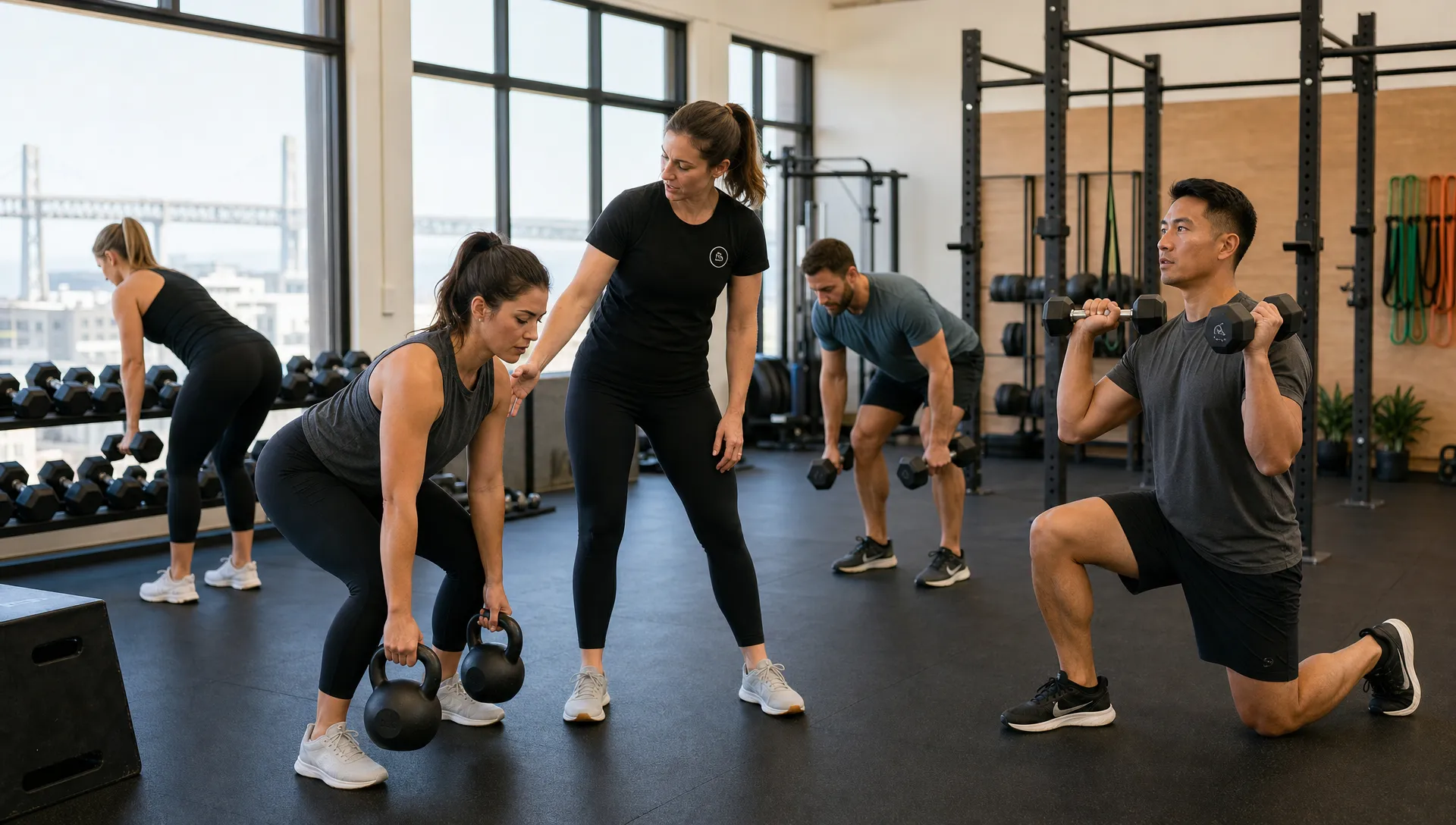
For strength and conditioning, this shared energy can raise focus without requiring you to manufacture motivation on your own. The best group training environments use that energy carefully: enough encouragement to help you push, enough coaching to keep the session safe and enough scaling so each person trains at the right level.
Structured programming beats random workouts
The body adapts to progressive challenge. That is true whether your goal is fat loss, muscle gain, bone health, better metabolic fitness or simply feeling stronger. Random workouts can be entertaining, but they are often poor at building measurable progress.
The American College of Sports Medicine’s position stand on resistance training emphasizes progression, exercise selection, volume and intensity as key variables for improving strength and muscular fitness (PubMed). In plain language, your program should not be a different surprise every day. It should have enough variety to stay engaging and enough structure to create adaptation.
That is a major advantage of group training when the programming is professionally designed. You get a planned sequence of movement patterns, loads and recovery periods instead of guessing what to do next. The coach can also help you progress exercises over time rather than jumping from one trend to another.
| Training factor | Going solo | Coached group environment |
|---|---|---|
| Workout planning | You decide each session | Program is prepared in advance |
| Technique feedback | Limited unless you film yourself | Coach can cue and adjust in real time |
| Consistency | Depends heavily on self-motivation | Supported by schedule and social accountability |
| Intensity control | Easy to underdo or overdo | Coach helps scale effort |
| Progress tracking | Often inconsistent | More likely to follow a plan over time |
Data makes the experience more personal
One misconception is that a group setting has to be generic. It does not. The session can be shared while the targets, modifications and progress markers remain individual. This is where data-driven coaching becomes especially powerful.
At Custom Fit, clients can pair training with tools such as DEXA scans, VO2 max testing, nutrition coaching and recovery support at Custom Fit in San Francisco. Custom Fit DEXA scans are performed by Registered Dietitians or Exercise Physiologists, which matters because clients are working with professionals who understand nutrition, exercise physiology and body composition, not simply receiving an automated scan report.
If your scan shows changes in muscle mass, body fat or visceral fat, a qualified professional can help interpret what those numbers mean for your training and nutrition plan. Group training becomes more effective when it is connected to that kind of feedback, because you are no longer judging progress only by sweat, soreness or scale weight.
VO2 max testing can add another layer. Cardiorespiratory fitness has a strong association with health outcomes. A 2009 meta-analysis in JAMA found that higher cardiorespiratory fitness was associated with lower risk of all-cause mortality and cardiovascular events (PubMed). For busy adults, that makes conditioning quality more important than simply doing more cardio.
The social factor makes hard work more sustainable
A good training group does not need to feel loud, performative or competitive. For many people, the value is quieter: you recognize familiar faces, you know the rhythm of the session and you feel part of a shared standard. That social context makes effort feel less isolating.
This is particularly useful for high-performing professionals who spend most of the day making decisions. When you walk into a coached session, the next hour is already designed. You can focus on execution rather than planning.
The social benefit of group training is not just “motivation.” It is reduced friction. You are less likely to skip when the session is on your calendar, less likely to drift through the workout when others are focused and less likely to abandon a plan when a coach can help you adjust it.
When going solo still makes sense
Solo training is not wrong. It can be a good fit if you have a highly specific plan, unusual scheduling needs or a strong background in exercise technique. Some people also enjoy the mental reset of training alone.
The issue is whether solo training is producing the result you want. If your workouts are inconsistent, your strength has plateaued or you are unsure whether your plan matches your goals, a coached format may be the better next step. If you are comparing different levels of support, Custom Fit’s guide to group classes or private coaching can help you decide which structure fits your personality, schedule and goals.
For many people, the answer is not all solo or all coached. You might use group training as the foundation for strength and conditioning, then add solo walking, mobility or easy cardio between sessions.
How to choose the right group environment
Not every class is designed for results. Some are built mainly for entertainment. Others are too large for meaningful coaching. The right environment should make you feel challenged, seen and safe.
Look for a setting where coaches ask about your goals, offer modifications, explain the purpose of the session and track progress over time. The program should include strength work, conditioning, mobility and recovery considerations in a way that matches your fitness level.
Before committing to group training, ask how new clients are onboarded, how exercises are scaled and how progress is measured. If body composition, metabolic health or longevity are priorities, ask whether training connects with nutrition coaching, DEXA, VO2 max testing or recovery services. That integration is often what separates a casual workout class from a true coaching model.
Frequently Asked Questions
Is group training better than working out alone? It can be, especially if you struggle with consistency, program design or knowing how hard to push. Working out alone can be effective, but a coached group adds structure, feedback and accountability.
Can beginners join a coached group session? Yes, if the environment is designed to scale movements. Beginners should look for coaching, clear modifications and a culture that prioritizes technique over ego.
Will I still get individual attention in a group setting? In a well-coached setting, yes. The session may be shared, but exercise selection, loads, range of motion and pacing can be adjusted to the individual.
How many times per week should I train in a group? Many people do well with two to four coached sessions per week, depending on goals, recovery, training history and other activity. The right frequency should fit your schedule and allow progress without burnout.
Is group training useful for body composition goals? Yes, particularly when strength programming, nutrition coaching and objective measurements are combined. Tools like DEXA can help track muscle mass, body fat and visceral fat more accurately than scale weight alone.
A smarter way to stop guessing
The real advantage of group training is not that it is more social than solo exercise. It is that it creates a better system for doing the right work consistently. You get a plan, a coach, a schedule and an environment that makes progress easier to repeat.
If you are ready for a more structured approach to fitness, Custom Fit offers personal training, group classes, nutrition coaching, testing and recovery services in San Francisco. The goal is not just to work harder. It is to train with better information, better support and a plan you can sustain.