What Makes Custom Fit Different From a Typical Gym
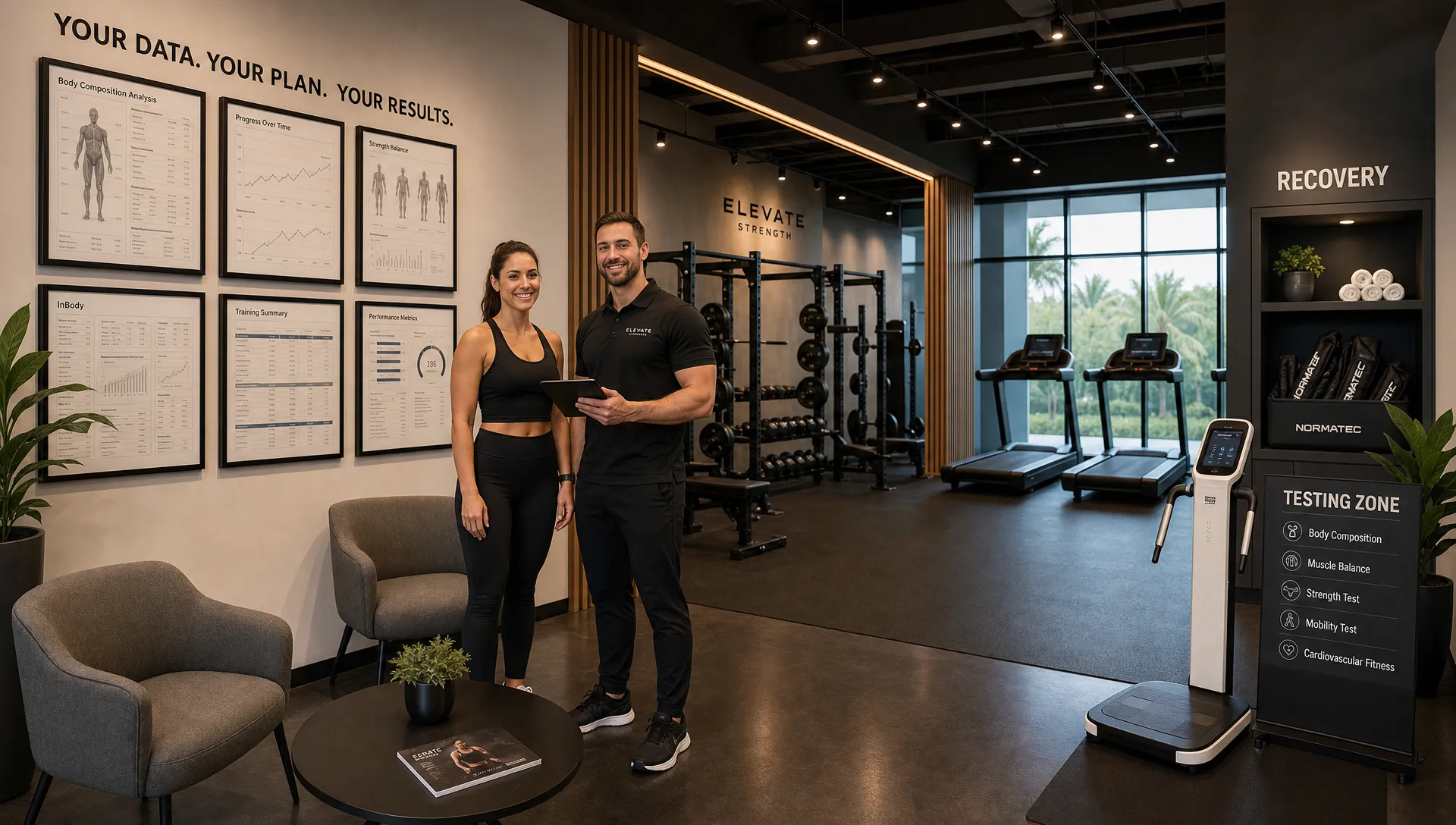


Most gyms are built around access. You pay for a membership, scan in, use equipment, take a class if it fits your schedule, and hope your consistency turns into results. For some people, that is enough.
Custom Fit is built around a different premise: access alone is not the same as progress. If you are a busy San Francisco professional, an athlete, a physician looking for a trusted wellness partner, or someone who has tried gym memberships before without seeing lasting change, the difference matters.
At Custom Fit, training, nutrition, recovery, and advanced testing are connected into one personalized process. The goal is not simply to help you work harder. It is to help you understand what your body needs, train with intention, and make measurable progress over time.
A typical gym starts with equipment. Custom Fit starts with you.
Walk into a typical gym and the first question is usually, “What equipment do they have?” That matters, but it is only one piece of the equation. The more important question is, “What should I be doing, and how will I know if it is working?”
Custom Fit’s model is more consultative. Instead of handing you a generic program or leaving you to guess, the process begins with understanding your goals, training history, health considerations, schedule, recovery capacity, and baseline metrics. That creates a more precise path forward.
This distinction is especially important for people who value efficiency. If you have limited hours between work, family, travel, and social commitments, random workouts are expensive in a different way: they cost time without guaranteeing direction. A data-informed plan helps you spend your effort where it will matter most.
For a deeper look at what a coach should evaluate before programming begins, Custom Fit has outlined what a gym fitness trainer should measure first, including goals, body composition, movement quality, nutrition, and recovery factors.
The coaching is personal, not performative
Many gyms offer personal training, but not all personal training is truly personal. A trainer can count reps, motivate you through a workout, and still miss the bigger picture. Effective coaching should connect your sessions to a larger plan.
At Custom Fit, personal training is designed to be specific to the person in front of the coach. That may mean strength training for longevity, body composition change, return-to-performance goals, metabolic health, or simply building a routine that finally feels sustainable. Partner training, group classes, and gym memberships can also fit into the broader experience, depending on what level of structure and support a client needs.
The value is not just motivation. It is decision-making. A strong coach helps answer questions like:
- Should you push intensity today or prioritize recovery?
- Is your current program improving strength, endurance, and body composition in the right proportions?
- Are your workouts aligned with your nutrition and lifestyle?
- Are you progressing because the plan is working, or just because you are working hard?
Research supports the idea that structured progression matters. The American College of Sports Medicine’s position stand on resistance training highlights the importance of planned manipulation of variables such as load, volume, exercise selection, and rest periods for continued adaptation, as summarized in this PubMed-indexed ACSM paper. In plain English, results come from intelligent progression, not just effort.
That is one reason Custom Fit’s approach to personal training in San Francisco built around your data stands apart from the standard gym experience. The coaching is meant to reduce guesswork.
Data turns fitness from a vague goal into a measurable process
A typical gym can tell you how often you showed up. Custom Fit can help you understand what is changing.
That difference matters because many people judge progress using incomplete signals. Scale weight alone does not tell you whether you gained muscle, lost fat, improved conditioning, or recovered better. A hard workout does not automatically mean a productive workout. Feeling tired is not the same as getting fitter.
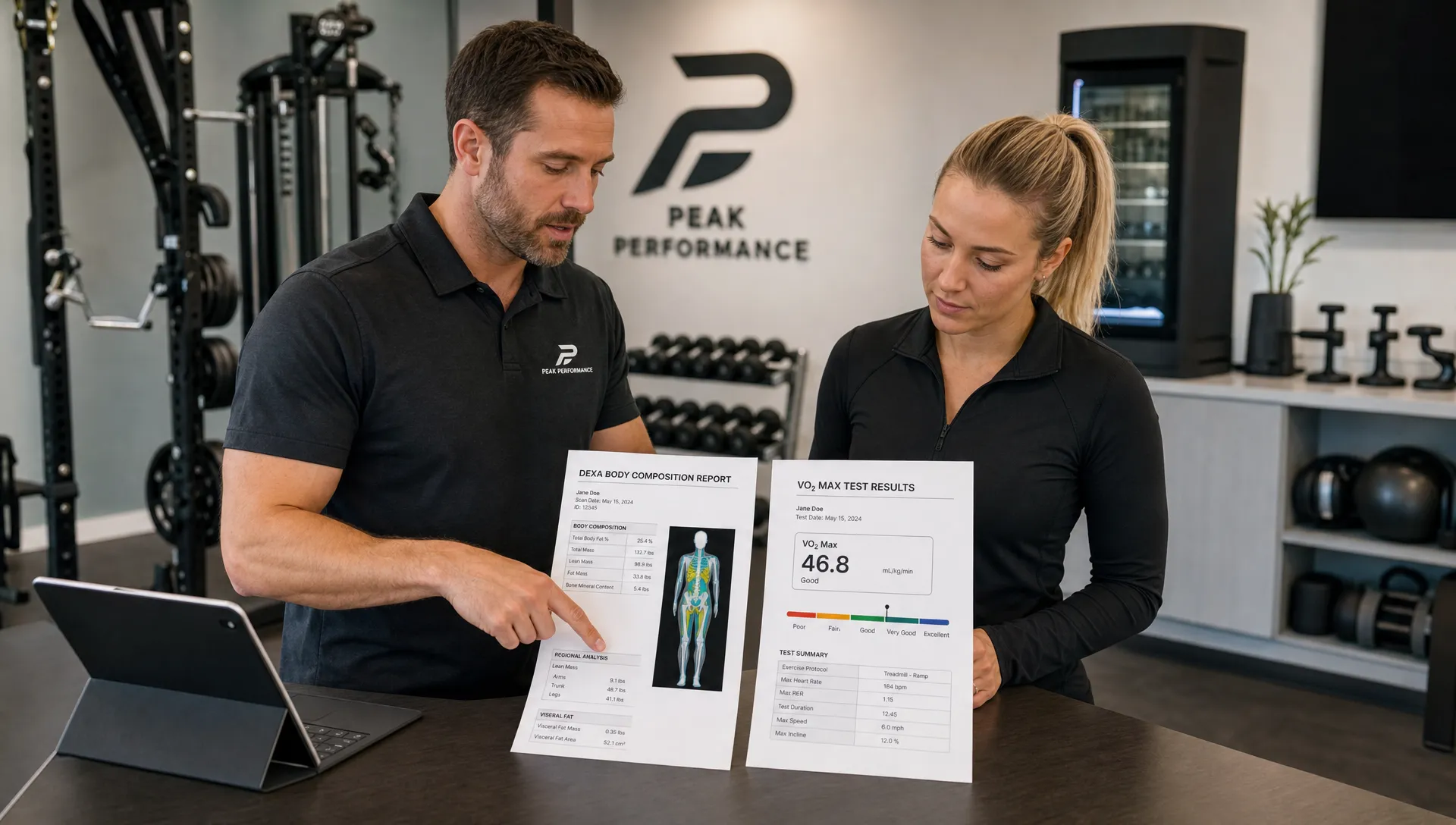
Custom Fit offers advanced testing such as DEXA scans and VO2 max testing, which can help clients better understand body composition and cardiovascular fitness. DEXA is widely used in clinical and research settings to assess body composition and bone-related measures, as described in this NCBI Bookshelf overview of dual-energy X-ray absorptiometry. VO2 max, a measure of cardiorespiratory fitness, is also strongly associated with health outcomes. A large study published in JAMA Network Open found that higher cardiorespiratory fitness was associated with lower long-term mortality risk among adults undergoing exercise treadmill testing.
For clients, the practical benefit is clarity. If your goal is fat loss, a DEXA scan can help distinguish fat loss from lean mass loss. If your goal is endurance or long-term health, VO2 max testing can provide a useful benchmark. If your goal is longevity, testing helps make the conversation more objective.
This is where Custom Fit feels less like a traditional gym and more like a performance and wellness studio. Testing is not a gimmick. It is a way to make better decisions.
Nutrition is part of the plan, not an afterthought
Many gym members train hard but remain frustrated because nutrition is disconnected from their workouts. They may under-eat protein, over-restrict calories, misjudge portions, or follow a plan that does not match their actual lifestyle.
Custom Fit includes nutrition coaching and access to registered dietitians, which is a major differentiator from a typical gym. This matters because nutrition is not just about weight loss. It influences strength gains, recovery, energy, sleep quality, metabolic health, and body composition.
Research from the International Society of Sports Nutrition emphasizes that protein intake, timing, and total dietary strategy can influence adaptations to exercise, particularly when paired with resistance training. Their position stand on protein and exercise is a useful reminder that training and nutrition work best when planned together.
For a busy professional, the best nutrition plan is not the most extreme one. It is the one that fits your work schedule, dining habits, travel, training demands, and health goals. A registered dietitian can help translate evidence into a plan that feels realistic rather than theoretical.
Recovery is treated as a performance variable
A typical gym often celebrates more: more workouts, more sweat, more intensity, more volume. But adaptation happens when stress is matched with recovery. If recovery is ignored, progress can stall even when effort is high.
Custom Fit’s recovery programs help make recovery part of the training system. That is especially relevant for clients who are balancing demanding careers, poor sleep, travel, stress, or high training loads. Recovery is not just about feeling relaxed after a session. It is about improving readiness so the next training session is productive.
This is also where the experience becomes more holistic. Training, nutrition, recovery, and testing are not isolated services. They are connected inputs. When those inputs are coordinated, the client can make better decisions about intensity, frequency, fueling, and rest.
If you are comparing premium fitness options in the city, Custom Fit’s combination of DEXA, VO2 max, and recovery services offers a more complete picture than a conventional gym membership.
The environment is designed for focus and accountability
San Francisco is full of fitness options, from big-box gyms to boutique classes to app-based workouts. The challenge is not finding a place to exercise. The challenge is finding a place where the experience supports consistency.
A typical gym can be crowded, anonymous, and inconsistent. That environment works for some people, but it can be a poor fit for clients who want privacy, expert attention, and a clear plan. Custom Fit is positioned as a premium wellness studio where the setting supports focused work.
For high-income professionals, this matters. A fitness plan should not create more friction in an already demanding schedule. The right environment helps you train efficiently, stay accountable, and avoid the mental overhead of figuring everything out alone.
For people newer to fitness, the environment also matters because it can reduce intimidation. When the process is guided, clients do not need to know every exercise, machine, metric, or nutrition strategy before they begin. They need a team that can meet them where they are and guide the next step.
Custom Fit is relevant beyond individual training
Custom Fit’s model also speaks to organizations and medical-adjacent partners. Private practice doctors, concierge medicine facilities, longevity clinics, and employee benefits managers often need trusted fitness and testing resources for clients, patients, or teams.
The reason is simple: modern wellness is becoming more measurable. Employers want benefits that support energy, resilience, and long-term health. Physicians and longevity clinics may want reliable partners for fitness testing, body composition insights, nutrition support, or structured training outside the medical office.
Useful measurements should lead to practical next steps. Ask how the team will connect your results with training, nutrition or recovery decisions.
Custom Fit’s combination of coaching, testing, nutrition, and recovery makes it a stronger fit for those partnerships than a traditional gym that primarily sells access to equipment.
Who benefits most from the Custom Fit approach?
Custom Fit is not necessarily for someone who only wants the lowest-cost place to use a treadmill. It is designed for people who want a more guided, measurable, and personalized experience.
This approach may be a strong fit if you:
- Want expert coaching rather than self-directed workouts
- Care about body composition, performance, or longevity metrics
- Have limited time and want each session to be purposeful
- Need nutrition support that matches your goals and lifestyle
- Prefer a premium, focused training environment
- Want recovery integrated into your fitness plan
- Are seeking a wellness partner for employees, patients, or clients
That does not mean every person needs every service. Some clients may begin with training. Others may start with testing. Some may add nutrition coaching once they realize their workouts are outpacing their fueling strategy. The point is that the experience can be tailored rather than generic.
The real difference: a gym membership versus a health strategy
A typical gym membership asks, “Will you show up?” Custom Fit asks a more complete set of questions: What are we trying to improve? What does the data say? What is the right plan? How should training, nutrition, and recovery work together? How will we know when to adjust?
That is the core difference.
Custom Fit is not simply a nicer gym. It is a more complete model for people who want to take fitness seriously without wasting time on guesswork. By combining personal training, nutrition coaching, longevity testing, DEXA scans, VO2 max testing, recovery programs, memberships, and group classes, Custom Fit creates a system that can support both performance and long-term health.
For San Francisco clients who are used to high standards in their professional lives, that level of personalization can make fitness feel less random and more strategic.
Frequently Asked Questions
What makes Custom Fit different from a typical gym? Custom Fit combines personal training, nutrition coaching, advanced testing, and recovery services in one data-driven wellness environment. A typical gym usually focuses on access to equipment, while Custom Fit focuses on personalized guidance and measurable progress.
Do I need to be an athlete to train at Custom Fit? No. Custom Fit can support athletes, busy professionals, beginners, and people focused on longevity or general health. The value comes from tailoring the plan to your goals and starting point.
Why are DEXA scans and VO2 max testing useful? DEXA scans can help assess body composition, while VO2 max testing provides insight into cardiorespiratory fitness. These metrics can help make training, nutrition, and recovery decisions more objective.
Is nutrition coaching included in the Custom Fit approach? Nutrition coaching is one of the services Custom Fit offers, and the team includes registered dietitians. This helps clients connect training with realistic nutrition strategies that support their goals.
Is Custom Fit a good option for physicians, longevity clinics, or employee benefits teams? Custom Fit may be relevant for organizations seeking a premium wellness, fitness testing, training, nutrition, or recovery partner in San Francisco. Its data-driven model can support more structured health and performance programs.
Ready for a gym experience built around your goals?
If you are tired of guessing your way through workouts, Custom Fit offers a more personal, measurable, and strategic path. Whether your priority is strength, body composition, metabolic health, performance, recovery, or longevity, the team can help you build a plan that fits your life.
Explore Custom Fit’s personal training, nutrition, testing, recovery, memberships, and new client options at Custom Fit SF.