How to Choose a Fitness Personal Trainer for Your Goals


Choosing a fitness personal trainer near me is not just about finding the closest studio or the coach with the best social media presence. The right trainer should understand your goal, assess your starting point, build a plan you can follow and adjust it as your body changes. That matters even more in San Francisco, where demanding work schedules, steep hills, long commutes and high expectations can make generic fitness plans fall apart.
What “fitness personal trainer near me” should mean in San Francisco
“Near” should include more than physical distance. A trainer may be five blocks away, but if the appointment times, training style or facility environment do not fit your life, the plan will not last.
For a busy professional commuting from the Financial District or walking over from Nob Hill, location matters because consistency matters. The best choice is often a studio that fits naturally into your workday, offers enough privacy to focus and has the assessment tools to make each session purposeful. If you are comparing options locally, start by looking at whether Custom Fit’s San Francisco studio can support your training, nutrition and testing needs in one place.
The smartest way to use a fitness personal trainer near me search is to treat it as the beginning of a vetting process, not the final answer. You are not buying workouts. You are choosing a professional who will help you make better decisions about your body over time.
Start with your goal, then match the trainer
A trainer who is excellent for marathon conditioning may not be the best fit for muscle gain, body recomposition or post-rehab strength. Before you ask about packages or scheduling, define what success looks like in plain terms.
Your goal does not need to be complicated. It does need to be specific enough for a coach to design a plan.
| Your primary goal | What the trainer should know how to assess | What the plan should include |
|---|---|---|
| Fat loss or body recomposition | Body composition, nutrition habits, training history and recovery | Strength training, nutrition coaching and measurable checkpoints |
| Strength or muscle gain | Movement quality, current strength levels, exercise technique and progression | Progressive resistance training and clear load targets |
| Longevity and metabolic health | Aerobic fitness, muscle mass, visceral fat risk and health constraints | Strength, conditioning, recovery and testing when appropriate |
| Accountability and consistency | Schedule barriers, motivation patterns and lifestyle demands | Realistic session cadence and follow-up between milestones |
| Return to training after time off | Injury history, mobility, confidence and baseline capacity | Gradual progression, form coaching and recovery planning |
A strong fitness personal trainer near me result should align with the outcome you care about most. If your goal is to reduce visceral fat, maintain lean muscle and improve energy, you need more than calorie-burning sessions. If your goal is strength, you need a progression model that tracks load, reps, recovery and technique.
If your goal is body recomposition
Body recomposition requires a trainer who can connect training with nutrition, recovery and body composition data. Scale weight alone is too limited because it cannot distinguish fat loss from muscle loss.
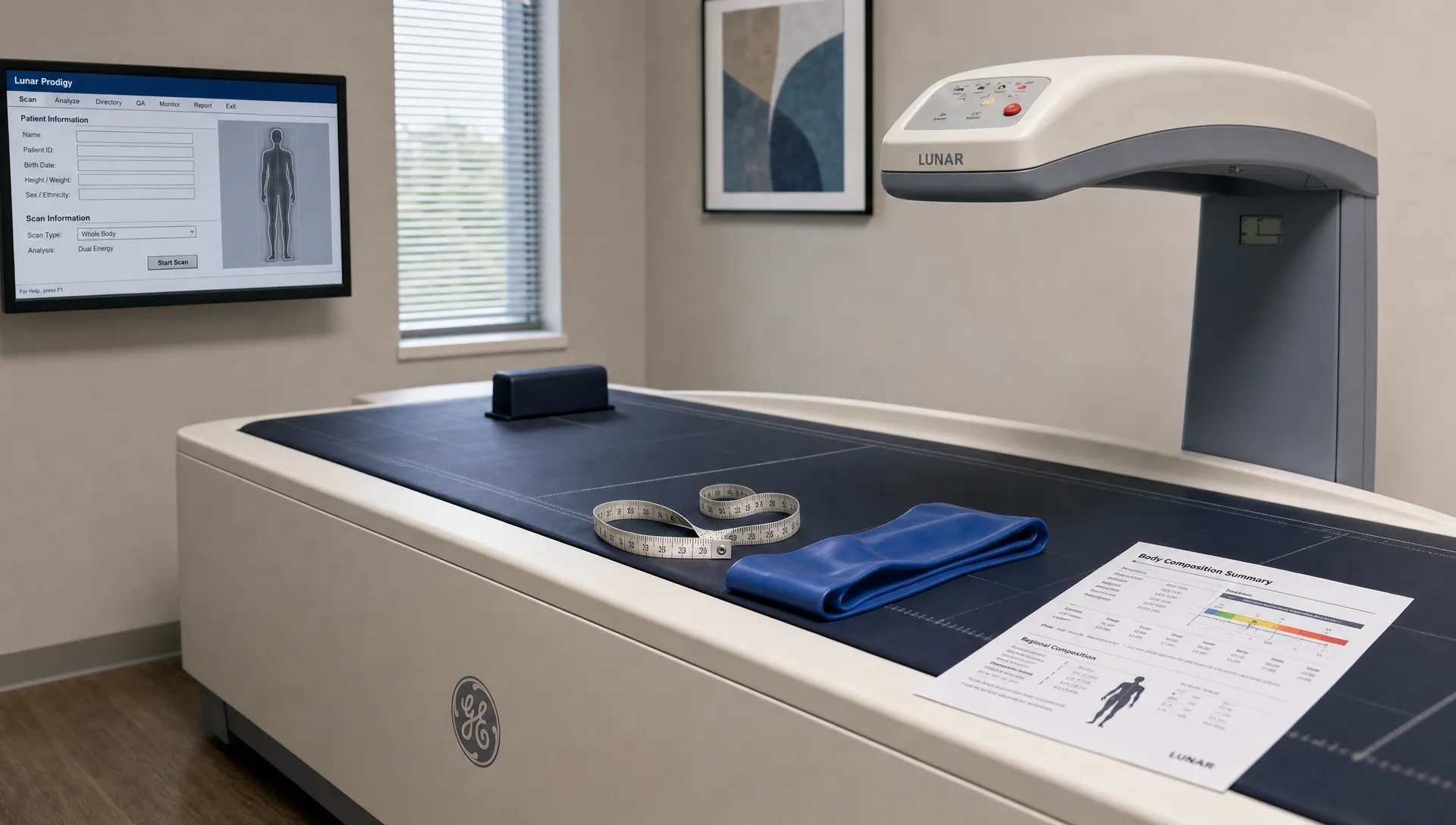
This is where DEXA can be useful. DEXA provides a more detailed view of body composition, including fat mass, lean mass and visceral fat estimates. At Custom Fit, DEXA scans are performed by Registered Dietitians or Exercise Physiologists, so clients are working with professionals who understand nutrition, exercise physiology and body composition rather than simply receiving an automated scan report.
Ask the trainer how they interpret body composition changes. A good coach should be able to explain why preserving muscle matters, how training volume supports that goal and when nutrition adjustments are appropriate.
If your goal is strength, muscle or longevity
For strength and muscle gain, look for structured progression. Random hard workouts can make you sore, but they do not guarantee progress.
The American College of Sports Medicine’s position stand on resistance training progression emphasizes variables such as load, volume, exercise selection, rest periods and progression over time. A qualified trainer should know how to manipulate those variables based on your experience and recovery.
If longevity is your priority, aerobic capacity matters too. A large JAMA Network Open study on cardiorespiratory fitness and mortality found that higher cardiorespiratory fitness was associated with lower long-term mortality risk among adults undergoing treadmill testing. That does not mean everyone needs elite endurance training. It means a trainer should know when conditioning, VO2 max testing or zone-based cardio belongs in your plan.
Look for assessment before intensity
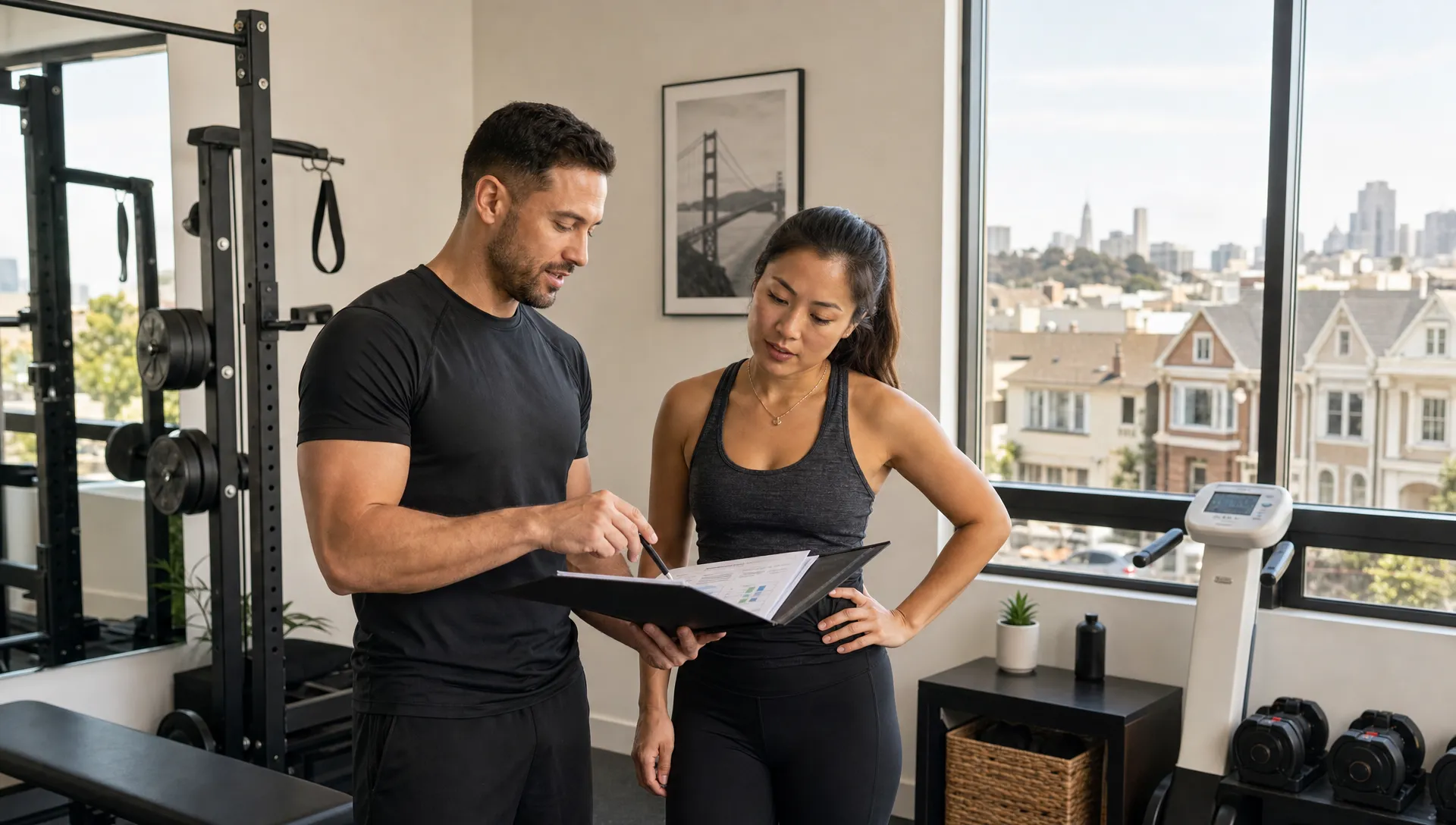
A trainer who pushes hard before assessing well is guessing. Your first sessions should reveal how you move, how you recover, what limitations exist and what data would help refine the plan.
When someone searches for a fitness personal trainer near me, the tempting shortcut is to ask, “Can this person motivate me?” Motivation helps, but assessment protects you from wasting months on the wrong approach. It also helps a coach choose exercises that fit your joints, experience and goals.
A strong first assessment may include movement screening, goal history, training background, injury history, lifestyle constraints, baseline strength and relevant measurements. For some clients, that may also include DEXA, VO2 max testing or nutrition evaluation.
What a quality assessment should clarify
Good assessments turn vague goals into specific coaching decisions. If your trainer gathers information but cannot explain how it changes your program, the assessment is mostly theater.
| Assessment area | Why it matters | What to listen for |
|---|---|---|
| Goals and timeline | Keeps the plan focused and realistic | “Here is what we can change in 8 to 12 weeks.” |
| Movement quality | Helps choose safer exercise variations | “This squat variation fits your current mobility better.” |
| Strength baseline | Creates measurable progression | “We will build from these starting loads.” |
| Body composition | Shows changes beyond scale weight | “We are watching lean mass and fat mass separately.” |
| Recovery and schedule | Prevents overtraining and missed sessions | “Your travel weeks need a modified plan.” |
| Nutrition habits | Supports energy, body composition and performance | “Your protein and meal timing need attention.” |
If you want a deeper list of what to cover before hiring a coach, Custom Fit’s guide to what to ask during a personal training consultation is a useful next step.
Evaluate coaching quality, not personality alone
Liking your trainer matters. Trust and communication make it easier to show up, ask questions and stay honest about what is working. But personality cannot replace technical skill.
A good trainer should be able to coach in real time. That means they can demonstrate movements, spot compensation patterns, adjust an exercise when needed and explain why the change matters. If every client gets the same circuit, you are not receiving personal training in any meaningful sense.
Your fitness personal trainer near me shortlist should include coaches who can communicate clearly without overcomplicating everything. You should understand the purpose of each training block, the reason exercises are selected and how progress will be measured.
For strength-focused clients, communication is especially important because small changes in setup can affect both results and injury risk. If you are trying to build strength efficiently, Custom Fit’s article on why a personal trainer for strength training works faster explains how technique, progression and accountability shorten the learning curve.
Check the facility, privacy and support around the trainer
The trainer matters, but the training environment matters too. A crowded gym with long waits for equipment can derail a precise plan. A facility without assessment tools may make it harder to track the outcomes you care about. A space that feels chaotic may be a poor fit if training is one of the few focused hours in your week.
For many San Francisco professionals, privacy is also part of the value. You may not want to train in a packed room between calls, appointments or family commitments. A private training setting can make it easier to concentrate, move safely and discuss health goals without feeling watched.
When comparing a fitness personal trainer near me option, ask what support exists beyond the hour-long session. Nutrition coaching, recovery services, partner training, group classes and testing can all matter depending on your goals. The point is not to choose the studio with the longest menu of services. It is to choose the place where the services connect into a coherent plan.
If facility quality is a major part of your decision, this guide to what to look for in a private training gym covers privacy, equipment, coaching standards and assessment processes in more detail.
Ask how progress will be measured
Progress should not depend on how exhausted you feel after a session. Hard workouts can be useful, but fatigue is not the same as adaptation.
Before committing, ask what the trainer tracks and how often the plan changes. Useful metrics may include exercise loads, reps, movement quality, resting heart rate trends, body composition, VO2 max, energy, sleep, soreness and nutrition adherence. Not every client needs every metric. Every client does need enough measurement to know whether the program is working.
This is especially important for longevity clinics, concierge medicine practices and employee benefits managers evaluating a fitness partner. If you are referring patients, executives or employees, you need confidence that the training provider can document progress, communicate professionally and work within a broader wellness strategy.
A credible fitness personal trainer near me option should be comfortable explaining what they measure, why it matters and how decisions are made from the data. If the answer is simply “we will see how you feel,” keep looking.
Compare trainers with a simple decision framework
When you have two or three good options, avoid choosing based only on convenience. Use a structured framework so you can compare what actually affects results.
Score each trainer or studio from 1 to 5 in five areas: goal fit, assessment quality, coaching skill, facility environment and accountability. Then add one practical category: schedule fit. The best trainer on paper is not the best trainer for you if you cannot see them consistently.
When choosing a trainer, look for evidence that their process will fit your actual schedule and circumstances, not just an ideal week.
Your final fitness personal trainer near me decision should feel both professional and practical. You want a coach who can build the plan, a facility that supports the plan and a schedule that gives the plan a chance to work.
Red flags to watch for
Some warning signs show up quickly during a consultation or trial session. Be cautious if a trainer promises dramatic results without learning your history, dismisses nutrition and recovery, cannot explain their programming or pushes intensity before assessing movement.
Also be wary of anyone who treats testing as a sales gimmick. DEXA, VO2 max testing and other assessments are only valuable when a qualified professional can interpret the results and connect them to your training and nutrition. Data should make your plan clearer, not more confusing.
Another red flag is a one-size-fits-all approach. If you are a physician with a tight schedule, a founder under chronic stress or a parent returning to training after years away, your plan should reflect those constraints. Personal training should be personal in both the exercises and the implementation.
Frequently Asked Questions
How do I know which fitness personal trainer near me is right for my goal? Start by defining your goal, then ask how the trainer assesses that goal, measures progress and adjusts the plan. The right trainer should be able to connect your workouts to a clear outcome such as strength, fat loss, muscle gain, conditioning or longevity.
What credentials should I look for in a personal trainer? Look for reputable fitness certifications, relevant experience and a clear process for assessment and progression. If your goals involve nutrition, body composition or metabolic health, it is especially helpful to work in a setting that includes Registered Dietitians, Exercise Physiologists or other qualified professionals.
Is a private training gym better than a commercial gym? It depends on your needs. A private training gym can offer more focused coaching, better access to equipment, greater privacy and stronger assessment processes. A commercial gym may work if you are confident training independently and do not need as much structure.
Should I choose a trainer who offers DEXA or VO2 max testing? Testing can be valuable if the results are interpreted by qualified professionals and used to improve your plan. At Custom Fit, DEXA scans are performed by Registered Dietitians or Exercise Physiologists, which helps clients understand the body composition data in the context of nutrition and training.
How often should I meet with a personal trainer? Many people start with two to three sessions per week, then adjust based on goals, budget, recovery and confidence. The best frequency is the one that creates progress while fitting your schedule consistently.
Ready to choose with more confidence?
The best fitness personal trainer near me is not simply the closest coach. It is the trainer, facility and support system that can help you train consistently, measure what matters and adapt as your body changes.
If you want a more data-driven approach, Custom Fit offers personal training, nutrition coaching, recovery support and advanced testing such as DEXA and VO2 max. Start with a consultation, bring your goals and look for a plan that feels specific enough to trust and practical enough to follow.