How Personal Training and Nutrition Coaching Solve Plateaus
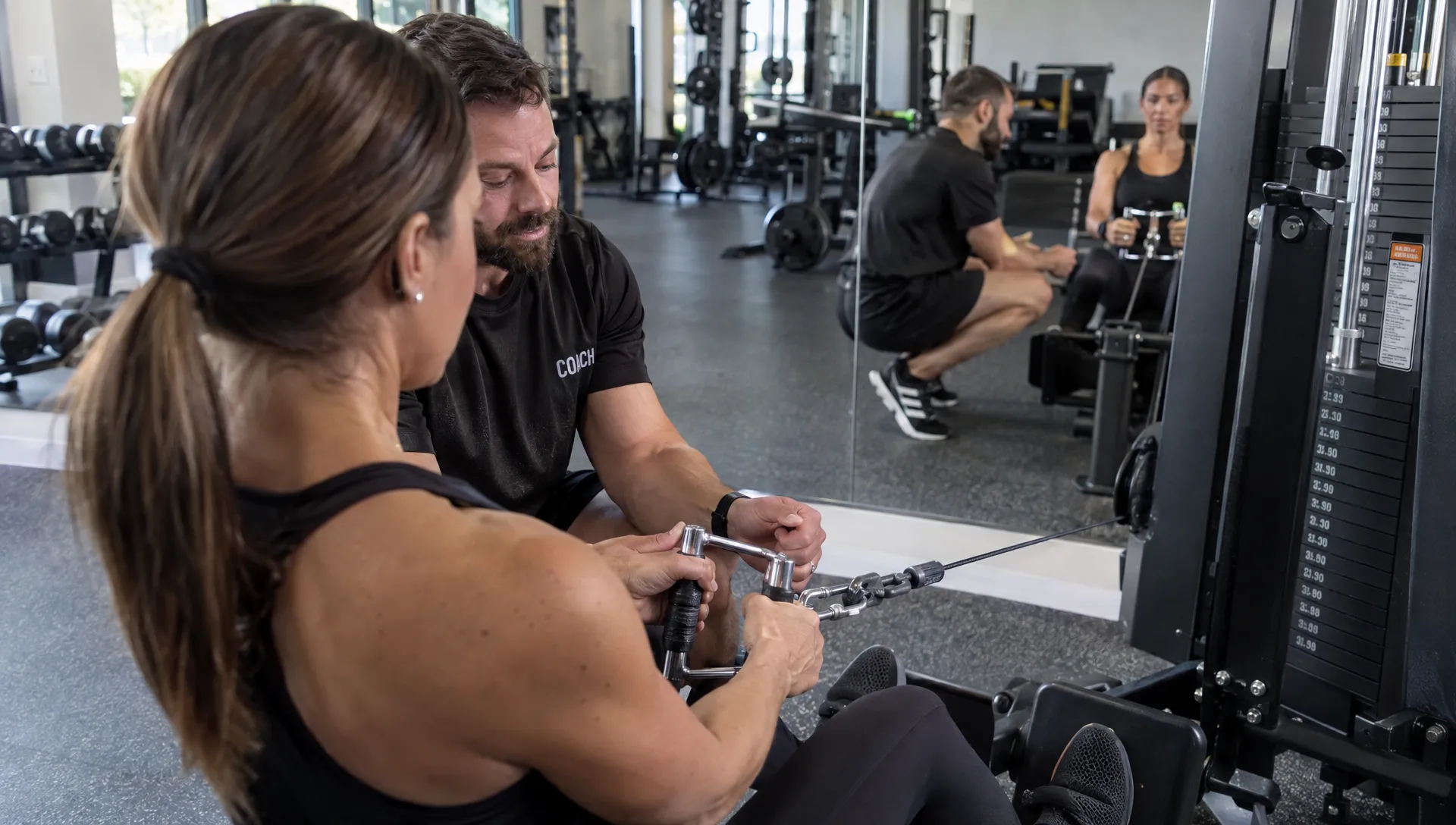


Personal training and nutrition coaching can help break a fitness plateau by identifying what is actually limiting progress, rather than simply adding harder workouts or stricter food rules. A stalled lift, an unchanged scale and persistent fatigue may look like the same problem, but they often require different adjustments.
For busy San Francisco professionals, the challenge is making those adjustments fit a real workweek. The most useful approach combines a clear goal, a review of recent patterns and a small, measurable change. More effort is not always the missing ingredient.
First, confirm that you have a plateau
A plateau is a sustained lack of progress toward a specific goal despite reasonably consistent execution. One disappointing workout or a few days of unchanged weight does not establish one.
Start by naming the outcome you want to improve. For strength, compare repetitions and load using similar technique. For endurance, compare pace or power at a similar effort. For weight management, look at trends collected under consistent conditions rather than isolated readings.
Use several weeks of information, not a single frustrating day. Three or four weeks can be a practical starting point for reviewing a trend, although the right window depends on your goal and training experience. Experienced lifters generally should not expect the same pace of improvement as beginners.
Short-term changes can also obscure progress. Sodium intake, hydration, menstrual-cycle changes and soreness can affect scale weight. Travel or a demanding deadline can temporarily reduce workout performance.
If your measurements are inconsistent, the first intervention is better measurement. Otherwise, you risk changing a plan that was working or reacting to noise rather than a genuine stall.
How personal training and nutrition coaching find the limiting factor
An effective review connects your training log with your eating patterns, recovery and schedule. The question is not whether your routine looks healthy on paper. It is whether the routine provides the right stimulus and support for your current goal.
These patterns suggest different starting points:
| What has stalled? | What to examine first | A possible adjustment |
|---|---|---|
| Strength on a particular lift | Technique, progression and fatigue | Refine execution or adjust training volume |
| Weight-loss trend | Eating consistency and daily movement | Address a recurring intake or activity gap |
| Workout energy | Meal timing, total intake and sleep | Improve fueling or reduce accumulated fatigue |
| Endurance performance | Training intensity and recovery | Rebalance easier and harder sessions |
| Attendance | Calendar demands and session length | Build a more realistic weekly schedule |
The broader principle is individualized feedback. If you invest in professional development, it may be familiar from one-to-one professional certification classes, where mentoring is tailored to the learner’s work context. Fitness coaching applies a similar feedback principle to movement and eating habits, with different professional qualifications.
Effective personal training and nutrition coaching turn this review into a testable hypothesis: identify the likely bottleneck, change a relevant variable and watch the response.
Fix the training stimulus before adding more workouts
Doing the same exercises is not necessarily a problem. Doing them indefinitely with the same effort, load and volume can be.
Progressive overload means gradually increasing the challenge as your capacity improves. That might involve more weight, additional repetitions, a greater range of motion or better control. It does not mean every session must be harder than the last.
The American College of Sports Medicine’s position stand on resistance-training progression describes adjusting training variables according to goals and training experience. The practical lesson is that programming should evolve, rather than remain fixed after the first few successful weeks.
Consider a squat that has stopped improving. A trainer might discover that inconsistent depth makes the log misleading, that every set is taken to exhaustion or that the weight never increases despite comfortable repetitions. Each finding leads to a different intervention.
For example, a coach could establish a repetition range and increase resistance once you can complete that range with the intended technique and effort. Alternatively, reducing volume temporarily may help when fatigue is masking performance.
This is where personal training and nutrition coaching work together: a training adjustment is easier to evaluate when food intake and recovery are also understood. Custom Fit’s guide to adapting training programs to your data explores how those decisions can evolve over time.
Match nutrition to the goal you are pursuing
A nutrition plan can be nutritious yet poorly matched to your training demands. Someone trying to improve strength may be unintentionally eating too little. Someone pursuing weight loss may have a weekday routine that is regularly offset by weekend meals and drinks.
For weight management, energy balance matters, but the solution is not automatically a larger restriction. After weight loss, a smaller body generally requires less energy. Appetite and activity patterns can change too. Hall and Kahan’s review of long-term weight management explains why maintaining progress requires ongoing adjustments rather than assuming the original plan will work indefinitely.
A registered dietitian can examine the pattern without reducing the conversation to willpower. Useful questions include whether lunch is routinely skipped, whether restaurant portions differ from expectations and whether under-fueling earlier in the day contributes to evening hunger.
Protein is another consideration for resistance training. A systematic review and meta-analysis by Morton and colleagues found that protein supplementation supported additional gains during resistance training on average. That does not mean everyone needs supplements; food choices and total intake come first.
Personal training and nutrition coaching should make eating more compatible with your goal, not more complicated. A repeatable lunch or reliable pre-workout meal may be more useful than detailed tracking you cannot sustain. For practical habit design, explore how nutrition coaching simplifies healthy eating.
Check recovery and the demands of your workweek
A plateau can reflect insufficient recovery rather than insufficient effort. If performance is slipping across several exercises, soreness is lingering and motivation is unusually low, adding sessions may worsen the problem.
Review sleep consistency, training frequency, work stress and the spacing of demanding workouts. A late client dinner followed by an early training session is a scheduling problem as much as a fitness problem. So is trying to compress a missed week of exercise into two exhausting days.
The response might be a lighter training week, fewer demanding sets or a schedule that protects recovery between sessions. Daily movement matters too: a desk-heavy week can reduce activity outside the gym even when formal workouts remain unchanged.
Personal training and nutrition coaching can help distinguish a need for more stimulus from a need for better recovery, but persistent symptoms deserve medical attention. Unexplained fatigue, dizziness, pain or an abrupt decline in exercise tolerance should not be treated as ordinary plateau management.
The goal is a routine that survives meetings, commuting and travel. A sustainable plan provides more useful information than an ambitious plan followed inconsistently.
Use testing when it can answer a specific question
Testing is most useful when the result could change a decision. It should not replace a review of your routine or become a reason to chase every available metric.
If scale weight is difficult to interpret, a DEXA scan can provide additional information about body composition, including estimated fat and lean tissue. Lean tissue is not identical to muscle mass, and a scan does not directly measure strength. Hydration, positioning and other testing conditions can influence comparisons, so consistent procedures matter.

Custom Fit DEXA scans are performed by Registered Dietitians or Exercise Physiologists. Clients work with professionals who understand nutrition, exercise physiology and body composition, rather than simply receiving an automated scan report. That expertise helps connect the findings to training and nutrition decisions.
For an endurance-related plateau, VO2 max testing may provide another useful reference point. Custom Fit offers both DEXA scans and VO2 max testing, but the appropriate assessment depends on the question you are trying to answer.
Within personal training and nutrition coaching, testing should clarify a decision: whether to revisit fueling, adjust training or continue a plan that is producing progress not obvious from one measurement.
Run a focused reset instead of changing everything
A useful plateau reset starts with a short observation period, followed by a targeted adjustment. Two weeks can reveal implementation problems, but it may not be long enough to judge the full outcome, especially for slower-changing goals.
Establish a baseline
For the first week or two, record the information most relevant to your goal. That might include workout sets and repetitions, meal timing, sleep duration and a consistent weight trend.
Keep the process manageable. You do not need a complete lifestyle spreadsheet. You need enough information to distinguish a programming issue from a fueling, recovery or follow-through issue.
Choose one main adjustment
If training lacks progression, introduce a clear progression rule. If lunch is repeatedly missed, establish a dependable meal. If fatigue is high, reduce the training demand or improve recovery before adding more work.
Changing workouts, food intake, supplements and daily activity simultaneously makes it difficult to know what helped. Personal training and nutrition coaching are more useful when they support a focused experiment rather than a complete overhaul every time progress slows.
Set the review date and success measure
Agree on what you will evaluate and when. A fueling change might first improve workout energy. A technique adjustment might improve consistency before increasing load. Weight-related changes require enough observations to separate the trend from daily variation.
If the result does not improve, revisit the hypothesis instead of blaming your discipline.
Frequently asked questions
How long does a fitness plateau usually last? There is no universal duration. First confirm that progress has genuinely stalled using consistent measurements over several weeks. The review period should reflect your goal, experience and how quickly that outcome can reasonably change.
Should I eat less if weight loss has stopped? Not automatically. Review intake consistency, activity, hunger and recovery first. A registered dietitian can help determine whether a modest adjustment is appropriate or whether the existing plan needs better implementation rather than greater restriction.
Can coaching help if I already know how to exercise and eat well? Yes. Personal training and nutrition coaching can provide an outside review of programming, food patterns and recovery that is difficult to perform objectively on your own. Knowledge is useful, but applying it consistently and adjusting it at the right time are separate skills.
Do I need testing to get past a plateau? Not necessarily. Many stalls can be addressed through better tracking and targeted changes. Testing adds value when it answers a question that routine observations cannot resolve and the result will influence your next step.
Build your next step around the actual bottleneck
Before committing to more workouts or stricter eating, identify what has stopped improving and what evidence supports the explanation. Bring a few weeks of relevant observations to your next coaching conversation.
Custom Fit in San Francisco offers personal training, nutrition coaching with registered dietitians, recovery services and fitness testing. Ask how those services could support your specific plateau and which adjustment makes sense first. The objective is a clearer plan, not simply a harder one.