How Fitness Testing Turns Health Goals Into a Clear Plan
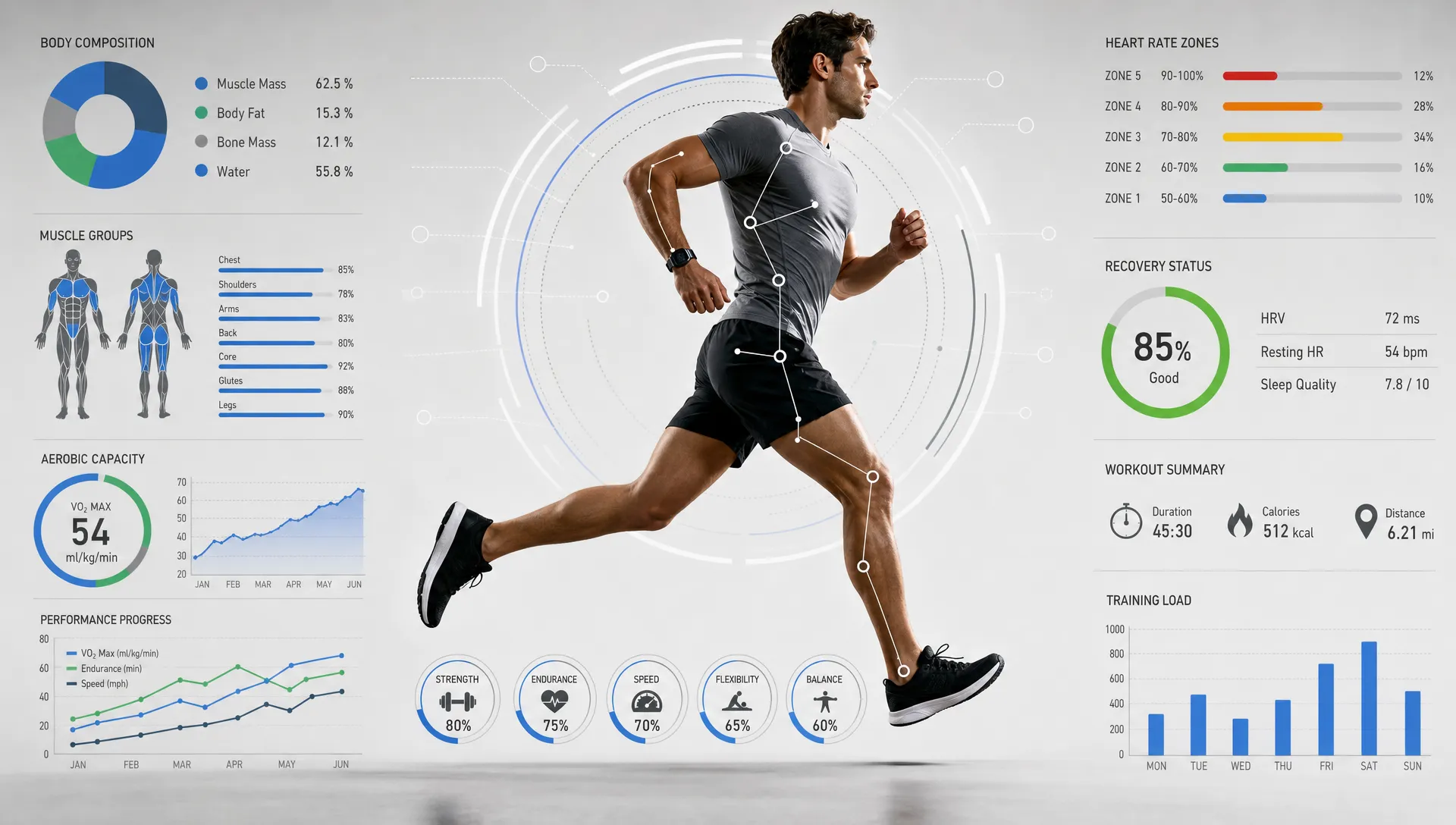


Most health goals start with a good intention and a vague target: lose fat, build muscle, improve endurance, feel younger, train consistently. Those goals are motivating, but they are not yet a plan. A plan needs a baseline, a way to measure progress and a clear decision about what to do next.
That is where fitness testing changes the conversation. Instead of guessing whether you need more cardio, heavier strength training, better nutrition or more recovery, objective testing shows what your body is doing now. The result is not just a set of numbers. It is a roadmap that connects your goal to specific training, nutrition and recovery choices.
For busy professionals in San Francisco, especially people balancing long workdays, travel, family and high expectations for performance, that clarity matters. You do not need more random effort. You need the right effort, applied consistently.
Fitness testing starts by turning wishes into measurable outcomes
A health goal becomes useful when it can be measured. “I want to get healthier” is a wish. “I want to reduce visceral fat, maintain lean mass and improve VO2 max over the next training block” is a plan waiting to happen.
Fitness testing helps separate the outcome from the method. Many people assume they need to train harder, eat less or add more workouts. Sometimes that is true. Other times the test results show that the real constraint is low muscle mass, poor aerobic capacity, under-recovery, inconsistent protein intake or a program that does not match the person’s schedule.
A strong testing process answers three practical questions:
- What is the current baseline?
- Which metric matters most for this goal?
- What should change in training, nutrition or recovery this week?
That third question is the difference between data and coaching. A test result only matters if it changes the plan.
The key fitness tests that clarify your next step
No single test explains everything. The most useful approach combines multiple measurements, then interprets them in the context of your goal, training history, medical background and lifestyle. If you want a deeper look at assessment priorities, Custom Fit has also covered what a gym fitness trainer should measure first before building a program.
DEXA scans for body composition
A DEXA scan can help estimate body fat, lean mass, bone density and fat distribution. This is especially useful when the scale is misleading. A person can lose fat and gain muscle with little change in body weight, or lose weight too aggressively and give up lean mass along the way.
The medical reference StatPearls describes dual-energy X-ray absorptiometry as a widely used method for assessing bone mineral density, with body composition applications as well through soft tissue analysis in appropriate settings. You can review that overview through the National Library of Medicine.
At Custom Fit, DEXA scans are performed by Registered Dietitians or Exercise Physiologists. That matters. Clients are not simply receiving an automated scan report and trying to interpret it alone. They are working with professionals who understand nutrition, exercise physiology and body composition, which makes the results more useful for building a realistic plan.
For example, if a DEXA scan shows higher body fat but also lower-than-expected lean mass, the next step may not be a large calorie deficit. It may be a strength-focused plan with adequate protein and a moderate nutrition strategy designed to protect or build muscle.
VO2 max testing for cardiovascular fitness
VO2 max testing helps estimate how effectively your body uses oxygen during intense exercise. It is often associated with athletes, but it is just as valuable for people focused on healthspan, energy and longevity.
In a 2016 scientific statement, the American Heart Association argued that cardiorespiratory fitness should be considered a clinical vital sign because of its strong relationship with health outcomes. You can read the statement in Circulation. A 2018 JAMA Network Open study of 122,007 adults also found that higher cardiorespiratory fitness was associated with lower long-term mortality risk among people undergoing exercise treadmill testing.
In practical terms, VO2 max testing can help define training zones. That means your cardio plan becomes more precise. Instead of “do more cardio,” you may need a combination of low-intensity aerobic work, intervals and recovery days matched to your current capacity.
Nutrition assessment
A Registered Dietitian can review your body composition, eating habits, activity, and goals to personalize your nutrition plan.
This is especially helpful for people who have dieted repeatedly, executives who eat inconsistently because of meetings or travel and clients who are unsure whether they are under-eating, over-eating or simply misallocating protein, carbohydrates and fats.
Nutrition is not just about calories. If the goal is fat loss without muscle loss, protein intake and strength training matter. A 2018 systematic review and meta-analysis in the British Journal of Sports Medicine found that protein supplementation enhanced gains in muscle mass and strength during resistance training, with benefits influenced by total daily protein intake and training status. The full paper is available through BJSM.
Strength, movement and recovery assessments
Strength testing shows what your body can currently produce. Movement assessments help identify limitations that may affect exercise selection. Recovery indicators, sleep quality, soreness patterns and training tolerance help determine how aggressively a plan should progress.
These measures are not about passing or failing. They help answer practical programming questions: Which lifts are appropriate? How much volume can you tolerate? Where do you need mobility or stability work? When should you push and when should you recover?
| Test or assessment | What it clarifies | How it can shape the plan |
|---|---|---|
| DEXA scan | Body fat, lean mass, bone density and fat distribution | Sets priorities for fat loss, muscle gain, bone health and nutrition |
| VO2 max test | Cardiorespiratory fitness and training zones | Guides aerobic training, intervals and endurance progression |
| Strength assessment | Current force production and training capacity | Informs exercise selection, loading and progression |
| Movement assessment | Mobility, stability and possible limitations | Helps reduce unnecessary strain and improve technique |
| Recovery review | Sleep, stress, soreness and readiness patterns | Determines how much intensity and frequency are sustainable |
How test results become weekly decisions
Fitness testing is most powerful when it changes the next seven days. The point is not to collect impressive data. The point is to decide what to do Monday, Wednesday and Friday, then adjust based on the response.
If DEXA results show low lean mass, the plan may prioritize progressive strength training, protein consistency and fewer excessive cardio sessions. If VO2 max is below the desired range, the plan may add structured aerobic work instead of relying on occasional hard workouts. If a nutrition assessment suggests energy intake is poorly matched to the goal, nutrition coaching can help set targets that support training rather than fight it.
This is why testing works best as part of an integrated program. Training, nutrition and recovery influence each other every day. A heavy strength block requires enough fuel. A fat loss phase still needs resistance training to protect lean mass. A cardio build requires recovery, not just more effort. Custom Fit has written more about why wellness and fitness work best as one plan, and testing is one of the clearest ways to connect those pieces.
What this looks like for common goals
Testing does not create one universal program. It helps match the program to the person. Two clients can have the same goal and need very different plans because their baselines are different.
| Goal | What testing may reveal | Plan direction |
|---|---|---|
| Lose body fat | Higher body fat, elevated visceral fat or low lean mass | Moderate nutrition target, strength training, protein strategy and periodic DEXA reassessment |
| Build muscle | Low lean mass, insufficient strength base or inadequate fueling | Progressive resistance training, nutrition support and recovery planning |
| Improve longevity | Low VO2 max, high visceral fat or low strength markers | Aerobic development, strength training and nutrition coaching focused on sustainable risk reduction |
| Increase energy | Poor recovery, inconsistent fueling or low aerobic capacity | Better workout distribution, sleep and recovery support, plus nutrition timing |
| Prepare for an event | Specific endurance, power or movement gaps | Training zones, strength priorities and a timeline for retesting |
| Break a plateau | No clear change in body composition, strength or conditioning | Adjust training stimulus, nutrition adherence, recovery or measurement cadence |
The best plan is not always more aggressive. Sometimes the right move is to narrow the focus. If a client wants fat loss, better sleep, more muscle, faster running and less pain all at once, testing helps rank those goals so the program has a clear first phase.
Why professional interpretation matters more than the report
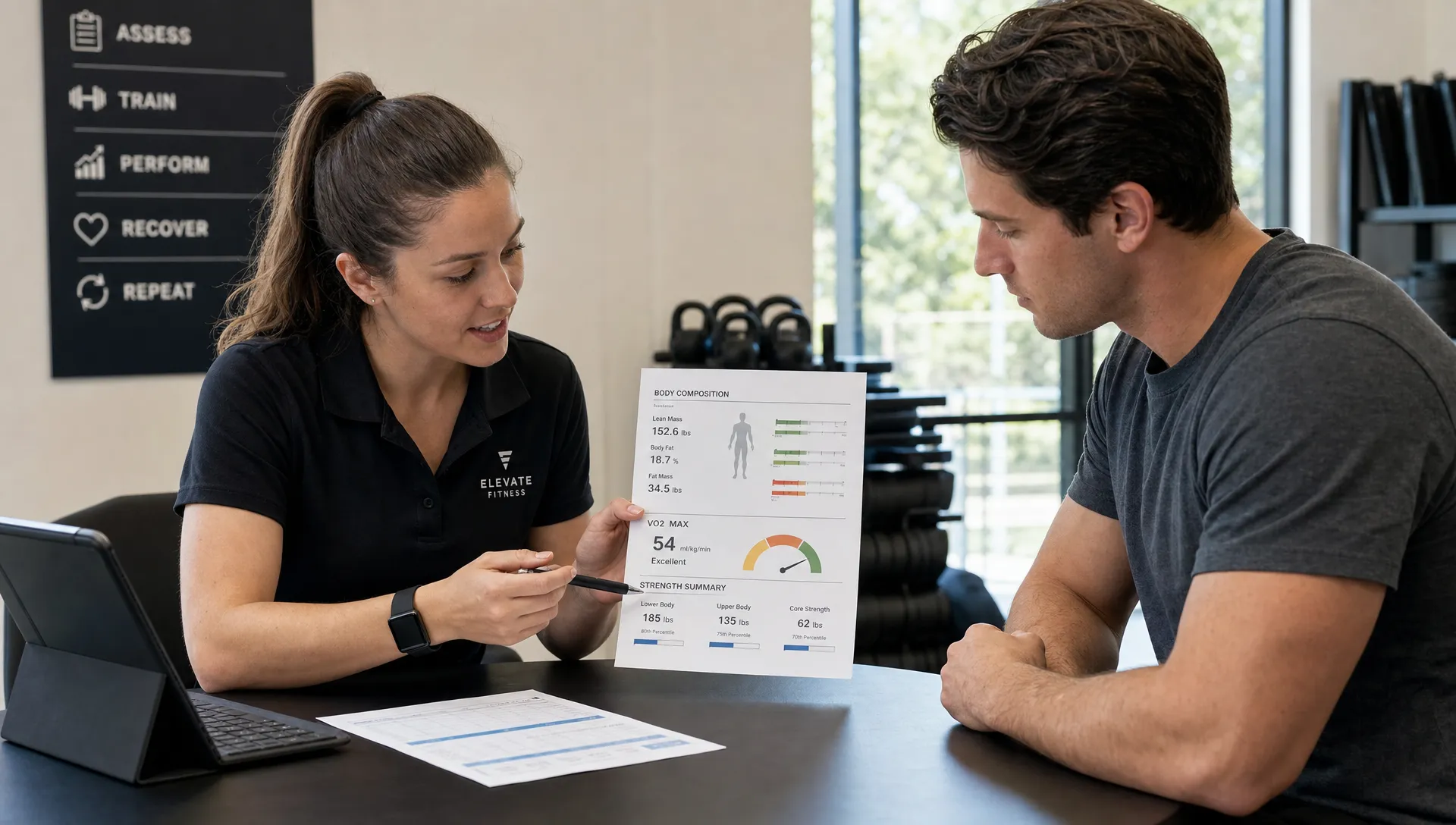
Automated reports can be useful, but they rarely explain tradeoffs. A DEXA report may show body fat percentage, lean mass and visceral fat estimates. It cannot know whether your work schedule makes five training days unrealistic, whether your protein intake is low, whether you are recovering from an injury or whether your goal is performance rather than aesthetics.
That is why the professional sitting with you after the test matters. At Custom Fit, DEXA scans are performed by Registered Dietitians or Exercise Physiologists who understand how body composition connects to nutrition and training. They can explain what the results mean, what they do not mean and how those findings should guide the next step.
For example, visceral fat can be an important marker to discuss because it is associated with cardiometabolic risk. But a useful conversation does not stop at “lower this number.” It asks what training, nutrition, sleep and stress changes are realistic enough to repeat.
Fitness testing is not a replacement for medical care. If results raise medical concerns, clients should involve their physician. For private practice doctors, concierge medicine teams and longevity clinics, objective fitness data can also support more informed conversations about lifestyle intervention, performance and long-term health planning.
The San Francisco reality: your plan has to fit your calendar
A technically perfect plan that does not fit your week is not a good plan. Many Custom Fit clients are managing demanding workdays, client dinners, travel and packed calendars. Someone moving between SoMa meetings, the Financial District and evening obligations may not have the same training window every day.
Testing helps make limited time more productive. If your VO2 max data shows that aerobic fitness is the limiting factor, two focused conditioning sessions may matter more than adding random workouts. If your DEXA scan shows that preserving muscle is the priority, strength training becomes non-negotiable. If your recovery is poor, the plan may need smarter spacing rather than more intensity.
The same logic applies to adherence. A plan should reduce decisions, not add friction. If you need structure beyond testing, this guide to building a personal fitness program you can stick to explains how to make training realistic enough to maintain.
For clinics, concierge medicine and employers, testing creates a shared language
Fitness testing can also be valuable beyond individual coaching. Private practice doctors, concierge medicine facilities, longevity clinics and employee benefits managers often need objective ways to support prevention, lifestyle change and follow-through.
Testing creates a shared language between the client, coach and healthcare team. Instead of vague updates like “I’m exercising more,” the conversation can include changes in lean mass, aerobic capacity, visceral fat estimates, strength and adherence.
For organizations, follow-up matters too. Testing should connect with appropriate coaching, clear communication and agreed privacy safeguards.
The key is to keep the human interpretation intact. Fitness and longevity data should support better coaching, not turn health into a dashboard with no plan behind it.
How often should you retest?
Retesting should be frequent enough to guide decisions, but not so frequent that normal fluctuations create noise. For many clients, body composition reassessment after 8 to 12 weeks can be useful because it gives training and nutrition enough time to produce measurable change. VO2 max may be reassessed after a focused conditioning block, often around 12 to 16 weeks depending on the person and goal.
The exact cadence should depend on the metric. Strength can be tracked more often through training logs. Body composition needs enough time to change meaningfully. Aerobic capacity improves through repeated exposure and progressive conditioning, so retesting too soon can understate progress.
A good retesting process asks:
- Did the target metric improve?
- Did the client follow the plan consistently enough to judge it fairly?
- Did any unintended tradeoff appear, such as muscle loss during fat loss?
- Should the next phase continue, intensify or shift focus?
Progress is not always linear. Testing helps you avoid overreacting to one bad week and underreacting to a real plateau.
What to ask before you book fitness testing
Before choosing a testing provider, ask how the results will be interpreted and applied. The quality of the plan depends on the quality of the follow-through.
Useful questions include:
- Which tests match my specific goal?
- Who performs and explains the test?
- How will the results change my training plan?
- How will nutrition be adjusted based on the findings?
- When should I retest?
- How will progress be tracked between tests?
The most important question is simple: “What will I do differently after this test?” If there is no clear answer, the testing process is incomplete.
Frequently Asked Questions
What is fitness testing? Fitness testing is the use of objective assessments, such as DEXA scans, VO2 max testing, strength assessments and movement screens, to understand your current baseline and guide a more personalized training plan.
How does a DEXA scan help with fitness goals? A DEXA scan can estimate body fat, lean mass, bone density and fat distribution. At Custom Fit, DEXA scans are performed by Registered Dietitians or Exercise Physiologists, so clients get professional interpretation connected to nutrition, exercise physiology and body composition.
Is VO2 max testing only for athletes? No. VO2 max testing is useful for anyone who wants to improve cardiovascular fitness, energy, endurance or longevity. It helps define training zones and shows whether your cardio plan is actually addressing your current limitation.
How often should I repeat fitness testing? The timing depends on the goal and test. Many people benefit from body composition retesting after 8 to 12 weeks and VO2 max reassessment after a focused training block. Your coach or clinician should set the cadence based on what you are trying to change.
Can fitness testing help if I already work out regularly? Yes. Testing is often most useful for people who are consistent but stuck. It can show whether the plateau is related to training stimulus, nutrition, recovery, aerobic fitness or body composition changes that the scale does not show.
Turn your health goal into a measurable plan
If you are ready to replace guesswork with a clear baseline, fitness testing can show where to focus first and how to measure progress. Custom Fit combines testing, personal training, nutrition coaching and recovery support so your plan reflects your actual body, schedule and goals.
Explore fitness testing and coaching at Custom Fit SF and start with data you can act on.