Bone Density Test Procedure: What Happens at Your Visit
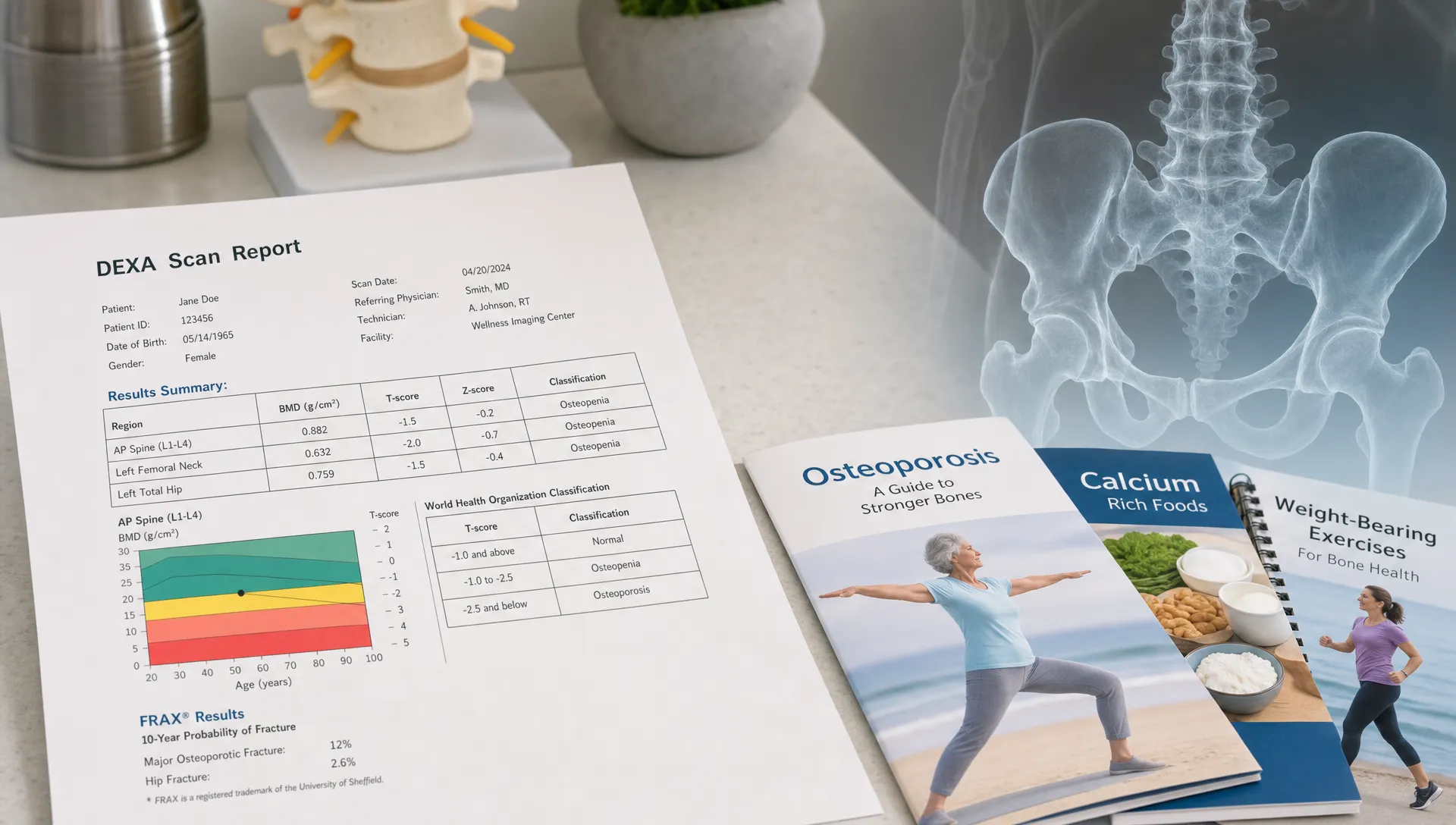


A bone density test is one of the simplest ways to understand a major part of your long-term health: how strong your bones are today and how that may affect your future fracture risk. If your clinician, trainer, or longevity team has recommended one, the visit is usually faster, easier, and less intimidating than most people expect.
The most common bone density test procedure uses DEXA, also called DXA, a low-dose X-ray scan that estimates bone mineral density. There are no needles, no enclosed MRI-style tube, and typically no recovery time. You lie still while the scanner passes over your body, then your results are reviewed in the context of your age, sex, medical history, and goals.
Below is what happens before, during, and after your visit, plus how to make sense of the numbers you may see on your report.
What a bone density test measures
A bone density test measures how much mineral content is present in a specific area of bone. Higher bone mineral density generally means stronger bones, while lower bone density can indicate osteopenia or osteoporosis, depending on the score and clinical context.
DEXA is widely used because it is quick, noninvasive, and delivers a very low radiation dose. The American College of Radiology and Radiological Society of North America describe DEXA as the standard method for diagnosing osteoporosis and assessing fracture risk in many clinical settings.
The test may focus on the hip, lumbar spine, or forearm when ordered for clinical osteoporosis screening. In wellness, performance, and body composition settings, a whole-body DEXA scan may also provide information about lean mass, fat mass, visceral fat, and total bone measures. At Custom Fit SF, clients often use DEXA as part of a broader data-driven approach to fitness, nutrition, and longevity. If you are considering a scan locally, you can review Custom Fit’s DEXA scan options to understand how the service fits into your health tracking plan.
Bone density matters beyond osteoporosis screening. For active adults, executives balancing high-stress schedules, endurance athletes, and people training for demanding pursuits, strong bones are part of staying resilient. Whether your goals include skiing, strength training, or safety-focused activities such as technical diving and instructor training in Thailand, knowing your baseline can help you make smarter decisions about training, nutrition, and recovery.
Who should consider a bone density test?
Many people first hear about bone density testing after a routine physical, a fracture, or a conversation about menopause, aging, or long-term medication use. The U.S. Preventive Services Task Force recommends osteoporosis screening for women age 65 and older, and for postmenopausal women younger than 65 who are at increased risk.
You may also want to discuss testing with your doctor if you have risk factors such as:
- A previous low-trauma fracture, such as a fracture from a standing-height fall
- A family history of osteoporosis or hip fracture
- Long-term corticosteroid use
- Early menopause or low sex hormone levels
- Low body weight or major unintentional weight loss
- Smoking or heavy alcohol intake
- Certain gastrointestinal, endocrine, kidney, or autoimmune conditions
- A history of eating disorders or chronic under-fueling
For men, younger adults, and athletes, recommendations are more individualized. A clinician may recommend testing based on fracture history, medication use, hormone status, chronic disease, or signs of low energy availability. In a longevity or performance setting, a baseline DEXA may also be useful for tracking changes in body composition and bone measures over time, especially when paired with nutrition coaching and resistance training.
How to prepare before your visit
Preparation is usually simple. In most cases, you can eat normally and continue your regular activities before a bone density test. However, the facility may give you specific instructions depending on the type of scan and the equipment being used.
A common instruction is to avoid calcium supplements for 24 hours before the scan, because calcium tablets can sometimes interfere with imaging. You should also tell the facility if you recently had a barium exam, nuclear medicine test, or CT scan with contrast, since you may need to wait before having DEXA imaging.
Wear comfortable clothing without metal if possible. Zippers, underwire bras, belts, large buttons, and metal fasteners can interfere with the scan area. If needed, you may be asked to change into a gown or remove jewelry, watches, keys, and other metal objects.
Before your appointment, tell the team if you are or may be pregnant. DEXA uses a low dose of radiation, but pregnancy precautions still matter. Also mention hip replacements, spinal hardware, prior fractures, or implants, because these may affect positioning or interpretation.
If your scan was ordered by a physician, bring the order and any relevant medical history. If you are using the test for fitness or longevity tracking, it helps to bring a short list of your goals, recent training changes, medications, supplements, and any prior DEXA results for comparison.
What happens when you arrive
Your visit usually starts with check-in and a brief review of your health history. The technician or specialist may confirm your height, weight, age, sex, and relevant risk factors. These details help contextualize your results and, in some clinical settings, may be used to calculate fracture risk.
You may be asked about prior fractures, family history, medications, menopause status, hormone therapy, calcium and vitamin D intake, smoking history, alcohol use, and exercise habits. These questions are not just paperwork. Bone density is influenced by genetics, hormones, nutrition, loading from exercise, illness, medications, and aging.
If you are visiting a fitness and wellness facility, the conversation may also include your goals. Someone focused on longevity may care about maintaining bone density and lean mass over decades. Someone in a fat-loss phase may want to ensure they are preserving muscle and not under-fueling. An athlete may want to monitor asymmetries, lean mass distribution, and bone health as part of a performance plan.
The bone density test procedure step by step
The scan itself is straightforward. You will lie on a padded table while the scanner arm moves over the area being measured. The machine does not touch you in a painful way, and you do not need to go inside a tunnel.
For a clinical hip and spine DEXA, the technician may position your legs with a foam block or support so the hip and spine can be measured accurately. For a forearm scan, your arm will be placed in a specific position. For a whole-body DEXA, you will typically lie flat with your body aligned on the table while the scanner captures a full-body image.
You will need to stay still during the scan. Movement can blur the image or affect measurement quality. The scan is quiet, painless, and usually completed in minutes, although the full appointment may take longer because of check-in, positioning, quality review, and result discussion.
Some people feel mildly awkward lying still in a precise position, but the procedure is not physically demanding. You can breathe normally. If you are uncomfortable, tell the technician before the scan begins so adjustments can be made when possible.

How long does a bone density test take?
The scan portion is often brief. Many DEXA scans take only several minutes once you are positioned, though the total visit may be closer to 20 to 30 minutes depending on the facility, the scan type, and whether your results are reviewed with you afterward.
If you are fitting the appointment into a workday in San Francisco, ask how much time to reserve from arrival to departure. For busy professionals, this is one of the advantages of DEXA: it can provide valuable objective data without a long appointment or downtime.
After the test, you can return to normal activities immediately unless your clinician has given you other instructions. There is no sedation and no recovery period.
What you will see in your results
Your report may include several numbers, and the most important ones depend on why the test was ordered.
For clinical bone density testing, the key result is often a T-score. A T-score compares your bone density to that of a healthy young adult reference population. In general, a T-score of -1.0 or higher is considered normal, between -1.0 and -2.5 is considered low bone mass or osteopenia, and -2.5 or lower is consistent with osteoporosis. These categories are part of widely used diagnostic criteria, but your clinician should interpret them in context.
You may also see a Z-score, which compares your bone density to what is expected for someone your age and sex. Z-scores are especially useful in younger adults, premenopausal women, and men under 50, where very low scores may prompt a clinician to look for secondary causes.
A DEXA report may also include bone mineral density in grams per square centimeter, site-specific results, percent change from a prior scan, and notes about scan quality. If you have a whole-body DEXA, the report may include body fat percentage, lean mass, visceral fat estimates, regional muscle distribution, and total bone measures. Custom Fit has a deeper walkthrough on how to read your DEXA scan results if you want help understanding how these metrics fit together.
Will you get a diagnosis during the visit?
That depends on where you are tested and why the test was ordered. A DEXA scan can provide the data used to identify low bone density, but a medical diagnosis and treatment plan should come from a licensed healthcare professional who can evaluate your full history.
This distinction matters. A wellness or fitness facility can help you understand your report, track changes, and connect the results to training, nutrition, and recovery behaviors. If your scores suggest osteoporosis, unexpectedly low bone density, or a major change from a prior scan, you should review the results with your physician. Your doctor may consider lab testing, medication review, fall-risk assessment, or treatment options.
For private practice physicians, concierge medicine groups, and longevity clinics, DEXA data can be a useful objective input. It helps move the conversation beyond body weight alone and supports more precise discussions about muscle, fat, and skeletal health. The best use of the data is collaborative: scan results, clinical context, and behavior change all working together.
Is a bone density test safe?
DEXA is considered safe for most people because it uses a very low dose of ionizing radiation. According to RadiologyInfo, the radiation exposure from bone densitometry is very small compared with many other imaging tests. Still, it is important to disclose pregnancy or possible pregnancy before the scan.
The procedure is noninvasive. There are no injections, no blood draws, and no contrast dye for a standard DEXA scan. Most people do not experience side effects.
If you have mobility limitations, back pain, recent surgery, or difficulty lying flat, tell the facility ahead of time. The team may be able to adjust positioning or advise whether the test is appropriate at that time.
What happens after the test?
After the scan, the images are checked for quality and the results are generated. In some settings, a radiologist or physician interprets the report. In wellness and performance settings, a qualified team member may walk you through the data and explain what the numbers mean for your goals.
If your bone density is normal, the next step may be establishing a smart retesting interval. You may not need frequent testing unless you are tracking a specific intervention, have changing risk factors, or are following a clinician’s recommendation. For broader body composition and longevity tracking, the ideal cadence varies by goal. Custom Fit explains this in more detail in its guide on how often to get DEXA scans for tracking.
If your bone density is low, the next step is not panic. It is a more informed plan. Your clinician may evaluate calcium and vitamin D status, kidney and thyroid function, hormone status, medication effects, and other potential contributors. The Bone Health and Osteoporosis Foundation’s clinician guide emphasizes a comprehensive approach that may include nutrition, exercise, fall prevention, and medication when appropriate.
Resistance training is especially important because bone responds to load. A well-designed program may include progressive strength training, impact or weight-bearing exercise when appropriate, balance work, and adequate recovery. Nutrition matters too. Protein, calcium, vitamin D, and overall energy intake all play roles in maintaining bone and muscle.
How to get the most accurate comparison over time
One DEXA scan gives you a baseline. The real value often comes from comparing future scans under similar conditions. This is especially true if you are tracking changes from strength training, nutrition coaching, fat loss, muscle gain, menopause-related changes, or a bone health treatment plan.
For cleaner comparisons, try to use the same facility and scanner when possible. Schedule scans at a similar time of day, follow the same pre-scan instructions, and avoid making conclusions from tiny changes that may fall within normal measurement variation.
Hydration, recent meals, intense workouts, and positioning can influence body composition readings more than bone density readings, but consistency still helps. If you are using DEXA to guide a performance or longevity program, pair the scan with a practical review: what changed in your training, diet, sleep, recovery, medications, or stress load since the last test?
Common myths about the bone density test procedure
One myth is that DEXA is only for older women. Osteoporosis screening is especially important for postmenopausal women and older adults, but bone health can be relevant earlier for people with fractures, hormonal issues, under-fueling, long-term steroid use, or high training loads.
Another myth is that a normal body weight means healthy bones. Body weight alone does not tell you whether you have adequate lean mass, healthy visceral fat levels, or strong bones. This is why DEXA can be more useful than relying only on the scale.
A third myth is that low bone density cannot improve. While age, genetics, and medical conditions matter, training, nutrition, medication when indicated, and fall prevention can meaningfully change risk. The goal is not just a better score. It is fewer fractures, better function, and a more resilient body.
Frequently Asked Questions
Does a bone density test hurt? No. A standard DEXA bone density test is painless and noninvasive. You lie still on a padded table while the scanner moves over the measurement area.
Do I need to fast before a bone density test? Usually no. Most people can eat normally before the test, although your facility may ask you to avoid calcium supplements for 24 hours. Follow the specific instructions provided when you schedule.
What should I wear to my appointment? Wear comfortable clothing without metal zippers, buttons, underwire, or belts if possible. You may be asked to remove jewelry or change into a gown if metal could interfere with the scan.
Is DEXA the same as a bone scan? No. A DEXA scan measures bone mineral density using low-dose X-ray technology. A nuclear medicine bone scan is a different test used for different medical reasons and usually involves an injected tracer.
Can a DEXA scan show body fat and muscle too? A whole-body DEXA scan can estimate body fat, lean mass, visceral fat, and regional body composition in addition to certain bone measures. Clinical osteoporosis scans often focus on the hip, spine, or forearm.
What happens if my bone density is low? Review the results with your physician, especially if your T-score or Z-score is unexpectedly low. Your doctor may recommend additional evaluation, lifestyle changes, medication, or follow-up testing depending on your risk profile.
Ready to understand your baseline?
A bone density test procedure is quick, low-stress, and highly informative when the results are interpreted correctly. Whether you are focused on osteoporosis screening, longevity, athletic performance, or a smarter fitness plan, DEXA can help turn guesswork into measurable data.
If you are in San Francisco, Custom Fit SF can help you use DEXA insights alongside personal training, nutrition coaching, recovery, and advanced wellness testing so your next steps are based on your actual body, not averages.