Personal Fitness Habits That Make Results Easier to Keep
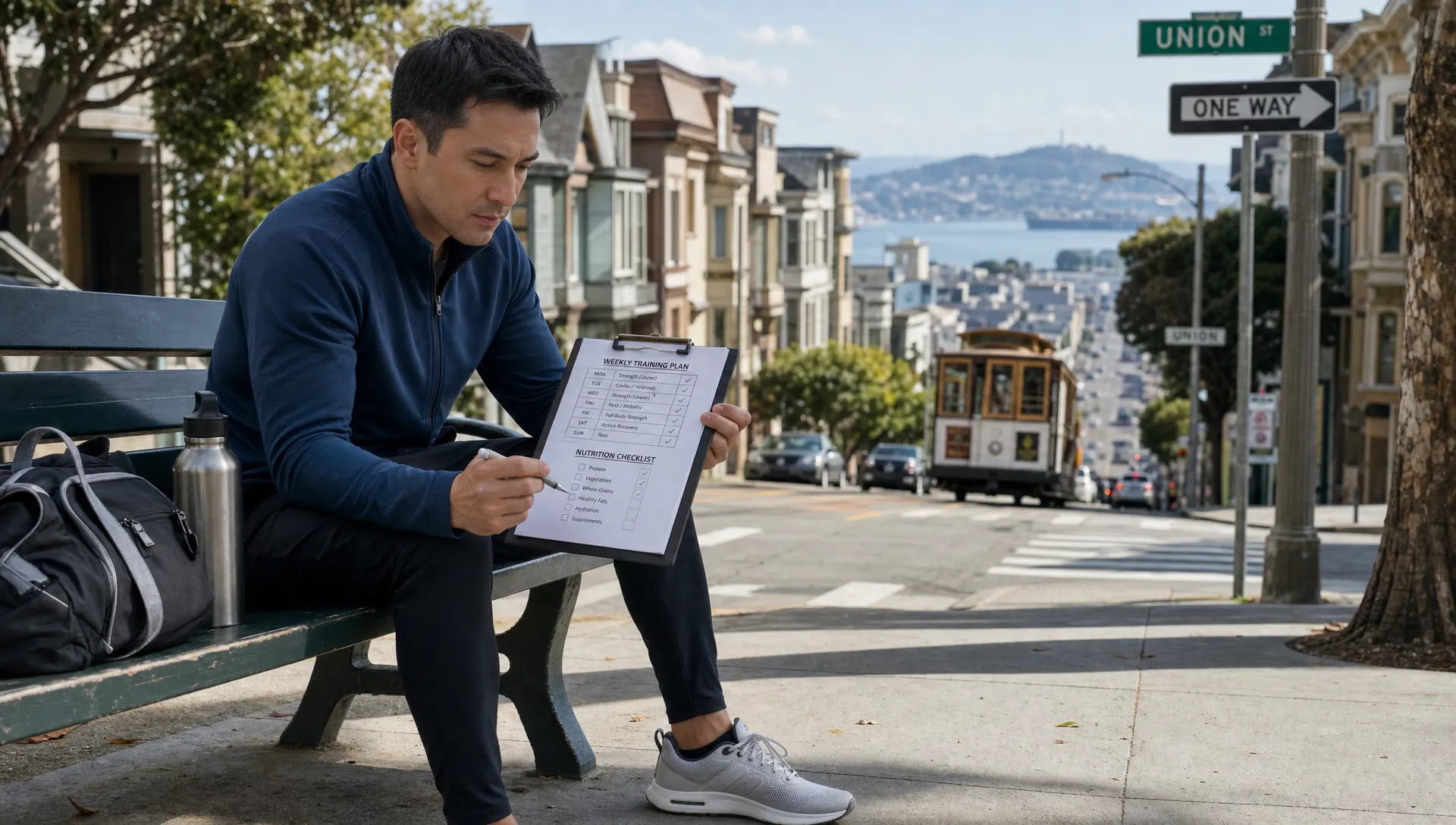


Consistency gets easier when your fitness plan stops depending on perfect motivation. For busy professionals, parents, founders, physicians, and anyone balancing a demanding San Francisco schedule, the goal is not to train harder every week forever. The goal is to build personal fitness habits that make healthy choices feel repeatable, even when work, travel, stress, and family obligations change the day.
That distinction matters. Research on habit formation suggests that automaticity develops through repeated behavior in a stable context, not through willpower alone. In one well-known study, published in the European Journal of Social Psychology, participants took anywhere from 18 to 254 days to form a habit, with an average of 66 days depending on the behavior and person (PubMed). In other words, sustainable fitness is less about a 30-day sprint and more about designing routines you can keep practicing.
Here are the habits that make results easier to keep, whether your goal is fat loss, strength, longevity, better metabolic health, or simply feeling more capable in your body.
Start with a “repeatable week,” not a perfect week
Most fitness plans fail because they are built around an ideal calendar. A repeatable plan starts with the week you actually live.
If you regularly have early meetings, late dinners, school pickups, clinic hours, or unpredictable travel, a five-day gym plan may look impressive on paper but fail in practice. A better habit is to define your non-negotiable baseline: the smallest training rhythm you can maintain most weeks.
For many people, that might be two to three strength sessions, one conditioning session, and daily walking. For others, it may be three 45-minute training blocks with short mobility work on off days. The exact formula matters less than whether it survives a normal month.
The World Health Organization recommends adults aim for 150 to 300 minutes of moderate-intensity aerobic activity weekly, or 75 to 150 minutes of vigorous activity, plus muscle-strengthening activities at least two days per week (WHO). Those targets are useful, but they should be translated into your real schedule. If you need help building the structure, Custom Fit has a deeper guide on how to build a personal fitness program you can stick to.
A practical habit: before each week starts, choose your training windows and put them on your calendar like appointments. If your calendar is where your most important commitments live, your workouts should live there too.
Use a minimum effective dose when life gets busy
One of the most underrated personal fitness habits is having a “minimum workout” ready before you need it.
Many people miss one workout, then decide the week is ruined. But maintaining results often depends on avoiding long gaps, not executing every session perfectly. A 20-minute strength circuit, a brisk walk between calls, or a short mobility session can preserve momentum when a full workout is not realistic.
Think of your minimum workout as a bridge. It keeps your identity intact: “I am someone who trains, even when the day is compressed.” That identity is powerful because it prevents all-or-nothing thinking.
A good minimum session might include:
- A squat or lunge pattern
- A push movement
- A pull movement
- A hinge movement
- A short finisher, such as incline walking, rowing, or bike intervals
You do not need to chase exhaustion. You need to keep the habit alive.
Measure progress without obsessing over the scale
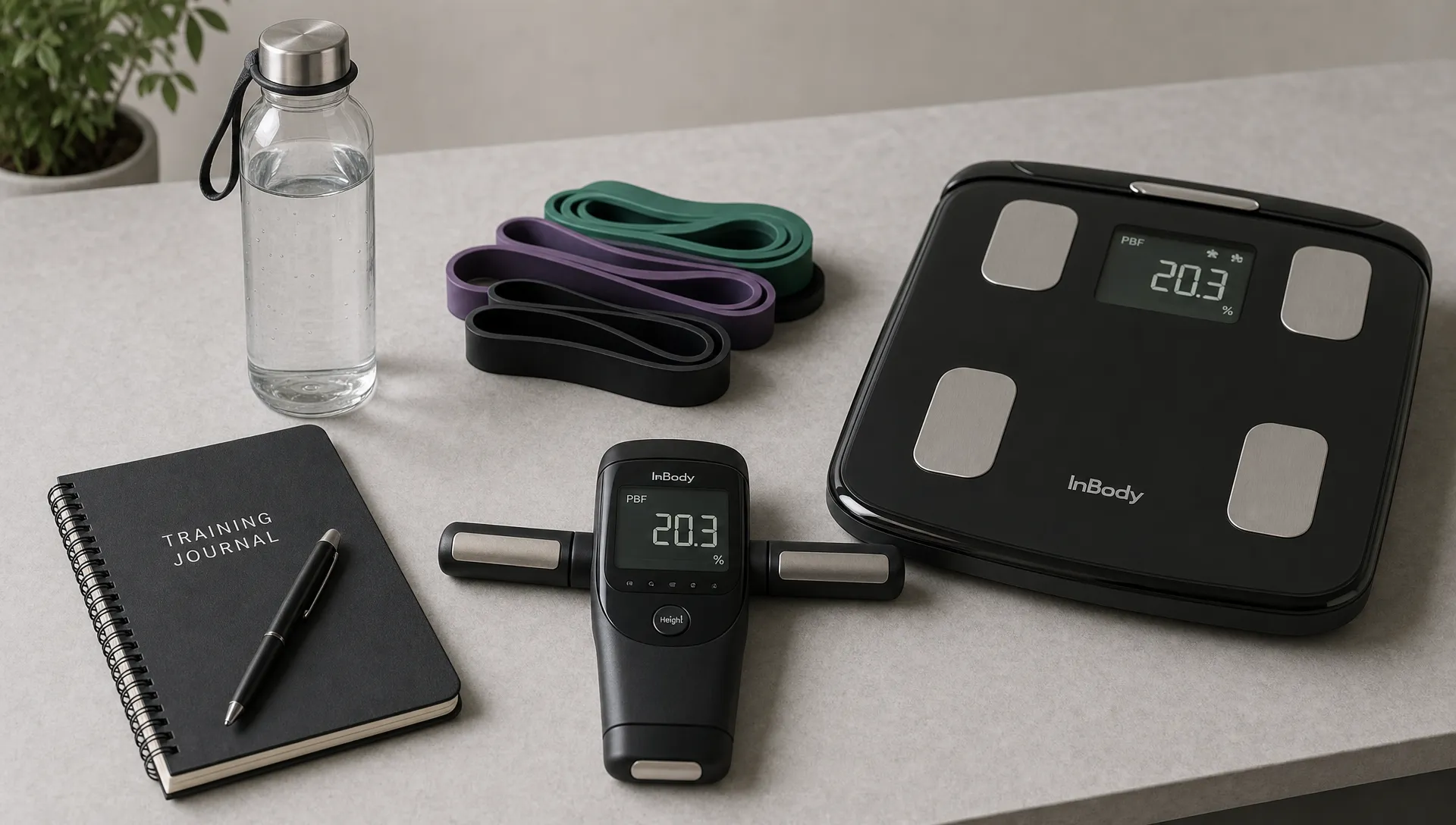
The bathroom scale can be useful, but it is incomplete. It does not show whether you gained lean mass, improved aerobic capacity, reduced visceral fat, recovered better, or became more powerful.
Self-monitoring is strongly associated with better weight management outcomes, especially when people track consistently rather than perfectly. A review in the Journal of the American Dietetic Association found that self-monitoring of diet, physical activity, and body weight was linked to improved weight loss outcomes (PMC). But tracking should give you clarity, not anxiety.
For lasting results, track a mix of leading and lagging indicators.
Leading indicators are the behaviors you control: workouts completed, steps, protein intake, sleep, alcohol frequency, and recovery practices. Lagging indicators are the outcomes: body composition, performance, blood markers, resting heart rate trends, and how clothes fit.
This is where data-driven fitness can be especially useful. Body composition testing, VO2 max testing, metabolic testing, and structured coaching can help you see what is actually changing. For a more detailed breakdown, Custom Fit explains the best ways to track your fitness progress beyond body weight alone.
The habit is simple: review your data at planned intervals, not constantly. Weekly behavior checks and periodic objective testing are usually more helpful than daily emotional scorekeeping.
Make protein and fiber automatic
Training creates the stimulus. Nutrition determines how well your body adapts.
For most active adults, two nutrition habits make a major difference: eating enough protein and eating enough fiber-rich foods. Protein supports muscle repair and lean mass retention, especially when paired with resistance training. The International Society of Sports Nutrition position stand notes that higher protein intakes can support training adaptation and body composition goals in active individuals (PMC).
Fiber-rich foods, such as vegetables, legumes, berries, oats, and whole grains, support fullness and metabolic health. They also make meals more satisfying, which matters when your goal is consistency rather than short-term restriction.
The easiest way to keep nutrition on track is to create default meals. Not a rigid meal plan, just a short list of reliable options you can repeat.
Examples include Greek yogurt with berries and nuts, eggs with vegetables and avocado, salmon with rice and greens, tofu or chicken bowls, protein smoothies, or a high-protein salad you actually enjoy. If you eat out often, decide your “go-to” orders at your usual restaurants before hunger and decision fatigue take over.
For more practical guidance, Custom Fit’s article on nutrition for gym-goers covers protein timing, carbohydrates, hydration, and matching intake to training goals.
Protect recovery like it is part of the workout
Recovery is not what you do after fitness. It is part of fitness.
If your nervous system is constantly stressed, your sleep is short, and your workouts are always high intensity, you may be working hard without adapting well. This is especially relevant for high-performing professionals who treat fatigue as a badge of honor.
Sleep is one of the most important recovery tools. A systematic review published in Sports Medicine found that sleep extension and sleep hygiene strategies can benefit athletic performance and recovery-related outcomes (PubMed). You do not need to optimize every variable overnight, but a few repeatable habits can make a meaningful difference.
Start with a consistent sleep window when possible. Reduce late caffeine. Create a transition ritual after work so your body is not expected to go from high-alert mode to deep sleep in ten minutes. Schedule lower-intensity training when your sleep debt is high.
Recovery also includes mobility, soft tissue work, breathwork, walking, hydration, and days where you deliberately avoid turning every session into a test. The goal is not to do less. The goal is to absorb the work you are already doing.
Keep strength training as the foundation
Cardio matters. Mobility matters. But if you want results that are easier to keep, strength training should be a foundation of your personal fitness routine.
Muscle is metabolically active tissue. Strength supports joint health, function, posture, glucose regulation, and long-term independence. It also makes many other activities easier, from hiking in Marin to carrying groceries up San Francisco hills.
A 2022 systematic review and meta-analysis in the British Journal of Sports Medicine found that muscle-strengthening activities were associated with a lower risk of all-cause mortality and several major non-communicable diseases (PubMed). That does not mean everyone needs to train like a powerlifter. It means progressive resistance training has benefits far beyond aesthetics.
A sustainable strength habit includes planned progression. Over time, you may increase load, reps, sets, range of motion, or control. Without progression, workouts can become maintenance at best and random fatigue at worst.
If you are newer to strength training, returning after injury, or trying to improve body composition without overtraining, professional coaching can help you choose the right exercises and progress safely.
Build your environment so good choices are easier
Discipline is useful, but environment often wins.
If your gym bag is packed, your training session is scheduled, your fridge has high-protein options, and your coach expects you, the healthy choice becomes easier. If your calendar is chaotic, your pantry is random, and every workout requires a new decision, even strong motivation can fade.
This principle applies beyond fitness. Physicians, clinic owners, and wellness leaders often see the same pattern in business growth: consistent systems outperform sporadic effort. For example, private healthcare practices that want steadier patient education and lead generation may benefit from working with a specialized healthcare marketing agency rather than relying on one-off campaigns. In fitness, the equivalent is building systems that repeatedly point you toward the outcome you want.
For your own health, create friction for the habits you want less of and reduce friction for the habits you want more of. Put walking shoes by the door. Keep water visible. Book workouts in advance. Place your phone away from the bed. Choose a gym or studio that is convenient enough to use consistently.
The easier the next right action is, the more often you will take it.
Get expert feedback before motivation drops
Many people wait to ask for help until they are frustrated. A better habit is to use expert feedback early, while motivation is still high and your plan can be adjusted before problems become patterns.
A coach, registered dietitian, or testing specialist can help you answer questions that are hard to solve alone:
- Is my training intensity appropriate for my goal?
- Am I eating enough to support performance and body composition changes?
- Is my cardio improving, or am I just getting tired?
- Are my recovery habits keeping up with my workload?
- Is my program aligned with my current health data?
This is especially important if you are managing a demanding career, training for longevity, or trying to improve multiple markers at once. Custom Fit’s approach to personal training in San Francisco built around your data reflects this idea: better inputs lead to better decisions.
You do not need to outsource responsibility for your health. You need the right feedback loop so your effort goes in the right direction.
Make your habits identity-based
The most durable fitness habits are connected to identity, not punishment.
If your internal story is “I have to work out because I fell off,” training becomes a tax. If your story is “I train because I take care of my body and want to perform well for decades,” the same workout becomes a vote for the person you want to be.
Identity-based habits are particularly powerful because they continue after the initial goal is reached. Losing 15 pounds, improving a DEXA scan, or increasing VO2 max can be motivating. But keeping those results usually requires a deeper reason to continue.
Ask yourself: what kind of person would naturally maintain the results I want?
That person may schedule workouts before the week gets crowded. They may eat a protein-forward breakfast. They may walk after dinner, protect sleep, and test key metrics periodically. They may not be perfect, but they return to the plan quickly.
That is the real skill: not avoiding every disruption, but shortening the time between disruption and recommitment.
Frequently Asked Questions
What are the best personal fitness habits for long-term results? The most effective habits are consistent strength training, planned weekly workouts, protein-forward meals, daily movement, adequate sleep, recovery practices, and periodic progress tracking. The best habits are the ones that fit your actual schedule and can be repeated for months.
How many days per week should I work out to maintain results? Many adults can maintain meaningful results with two to four structured workouts per week, especially when combined with daily walking and good nutrition. Your ideal frequency depends on your goals, training history, recovery, and schedule.
Is tracking necessary for personal fitness progress? Tracking is not mandatory, but it helps. Monitoring workouts, nutrition, sleep, body composition, and performance can reveal whether your plan is working. The key is to track useful signals at appropriate intervals instead of obsessing over daily fluctuations.
Why do people lose fitness results after making progress? Results often fade when the plan used to achieve them is too restrictive, time-consuming, or disconnected from everyday life. Sustainable results require habits that continue after the initial motivation or deadline is gone.
When should I work with a personal trainer or dietitian? Consider getting expert support if you are unsure how to train safely, have plateaued, want objective testing, need nutrition structure, or are balancing fitness with a demanding professional schedule. Coaching can help you make better decisions and stay consistent.
Make your fitness results easier to keep
The right personal fitness habits reduce the need for constant willpower. They turn training, nutrition, recovery, and tracking into a system you can return to again and again.
At Custom Fit, clients can combine personal training, nutrition coaching, recovery services, DEXA scans, VO2 max testing, metabolic testing, and longevity-focused support in one data-driven environment. If you want a smarter plan built around your body, your schedule, and your goals, Custom Fit can help you create routines that are easier to maintain long after the first results appear.