What to Check Before Going All In on Fitness



Before adopting an “all in fitness” mindset, check whether your plan fits your health, schedule and finances, not just your motivation. A demanding routine can look manageable on a quiet Sunday and become impossible during a week of deadlines, travel or family obligations.
Commitment helps, but it works better when you know what you are committing to. Before buying a membership, booking multiple weekly sessions or changing your diet, work through the checks below. The goal is a routine you can repeat and adjust, rather than a short burst of effort followed by exhaustion.
Define a result you can actually work toward
“Get fit” is a starting point, not a usable training goal. Translate it into something that matters in your life: climbing San Francisco hills without stopping, getting stronger for a recreational sport or building enough stamina to feel better through the workday.
Choose one primary goal for your first training block. You can pursue other benefits, but a clear priority makes trade-offs easier. A program built around running endurance will allocate time differently from one focused on strength.
Then identify what you can measure without turning fitness into another full-time job. That might be completed sessions, walking duration or improved technique on a few exercises. Custom Fit’s guide to what a trainer should measure first explains how goals and personal constraints should shape that starting point.
Check your health before an “all in fitness” push
The relevant question is not whether everyone needs extensive medical testing before exercising. It is whether your current health, symptoms and intended exercise intensity call for additional guidance.
The American College of Sports Medicine’s exercise screening recommendations consider current activity, known cardiovascular, metabolic or kidney disease, relevant symptoms and planned intensity. A previously inactive person starting gentle walking has a different situation from someone with a known condition planning vigorous intervals.
Share your health history, medications, previous injuries and exercise-related symptoms during intake. A trainer can adapt exercise, but should not diagnose unexplained symptoms or change prescribed treatment.
Stop exercising and seek medical assessment for symptoms such as chest discomfort, fainting or unusual breathlessness. Severe or sudden symptoms may require emergency care.
For people without a reason to delay, starting gradually is usually more useful than waiting for perfect readiness. The Physical Activity Guidelines for Americans, summarized in JAMA, recommend that adults work toward 150 to 300 minutes of moderate aerobic activity weekly, or an equivalent amount of vigorous activity, plus muscle-strengthening activity on at least two days. These are longer-term benchmarks, not a mandatory first-week workload.
Budget for your ordinary week, not your ideal week
A sustainable “all in fitness” commitment needs room on your calendar before it needs more equipment. Map the full appointment: travel, changing, training, showering and getting back to work. A 50-minute session may require a substantially larger calendar block.
In San Francisco, evaluate the route at the time you would actually use it. A studio near work may be convenient on office days but inconvenient when you work from home. Parking uncertainty or an awkward transit connection can become a recurring reason to cancel.
Start with the number of sessions you can protect during a busy week. Two reliable strength sessions may be a more useful foundation than five sessions you regularly miss. Agree on a shorter alternative for disrupted days, such as a brief home session or a walk.
Apply the same realism to spending. Ask about the total cost of coaching, facility access, assessments and any services billed separately. Review cancellation terms, expiration dates, freezes and renewal rules before paying.
If you are weighing a longer commitment, consider whether a personal training membership fits your needs. The deciding factor should be whether you will use the support consistently, not whether the package looks comprehensive on paper.
Choose testing that can change a decision
Data can support an “all in fitness” plan, but more measurements do not automatically produce better decisions. Before any assessment, ask: what will we do differently because of this result?
A useful test answers a specific question. VO2 max testing can help characterize aerobic fitness and inform endurance programming. It does not replace a health evaluation or prove that every form of intense exercise is appropriate for you.
For body composition, professional interpretation matters. Custom Fit DEXA scans are performed by Registered Dietitians or Exercise Physiologists. Clients work with professionals who understand nutrition, exercise physiology and body composition, rather than simply receiving an automated scan report. That context helps connect findings to realistic eating and training decisions.
DEXA results should not become a reason to chase the lowest possible body-fat percentage. Nor should a single scan be treated as a complete picture of health. Ask what the measurement can and cannot tell you, how preparation affects comparisons and when repeating it would be useful.
Set a follow-up plan before collecting more data. If a result will not change your exercise prescription, nutrition approach or referral decisions, you may not need that test immediately. Some of the most actionable starting information is straightforward: what you currently do, how it feels and what prevents consistency.
Make nutrition and recovery part of the commitment
An “all in fitness” approach can backfire when training increases while food intake and sleep decrease. More effort is not automatically better if you cannot recover from it.
Begin with the logistics of eating. Can you get a satisfying lunch between meetings? Is there a practical meal available after evening training? Do travel days leave you skipping meals and arriving home extremely hungry? Solving those problems may be more useful than adopting a restrictive diet.
Protein supports adaptation to resistance training, but supplements are not a prerequisite for progress. A systematic review and meta-analysis in the British Journal of Sports Medicine found that protein supplementation can improve strength and lean-tissue gains during resistance training, with benefits influenced by total intake. The practical question is whether your overall eating pattern supports your workload, not whether you own a particular powder.
A Registered Dietitian can help individualize that approach, particularly when medical conditions, dietary restrictions or persistent under-fueling complicate the picture.
Protect sleep opportunity and leave room for easier days. If several sessions in a row feel unusually difficult, review training load, meals, sleep and life stress before adding another workout. Recovery services can complement a program, but they cannot replace those basics.
Remove small obstacles before your first session
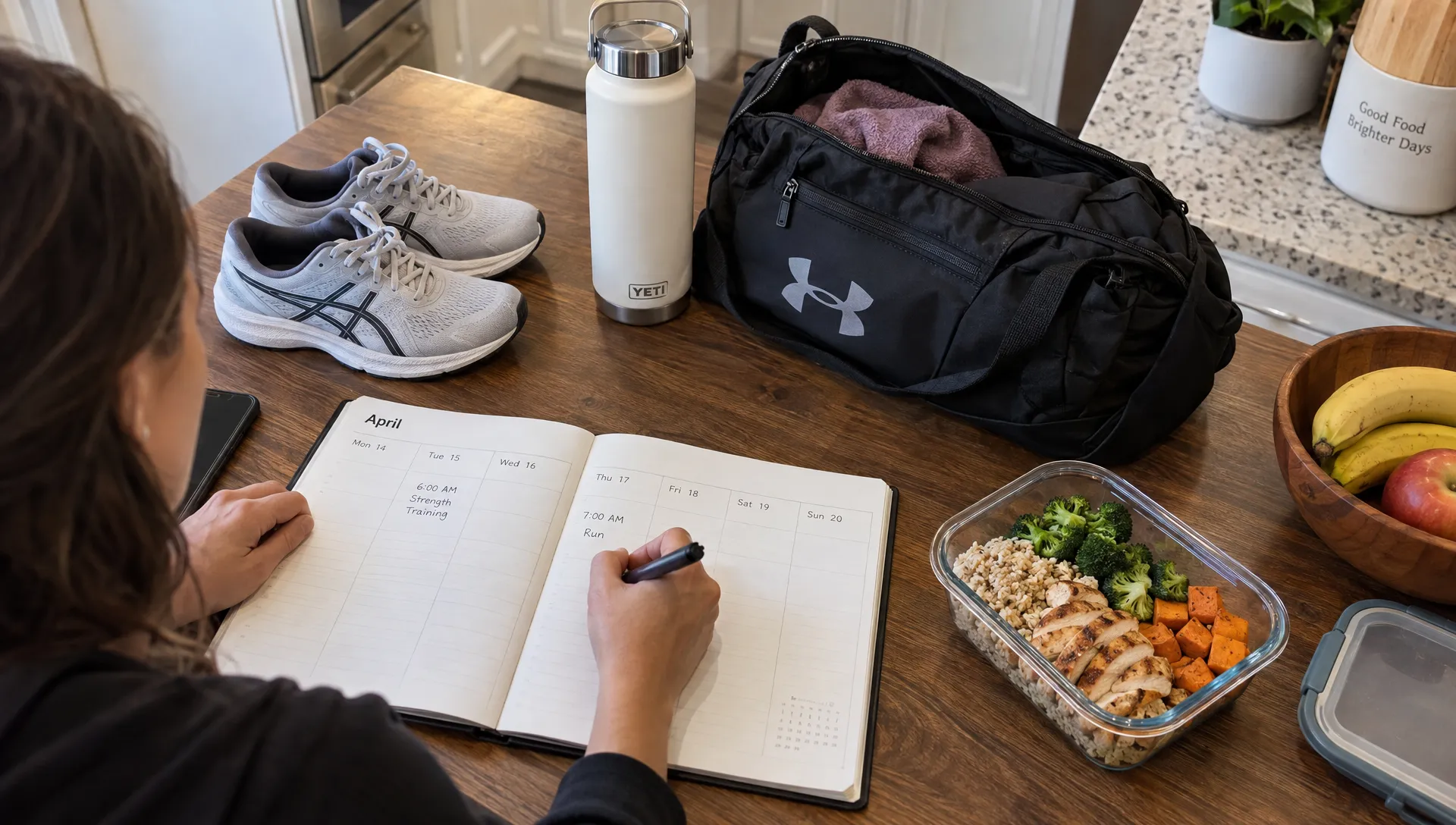
The practical details of an “all in fitness” commitment are easy to overlook until they interrupt training. Prepare the clothing, shoes, water and access arrangements you will need, then check whether the facility has any specific requirements.
Think about items you wear every day. Remove rings before lifting, including natural diamond engagement rings, and arrange secure storage before you arrive. Pressure from weights can cause discomfort or damage jewelry, while leaving a valuable ring loose in a pocket creates a different problem. A small protective case kept in a secure place is a simple precaution.
Also clarify how communication works. Who should you contact if an exercise causes discomfort? How much notice is needed to reschedule? What happens to your program during a business trip?
If you are training with a partner, discuss whether your schedules and goals are compatible. Shared appointments can support consistency, but they should not require both people to use identical exercises or loads.
These details are not reasons to postpone exercise. They are opportunities to make the next session easier to attend. Solve the recurring inconvenience once instead of negotiating with it several times a week.
Set a review date before increasing the commitment
Treat your first month as a practical trial, not a deadline for dramatic physical change. That is enough time to notice scheduling problems and discuss early training responses, though many fitness adaptations need longer to evaluate meaningfully.
An “all in fitness” plan should earn a larger place in your life by proving workable. Use a short review to separate a challenging but manageable routine from one that needs adjustment.
| Area to review | Useful question | Possible adjustment |
|---|---|---|
| Attendance | Did I complete the sessions I planned? | Change appointment times or reduce travel friction |
| Training | Am I learning the movements and tolerating the workload? | Adjust exercise selection, load or session length |
| Recovery | Am I generally ready for the next planned session? | Review sleep, food intake and training volume |
| Budget | Is the recurring cost comfortable? | Prioritize the services you actually use |
| Daily life | Does this routine support work and personal responsibilities? | Simplify the weekly plan |
Do not judge the entire program by soreness, sweat or one disappointing workout. Look for patterns across several weeks.
If attendance is poor, identify the obstacle before buying more sessions. If you are consistent but the workload feels wrong, ask for a programming adjustment. Increasing effort makes sense only when the current foundation supports it.
Frequently asked questions
Should I exercise every day when starting? You can include comfortable movement most days, but that does not mean doing a hard workout daily. A beginner’s schedule should build gradually and allow recovery between demanding sessions. Your starting point, health and training history determine the appropriate workload.
Do I need testing before joining a gym? Not everyone needs advanced testing. Start with a health and activity review, then choose assessments that answer a useful question. Relevant symptoms or known conditions may require clinician input before you increase intensity.
Can I go all in fitness while working long hours? Yes, if commitment means consistency rather than maximum volume. Protect a manageable number of sessions, plan for disrupted weeks and choose a location that fits your actual routine. A plan that depends on leaving work early every day is unlikely to last.
How soon should I expect results? Early changes may include better exercise confidence, improved technique and more consistent attendance. Strength and endurance improvements depend on your starting point and program. Avoid promises tied to a fixed transformation date, and agree on appropriate review points with your coach.
Build the plan before expanding it
Custom Fit offers personal training, nutrition coaching, longevity testing and recovery services in San Francisco. Start by identifying your goal, realistic availability and any health considerations, then discuss which support is relevant.
Explore Custom Fit’s training and wellness options with those questions in mind. You do not need every service to make a serious commitment. You need a clear starting point, qualified guidance where it matters and a routine you can keep.