What to Ask During a Personal Training Consultation



A personal training consultation should feel less like a sales pitch and more like a strategic intake. You are not only asking whether a trainer has openings. You are deciding whether this person, facility and process can help you train safely, consistently and measurably.
That matters because the best fitness plan is rarely the most extreme one. It is the plan that fits your goals, physiology, schedule, injury history, stress load and current habits. For a busy professional in San Francisco, that might mean training before Financial District meetings, fitting sessions around call weeks or using objective testing to make each hour in the gym count.
Use the consultation to learn how the trainer thinks. A good trainer should ask thoughtful questions, listen carefully and explain how your program would be built. You should leave with a clearer sense of the path ahead, even if you have not committed yet.
What a personal training consultation is really for
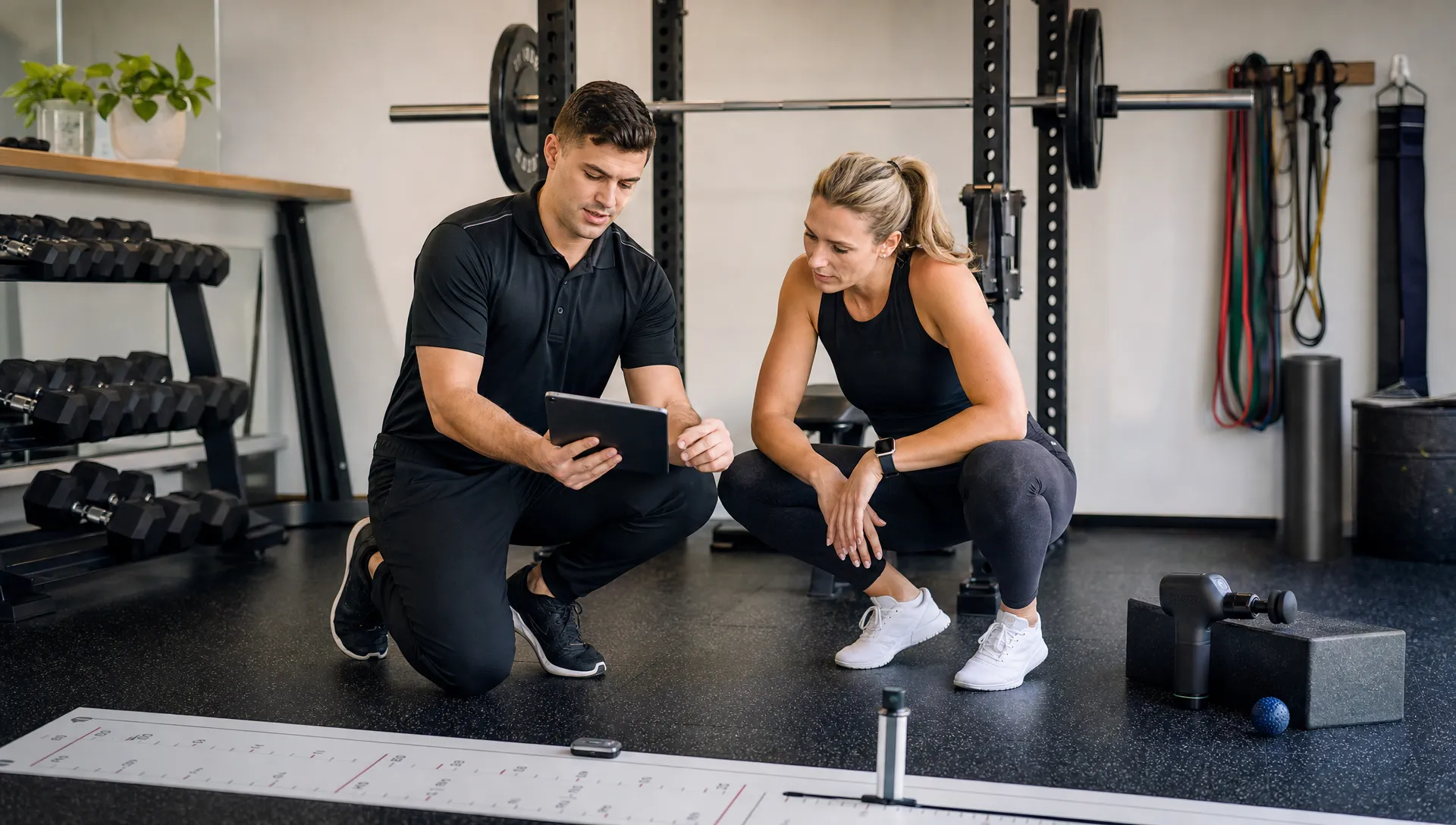
A personal training consultation is a two-way interview. The trainer is learning about your goals, limitations, training history and lifestyle. You are learning whether their process is credible enough to trust with your body, time and money.
At the end of the consultation, you should understand a few practical things:
- What your starting point will be measured against
- How your training plan will be individualized
- How progress will be tracked
- How nutrition, recovery and scheduling will be addressed
- What kind of support you can expect between sessions
If the meeting jumps straight to packages without asking about your health history, movement quality or goals, slow the conversation down. Price matters, but it should come after fit, safety and strategy.
Ask about experience with clients like you
Start with the question that reveals whether the trainer understands your context: What types of clients do you typically work with, and have you helped someone with goals similar to mine?
A trainer who works mainly with general weight loss clients may still be excellent, but their approach may differ from someone who specializes in strength development, return to training after injury, longevity, body composition or performance for recreational sports. The goal is not to find a trainer who has only worked with your exact profile. It is to see whether they can explain how they adapt their coaching to different needs.
If you are a physician, founder, executive or parent with limited training windows, ask how they build effective plans for unpredictable schedules. If you are returning after a shoulder, back, knee or hip issue, ask how they screen movement and decide when to modify an exercise. If you are training for performance, ask how they balance strength, conditioning and recovery.
A credible answer should include process, not just enthusiasm. Listen for details about assessment, progression, communication and adjustment.
Ask what they assess before the first real workout
The first session should not be random. Before loading you with heavy lifts or high-intensity circuits, a trainer should understand your baseline.
Ask: What do you measure before creating my program?
The answer may include goals, medical history, orthopedic history, movement screening, strength baselines, cardiovascular fitness, training experience, recovery patterns, nutrition habits and body composition. Not every client needs every test, but every client deserves a clear reason for what is measured and why.
The Physical Activity Guidelines for Americans recommend both aerobic activity and muscle-strengthening work for adults, but the way those recommendations translate into a program depends on your current capacity. Someone who has trained consistently for ten years needs a different starting point than someone rebuilding fitness after a long work-heavy period.
For a deeper look at the first data points that matter, Custom Fit’s guide on what a gym fitness trainer should measure first is a helpful companion to this consultation checklist.
Ask how your goals become a weekly plan
Many people arrive with a goal that sounds simple: lose body fat, build muscle, get stronger, improve energy, prepare for a race, reduce pain or feel athletic again. The consultation should translate that outcome into a plan you can actually follow.
Ask: How would you turn my goal into a weekly training structure?
A strong answer should cover frequency, session length, training focus, recovery needs and what you may need to do outside the gym. It should also reflect your constraints. A client who can train four days a week with consistent sleep has different options than a client who can commit to two sessions and frequent travel.
You can also ask: What would the first 8 to 12 weeks look like?
The trainer does not need to write the full program on the spot, but they should explain the progression. For example, the first phase may emphasize technique, movement quality and baseline strength. Later phases may increase load, volume, power, conditioning or sport-specific work.
The American College of Sports Medicine’s position stand on progression models in resistance training emphasizes that strength programs should progress variables such as load, volume, exercise selection and rest based on training status. In plain language, a program should evolve because you evolve.
Ask how progress will be tracked beyond the scale
The scale can be useful, but it is a blunt instrument. It cannot tell you whether you gained lean mass, lost visceral fat, improved aerobic capacity, maintained strength while cutting weight or recovered better between sessions.
Ask: Which metrics will we use to know whether the plan is working?
For some clients, progress tracking may include strength numbers, range of motion, resting heart rate, step consistency, recovery habits, waist measurements, training attendance or energy levels. For others, advanced testing can give a clearer picture.
If your consultation includes body composition, ask how it is measured and who interprets the results. DEXA can provide insight into body fat, lean mass, bone density estimates and visceral fat, but the interpretation matters. Custom Fit DEXA scans are performed by Registered Dietitians or Exercise Physiologists, so clients are working with professionals who understand nutrition, exercise physiology and body composition rather than simply receiving an automated scan report.
If cardiovascular fitness is part of your goal, ask whether VO2 max testing is appropriate. The American Heart Association has argued in a scientific statement on cardiorespiratory fitness that fitness is a powerful clinical vital sign because it is closely tied to health outcomes. For longevity-minded clients, performance-focused clients and concierge medicine partners, that kind of data can make training more precise.
Ask about nutrition support and recovery
Training creates the stimulus. Nutrition, sleep and recovery determine how well you adapt to it. A consultation that ignores those inputs is incomplete, especially if your goals involve body composition, energy, metabolic health or performance.
Ask: How do you coordinate training with nutrition?
Some trainers provide general habit coaching, while nutrition planning should be handled by a registered dietitian or qualified nutrition professional when you need individualized guidance. At Custom Fit, nutrition coaching and Registered Dietitians are part of the broader wellness model, which is especially useful for clients who want their training, body composition data and eating strategy to align.
Also ask: What recovery factors do you track or discuss?
A trainer should care about sleep, soreness, stress, travel, alcohol intake, hydration and training readiness. This does not mean every session becomes a lifestyle audit. It means your program should respond to real conditions. If you slept four hours before a 7 a.m. session, the right plan may not be the same as the plan after a full night of rest.
Tell your trainer about the activities you enjoy, whether that is skiing in Tahoe, cycling in Marin, playing tennis or hiking. Your plan should account for their movement, strength and conditioning demands.
Ask how they handle injuries, limitations and medical considerations
A consultation is the right time to disclose injuries, surgeries, chronic pain, medications, diagnoses and any medical guidance you have received. You do not need to overshare, but you should give enough context for safe programming.
Ask: How do you modify training for injuries or movement limitations?
The best answer is not that they can fix everything. Personal trainers should stay within their scope. A responsible trainer can modify exercise selection, adjust load, monitor symptoms and coordinate with your physical therapist, physician or other healthcare provider when needed.
If you are a private practice doctor, longevity clinic or concierge medicine team evaluating a training and testing partner, this question becomes even more important. You want a facility that understands scope of practice, communicates clearly and respects clinical boundaries.
Ask about coaching style and accountability
Two trainers can prescribe similar exercises but create very different experiences. Coaching style affects whether you feel supported, challenged, rushed, ignored or genuinely coached.
Ask: How would you describe your coaching style?
Then listen for whether their style matches what you need. Some clients want direct, technical coaching with detailed cues. Others need a calm, private environment and steady accountability. Some want to understand the why behind every block of training. Others prefer a concise plan and efficient execution.
Follow with: What happens between sessions?
This question helps you understand whether you will receive homework, habit goals, mobility work, nutrition guidance, progress updates or communication outside the gym. It also clarifies what you are paying for. If the only support happens during the hour, the price and expectations should reflect that.
Ask about the facility and training environment
The right training environment can make consistency easier. For many high-income professionals, privacy, cleanliness, scheduling reliability and equipment quality are not luxuries. They are part of making training sustainable.
Ask: Where will we train, and what resources are available here?
The answer should help you understand whether the space supports your goals. Strength training requires appropriate equipment. Body composition goals may benefit from testing access. Performance goals may require conditioning tools. Recovery goals may require a thoughtful approach to warmups, mobility, soft tissue work or dedicated recovery services.
If you are comparing options, it also helps to ask what makes a facility different from a standard commercial gym. Personal attention, professional assessment, fewer distractions and better continuity often matter more than the size of the room.
Ask about packages, commitments and fit
Once you understand the process, then ask about logistics. A clear business conversation prevents misunderstandings later.
Ask: What is included in the personal training package?
That should cover session length, frequency, assessment, program updates, testing, nutrition support, recovery services, cancellation policies and communication expectations. Some packages are session-only. Others include a broader coaching model. Neither is automatically better, but the value should be clear.
Custom Fit has a separate guide to what should be included in a personal training package if you want to compare options before making a decision.
Also ask: How do we decide whether this is a good fit after the first few weeks?
This question sets a collaborative tone. A good trainer should welcome feedback and be willing to refine the plan. If your goals, schedule or response to training change, the program should change with you.
Red flags during a personal training consultation
Most consultations are friendly, but friendliness is not enough. Watch for signs that the trainer or facility may not be the right fit.
Red flags include:
- No meaningful health history or injury intake
- A generic plan before any assessment
- Heavy pressure to buy immediately
- Promises of extreme results in unrealistic timelines
- Little explanation of how progress will be measured
- Dismissive responses to pain, fatigue or medical concerns
- No clear answer about qualifications or scope of practice
One red flag does not always mean you should walk away, but it should prompt follow-up questions. You are looking for judgment, not just motivation.
How to prepare before your consultation
A good consultation becomes more useful when you arrive prepared. You do not need a perfect goal statement or a spreadsheet of every workout you have ever done, but a little clarity helps.
Bring or be ready to discuss:
- Your top one to three goals
- Current training routine, if any
- Injury history, surgeries or pain patterns
- Medications or medical limitations relevant to exercise
- Typical weekly schedule and travel demands
- Nutrition challenges or dietary restrictions
- Sleep, stress and recovery patterns
- Any recent testing, such as blood work, DEXA or VO2 max results
If you track workouts, steps, heart rate or sleep with a wearable, mention it. The trainer may not need every data point, but trends can help shape better coaching decisions.
Frequently Asked Questions
How long does a personal training consultation take? Most consultations take 30 to 60 minutes, depending on whether they include movement screening, goal setting or testing discussion. A longer consultation is often useful when you have injuries, complex goals or want advanced assessments.
Should I work out during the consultation? Sometimes. Many consultations include light movement screening or basic baseline exercises, but you should not be pushed into a hard workout before the trainer understands your health history and readiness.
What should I ask if my goal is fat loss? Ask how the trainer will track body composition, strength, nutrition habits, recovery and adherence. Fat loss plans should protect lean mass and performance, not only reduce scale weight.
What should I ask if I want to build muscle? Ask how the program will progress load, volume and exercise selection over time. You should also discuss protein intake, recovery, training frequency and how muscle gain will be measured.
Is DEXA useful before starting personal training? It can be useful if body composition, muscle mass, bone density estimates or visceral fat are important to your goals. The value increases when results are interpreted by qualified professionals, such as the Registered Dietitians or Exercise Physiologists who perform DEXA scans at Custom Fit.
Should I choose the trainer with the most intense workouts? Not necessarily. Intensity is only one variable. The better choice is usually the trainer who can assess you well, progress your plan intelligently and keep you consistent without unnecessary setbacks.
Make the consultation count
A strong personal training consultation should leave you with confidence, clarity and a practical next step. You should know how your goals will be assessed, how your program will be built, how progress will be measured and how the trainer will adapt when real life gets complicated.
If you want a data-driven training experience that connects personal training, nutrition coaching, recovery and advanced testing, explore Custom Fit’s San Francisco wellness studio and come prepared with the questions that matter most to your goals.