Is One on One Personal Training Worth the Extra Focus?
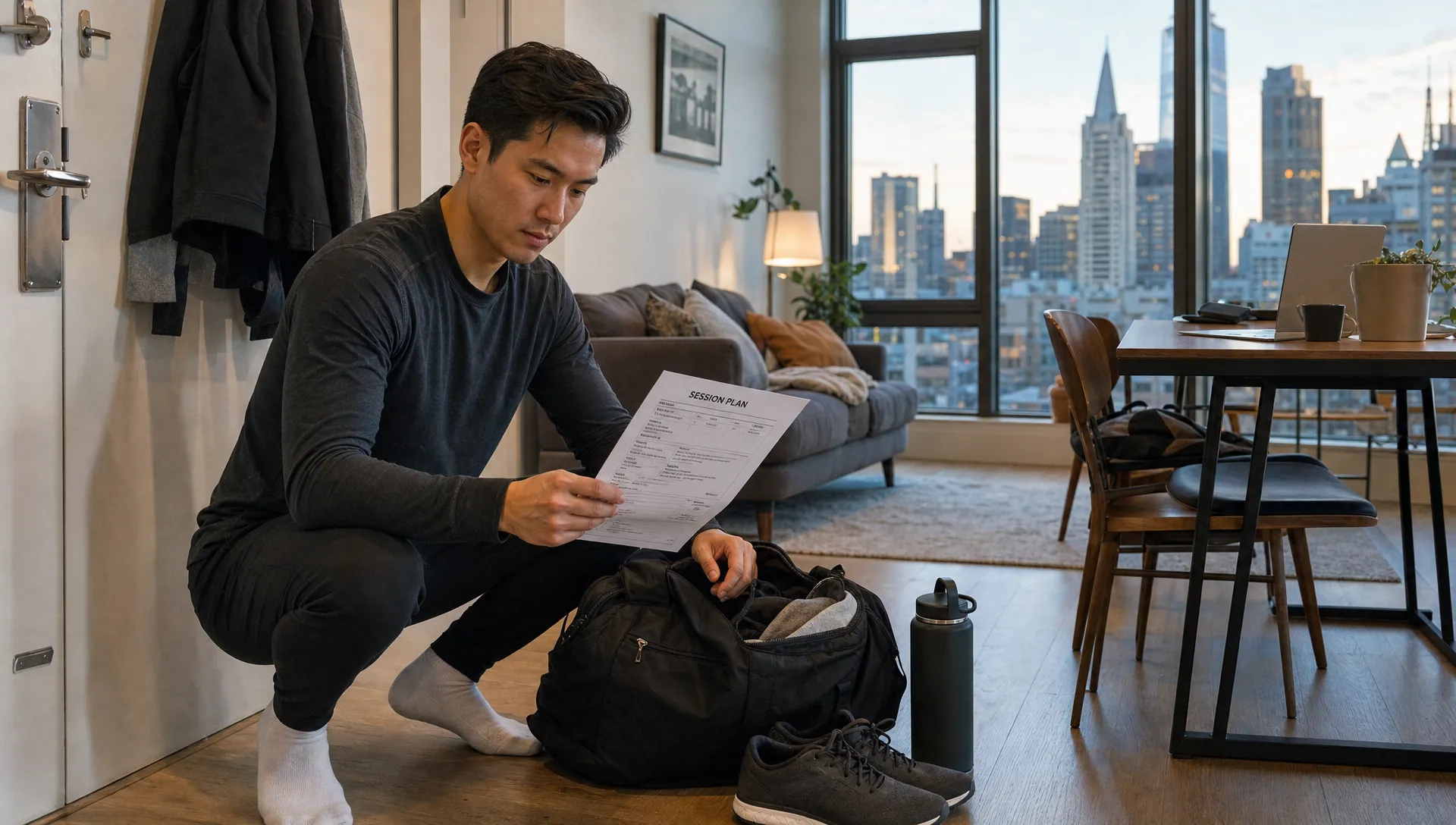


If you are weighing one on one personal training against small-group coaching, classes or a self-guided gym plan, the real question is not whether more attention feels better. It is whether that extra focus changes your outcomes enough to justify the added investment.
For busy San Francisco professionals, the answer often depends on three things: how specific your goal is, how much time you can realistically give to training and how much feedback you need to move safely and consistently. A private session should do more than count reps. It should reduce guesswork, protect your schedule and turn each workout into a precise step toward measurable progress.
The real value is not just attention
Attention matters, but attention alone is not the product. The value comes from how a coach uses that attention: observing movement quality, adjusting load, managing fatigue, correcting technique and connecting your workouts to the rest of your life.
A generic program can tell you what to do on paper. A skilled coach can see how you actually move on a Tuesday morning after a long workday, a poor night of sleep or a stressful week. That difference is meaningful, especially if your goals include strength, body composition, longevity or returning to exercise after injury.
Mazzetti and colleagues found that directly supervised resistance training produced greater strength improvements than unsupervised training in a controlled setting, according to their paper in Medicine & Science in Sports & Exercise on direct supervision and strength performance. Supervision is not magic, but it can improve effort, progression and technical execution.
For many clients, one on one personal training is most valuable because it compresses the learning curve. You spend less time wondering whether your plan is working and more time executing a plan that adapts as your body responds.
Where one on one personal training adds the most value
The extra focus is easiest to justify when the margin for error is small. That might mean you have limited training windows, a demanding job, a history of inconsistent workouts or a goal that requires more precision than a general fitness class can provide.
Professionals commuting between SoMa, the Financial District and Pacific Heights may only have two or three realistic training slots per week. In that scenario, missed cues and wasted sessions are costly. The session needs to be planned, coached and progressed with intention.
Private coaching also helps when focus outside the gym is a bottleneck. If your calendar is packed, methods like time blocking can support consistency. Even though it is written for students, this guide to time management strategies that improve focus explains practical systems, including time blocking and the Pomodoro method, that translate well to protecting workout time.
Common situations where private coaching pays off
You are more likely to get strong value from private coaching if you recognize one or more of these patterns:
- You need accountability because workouts disappear when work gets intense.
- You want strength, muscle gain or fat loss but do not know how to progress training safely.
- You are returning after injury, travel, burnout or a long break from exercise.
- You care about measurable health data, not just how hard a workout feels.
- You want coaching that respects a high-stress schedule and recovery limitations.
If your needs are simpler, small-group or partner formats may still work well. Custom Fit has also covered whether partner personal training is right for you if you want a more social option with shared accountability.
How private training compares with other formats
The best format is the one that matches your goals, personality and constraints. A private session offers the most customization, but it is not always the only smart choice.
| Training format | Best for | Main tradeoff |
|---|---|---|
| Private coaching | Specific goals, technique work, accountability and individualized progression | Higher cost per session |
| Partner training | Shared motivation, compatible goals and a lower cost than private coaching | Less individualized than solo coaching |
| Small-group training | Community, consistency and structured workouts | Less time for detailed personal adjustments |
| General fitness classes | Variety, energy and convenience | Limited personalization and tracking |
In one on one personal training, the trainer can modify the plan in real time without balancing the needs of several people. If your squat pattern changes during a set, your coach can address it immediately. If your shoulder feels restricted during pressing, the exercise can be adjusted without slowing down a group.
That level of responsiveness is especially useful for high-performing professionals who already manage a lot of complexity at work. The goal is not to make fitness more complicated. It is to remove decisions, clarify priorities and make the session count.
What the extra focus should look like in practice
A private session should not feel like a random hard workout with a friendly coach. It should have a clear purpose. You should know what quality the coach is watching, why an exercise is in the program and how progress will be evaluated.
The American College of Sports Medicine describes progression in resistance training through variables such as load, volume, exercise selection, rest periods and frequency in its position stand on progression models in resistance training. A good coach turns those variables into decisions that fit your body and schedule.
That might mean reducing volume during a heavy travel week, emphasizing mobility before loading a movement or increasing intensity only after technique is stable. The focus is not only on effort. It is on the right effort at the right time.
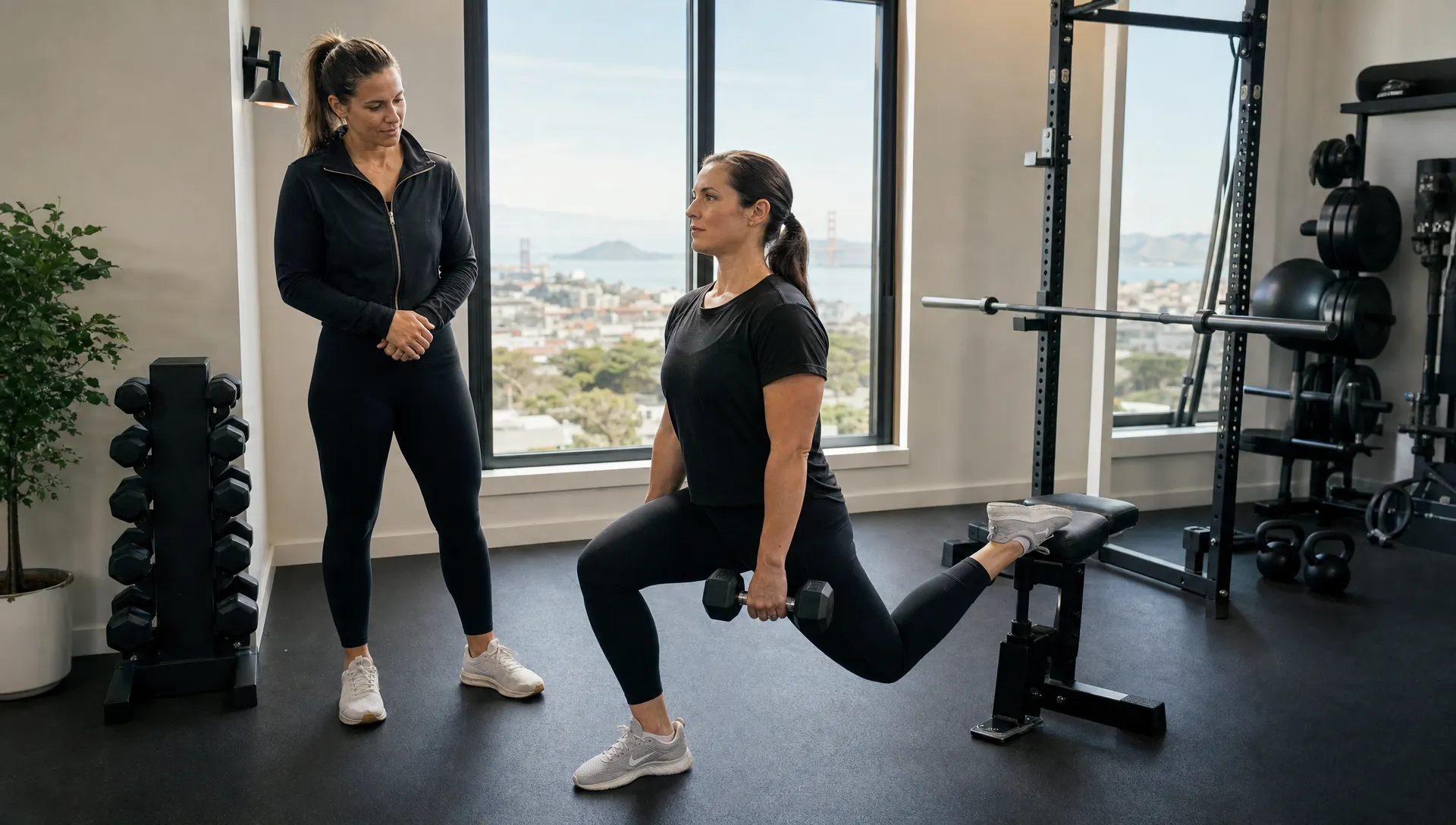
The strongest case for one on one personal training is that it can make fitness more efficient. Instead of trying to interpret conflicting advice from apps, social media or generic programs, you get immediate feedback from someone watching how your body responds in real time.
Data makes the focus more objective
Private coaching becomes more valuable when it is paired with objective information. Without data, clients and trainers may rely too heavily on scale weight, soreness or how hard a session felt. Those can be useful signals, but they do not tell the full story.
At Custom Fit, training can be paired with services such as nutrition coaching, VO2 max testing and DEXA scans. When a plan involves body composition, body fat, muscle mass or visceral fat, it matters who interprets the data. Custom Fit DEXA scans are performed by Registered Dietitians or Exercise Physiologists, so clients work with professionals who understand nutrition, exercise physiology and body composition rather than simply receiving an automated scan report.
That distinction matters. A scan result without context can lead to overreaction or poor decisions. A professional can help explain what changed, what did not change and what the next training or nutrition adjustment should be.
For a deeper look at choosing the right environment, Custom Fit has a practical guide on what to look for in a private training gym, including assessment quality, coaching standards and privacy.
When the extra focus may not be necessary
Private coaching is not automatically the best answer for everyone. If you already train consistently, have excellent technique and mainly want a motivating environment, a class or small-group format may be enough. If budget is the main constraint, starting with fewer private sessions and combining them with independent workouts can still work.
The key is to be honest about what has stopped you before. If lack of knowledge, poor exercise selection or accountability problems keep repeating, one on one personal training may save time in the long run. If your plan is already working and you simply enjoy variety, private coaching may be useful as an occasional check-in rather than your primary format.
This is where goal clarity matters. A general goal like “get in shape” can be served by many approaches. A more specific goal, such as improving lean mass, reducing injury risk, building strength after a long break or preparing for a high-demand season at work, often benefits from more direct coaching.
How to decide if it is worth it for you
Before choosing private coaching, ask what you expect the extra focus to do. The value should show up in better consistency, safer movement, clearer progression and less decision fatigue.
A useful evaluation framework is simple:
| Question | What a “yes” suggests |
|---|---|
| Do I miss workouts when work gets busy? | Accountability may be worth paying for. |
| Do I feel unsure about form or exercise selection? | Direct coaching can reduce risk and confusion. |
| Do I have a specific health, strength or body composition goal? | A personalized plan may be more efficient. |
| Do I want testing, nutrition and training to work together? | A data-driven studio may be a better fit than a standard gym. |
| Do I value privacy and focused coaching? | A private environment may support better consistency. |
If most of those answers are yes, one on one personal training is not just a premium version of a workout. It is a structure for getting better information, better coaching and better follow-through.
Custom Fit’s approach is built around data-driven fitness, personal training, nutrition coaching, recovery services and advanced testing in a private San Francisco setting. If you are comparing options, you may also find it useful to read the broader discussion of whether personal training is worth it for busy professionals.
Frequently Asked Questions
Is one on one personal training better than group training? It is better when you need individualized programming, form correction, accountability or a plan tied to specific goals. Group training can be a strong choice if you mainly want energy, community and general fitness structure.
How often should I meet with a private trainer? Many clients start with two or three sessions per week, then adjust based on goals, schedule and budget. Some maintain one weekly session for accountability while completing additional workouts independently.
Is private coaching useful if I already know how to exercise? Yes, if you want a more precise plan, better progression or objective feedback. Experienced exercisers often benefit from coaching because small adjustments in technique, volume and recovery can affect results.
Does testing make personal training more effective? Testing can make coaching more targeted when it is interpreted by qualified professionals. Metrics such as VO2 max, body composition and strength markers help guide training decisions instead of relying only on feel.
Is the extra focus worth it?
The extra focus is worth it when it solves a real constraint: limited time, inconsistent habits, unclear programming, injury concerns or goals that require measurable progress. It is less about luxury and more about precision.
For people with demanding schedules in San Francisco, one on one personal training can turn exercise from another decision into a guided system. If you want coaching that integrates training, nutrition, recovery and testing, explore Custom Fit in San Francisco and consider booking a conversation about the right starting point for your goals.