How VO2 Testing Can Improve Your Training Zones
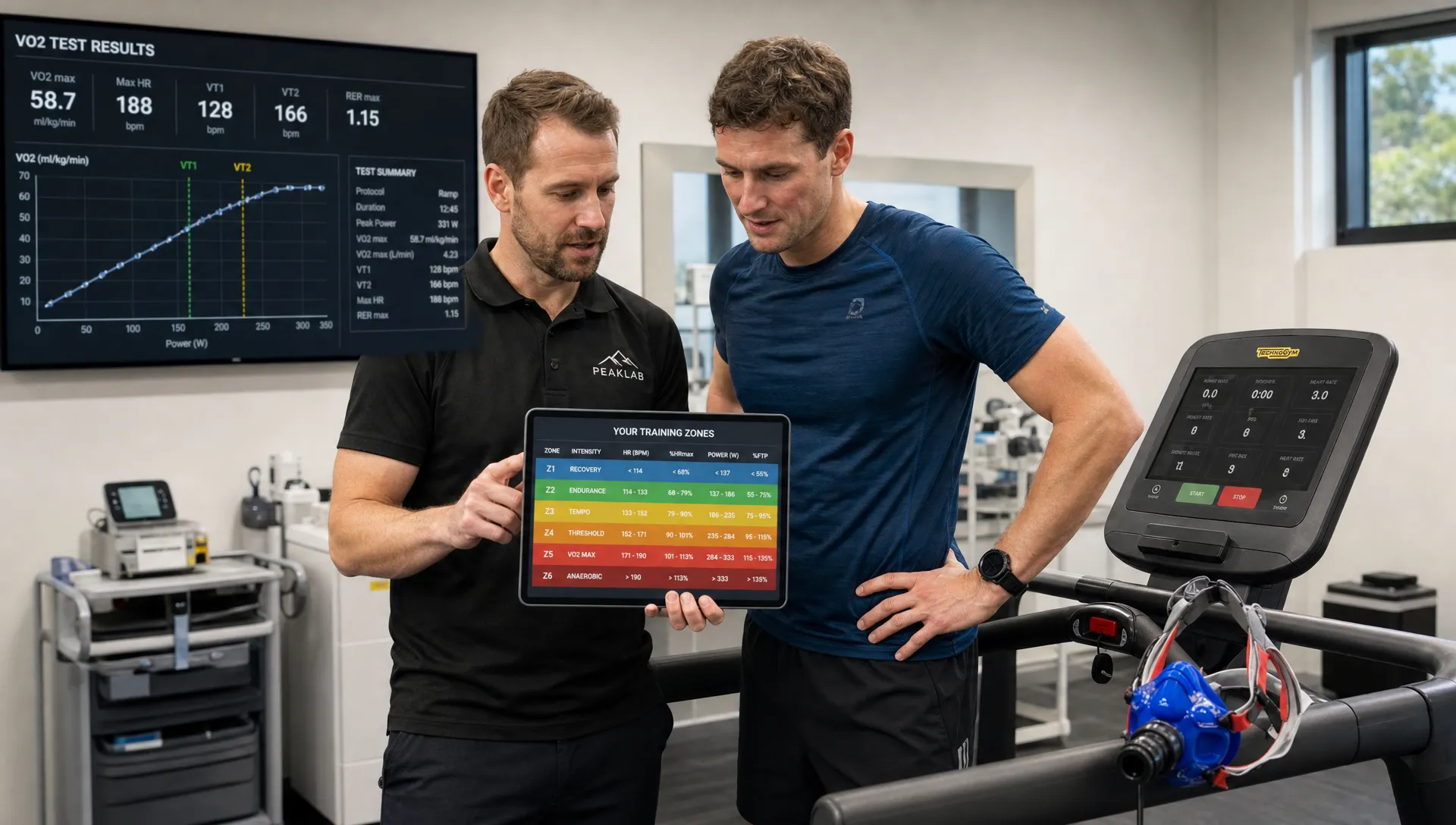


Generic heart-rate zones are convenient, but they often miss the physiology that actually determines how hard your body is working. VO2 testing gives you a lab-based way to identify your aerobic capacity, ventilatory thresholds and personalized training zones, so your easy days are truly easy and your hard sessions are targeted instead of guessed.
For busy San Francisco professionals, recreational athletes and anyone training for healthspan, this matters. If your watch says you are in Zone 2 but your breathing, fatigue and recovery say otherwise, the problem may not be your effort. It may be that your zones were never set from your actual physiology.
Why training zones are often wrong without VO2 testing
Most default training zones are based on formulas such as 220 minus age or broad percentages of estimated maximum heart rate. Those formulas can be useful for population averages, but they are rough for individuals. Two people can be the same age, weigh the same and run the same pace, yet have very different aerobic thresholds.
VO2 testing improves that picture because it measures how your body uses oxygen during increasing exercise intensity. Instead of assuming that 70 percent of max heart rate means the same thing for everyone, a lab test identifies where your breathing and metabolism actually shift.
That distinction is not only relevant for performance. The American Heart Association has argued that cardiorespiratory fitness should be treated as a clinical vital sign because it strongly predicts cardiovascular and overall health outcomes. A large 2018 JAMA Network Open study also found that higher cardiorespiratory fitness was associated with lower long-term mortality risk among adults undergoing exercise treadmill testing.
What VO2 testing measures when setting zones
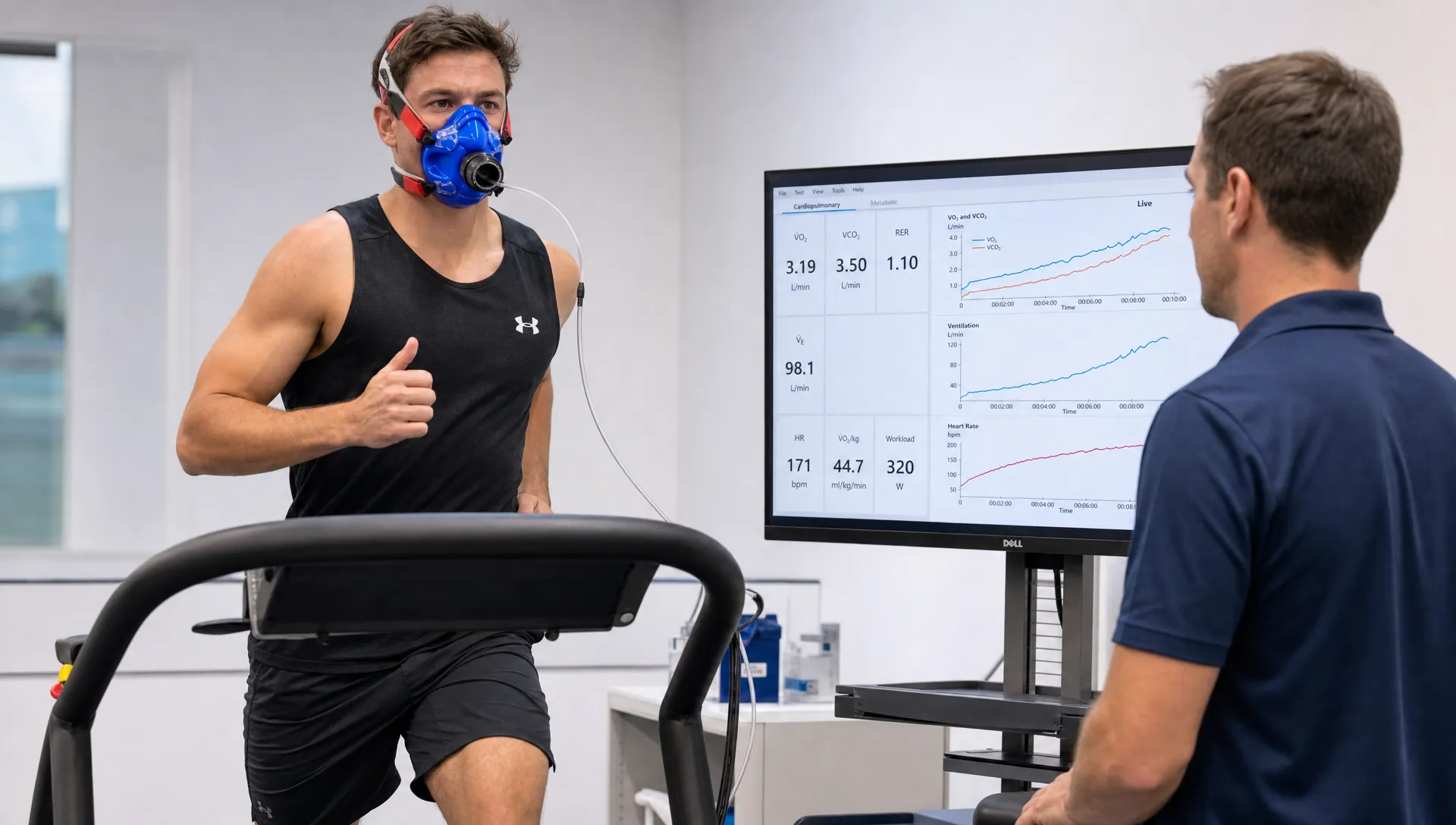
During a lab-based test, you exercise on a treadmill or bike while wearing a mask connected to metabolic equipment. The system measures oxygen uptake, carbon dioxide production, breathing rate and other variables as intensity rises. The result is a profile of how your cardiovascular and metabolic systems respond under progressive stress.
The most useful data for training zones often comes from your ventilatory thresholds, not just your peak number. Your first ventilatory threshold, often called VT1, is where breathing begins to rise more noticeably but remains controlled. Your second ventilatory threshold, often called VT2, is where sustained conversation becomes difficult and the effort approaches a hard, threshold-level intensity.
If you want a deeper walkthrough of the test itself, Custom Fit explains the process in this guide to getting VO2 max tested and using your results. For zone-setting, the practical takeaway is simple: your test report should help translate physiology into heart-rate ranges, pace or power targets and training priorities.
How VO2 testing turns vague zones into actionable targets
VO2 testing can replace generic zones with ranges that match how your body is currently functioning. That can change your training immediately, especially if you have been doing too much moderate-intensity work, mistaking hard aerobic effort for easy base training or relying only on wearable estimates.
| Training zone | What it usually targets | What lab data helps clarify | Common use |
|---|---|---|---|
| Zone 1 | Recovery and low stress movement | Heart rate below early aerobic strain | Easy walks, recovery rides, warmups |
| Zone 2 | Aerobic base and fat oxidation emphasis | Range around or below VT1 | Steady endurance work, health-focused cardio |
| Zone 3 | Moderate aerobic pressure | Space between VT1 and VT2 | Tempo efforts, longer steady sessions |
| Zone 4 | Threshold development | Range near VT2 | Controlled hard intervals, race-specific work |
| Zone 5 | Maximal aerobic power | Work near peak oxygen uptake | Short intervals, VO2 max sessions |
The biggest surprise for many people is that their true Zone 2 is lower than expected. This is common among motivated professionals who train hard, sit through long workdays, then try to make every workout count. They often drift into a middle zone that feels productive but does not allow enough recovery to support high-quality hard sessions.
Zone 2 becomes easier to execute
Zone 2 training is popular because it supports aerobic efficiency, endurance and metabolic health. The challenge is that many people define it by feel alone or by a watch-generated range that may not reflect their actual physiology.
VO2 testing makes Zone 2 more concrete. If your VT1 occurs at a specific heart rate, pace or wattage, your coach can use that information to prescribe aerobic sessions that stay below the point where stress rises sharply. That is valuable for runners on the Embarcadero, cyclists heading across the Golden Gate Bridge or professionals squeezing a focused session between meetings in SoMa or the Financial District.
Threshold work becomes more precise
Threshold training is productive, but only when the intensity is controlled. Too easy and it becomes another aerobic session. Too hard and it turns into a session you cannot repeat often enough to adapt well.
A well-conducted test helps identify the range near VT2, where your body is working hard but still managing the effort for a limited duration. This allows you to build intervals around the right target instead of chasing an arbitrary pace from a training plan written for someone else.
How to use VO2 testing results in a weekly plan
VO2 testing is only useful if the data changes your training decisions. After your zones are established, the next step is deciding how much time to spend in each range based on your goal, training history, schedule and recovery capacity.
A health-focused client might use the results to build three weekly aerobic sessions, with most work below VT1 and one short interval day. A marathoner may use the same data to refine long-run pacing, tempo work and recovery days. A cyclist may translate the test into heart-rate and power targets for base rides, climbing intervals and race preparation.
Useful programming begins with understanding your current capacity and constraints. Testing can inform that process when it answers a specific training question.
If you already train hard but progress has slowed, your issue may not be motivation. It may be the distribution of intensity. Custom Fit has also covered common VO2 max training mistakes that hold back progress, including doing too many hard sessions and neglecting true aerobic base work.
Why your zones should change over time
Your training zones are not permanent. If your aerobic fitness improves, your VT1 may occur at a faster pace or higher power output. If stress, sleep disruption, injury or illness reduces fitness, the same workout may create a higher physiological load than it did before.
VO2 testing provides a baseline and a retesting point. Many people benefit from retesting after a meaningful training block, often around 8 to 16 weeks, depending on the goal and the consistency of training. That does not mean you need constant testing. It means your plan should evolve when your body evolves.
This is where lab results can be more useful than wearable trends alone. A watch may estimate changes in fitness, but a metabolic test can show whether your thresholds have moved, whether your aerobic base is improving and whether your high-intensity training is producing the intended adaptation.
Combining zones with strength, nutrition and recovery
Training zones are one piece of a larger system. If your goal is endurance, longevity, fat loss, muscle gain or better metabolic health, your cardio plan should connect with strength training, nutrition and recovery rather than compete with them.
At Custom Fit in San Francisco, VO2 testing can sit alongside personal training, nutrition coaching, recovery services and advanced assessment options. If body composition is part of the goal, Custom Fit DEXA scans are performed by Registered Dietitians or Exercise Physiologists. That means clients work with professionals who understand nutrition, exercise physiology and body composition, not simply an automated scan report.
This matters because training zones do not exist in isolation. A lower-intensity aerobic plan may be ideal for someone rebuilding consistency, while another client may need more strength work to support muscle mass, joint resilience and long-term performance. A Registered Dietitian can also help align fueling with the type of work being prescribed, especially if higher-volume endurance training is part of the plan.
Who benefits most from better training zones
VO2 testing is useful for more than elite endurance athletes. It can help anyone who wants to stop guessing and train with clearer feedback. That includes executives with limited training time, runners preparing for a race, cyclists balancing endurance and intensity, people returning to fitness and clinicians looking for objective cardiovascular fitness data for wellness planning.
The most common benefit is better restraint. Once people see their actual Zone 2, they often realize that easy training should feel more controlled than they expected. They also see that hard training works best when it is placed strategically rather than repeated every day.
For a broader health and performance perspective, Custom Fit’s guide on what VO2 max means for your health and performance explains why this metric has become a central marker in fitness and longevity conversations.
Frequently Asked Questions
How does VO2 testing improve training zones? VO2 testing measures oxygen use, breathing patterns and threshold changes during exercise. That data helps set zones based on your physiology instead of age-based formulas or generic wearable estimates.
Is Zone 2 always based on heart rate? Not always. Heart rate is common, but zones can also be translated into pace, power or perceived exertion. Heart rate can drift with heat, caffeine, stress and fatigue, so many plans use more than one target.
How often should I retest my zones? Many people retest after a focused training block, often around 8 to 16 weeks. Retesting is most useful when you have trained consistently enough for your physiology to change.
Can VO2 testing help if I am not an endurance athlete? Yes. It can help general fitness clients, longevity-focused clients and people returning to exercise understand safe, productive cardio intensities. The goal is not only a higher peak number, but better training decisions.
Do wearables replace lab testing? Wearables can be helpful for tracking trends, but they estimate many values. A lab test directly measures respiratory data during exercise, which gives a more accurate foundation for personalized zones.
Train with zones that match your body
If your workouts feel harder than they should, your recovery is inconsistent or your progress has stalled, your training zones may need better data. Lab-based testing gives you a clearer starting point, then coaching helps turn that information into practical sessions you can repeat.
For San Francisco clients who want a more precise approach to fitness, performance and longevity, Custom Fit combines testing with coaching so the numbers lead to better decisions, not just a report you file away.