How Private Training Sessions Help You Master Technique
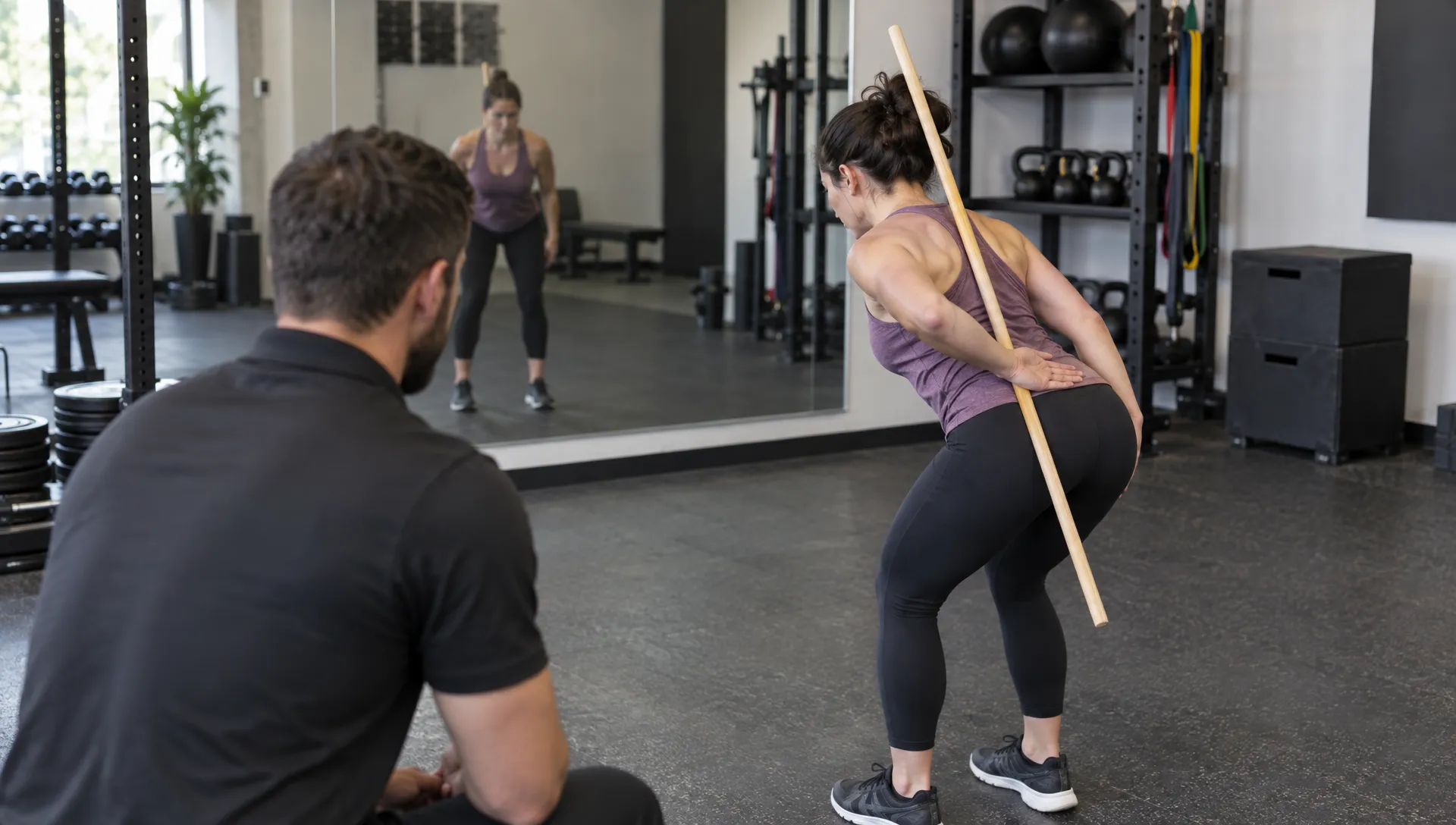


Watching a squat demonstration is not the same as knowing how to perform one consistently. In private training sessions, a coach can observe your movement, identify what needs attention and help you practice a specific correction. The goal is not to collect endless instructions. It is to develop technique you can repeat without someone talking you through every repetition.
For busy San Francisco professionals, that distinction matters. Training time should build both fitness and usable skills. Whether you are learning to lift or refining an established routine, individual coaching can make practice more purposeful, provided your trainer teaches rather than simply supervises.
What mastering technique actually means
Good technique is controlled, repeatable movement that suits the exercise, your abilities and your goal. It is not necessarily a textbook pose or an exact copy of another person's form.
Body proportions, joint mobility and experience influence how an exercise looks. Two people can perform effective squats with different stance widths or torso angles. A coach should explain which differences are acceptable and which adjustments would help you control the movement better.
Mastery also means recognizing when technique changes. You should gradually learn to notice an unstable setup, an uncontrolled lowering phase or a repetition that becomes substantially different as fatigue builds.
No technique standard guarantees freedom from injury. Appropriate loading, recovery and your health history also matter. Coaching helps you make better training decisions without pretending that one perfect posture solves everything.
How private training sessions make feedback more useful
Individual attention creates an opportunity to connect what you feel with what your coach observes. That connection is more valuable than receiving a long list of corrections after every set.
Start with a manageable version of the movement
A useful starting assessment examines how you perform the exercise under manageable conditions. Before increasing resistance, your coach can observe your setup, balance, movement path and ability to control the return phase.
For example, a supported squat or light goblet squat may reveal more about your current control than a challenging barbell attempt. The starting exercise should let you practice successfully, not serve as a test you are expected to struggle through.
This is exercise assessment, not medical diagnosis. Persistent pain, a recent injury or unexplained symptoms may require evaluation by an appropriate healthcare professional before training progresses.
Use one actionable cue at a time
“Fix your form” gives you little to work with. “Push the floor away” during a lift or “reach your hips toward the wall” during a hinge provides a clearer action.
Gabriele Wulf's review of attentional focus and motor learning describes benefits of focusing on a movement's effect rather than exclusively on individual body parts across many motor tasks. This supports trying outcome-focused cues, although the most useful wording still depends on the person and exercise.
In private training sessions, a coach can test a cue, watch the next few repetitions and keep it only if it improves the intended movement. More instructions are not automatically better coaching.
Four movement patterns that benefit from close observation
Technique instruction becomes more useful when it addresses a specific task. A trainer should be able to explain what an adjustment is intended to change, rather than asking you to imitate a shape without context.
| Movement pattern | What a coach can observe | Possible teaching adjustment |
|---|---|---|
| Squat | Balance, comfortable depth and control through the repetition | Adjust stance or use a box as a consistent depth reference |
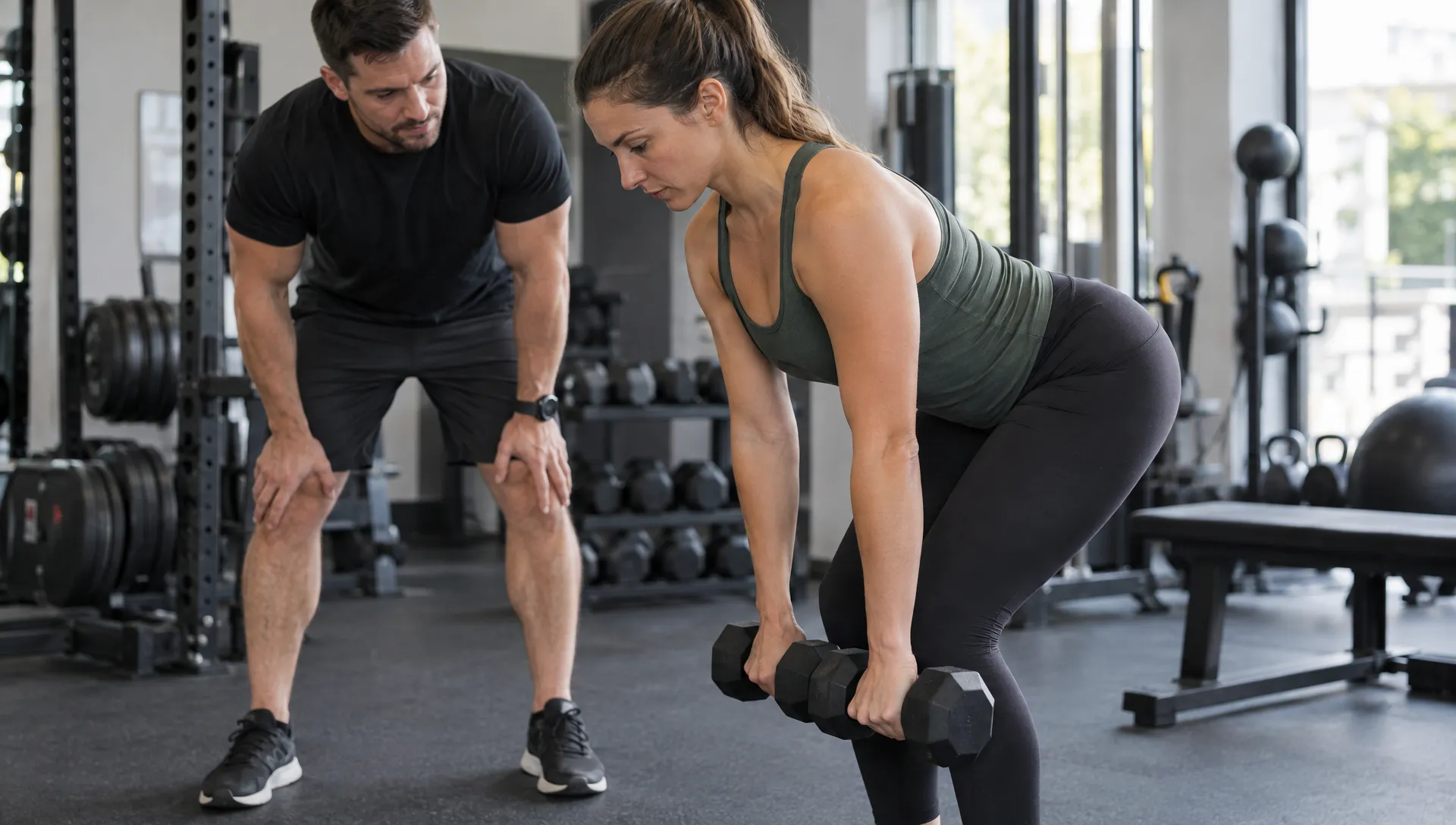
| Hip hinge | How the hips move and whether the load stays controlled | Practice reaching the hips toward a wall before adding resistance |
| Push | Stability, movement range and control during lowering | Use an incline push-up or lighter resistance to practice repeatable repetitions |
| Pull | The pulling path and whether torso movement changes the exercise | Reduce resistance and establish a controlled start and finish position |
These are examples, not universal prescriptions. A box squat may help one person understand depth while another benefits more from changing stance or slowing the lowering phase.
The advantage of private training sessions is that your coach can compare attempts and see whether an adjustment actually works for you. If a cue creates more confusion or discomfort, the answer is to reconsider it, not repeat it louder.
Breathing and bracing deserve their own practice
People often concentrate on where their arms and legs go while overlooking breathing. A coach can help you coordinate breathing with the movement and develop appropriate trunk tension without turning every repetition into a maximal effort.
The strategy should match the exercise and resistance. Breathing during a light introductory exercise may differ from bracing during a demanding strength attempt. People with cardiovascular conditions or other relevant health concerns should discuss exercise and breath-holding precautions with their clinician.
Abdominal bracing does not require grinding your teeth. Persistent tooth pain or clenching-related dental problems need dental assessment, not another lifting cue.
A useful teaching sequence is to practice the breathing pattern under easy conditions, combine it with the movement and then check whether it remains manageable as resistance increases.
Make practice between appointments specific
Private training sessions should leave you knowing what to practice independently, not wondering which of ten corrections matters most. Ask your coach to identify one movement priority and an exercise version you can perform reliably on your own.
A simple practice note might read: “Goblet squat, use the agreed box height, lower under control and stop the set if balance becomes inconsistent.” That is more useful than a vague reminder to work on leg technique.
Keep independent practice within familiar conditions. Adding resistance, changing the exercise and attempting a new tempo simultaneously makes it difficult to tell what caused a problem.
You can also ask your trainer whether a short video would help review an assigned movement. If you record yourself, keep the camera stable, capture the full movement and follow the gym's privacy rules. Video can support coaching, but it cannot establish whether a painful movement is medically safe.
Progress resistance without losing the skill
An exercise that looks controlled with a light weight may change when the load becomes challenging. That does not mean every difference is a failure, but it does mean progression should be deliberate.
Before increasing difficulty, establish a repeatable setup and manageable movement range. Then change one variable, such as resistance or repetitions, while checking whether you can maintain the intended execution.
The American College of Sports Medicine's position stand on resistance-training progression emphasizes matching progression to goals, physical capacity and training status. It supports individualized programming rather than a fixed increase for everyone.
Well-run private training sessions connect progression to movement quality as well as completed repetitions. Finishing a set is not the only relevant outcome if the last repetitions become a substantially different exercise.
This is one reason strength training with a personal trainer can reduce guesswork. Your coach can distinguish a productive challenge from an increase you are not yet prepared to manage.
Measure learning, not just performance during the appointment
Immediate improvement is encouraging, but it does not always mean the skill has stuck. If you move well only while receiving continuous instructions, you may still depend heavily on feedback.
A coach can check learning by asking you to perform the same familiar exercise at the next appointment before offering reminders. Once you are consistent, a modest change in resistance or equipment can help reveal whether you understand the movement or have memorized one setup.
Useful signs of progress include needing fewer reminders, recognizing your own errors and explaining why a cue helps. You should also know when to stop a set or choose an easier variation.
Over time, private training sessions should increase your independence. That does not require ending the coaching relationship. It means coaching can move from constant correction toward finer adjustments, programming decisions and more demanding skills.
Frequently asked questions
How long does it take to improve exercise technique? You may notice a useful correction in one appointment, but making it consistent usually requires repeated practice. The timeline depends on the movement's complexity, your experience and how often you practice. A trainer should avoid promising mastery within a fixed number of sessions.
Can beginners benefit from individual technique coaching? Yes. Beginners can learn manageable exercise variations, clear setup routines and ways to recognize when a repetition becomes uncontrolled. Starting with appropriate resistance gives you room to learn without treating every attempt as a strength test.
Should a trainer correct every repetition? Not necessarily. Frequent feedback can help introduce a skill, but you also need opportunities to perform it without prompts. A useful coach gradually checks what you can retain independently rather than filling every repetition with instructions.
What if an exercise hurts despite a form correction? Stop the painful attempt and tell your trainer. A different exercise may be appropriate, but persistent, sharp or unexplained pain warrants clinical evaluation. A trainer should not diagnose the cause or insist that better form will resolve it.
Build technique you can use beyond the studio
Custom Fit offers personal training in San Francisco for clients seeking individualized guidance. When discussing private training sessions, bring a concrete goal: learning a hinge, making squats more consistent or understanding how to progress a press.
Before committing, use this guide to evaluate a private training gym's coaching approach. Look for clear explanations, manageable practice and progress you can recognize yourself. Explore Custom Fit's personal training and wellness services to discuss support for your training goals.