How Gym Classes Help Busy Adults Stay Consistent
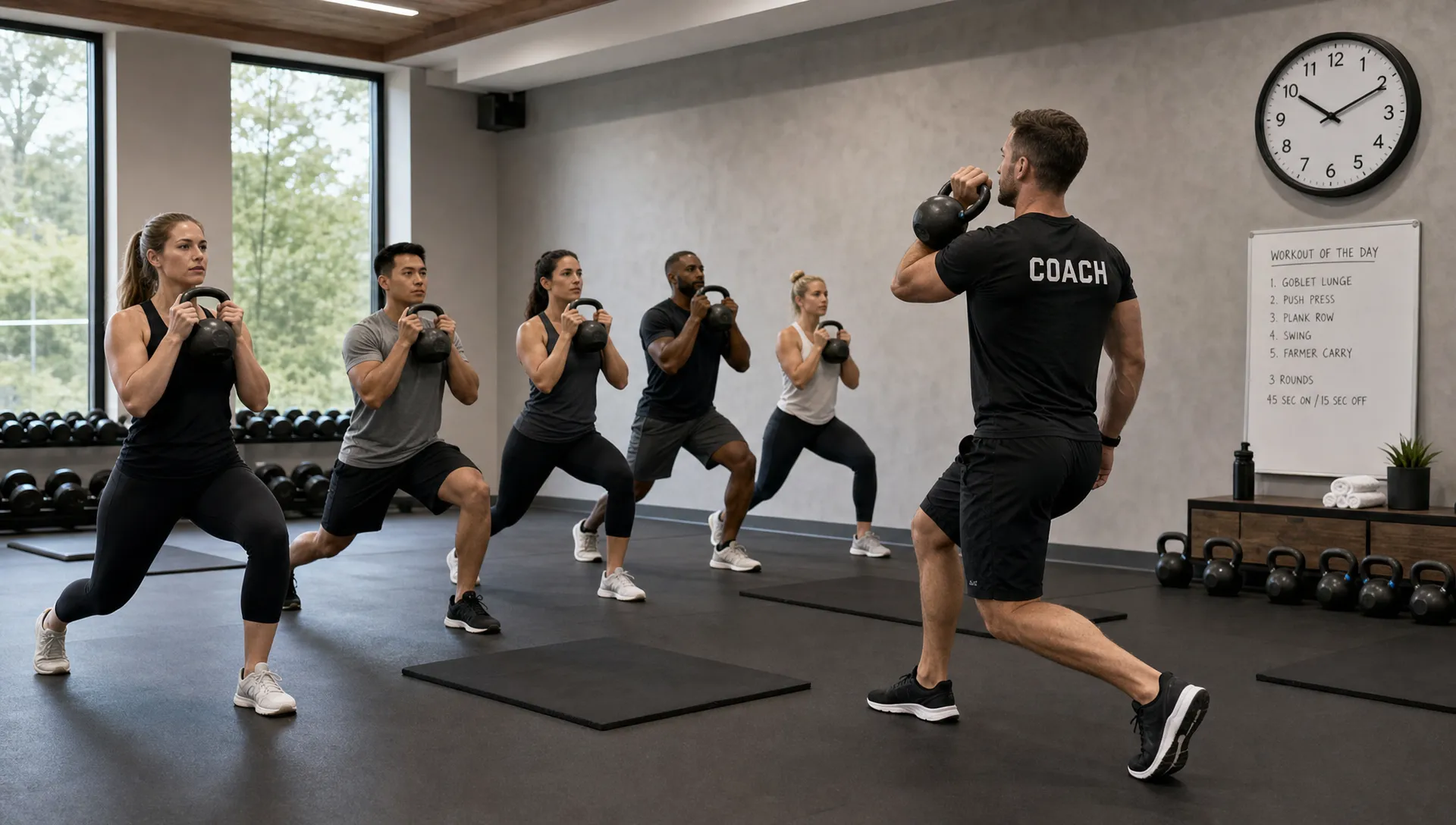


Most busy adults do not struggle with fitness because they lack goals. They struggle because their schedule is crowded, their energy fluctuates, and every workout requires another decision at the end of a long day.
That is where gym classes can be surprisingly powerful. A well-run class turns exercise from something you hope to fit in into something already on the calendar. It gives you a start time, a coach, a plan, and a reason to show up even when motivation is low.
For professionals, parents, executives, clinicians, and anyone juggling a demanding week in San Francisco, consistency is often the real performance advantage. The best workout is not the one that looks perfect on paper. It is the one you can repeat.
Why consistency is the hardest part of fitness
The basic exercise recommendations are clear. The CDC recommends that adults get at least 150 minutes of moderate-intensity aerobic activity per week, plus two days of muscle-strengthening activity. Most people understand that movement is important. The challenge is translating that knowledge into a routine that survives meetings, travel, family obligations, and stress.
Research on the physical activity intention-behavior gap helps explain this problem. A meta-analysis in the British Journal of Health Psychology found that people often intend to exercise but fail to follow through consistently, which means good intentions alone are not enough to create lasting behavior change. The missing piece is usually structure.
Gym classes help close that gap because they remove many of the small barriers that derail workouts. You do not have to design the session, decide when to start, negotiate with yourself about intensity, or wonder whether you are doing enough. You simply show up, follow the plan, and let the class environment carry part of the load.
Gym classes turn workouts into appointments
Busy adults are used to honoring calendar commitments. Client meetings, patient appointments, school pickups, investor calls, and dinner reservations happen because they have a defined time and place. Fitness becomes easier to protect when it is treated the same way.
A class at 7:00 a.m. or 5:30 p.m. creates a clear commitment. That matters because vague goals like exercising more leave too much room for negotiation. A class schedule makes the decision specific: this class, at this time, on this day.
Behavioral science supports this idea. Research on implementation intentions, often described as if-then planning, shows that linking an intended action to a specific situation can improve follow-through. In practice, a gym class creates that if-then structure naturally: if it is Tuesday morning, then I go to class.
The appointment effect is especially helpful during high-pressure weeks. You may not have the mental bandwidth to plan a full workout, but you can still keep a scheduled class. Over time, that repeated attendance becomes part of your identity: you are someone who trains on certain days, not someone who starts over every Monday.
They reduce decision fatigue
One underestimated reason adults skip workouts is decision fatigue. After a full day of complex choices, even simple questions can feel draining. Should you lift or do cardio? How many sets? What weight? What if the equipment is taken? Should you push hard or recover?
Gym classes reduce that friction by giving you a ready-made session. A coach has already decided the warm-up, the focus, the pace, and the progression. That does not mean you stop paying attention to your body. It means you no longer have to build the whole workout from scratch.
High-performing professionals already understand the value of outsourcing specialized tasks. The same reason a business owner might use a managed digital marketing partner to reduce execution load applies to fitness. When the system is managed well, you preserve energy for the work that only you can do.
In fitness, that system might be as simple as joining a class where the programming is planned, the coach is present, and the environment supports the outcome. Less thinking can lead to more doing.
Classes create accountability without pressure
Accountability is not about being shamed into exercise. The best accountability is quiet, positive, and consistent. It comes from knowing that your coach will notice your progress, your classmates will recognize your effort, and your future self will appreciate that you showed up.
This social layer is one reason gym classes work well for adults who have struggled with solo training. When you train alone, skipping a workout is invisible. In a class, your presence becomes part of a pattern. You are expected, and that expectation can be motivating in a healthy way.
Group settings can also make effort feel more manageable. A difficult interval, a challenging strength circuit, or a mobility drill feels different when everyone around you is working through it too. You still train at your own level, but you are not doing it in isolation.
For busy adults, that matters. Many people spend the day leading, deciding, and performing. A class can provide a rare opportunity to follow expert guidance, move with others, and let the structure do its job.
Variety helps prevent boredom and imbalance
Consistency does not mean repeating the same workout forever. In fact, boredom is one of the fastest ways to lose momentum. Gym classes can help by giving you variety while still keeping your weekly routine predictable.
Depending on the class format, you may rotate through strength, conditioning, mobility, core work, balance, and recovery-focused sessions. That variety helps train different physical qualities without requiring you to become your own programmer.
For adults who sit for long hours, travel frequently, or work under stress, this balanced approach can be valuable. Strength training supports muscle and bone health. Conditioning supports cardiovascular fitness. Mobility and recovery work help you feel better between sessions. The class schedule becomes a simple way to cover more bases without overcomplicating the plan.

Gym classes work best when they fit your actual life
The most consistent routine is rarely the most ambitious one. It is the one that fits your real calendar, energy, commute, sleep, and stress level.
If you are choosing gym classes, look for the practical details that make attendance easier. The right class is not just effective. It is repeatable.
Consider these factors before committing:
- Schedule fit: Choose class times that match your natural availability, not your idealized schedule.
- Location convenience: A class near work, home, or your commute route is easier to maintain.
- Coaching quality: Look for instruction, movement options, and attention to form.
- Progression: Good classes should help you improve over time, not just make you tired.
- Recovery balance: A sustainable schedule includes easier days, mobility work, and rest.
- Community feel: The environment should feel supportive, not intimidating.
This is where a boutique or data-driven studio environment can be useful. When classes are part of a broader wellness ecosystem, it is easier to connect your training with nutrition, recovery, and performance testing rather than treating every workout as a random event.
How classes compare with solo workouts and personal training
Gym classes are excellent for consistency because they create structure, energy, and accountability. Solo workouts can be flexible, but they often require more planning and self-direction. Personal training provides the highest level of customization, especially if you are working around injuries, specific performance goals, or strength plateaus.
For many busy adults, the best approach is not either-or. It is a smart blend. You might use classes for weekly consistency and add personal training when you need more individual coaching, technique refinement, or goal-specific programming. If strength is your priority, this guide on why a personal trainer for strength training works faster explains how personalized coaching can reduce guesswork.
Classes can also be a gateway into a larger routine. Once you are showing up consistently, it becomes easier to add targeted work, refine your nutrition, and measure progress. The foundation is attendance. Everything else builds from there.
A realistic weekly class rhythm for busy adults
You do not need to train every day to make progress. In fact, many adults do better with a realistic weekly structure than with an aggressive plan that collapses after two weeks.
A sustainable class-based routine might look like this:
- Two strength-focused classes per week: These help build and maintain muscle, improve joint support, and protect long-term function.
- One conditioning class per week: This supports cardiovascular fitness and energy without requiring long cardio sessions.
- One mobility or recovery-focused session per week: This helps manage stiffness, stress, and movement quality.
- One optional open workout or walk: This adds flexibility without making the routine feel rigid.
That rhythm gives you enough structure to build momentum while leaving room for work dinners, travel, family time, and recovery. If your week gets chaotic, keeping just two classes can still preserve the habit. The goal is not perfection. It is continuity.
Nutrition and recovery make classes easier to repeat
Consistency is not only about willpower. It is also about whether your body feels ready to train again. If you under-eat, sleep poorly, skip hydration, or stack hard classes without recovery, even the best schedule will become difficult to maintain.
For gym-goers, the fundamentals matter: enough protein, enough carbohydrates to support training, hydration, and meals that match your goals. If you are training regularly but feeling flat, sore, or unusually fatigued, nutrition may be part of the issue. Custom Fit SF has a practical guide on nutrition for gym-goers that covers simple ways to support training without making food feel complicated.
Recovery matters just as much. Busy adults often underestimate the cost of chronic stress, travel, and poor sleep. A smart class schedule should leave you feeling stronger over months, not crushed after every session. That means scaling intensity when needed and using recovery tools, lighter sessions, and coaching feedback to stay on track.
Data can make consistency more motivating
One reason adults lose interest in fitness is that progress is not always visible week to week. The scale may fluctuate. Strength may improve gradually. Cardiovascular changes may be hard to feel at first.
Testing can make progress more concrete. DEXA scans can help track body composition changes, including lean mass and fat mass. VO2 max testing can provide insight into cardiovascular fitness. These measurements are not required to start, but they can be useful for people who are motivated by data and want a clearer picture of how training is working.
At Custom Fit SF, gym classes can fit alongside personal training, nutrition coaching, recovery programs, DEXA scans, VO2 max testing, and other wellness services. That combination is especially helpful for busy adults who want a more complete plan without piecing everything together on their own.
Frequently Asked Questions
Are gym classes good for beginners? Yes. The key is choosing classes with coaching, movement options, and a supportive environment. Beginners should prioritize learning proper form and building consistency before chasing maximum intensity.
How many gym classes should a busy adult take each week? Most people can start with two to three classes per week. That is enough to build a habit and improve fitness while still allowing time for recovery, work, and family commitments.
Can gym classes replace personal training? Gym classes can be enough for many general fitness goals, especially if the coaching is strong. Personal training is better when you need a fully individualized plan, technique work, injury modifications, or sport-specific programming.
What type of gym class is best for consistency? The best class is one you can attend regularly. For most adults, a mix of strength, conditioning, and mobility creates a balanced routine that is easier to sustain long term.
What if my schedule changes every week? Use a flexible minimum. Commit to a baseline of two classes weekly, then add a third or fourth when your schedule allows. This keeps the habit alive even during demanding weeks.
Build a routine that is easier to keep
Gym classes help busy adults stay consistent because they solve the biggest barriers to exercise: planning, accountability, time pressure, and decision fatigue. They turn fitness into a scheduled commitment, provide expert structure, and make it easier to keep moving even when life gets complicated.
If you want a fitness routine that works with your real schedule, explore personal training, gym classes, nutrition coaching, testing, and recovery support at Custom Fit SF. A consistent plan does not have to be complicated. It just has to be designed well enough to repeat.