How Fitness and Personal Training Work Better Together
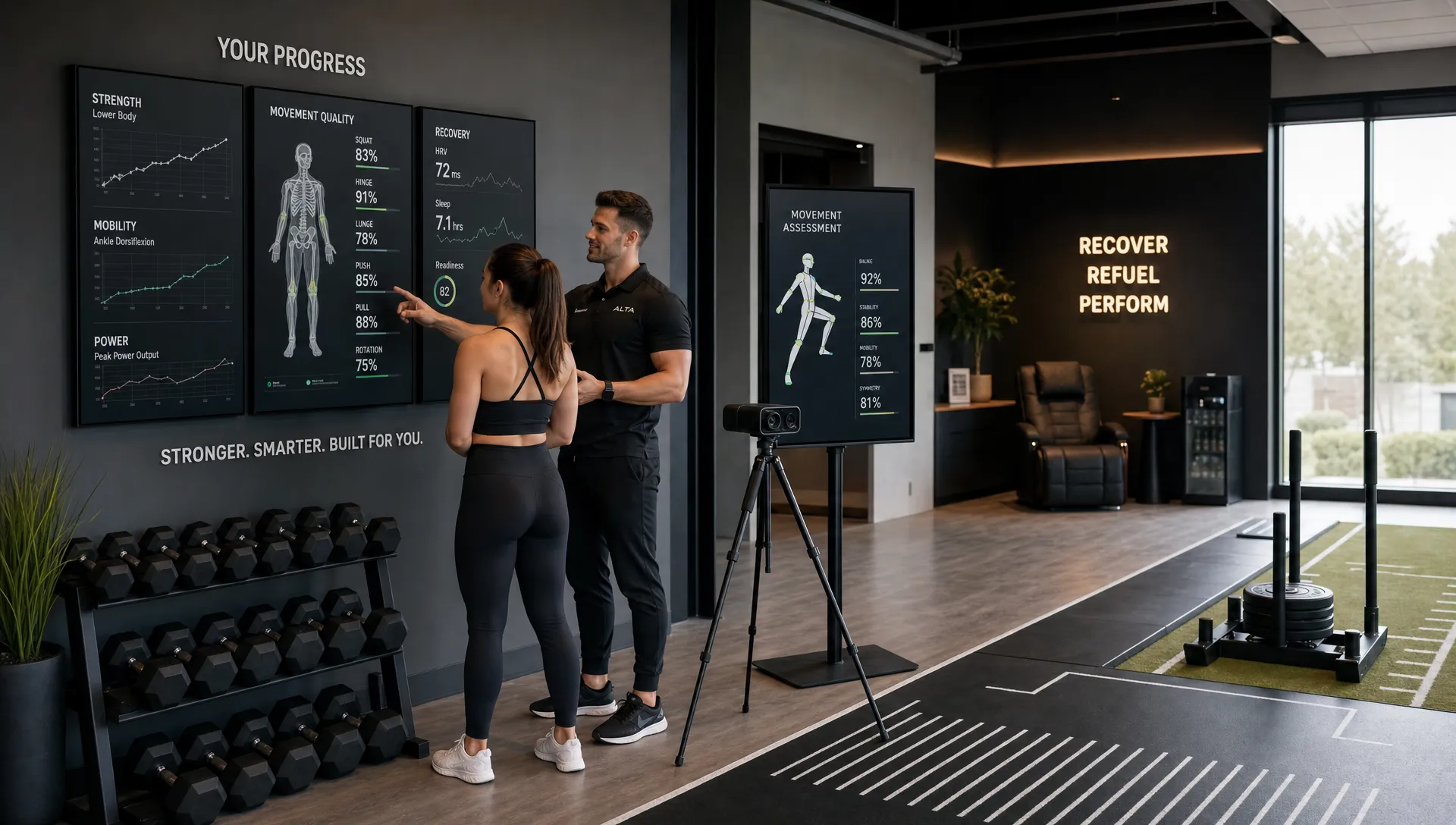


Fitness gives you the destination. Personal training gives you the route, the pacing, the feedback, and the adjustments that keep you moving toward it.
That distinction matters. Many people in San Francisco have a clear goal: get stronger, improve body composition, boost energy, train for longevity, or feel more capable in daily life. The hard part is not wanting results. The hard part is converting that intention into the right workouts, done consistently, with enough progression to create change and enough recovery to avoid burnout.
That is where fitness and personal training work better together. Fitness is the broad outcome you want across strength, cardiovascular health, mobility, metabolism, and confidence. Personal training is the coached process that makes those outcomes more specific, measurable, and sustainable.
Fitness Is the Goal, Personal Training Is the Operating System
A general fitness plan often starts with good intentions: go to the gym more, lift weights, do cardio, eat better, stretch, recover. Those are all useful, but they are not yet a system.
A personal trainer turns broad fitness goals into decisions you can actually execute. Which movements should you prioritize? How heavy should you lift? How many sets are enough? When should you progress, deload, or change the plan? What should you do when work travel, poor sleep, or a sore shoulder disrupts the week?
Without coaching, many people rely on guesswork. They repeat comfortable workouts, skip exercises they dislike, push too hard on low-energy days, or change programs before the first one has time to work. With personal training, the plan becomes more intentional. You are no longer just “working out.” You are training for a defined adaptation.
That may be strength, muscle gain, fat loss, better aerobic capacity, healthier movement, or long-term resilience. The details change by person, but the principle is the same: fitness improves faster when the process is structured.
Why the Combination Matters More for Busy Professionals
For high-performing professionals, the biggest barrier is rarely access to information. The internet has endless workouts, meal plans, and fitness advice. The real barriers are time, attention, consistency, and personalization.
A busy schedule turns small inefficiencies into big setbacks. If you only have three training windows per week, the wrong program can waste months. If you sit through long workdays, your warm-up and mobility needs may differ from someone with a more active lifestyle. If stress is high, recovery has to be part of the plan, not an afterthought.
This is why personal training is especially valuable for people with demanding careers. A good coach reduces decision fatigue and helps you use limited training time well. For a deeper look at this angle, Custom Fit has also covered why personal training is worth it for busy professionals.
The goal is not to make fitness more complicated. It is to make it more efficient, safer, and easier to repeat.
The Science Behind Guided Training
Exercise works because the body adapts to stress. Strength training challenges muscle and connective tissue. Aerobic training challenges the cardiovascular system. Mobility work improves usable range and control. Nutrition and recovery provide the inputs that allow adaptation to happen.
The challenge is applying the right dose. Too little stimulus produces little change. Too much stimulus, especially without recovery, can lead to fatigue, pain, or stalled progress.
Research supports the value of guidance. A study published in Medicine & Science in Sports & Exercise found that one-on-one personal training helped participants improve their attitudes and readiness around physical activity, suggesting coaching can influence both behavior and follow-through (PubMed).
Cardiorespiratory fitness is also strongly tied to long-term health. A large study in JAMA Network Open found that higher cardiorespiratory fitness was associated with lower long-term mortality risk, reinforcing why structured aerobic development should sit alongside strength work for many adults (JAMA Network Open).
The takeaway is practical: fitness is not just about looking better. It is a health and performance asset. Personal training helps you train that asset with more precision.
Five Ways Fitness and Personal Training Reinforce Each Other
1. Assessments make the plan more personal
A fitness goal becomes more useful when it is connected to baseline data. This might include strength levels, movement quality, cardiovascular capacity, body composition, training history, injury considerations, lifestyle demands, and nutrition habits.
At a data-driven studio like Custom Fit, services such as DEXA scans and VO2 max testing can help clarify where you are starting from. Those numbers do not replace coaching, but they can make coaching smarter. A trainer can use assessment data to prioritize the right interventions, track progress, and avoid relying only on the scale or subjective effort.
For example, two people may both want to “get leaner,” but one may need more muscle-building work while the other needs improved aerobic capacity, better nutrition consistency, or recovery support. The goal sounds the same. The plan should not be.
2. Coaching improves exercise quality
Technique is one of the clearest ways personal training improves fitness outcomes. Better form helps you target the intended muscles, manage joint stress, and progress with more confidence.
This matters most in strength training. Squats, deadlifts, presses, rows, lunges, and carries can be highly effective, but they should be adapted to your body, experience, and goals. A trainer can adjust stance, range of motion, tempo, load, and exercise selection in real time.
That feedback loop is difficult to replace with a generic program. Even experienced exercisers benefit from outside eyes, especially when loads get heavier or when the goal is to train around old limitations. If strength is a major priority, it is worth understanding why working with a personal trainer can make strength training progress faster.
3. Progression becomes measurable instead of random
Fitness improves through progressive overload, meaning the training challenge increases over time in a way the body can adapt to. That does not always mean lifting heavier every session. It can mean more reps, better control, greater range of motion, improved conditioning, shorter rest periods, or better weekly consistency.
Personal training helps define what progress should look like for your goal. A runner improving VO2 max needs a different progression strategy than a founder rebuilding strength after years of desk work. Someone focused on longevity may need a blend of strength, power, balance, aerobic capacity, and mobility.
The trainer’s job is to keep the plan moving forward while respecting recovery. That balance is where many self-directed routines break down.
4. Nutrition stops being disconnected from training
Training creates the signal. Nutrition helps determine how well your body responds.
If you want to build muscle, protein intake and total energy matter. If you want to lose fat while maintaining strength, the plan has to support performance while creating the right calorie balance. If you want stable energy through demanding workdays, meal timing, hydration, and food quality can make a noticeable difference.
The International Society of Sports Nutrition has published position stands emphasizing the role of protein in supporting exercise adaptation and body composition goals (Journal of the International Society of Sports Nutrition). In practice, that means nutrition coaching works best when it is aligned with the training plan, not treated as a separate project.
This is also where registered dietitians and qualified nutrition coaches can add value. The best plan is not the most extreme one. It is the one that supports your goals and fits your real life.
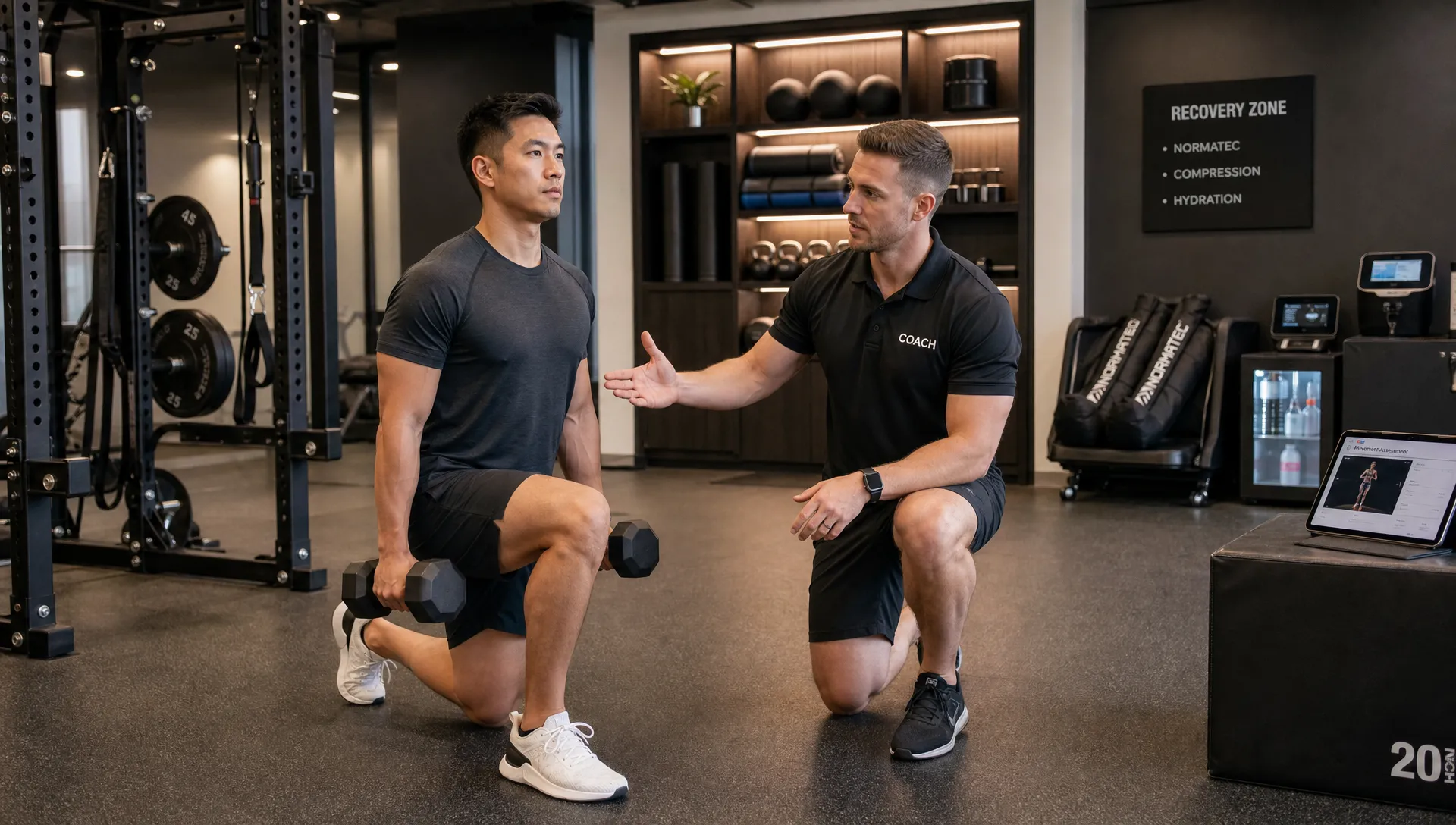
5. Recovery becomes part of the strategy
Many motivated people underperform because they only focus on the work. They train hard, work long hours, sleep inconsistently, and wonder why results slow down.
Recovery is not passive. It is part of adaptation. Sleep, mobility, soft tissue work, lower-intensity movement, stress management, and intelligent programming all influence how well you respond to training.
Personal training helps regulate effort. Some days are built for intensity. Other days are built for skill, volume, mobility, or restoration. When your fitness plan includes recovery programs, it becomes easier to train consistently without treating every session like a test.
Personalization Is the Difference Between a Workout and a Plan
A workout is something you do today. A plan is a sequence of decisions that moves you toward a result.
A useful fitness program should fit the person using it, including their goals, experience, schedule and preferences.
This is why personal training should not be reduced to a session count. A strong training experience includes assessment, coaching, progression, accountability, and adjustments. If you are comparing options, it helps to know what should be included in a personal training package before you commit.
What This Looks Like in a Real Week
When fitness and personal training work together, the week has a clear purpose. It does not need to be complicated, but it should be coherent.
A balanced plan might include strength sessions, conditioning, mobility, nutrition targets, and recovery practices. The exact mix depends on the person. A physician with limited training windows may need efficient full-body strength sessions and simple nutrition structure. A tech executive focused on longevity may need VO2 max development, body composition tracking, and recovery support. Someone returning to fitness may need confidence, movement quality, and consistency before intensity.
The trainer helps answer the weekly questions that determine results:
- What is the priority this week?
- Which sessions need to be hard, moderate, or restorative?
- What should change if sleep or stress is poor?
- How will progress be measured?
- What is the smallest nutrition habit that would create the biggest impact?
These decisions are where coaching earns its value. They turn fitness from a vague aspiration into a repeatable practice.
A Note for Longevity, Concierge Medicine, and Employee Wellness Teams
Fitness and personal training also work better together in clinical-adjacent and corporate wellness settings. Testing can identify opportunities, but behavior change happens between appointments. A DEXA scan, VO2 max result, or metabolic insight is most useful when it connects to a coached plan that a person can follow.
For longevity clinics, concierge medical practices, and employee benefits teams, this bridge matters. Many patients and employees want better health, but they need structure beyond advice. Personal training can help translate goals such as improved body composition, stronger bones and muscles, better conditioning, and healthier routines into consistent action.
This does not replace medical care. It supports lifestyle execution. When communication, testing, training, nutrition, and recovery are aligned, the person receives a clearer path and a better chance of following it.
Signs You Would Benefit From Combining Fitness With Personal Training
You do not need to be an athlete to benefit from personal training. In fact, coaching is often most useful when your goals are important but your time and energy are limited.
Consider combining fitness and personal training if you recognize any of these patterns:
- You restart fitness every few months but struggle to stay consistent.
- You train regularly but your strength, body composition, or energy has plateaued.
- You are unsure whether your workouts match your goals.
- You want to train hard but avoid unnecessary injury risk.
- You have test results, such as body composition or cardio fitness data, but do not know how to act on them.
- You want a more efficient plan that fits a demanding schedule.
The common thread is not lack of motivation. It is lack of a system that adapts to you.
Frequently Asked Questions
Is personal training only for beginners? No. Beginners benefit from learning proper technique and building confidence, while experienced exercisers benefit from programming, progression, accountability, and expert feedback. The value changes with your level, but it does not disappear.
How often should I work with a personal trainer? It depends on your goals, schedule, experience, and need for accountability. Some people do best with multiple coached sessions per week, while others use coaching to guide a broader independent plan. The right frequency should match the outcome you want and the support you need.
Can personal training help with weight loss? Yes, especially when training is paired with nutrition coaching and realistic lifestyle habits. Workouts can build strength, preserve muscle, and increase energy expenditure, but sustainable body composition change usually requires nutrition alignment as well.
What makes data-driven personal training different? Data-driven training uses assessments, performance markers, and progress tracking to guide decisions. Instead of guessing whether a plan is working, you can evaluate strength, conditioning, body composition, recovery, and consistency over time.
Do I need advanced testing before starting? Not always. You can begin with a coaching assessment and basic movement screening. Advanced options such as DEXA scans or VO2 max testing can be useful when you want more precise baseline data or when performance, longevity, or body composition are major goals.
Build a Fitness Plan That Fits Your Life
Fitness works best when it is not left to chance. Personal training gives your goals structure, your workouts purpose, and your progress a way to be measured.
At Custom Fit in San Francisco, clients can connect personal training with nutrition coaching, recovery services, DEXA scans, VO2 max testing, group classes, and gym memberships in a premium, data-driven environment. Whether your goal is strength, energy, longevity, or better follow-through, the right plan should fit your body, your schedule, and your life.
If you are ready to stop guessing and start training with a clearer strategy, explore Custom Fit and take the next step toward a smarter fitness plan.