How Data-Driven Fitness Improves Decision-Making
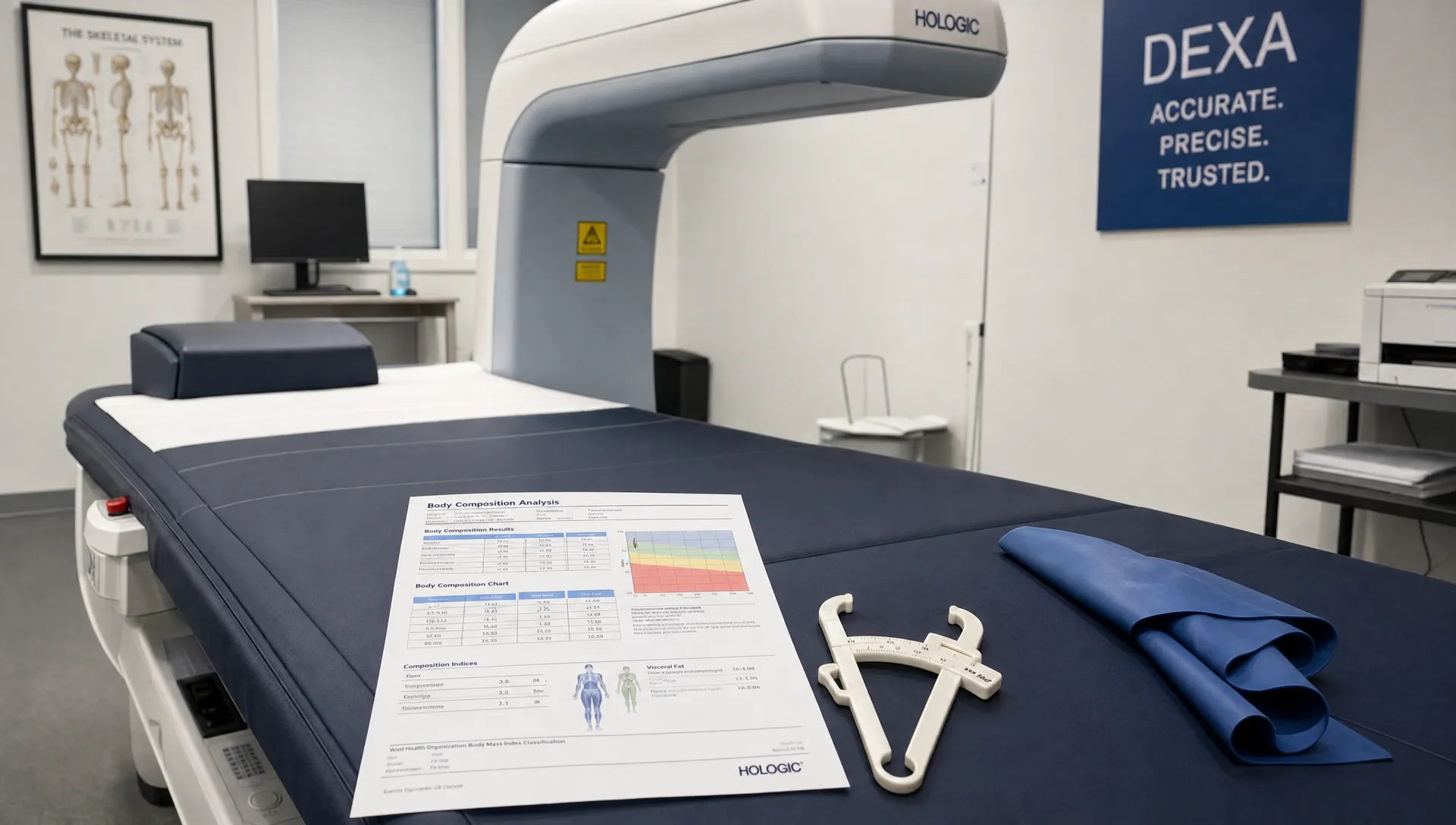


Data driven fitness is not about collecting numbers for their own sake. It is about using the right measurements to make better decisions: what to train, how hard to push, when to recover, what to eat and whether your plan is actually working.
For busy professionals, physicians, longevity teams and anyone trying to get in shape in San Francisco, better decision-making matters because time is limited. A one-hour workout, a nutrition change or a recovery session should be chosen for a reason, not because it looked good on social media.
What data driven fitness changes about decision-making
Traditional fitness decisions often start with assumptions. You feel out of shape, so you do more cardio. You want to lose weight, so you eat less. You feel sore, so you skip training. Those choices may work for a while, but they can also miss the real constraint.
A data-informed approach starts by asking better questions. Is your limiting factor aerobic capacity, muscle mass, movement quality, sleep, nutrition consistency, visceral fat, training volume or recovery? Once you know what is most likely holding you back, the next step becomes clearer.
This is not unique to health. Teams in other industries increasingly use attribution, identity resolution and predictive models to reduce guesswork, as shown in DirectMail.io’s recap of a modern direct mail playbook. Fitness works best with the same discipline: gather meaningful inputs, interpret them correctly and adjust the plan based on results.
The decisions that improve when data leads
At its best, data driven fitness turns vague goals into specific decisions. Instead of asking whether you should work harder, you can ask whether the next best move is to increase load, add low-intensity conditioning, improve protein intake or schedule recovery.
A good plan does not need endless metrics. It needs a few reliable measures that connect to your goal and a coach who can interpret them in context.
| Decision area | Useful data | Better decision |
|---|---|---|
| Strength training | Load, reps, technique, progression | Add weight, change volume or refine form |
| Conditioning | VO2 max, heart rate response, pace | Set training zones and avoid random intensity |
| Body composition | DEXA, lean mass, fat mass, visceral fat | Target fat loss, muscle gain or recomposition |
| Nutrition | Food patterns, protein intake, metabolic goals | Adjust calories, meal timing or macronutrients |
| Recovery | Soreness, sleep, energy, training performance | Push, maintain or deload |
If you want a deeper planning process, Custom Fit has also outlined how to build a custom fitness plan around your health data without turning your routine into a spreadsheet.
Training intensity becomes easier to calibrate
One of the most common decision errors is training in the same middle zone all the time. The workout feels hard enough to count, but it may not be targeted enough to build endurance, speed or recovery capacity efficiently.
VO2 max testing helps clarify aerobic fitness and can guide training zones. That matters because cardiorespiratory fitness is strongly associated with long-term health outcomes. A large meta-analysis published in JAMA found that higher cardiorespiratory fitness was linked with lower risk of all-cause mortality and cardiovascular events.
In data driven fitness, the goal is not to make every workout maximal. The goal is to know when intensity is productive and when it is just fatigue. For a time-pressed executive or parent, that distinction can prevent wasted effort.
Strength and muscle goals get more specific
Weight on the scale is a blunt instrument. If you gain two pounds while adding lean mass and reducing fat, that is a very different outcome than gaining two pounds from fat alone. If you lose weight quickly but lose muscle with it, your plan may need a course correction.
Body composition testing gives more context. DEXA can help estimate lean mass, fat mass and regional fat distribution, including visceral fat. At Custom Fit, DEXA scans are performed by Registered Dietitians or Exercise Physiologists, so clients are working with professionals who understand nutrition, exercise physiology and body composition, not simply receiving an automated scan report.
That interpretation matters. The right next step may be more progressive strength training, a different nutrition target or a recovery adjustment that allows muscle to grow.
Why body composition data changes the conversation
For many clients, data driven fitness becomes most valuable when body composition enters the discussion. Body fat percentage, muscle mass and visceral fat can show risks or opportunities that scale weight hides.
Visceral fat deserves special attention because it is stored around internal organs and is associated with cardiometabolic risk factors. Research from the Framingham Heart Study, published in Circulation, found that visceral and subcutaneous abdominal fat had different relationships with metabolic risk.
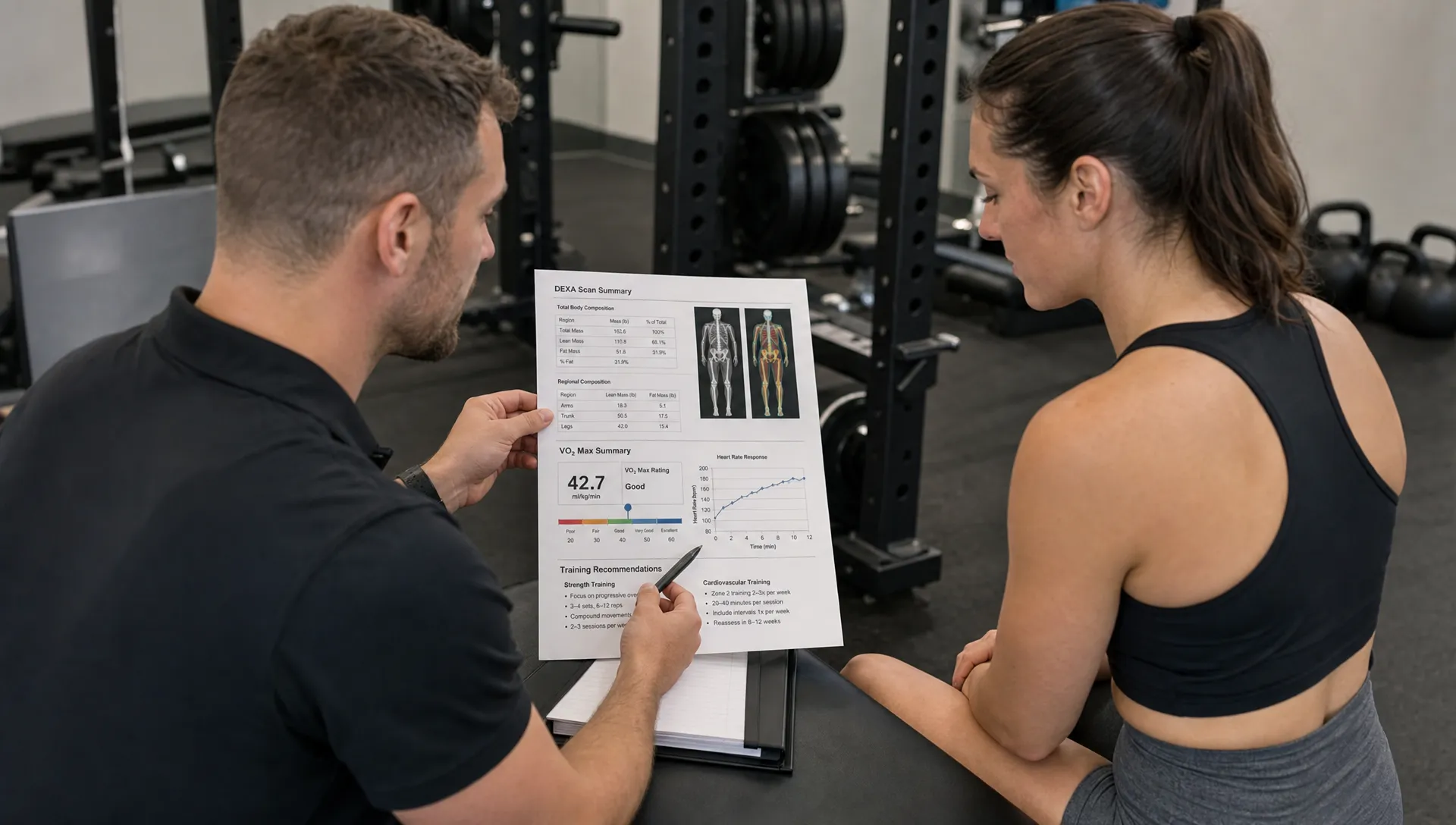
This does not mean a scan automatically tells you what to do. A useful scan is the start of a conversation. A Registered Dietitian may connect the result to protein intake, energy balance and meal structure, while an Exercise Physiologist may connect it to resistance training, conditioning and recovery. The decision improves because the data is interpreted through professional judgment.
Nutrition decisions become less emotional and more practical
Nutrition is where many people make decisions from frustration. If progress slows, they cut more calories. If energy drops, they assume discipline is the problem. Sometimes the issue is simply that the plan does not match the training goal.
Data driven fitness helps separate emotion from adjustment. Someone focused on recomposition may need enough protein to support muscle while reducing excess calories gradually. Someone training for performance may need more carbohydrate around hard sessions. Someone with a high-stress schedule may need a plan that is consistent before it is aggressive.
Research supports the role of protein and resistance training for lean mass. A meta-analysis in the British Journal of Sports Medicine found that protein supplementation increased gains in muscle mass and strength during resistance training programs, with benefits depending on baseline intake and training status.
The practical takeaway is simple: nutrition decisions should support the goal your data points toward.
Recovery decisions stop being optional
Recovery is often treated as a luxury, especially among high-performing professionals. Yet recovery is part of adaptation. Training creates the stimulus; sleep, nutrition and recovery time help turn that stimulus into progress.
Without data, people tend to make recovery decisions based on personality. Some push through everything. Others back off as soon as a workout feels uncomfortable. Neither approach is reliable.
With a data-informed process, a coach can compare subjective signals with performance trends. If strength drops, soreness stays high and sleep is poor, reducing volume may be the productive choice. If energy is good and performance is improving, the plan may be ready to progress.
The value of data driven fitness is that it makes restraint feel like a strategy when restraint is warranted.
How data helps coaches, physicians and benefit teams
Decision-making gets even more important when fitness is part of a broader health strategy. Private practice physicians, concierge medicine teams and longevity clinics often need objective ways to connect lifestyle recommendations to measurable outcomes.
Fitness testing can create a shared language. A physician may care about cardiometabolic risk. A dietitian may focus on nutrition adherence and body composition. A trainer may focus on strength, mobility and aerobic capacity. When those professionals are working from the same baseline, recommendations can become more coordinated.
In a data driven fitness model, employee benefits managers can also think beyond generic wellness perks. The question becomes whether a program helps employees make consistent, measurable changes in fitness, recovery and health behaviors. That is a stronger standard than attendance alone.
For readers who want to understand the testing side more deeply, Custom Fit explains how fitness testing turns health goals into a clear plan.
Local decisions matter in San Francisco
A fitness plan that looks perfect on paper can fail if it does not fit real life. In San Francisco, commute patterns, demanding workdays and neighborhood routines all affect consistency.
Someone working near the Financial District may need efficient early-morning or midday training. A SoMa professional may prefer a plan that combines testing, coaching and recovery in fewer weekly trips. The best decision is not just physiologically sound; it is logistically realistic.
For people balancing work, family and health goals across the city, Custom Fit SF brings personal training, nutrition coaching, testing and recovery services into one data-focused wellness environment.
A simple framework for using data without overthinking it
A practical data driven fitness framework does not require tracking everything. It requires a repeatable process that turns measurements into action.
Use this sequence when evaluating your own plan:
- Start with the goal: Fat loss, muscle gain, endurance, longevity and performance require different priorities.
- Choose the right baseline: DEXA, VO2 max, metabolic testing, strength assessments or nutrition review should match the goal.
- Make one meaningful change: Adjust training, nutrition or recovery based on the most relevant signal.
- Retest at the right interval: Retesting too soon can create noise, while waiting too long can delay correction.
- Interpret results with context: Travel, stress, illness, sleep and adherence all affect outcomes.
This framework keeps data useful. The point is not to chase perfect numbers every week. The point is to make the next decision better than the last one.
Common mistakes in data-informed training
The first mistake is collecting data without changing behavior. A scan, test or wearable metric has limited value if it never affects the training plan.
The second mistake is overreacting to one measurement. Body weight can fluctuate. Performance can dip after poor sleep. Heart rate can be affected by stress or illness. Good coaching looks for patterns, not isolated signals.
The third mistake is treating all metrics as equal. If your main goal is improving muscle mass, strength trends and body composition matter more than daily calorie burn. If your main goal is aerobic health, VO2 max and zone-based conditioning deserve more attention.
The strongest data driven fitness programs combine objective testing with human interpretation. Data shows the direction. Coaching turns it into decisions you can actually follow.
Frequently Asked Questions
What is data-driven fitness? Data-driven fitness uses testing, progress tracking and professional interpretation to guide training, nutrition and recovery decisions. The goal is to reduce guesswork and adjust the plan based on evidence.
Do I need advanced testing to benefit from a data-informed plan? Not always. Basic progress measures can help, but advanced tests such as DEXA, VO2 max and metabolic testing can give a clearer baseline when you want a more precise plan.
How often should fitness data be reviewed? Training data can be reviewed weekly, while body composition and metabolic changes usually need more time. The right cadence depends on your goal, the metric and how much your program has changed.
Why does professional interpretation matter for DEXA scans? DEXA data is more useful when a qualified professional explains what it means for nutrition, exercise and body composition. At Custom Fit, scans are performed by Registered Dietitians or Exercise Physiologists, not handed over as an automated report without context.
Make your next fitness decision with better information
If your current routine feels like trial and error, the next step is not always to work harder. It may be to measure the right things, understand what they mean and make a more targeted decision.
Custom Fit helps clients connect personal training, nutrition coaching, longevity testing and recovery into a clearer plan. For busy San Francisco professionals and health partners, that combination can turn effort into a smarter strategy for long-term progress.