Does Gym Coaching Deliver Better Results Than Working Out Alone?
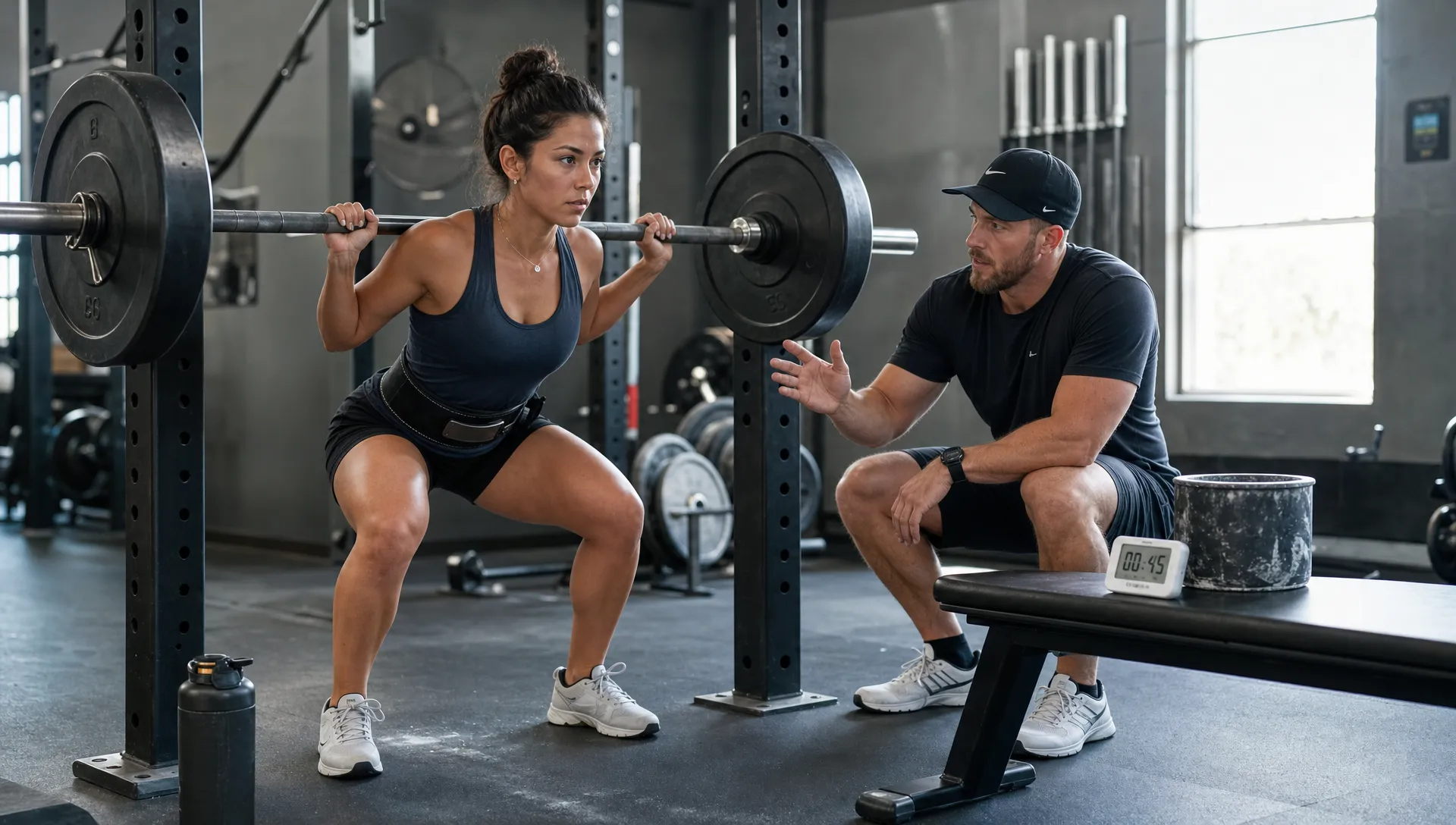


If you already know how to train, enjoy building your own programs and rarely miss workouts, working out alone can be effective. For everyone else, especially people with specific goals and limited time, gym coaching usually delivers better results because it adds structure, expert feedback, accountability and better measurement.
That does not mean every coached session is automatically superior to every solo workout. A vague training plan with poor coaching will not outperform a thoughtful independent program. But when coaching is personalized, progressive and tied to clear metrics, it solves many of the problems that quietly limit results: inconsistent intensity, repeated exercise selection, technique drift, unclear nutrition strategy and missed recovery.
For busy San Francisco professionals moving between SoMa, the Financial District and demanding schedules, the real question is not whether exercise works. It is whether your training approach turns limited hours into measurable progress.
The short answer: coaching helps most when the goal is specific
Gym coaching tends to outperform working out alone when your goal is more than general activity. If you want to build muscle, reduce body fat, improve VO2 max, train around old injuries or stay consistent during a demanding work season, a coach can make the process more efficient.
The biggest difference is decision quality. Working out alone requires you to decide what to do, how hard to train, when to progress, when to back off and how to adapt when life gets in the way. A coach turns those decisions into a plan, then adjusts the plan based on what happens in real life.
Research supports this advantage. In a resistance training study published in Medicine and Science in Sports and Exercise, Mazzetti and colleagues found that directly supervised resistance training produced greater strength improvements than unsupervised training. The study does not mean supervision is magic. It suggests that when someone qualified is watching load selection, effort and execution, people often train more effectively.
That is the core value of gym coaching: not motivation alone, but better execution over time.
Why working out alone often stalls
Solo workouts can fail for reasons that feel small in the moment. You repeat the same weights because they feel comfortable. You avoid exercises you dislike but probably need. You push hard on days when you are under-recovered, then skip the next session. You train consistently for three weeks, then travel, get buried at work and lose the thread.
None of this is a character flaw. Exercise behavior is hard to manage because the feedback loop is delayed. One good workout does not change your body. One missed session does not ruin your progress. Results come from dozens of good decisions stacked together, which is exactly where coaching creates leverage.
The American College of Sports Medicine position stand on resistance training progression emphasizes variables such as load, volume, rest, exercise selection and progression. Most gym members know these factors matter in theory. Fewer people apply them consistently for months while adapting to sleep, stress, travel and changing goals.
A coach helps make those adjustments before a plateau turns into frustration.
The four ways gym coaching can improve results
1. A coach gives your training a progression model
Better workouts are not just harder workouts. They are workouts that fit into a sequence. A good coach looks at your starting point, movement ability, training history, schedule and recovery capacity, then builds toward a goal.
That may mean adding load, improving range of motion, increasing weekly volume, changing tempo or rotating exercises at the right time. It may also mean doing less when your body is not absorbing the work.
This is where many solo routines break down. People often judge a workout by sweat, soreness or calorie burn. Those can be part of training, but they are not reliable measures of progress. A coach is more likely to ask whether your plan is making you stronger, fitter, leaner, more resilient or more consistent.
2. Technique feedback turns effort into useful work
Two people can perform the same exercise and get very different outcomes. A squat can build strength or reinforce compensation. A row can train the upper back or become a biceps and lower back exercise. A high-intensity interval can improve conditioning or just create fatigue.
Coaching improves the quality of each rep through cueing, exercise selection and immediate correction. This does not mean training must be complicated. Often, the best coaching cue is simple: adjust stance, slow the eccentric, brace before the lift or stop one rep before form breaks.
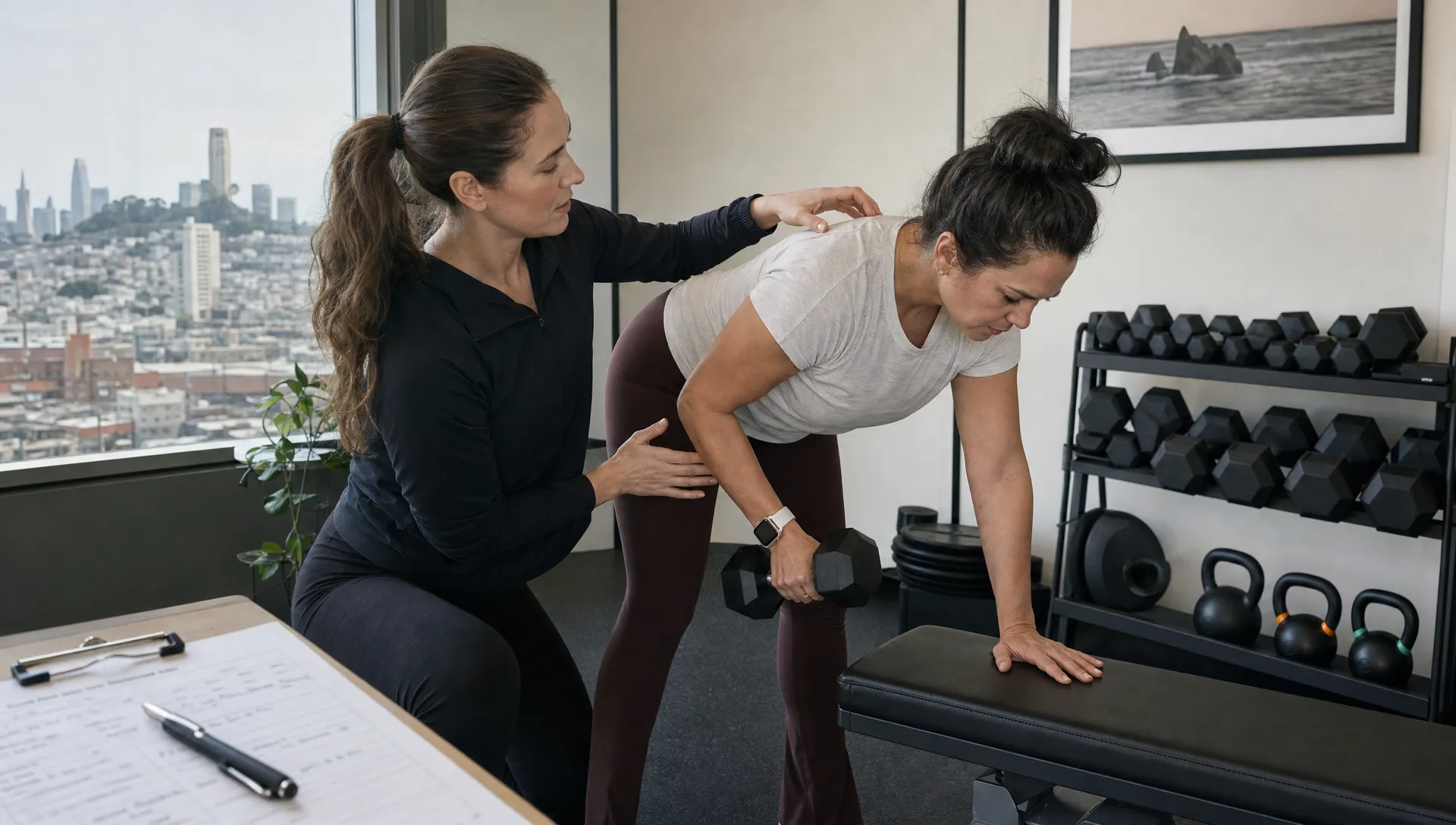
That feedback matters because you cannot always feel what you are doing. Video can help, but it does not replace a trained eye that can connect your movement pattern to your goal.
3. Accountability protects consistency
Appointments change behavior. If your training session is on the calendar and someone is expecting you, you are less likely to negotiate with yourself at the end of a long day.
Behavioral research also suggests that motivation improves when people feel competent, supported and connected to the process. A systematic review by Teixeira and colleagues on self-determination theory and exercise behavior found that autonomous motivation and perceived competence are consistently linked with physical activity adherence.
Good coaching builds both. You understand why you are doing the work, you learn how to do it well and you get feedback that helps you notice progress before the mirror catches up.
Professional health routines often work this way across disciplines. People understand the value of preventive care with a trusted family dentist, where regular check-ins can catch small issues before they become bigger ones. Fitness coaching applies a similar principle: recurring expert feedback helps you correct course early instead of waiting until pain, plateaus or discouragement force a reset.
4. Coaching connects training with nutrition and recovery
Many people assume their workout plan is the problem when the missing piece is nutrition, sleep or recovery. If you train hard but under-eat protein, miss sleep or recover poorly, results will lag.
This is why coaching is strongest when it is not isolated from the rest of your life. At Custom Fit SF, personal training can work alongside nutrition coaching, recovery services and testing, which gives clients a more complete view of what is affecting progress. The benefit is not more complexity. It is fewer blind spots.
For a deeper look at how coordinated support can improve outcomes, Custom Fit explains why a registered dietitian and personal trainer make a stronger team than treating food and training as separate projects.
What better results should actually mean
Better results should be defined before you compare coaching with solo training. Otherwise, the conversation becomes vague. A person training for longevity, a person preparing for a ski season and a person trying to gain lean mass should not judge progress the same way.
Useful metrics may include strength, lean mass, body fat percentage, visceral fat, resting heart rate, VO2 max, waist circumference, mobility, pain-free movement or weekly adherence. The right metric depends on the goal.
This is where data-driven coaching has an advantage over guesswork. For example, DEXA can help distinguish between scale weight changes and actual body composition changes. If weight is stable but lean mass is increasing and fat mass is decreasing, that is progress a bathroom scale may hide.
At Custom Fit, DEXA scans are performed by Registered Dietitians or Exercise Physiologists. That matters because clients are working with professionals who understand nutrition, exercise physiology and body composition, not simply receiving an automated scan report. The interpretation is part of the value.
VO2 max testing can also clarify whether conditioning is improving in a meaningful way. Cardiorespiratory fitness is not just an athletic metric. A large cohort study published in JAMA Network Open found that higher cardiorespiratory fitness was associated with lower long-term mortality risk. For longevity-focused clients, that makes conditioning a practical health target, not just a performance goal.
Gym coaching vs working out alone
| Factor | Working out alone | Gym coaching |
|---|---|---|
| Program design | Depends on your knowledge and discipline | Built around goals, schedule, ability and recovery |
| Technique | Self-corrected, often with limited feedback | Adjusted in real time by a coach |
| Progression | Easy to repeat the same routine too long | Planned increases in load, volume or complexity |
| Accountability | Based on personal motivation | Supported by appointments, check-ins and expectations |
| Adaptability | You decide how to change the plan | Coach modifies sessions based on performance and context |
| Measurement | Often scale weight, mirror or app data | Can include strength benchmarks, DEXA, VO2 max and other assessments |
| Best fit | Experienced, consistent exercisers with simple goals | People seeking efficient progress, skill development or measurable change |
The table makes the tradeoff clear. Solo training offers flexibility and independence. Coaching offers better feedback and fewer unforced errors. The best choice depends on how much support you need to train well consistently.
When working out alone can be enough
Working out alone may be enough if you already have a solid training background, know how to progress your program and have a history of consistency. It can also work well for maintenance phases, general health goals or people who genuinely enjoy self-directed training.
A solo approach is more likely to succeed when you can answer these questions clearly:
- What is the goal for the next 8 to 12 weeks?
- Which exercises are you progressing and why?
- How will you know when to increase or reduce intensity?
- What will you do if travel, stress or soreness disrupts the plan?
- Which metric will tell you whether the program is working?
If those answers are easy, you may not need weekly coaching. You might still benefit from periodic assessments, technique reviews or testing, but you can probably manage much of the work independently.
When gym coaching is clearly worth it
Gym coaching is most valuable when the cost of trial and error is high. That can mean limited time, a demanding career, a history of inconsistency, a performance goal or uncertainty about what your body needs now.
It is especially useful if you have been working out for months without measurable change. Plateaus often persist because people keep changing random variables instead of identifying the limiting factor. Is the program too easy? Too much volume? Not enough protein? Poor sleep? Inaccurate body composition tracking? A coach can help separate signal from noise.
Coaching also helps people who feel overwhelmed by fitness information. The modern gym environment can make simple goals feel complicated. You do not need every method. You need the right next step, repeated consistently.
Custom Fit has also written about how personal coaching fitness plans improve follow-through, which is often the difference between knowing what to do and actually doing it through a busy season.
What to look for in a gym coaching program
Not all coaching programs are equal. A strong program should begin with an assessment, define realistic goals and explain how progress will be tracked. You should understand why your plan looks the way it does, even if you do not need every technical detail.
Look for coaching that includes clear programming, movement feedback, appropriate progression and communication outside the workout when needed. If body composition is a goal, ask how the team evaluates muscle mass, fat mass and visceral fat. If performance or longevity is a goal, ask whether conditioning metrics such as VO2 max are part of the process.
The training environment matters too. A crowded gym can work for some people, but others need privacy, focus and equipment availability to train well. If you are comparing options in San Francisco, this guide on what to look for in a private training gym outlines the assessment, coaching and environment factors that make a difference.
How to decide which path is right for you
The simplest decision rule is this: if you are progressing, staying consistent and training safely on your own, keep going. If you are inconsistent, unsure what to change or disappointed by your results, gym coaching is likely a better use of your time.
For many clients, the best approach is not coaching forever or training alone forever. It is using coaching intensively to build skill, structure and momentum, then adjusting the level of support as goals change. Some people need one-on-one training. Others do well with partner training, small-group coaching, nutrition support, testing or a membership that keeps them connected to a plan.
In a city where workdays run long and wellness options are everywhere, better results usually come from fewer random choices, not more. Coaching helps narrow the plan to what matters, then keeps you accountable long enough for the work to show.
Frequently Asked Questions
Does gym coaching work better than working out alone for fat loss? It often does, especially when coaching includes progressive strength training, nutrition guidance and body composition tracking. Fat loss depends on more than workouts, so support with food, recovery and consistency can make a major difference.
How long does it take to see results from gym coaching? Many people notice better form, confidence and consistency within the first few weeks. Visible body composition or performance changes usually require a longer window, often 8 to 12 weeks of consistent training and nutrition habits.
Is gym coaching only for beginners? No. Beginners benefit from learning technique and building habits, but experienced exercisers often use coaching to break plateaus, refine programming, improve performance or train more efficiently.
Can I combine coaching with independent workouts? Yes. Many effective plans include coached sessions for strength, technique and progression, plus independent workouts for conditioning, mobility or practice. This hybrid model can be efficient for busy schedules.
How does Custom Fit measure progress beyond the scale? Depending on the client goal, progress may be evaluated through strength benchmarks, DEXA body composition scans, VO2 max testing and other assessments. Custom Fit DEXA scans are performed by Registered Dietitians or Exercise Physiologists who can interpret results in the context of nutrition, exercise physiology and body composition.
Train with better feedback
If you want to stop guessing and start measuring what is working, Custom Fit SF offers personal training, nutrition coaching, DEXA scans, VO2 max testing, recovery programs and memberships in a data-driven San Francisco wellness environment. The goal is not just harder workouts. It is smarter training, clearer feedback and a plan that fits your life.