Why Wellness and Fitness Work Best as One Plan
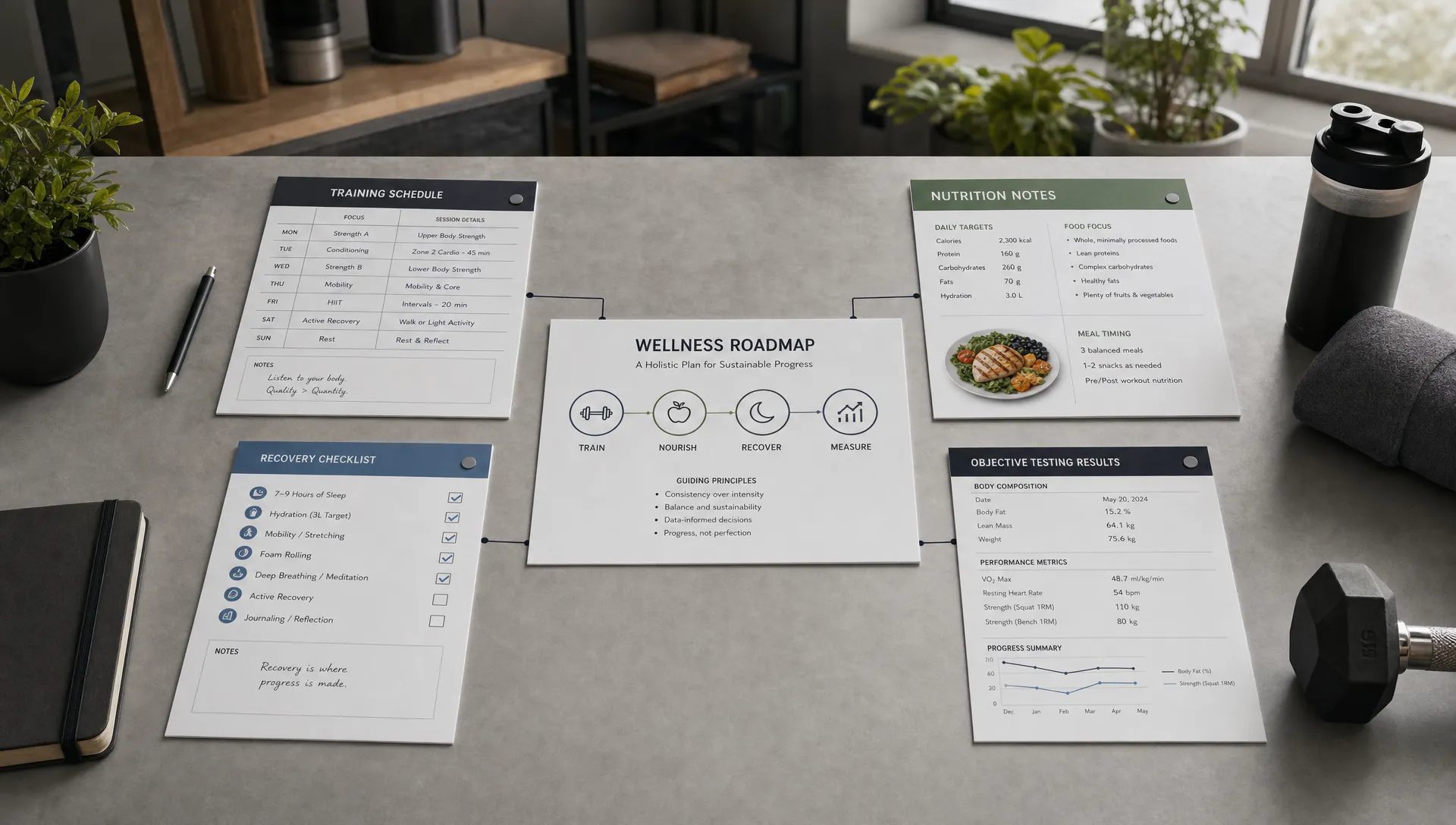


Most people treat health like a set of separate projects. They hire a trainer for strength, download an app for nutrition, book a massage when stress gets high, and schedule lab work only when something feels off. Each piece can help, but the real return comes when wellness and fitness are built into one coordinated plan.
That matters even more in a city like San Francisco, where ambitious professionals often have limited time, high stress, irregular meals, long workdays, and big expectations for performance. A workout plan that ignores sleep, nutrition, metabolic health, and recovery will eventually hit a ceiling. A wellness plan that never builds strength, aerobic capacity, and movement habits can feel vague and hard to measure.
The best approach combines both: train the body, measure what matters, fuel intelligently, recover deliberately, and adjust based on data.
Fitness builds capacity, wellness protects the system
Fitness is your ability to perform. It includes strength, mobility, endurance, power, coordination, and body composition. Wellness is the broader foundation that supports those abilities: nutrition, sleep, stress management, recovery, metabolic markers, hormonal health, and long-term disease risk.
They are not interchangeable, but they are inseparable.
A person can be strong in the gym but under-recovered, inflamed, sleep-deprived, or metabolically unhealthy. Another person can eat well and meditate daily but still lack the muscle mass, aerobic fitness, and functional strength needed for healthy aging. In both cases, the plan is incomplete.
Research increasingly supports this integrated view. A major scientific statement from the American Heart Association describes cardiorespiratory fitness as a powerful predictor of health outcomes and recommends that it be treated as a vital sign in clinical care. You can review the statement in Circulation, which highlights why aerobic capacity is more than a sports metric.
In practical terms, this means a strong plan should answer questions like these:
- Are your workouts improving measurable capacity, not just making you tired?
- Is your nutrition supporting your goals, schedule, and metabolic needs?
- Are you recovering enough to adapt from training?
- Are body composition and performance moving in the right direction?
- Are your habits sustainable during real life, not just ideal weeks?
When the answers are connected, progress becomes easier to understand and easier to keep.
Why separate programs often fail
A disconnected approach usually fails for predictable reasons. The workout is too aggressive for the person’s recovery. The nutrition plan does not match training demands. The wellness advice is too general to change behavior. The person measures weight but not muscle, fat distribution, aerobic capacity, strength, or adherence.
This is why many high-performing adults experience a frustrating pattern: they train hard for a few weeks, feel better briefly, then stall. Energy dips, old injuries flare up, cravings rise, sleep worsens, and motivation fades. The problem is rarely a lack of discipline. More often, the plan has too many moving parts and no central strategy.
For example, a busy executive may start high-intensity training to lose weight. If that plan is paired with low protein intake, five hours of sleep, high stress, and no recovery work, the body may respond with fatigue rather than adaptation. A more complete plan would balance strength training, aerobic work, nutrition coaching, recovery, and objective testing.
The same applies to corporate wellness. A stipend or gym discount may be appreciated, but it rarely changes outcomes by itself. Employees need accessible programming, credible coaching, meaningful assessments, and a culture that supports consistency. For companies exploring this, Custom Fit’s perspective on a performance-driven approach to corporate wellness in San Francisco offers a more integrated model than generic perks.
The four pillars of one effective plan
A unified wellness and fitness plan does not need to be complicated. It needs to be coordinated. At Custom Fit SF, the core idea is simple: combine expert coaching with data-driven services so training, nutrition, recovery, and testing support the same outcome.
1. Training that matches your body and your life
The right fitness program is not the hardest one. It is the one that produces adaptation without breaking consistency. For most adults, that means a balanced mix of strength training, cardiovascular work, mobility, and movement that fits the week they actually live.
Strength training supports muscle mass, joint function, metabolic health, and long-term independence. Cardio training supports heart health, endurance, and energy. Mobility and movement quality help reduce compensation patterns and keep training sustainable.
The key is personalization. A founder working 70-hour weeks, a physician on irregular shifts, and a parent returning to fitness after years away should not follow the same plan. Training variables such as frequency, intensity, volume, and progression should reflect readiness, goals, injury history, and schedule.
For readers who want a deeper look at the data-driven side, Custom Fit explains how personal training in San Francisco can be built around your data, rather than guesswork or generic programming.
2. Nutrition that supports performance and metabolic health
Nutrition is where many fitness plans become either too vague or too restrictive. “Eat clean” is not a plan. Neither is an extreme diet that works for three weeks and collapses during travel, client dinners, or family life.
A better nutrition strategy starts with the outcome. Fat loss, muscle gain, endurance, better blood markers, stable energy, and longevity may require different priorities. Registered dietitians and nutrition coaches can help translate those priorities into daily behavior.
Protein intake, meal timing, fiber, hydration, micronutrients, and total energy intake all influence training results. The International Society of Sports Nutrition notes that protein, when paired with resistance training, plays an important role in muscle adaptation and body composition. Their position stand is available through the Journal of the International Society of Sports Nutrition.
The point is not to turn every meal into a spreadsheet. It is to make sure your food supports the body you are asking to perform.
3. Testing that turns effort into insight
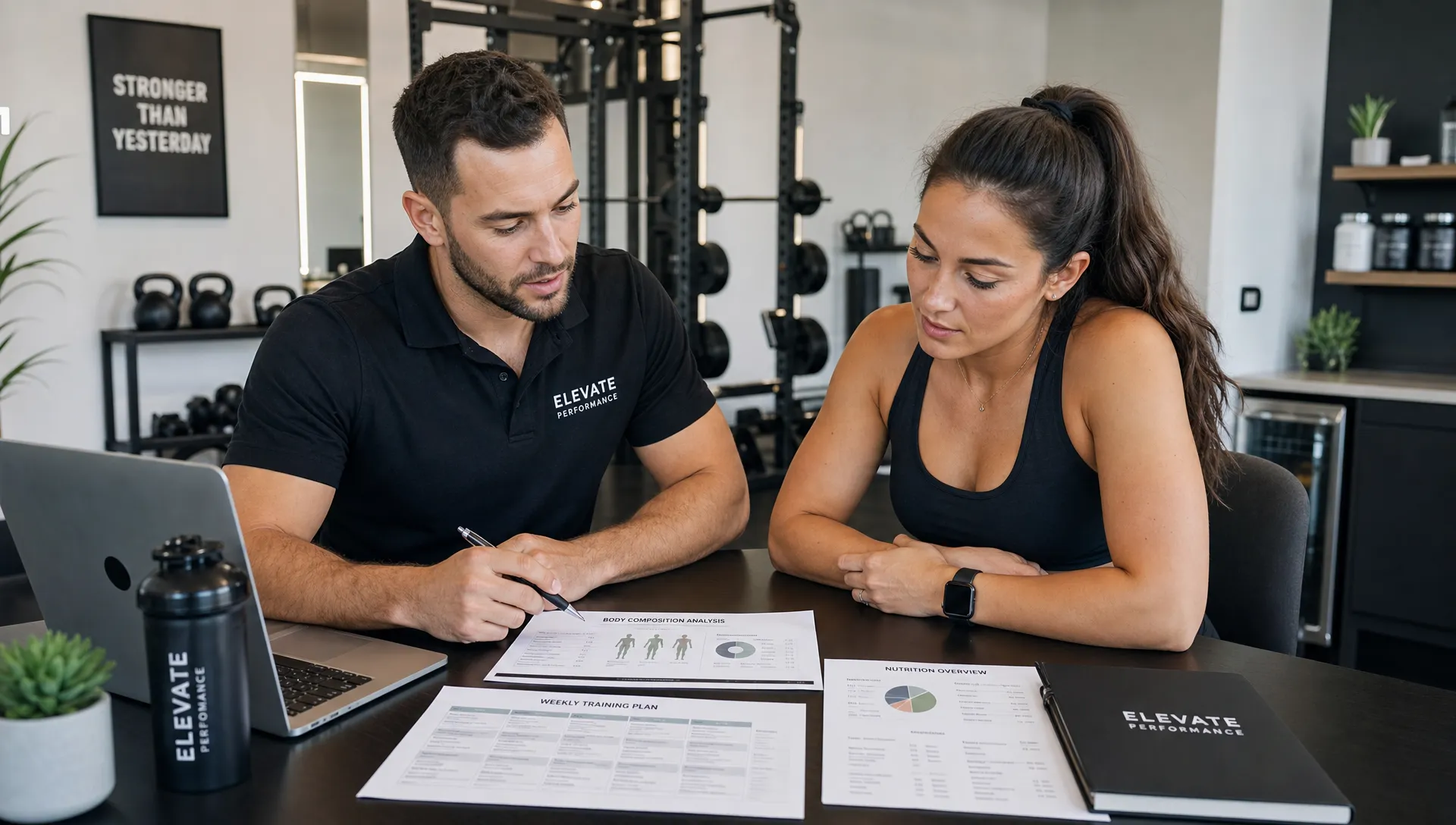
Without measurement, people often rely on feelings, assumptions, and the bathroom scale. Those signals can be useful, but they are incomplete.
A scale cannot tell you whether weight change came from fat, muscle, water, or inflammation. It cannot tell you whether your aerobic capacity is improving. It cannot show whether your plan is supporting long-term health or simply producing short-term fatigue.
That is where testing becomes valuable. Services such as DEXA scans and VO2 max testing can help create a clearer picture of body composition and cardiovascular fitness. For longevity clinics, concierge medicine practices, and private physicians, this type of testing can also complement clinical care by giving patients objective performance and body composition data.
The goal is not to test for the sake of testing. The goal is to make better decisions. If a client is losing weight but also losing lean mass, the plan may need more strength training, higher protein, or better recovery. If VO2 max is low despite frequent workouts, the cardio program may need more structure. If body composition is stable but strength and energy are improving, the plan may be working better than the scale suggests.
This is also where the broader wellness market is moving. Around the world, premium health providers are blending fitness, body composition, recovery, aesthetics, and longevity services into more comprehensive experiences, including medical wellness and aesthetic clinics such as Laprin Clinic, where appearance, recovery, and anti-aging goals are approached as connected parts of personal health.
4. Recovery that makes adaptation possible
Training creates the stimulus. Recovery creates the result.
For professionals who are always “on,” recovery is often the missing pillar. They may be willing to work hard in a session, but less willing to sleep enough, schedule lower-intensity days, manage stress, or use recovery tools consistently. Over time, this creates diminishing returns.
Recovery includes sleep, hydration, mobility, soft tissue work, nervous system regulation, and smart programming. It also includes knowing when not to push. A well-designed plan should alternate stress and restoration so the body has a reason, and the resources, to adapt.
A large body of research links physical activity with lower mortality risk, but the benefits are strongest when activity is sustainable across time. One accelerometer-based study published in BMJ found that higher levels of physical activity and lower sedentary time were associated with substantially reduced risk of premature death. The practical lesson is clear: consistency matters, and consistency depends on recovery.
What an integrated plan looks like in real life
A combined wellness and fitness plan should feel structured, not overwhelming. It should be specific enough to guide behavior but flexible enough to survive a demanding week.
A practical plan might include:
- Two to four strength sessions per week based on experience and recovery capacity
- Zone 2 cardio and targeted higher-intensity work based on aerobic goals
- Nutrition coaching focused on protein, meal structure, energy balance, and adherence
- DEXA or other body composition tracking at meaningful intervals
- VO2 max testing when cardiovascular fitness or longevity is a priority
- Recovery sessions, mobility work, and sleep strategies to support adaptation
The exact mix depends on the person. A 38-year-old tech executive focused on energy and body composition needs a different plan than a 62-year-old preparing for active retirement. A physician referring patients for metabolic testing may need a different workflow than an employer building a benefits program for a team.
The advantage of one coordinated plan is that every part informs the others. Training feedback influences nutrition. Testing influences programming. Recovery influences intensity. Goals influence measurement. Instead of chasing random tactics, the client follows a system.
Why this matters for longevity
Longevity is not only about living longer. It is about extending the years in which you can move well, think clearly, maintain muscle, recover from stress, and participate fully in life.
That requires more than a gym membership. Muscle mass, aerobic capacity, metabolic health, balance, mobility, and nutrition all play a role. A plan that integrates wellness and fitness gives each factor a place in the strategy.
For high-income professionals, the value is leverage. Better energy, stronger health markers, improved strength, and more resilience can influence work, family, travel, and quality of life. For clinicians, integrated fitness and wellness testing can support more complete patient conversations. For employers, it can turn wellness from a passive benefit into a measurable performance and retention asset.
Custom Fit’s broader personalized wellness approach in San Francisco is built around this idea: the best health plans are not generic. They are coached, measured, and adjusted.
How to start combining wellness and fitness
If your current routine feels fragmented, you do not need to overhaul everything at once. Start by identifying the weakest link in your system.
If you train regularly but feel tired all the time, look at recovery and nutrition. If you eat well but lack strength or stamina, build a progressive training plan. If you are working hard but not seeing results, add objective testing. If you have data but no clear action plan, work with coaches who can translate it into daily decisions.
The most effective starting point is usually a baseline assessment. Body composition, movement quality, lifestyle patterns, training history, nutrition habits, and recovery capacity all help determine what should come first.
From there, focus on the minimum effective plan you can repeat. A sustainable plan done consistently will outperform an impressive plan done sporadically.
Frequently Asked Questions
What is the difference between wellness and fitness? Fitness focuses on physical capacity, such as strength, endurance, mobility, and body composition. Wellness includes the broader systems that support health, including nutrition, recovery, sleep, stress, and metabolic markers. The best results come when both are planned together.
Do I need testing to improve my health? You can improve without testing, but testing can make your plan more precise. DEXA scans, VO2 max testing, and other assessments help show whether your training and nutrition are producing the intended changes.
How often should a wellness and fitness plan be adjusted? Most plans should be reviewed every few weeks, with larger reassessments every few months. The right timing depends on your goals, training age, health status, and whether objective testing is part of your program.
Is an integrated plan useful for corporate wellness programs? Yes. Companies often see better engagement when wellness programs include coaching, measurable assessments, fitness access, recovery options, and practical support instead of isolated perks.
Build a plan that works as one system
Your body does not separate workouts, meals, sleep, stress, and recovery into different categories. It responds to the total plan.
That is why wellness and fitness work best together. When training, nutrition, recovery, and testing are aligned, you can make smarter decisions, avoid wasted effort, and build results that last.
Custom Fit SF brings those pieces together through personal training, nutrition coaching, longevity testing, recovery services, and a premium fitness environment in San Francisco. If you are ready to stop guessing and start building a plan around your actual body, explore Custom Fit SF and take the next step toward a more complete approach to health.