Why Structured Workouts Beat Random Exercise for Progress
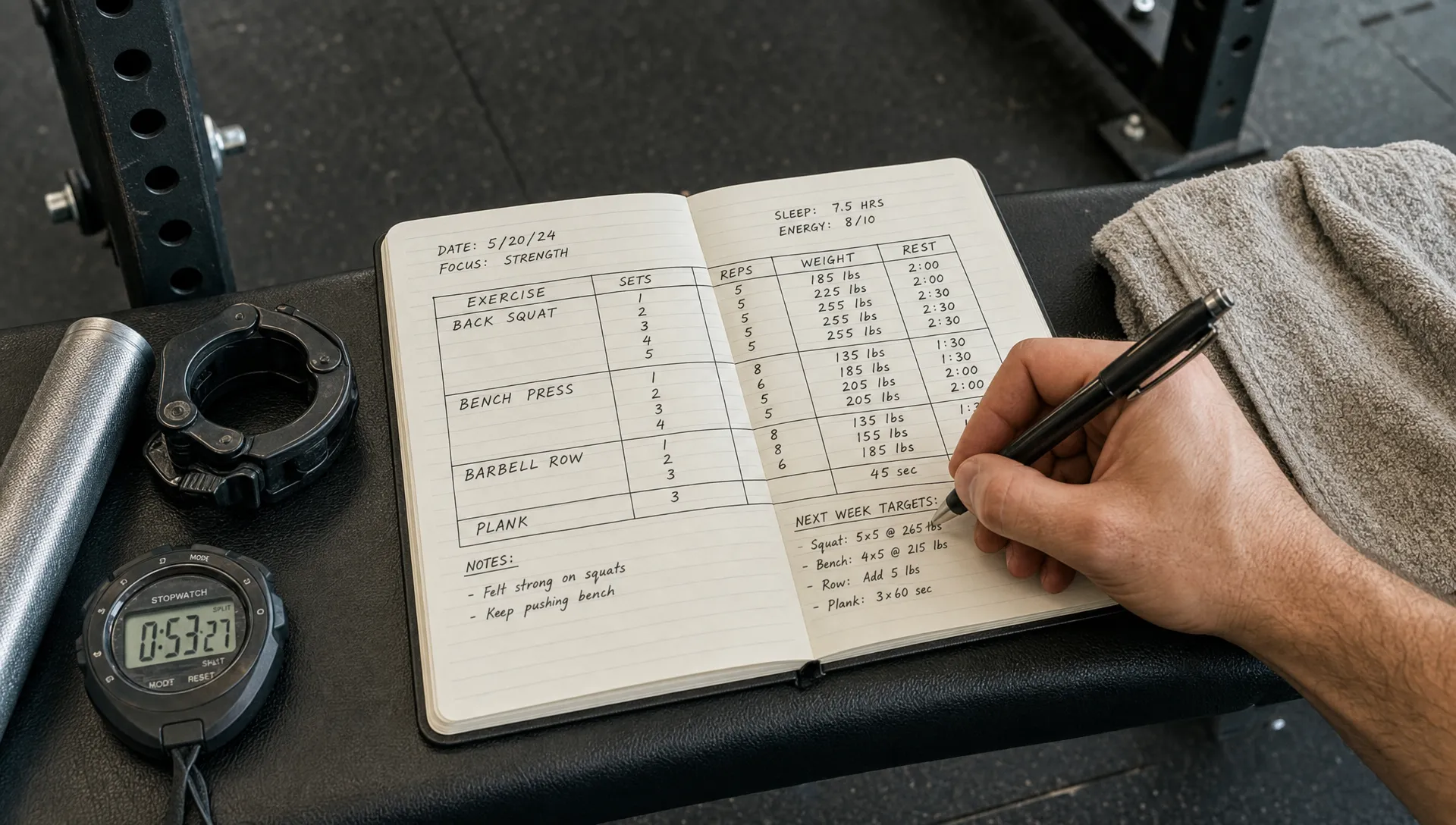


Random exercise can feel productive because it creates sweat, soreness and a sense of effort. But if your goal is measurable progress, whether that means building strength, improving cardiovascular fitness, changing body composition or staying pain-free, effort alone is not enough. Structured workouts give your training a direction, a dose and a way to know whether it is working.
That distinction matters for busy adults in San Francisco. If you are fitting workouts between client calls, clinical hours, school drop-offs or a commute from SoMa to the Marina, you do not have unlimited time to “just move more” and hope it adds up. You need sessions that make sense together.
A random workout may be better than skipping movement altogether. The problem is that random exercise often fails to answer the most important question: are you adapting, or are you just repeating fatigue?
What Random Exercise Gets Right, and Where It Falls Short
Random exercise has a place. A hike, pickup basketball game, walk through Golden Gate Park or spontaneous class can reduce stress and add valuable movement to your week. For people who have been sedentary, almost any safe activity is a positive start.
The limitation appears once your body adapts. Progress requires the right stress at the right time, followed by enough recovery to turn that stress into improvement. If every week is a mix of whatever feels appealing, your body may receive inconsistent signals. One week might overload your legs with hard intervals and heavy squats, then the next week might avoid lower-body strength completely.
Random training also makes it hard to troubleshoot. If your shoulder hurts, your running pace stalls or your body composition is not changing, you need a training history to review. Without a plan, you are left guessing whether the issue is exercise selection, intensity, recovery, nutrition or consistency.
This is why many people feel like they are “working out all the time” without seeing much change. They are spending energy, but the training dose is not organized enough to create a clear adaptation.
What Makes a Workout Structured?
A structured workout is not rigid for the sake of being rigid. It is a session built around a purpose. That purpose might be strength, hypertrophy, aerobic base, mobility, power, recovery or skill. The details can change, but the logic stays consistent.
A well-built plan answers a few simple questions:
- What is the goal of this session?
- Which movements or energy systems are being trained?
- How hard should the work feel?
- How will the plan progress over time?
- What data will show whether the plan is working?
Structured workouts usually include planned warm-ups, exercise order, sets, reps, rest periods, intensity targets and progression rules. They also account for recovery, because doing more is not always better. A strong training plan has enough stress to stimulate change without burying you in fatigue.
| Training element | Random exercise | Structured workouts |
|---|---|---|
| Goal | Often based on mood or availability | Tied to a specific outcome |
| Progression | Inconsistent or accidental | Planned through load, volume, pace or density |
| Recovery | Usually reactive | Built into the week |
| Measurement | Based on sweat, soreness or calories | Based on performance, adherence and testing |
| Adaptation | Hard to predict | Easier to repeat and refine |
This does not mean every session has to be complicated. A structured 45-minute strength workout may be simple: squat pattern, push pattern, pull pattern, hinge pattern, core work and a short finisher. What makes it effective is that the same patterns are trained consistently enough to improve.
The Science Favors Planned Progression
The American College of Sports Medicine’s position stand on progression models in resistance training describes a core principle of strength and fitness development: training variables need to be manipulated over time. Load, volume, rest, frequency and exercise selection all affect adaptation.
That is the missing ingredient in many random routines. If your weights, reps or effort never increase, strength gains eventually slow. If intensity jumps too aggressively, injury risk or burnout can rise. Structure helps you progress deliberately rather than leaving adaptation to chance.
For cardiovascular fitness, planned training matters too. The CDC’s adult physical activity guidelines recommend both aerobic activity and muscle-strengthening work. In practice, many people overdo one category and neglect the other. A structured week can balance strength, conditioning and lower-intensity movement so you are building a broader fitness base.
Cardiorespiratory fitness is not just a gym metric. In a large cohort study published in JAMA Network Open, Mandsager and colleagues found that higher cardiorespiratory fitness was associated with lower long-term mortality risk. The study analyzed more than 122,000 patients who completed exercise treadmill testing. You can review the paper through PubMed.
The takeaway is practical: if fitness is tied to health outcomes, then training should not be treated as a series of disconnected workouts. It should be managed like any other health behavior that benefits from consistency, feedback and intelligent adjustment.
Outside fitness, people already trust structure for health, from scheduled medical visits to preventive dental care. Training works the same way. Waiting until something hurts or until motivation spikes is less reliable than building repeatable appointments into your life.
Why Structured Workouts Work Better for Busy Professionals
For high-performing professionals, the main barrier is rarely a lack of information. It is decision fatigue. After a full day of clinical care, leadership meetings or client work, deciding what to train can become one more task.
Structure removes that friction. You show up, know the goal and execute. This is one reason coached sessions and scheduled classes work well for busy adults. When your workout is already planned, the mental load drops and consistency improves. If accountability is the missing piece, this guide on how gym classes help busy adults stay consistent explains why scheduling and coaching can make training easier to maintain.
Structured workouts also protect time. A random hour in the gym can disappear into warm-up wandering, machine availability and changing plans mid-session. A programmed hour has a sequence. You may still adjust based on energy, sleep or soreness, but the session has a spine.
For someone training before work in downtown San Francisco or after a long day near SoMa, that matters. A focused plan can turn three to four weekly sessions into meaningful progress instead of making fitness feel like another open-ended obligation.
Better Measurement Creates Better Progress
Random exercise often uses emotional metrics: Did I sweat? Am I sore? Did the workout feel hard? Those signals are not useless, but they are incomplete. Soreness is not the same as muscle growth and calorie burn on a wearable is not the same as improved metabolic health.
Structured workouts create better signals because they repeat key variables. If you perform a trap bar deadlift every other week, you can track load, reps and perceived effort. If you repeat a zone 2 cycling session, you can compare heart rate, output and recovery. If your body composition is changing, you can connect those changes to training and nutrition instead of guessing.
At Custom Fit, this is where data-driven testing can support smarter decisions. DEXA scans can provide insight into body composition, including lean mass, body fat and visceral fat. Custom Fit DEXA scans are performed by Registered Dietitians or Exercise Physiologists, which means clients are working with professionals who understand nutrition, exercise physiology and body composition, not simply receiving an automated scan report.
That professional interpretation matters. If scale weight is unchanged but lean mass is increasing and visceral fat is decreasing, the plan may be working even if the mirror is slow to catch up. If muscle mass is dropping during a fat-loss phase, the plan may need more protein, better strength progression or a different calorie target.
A Simple Example of a Structured Training Week
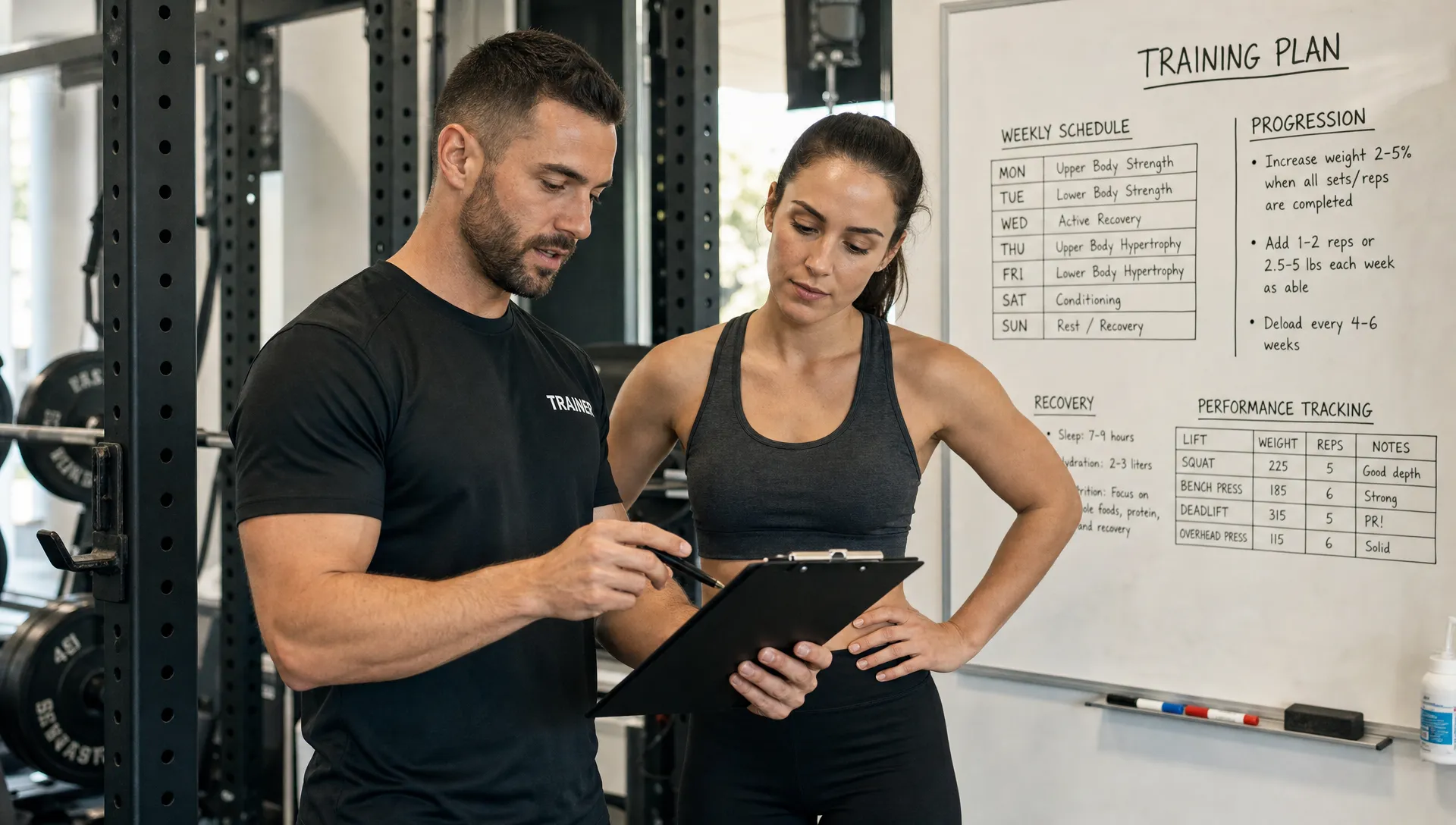
A good plan should match your goal, training age, schedule and recovery capacity. Still, most adults benefit from combining strength, aerobic work and mobility across the week. The exact exercises can vary, but the categories should be intentional.
| Day | Training focus | Why it matters |
|---|---|---|
| Monday | Full-body strength | Builds or maintains muscle and trains major movement patterns |
| Tuesday | Zone 2 cardio or brisk walking | Improves aerobic base and supports recovery |
| Wednesday | Strength with emphasis on upper body and core | Adds volume without overloading the same tissues |
| Thursday | Mobility, recovery or easy movement | Keeps consistency without stacking fatigue |
| Friday | Strength with lower-body emphasis | Reinforces progressive overload and power production |
| Saturday | Intervals, class or recreational activity | Builds conditioning and keeps training enjoyable |
| Sunday | Rest or long walk | Allows adaptation and sets up the next week |
This is not the only effective model. Some people do better with two strength days and two cardio days. Others need short sessions spread throughout the week. The point is that each session has a role and the week has a rhythm.
If strength is your priority, the fastest path is usually not more novelty. It is better coaching, better progression and better execution. For a deeper look at that approach, Custom Fit’s article on why a personal trainer for strength training works faster explains how technique, programming and feedback reduce wasted effort.
Planned Variety Beats Constant Novelty
One misconception about structured workouts is that they must be boring. They do not. Structure does not mean doing the exact same workout forever. It means changing the right things at the right time.
Planned variety can include new accessory exercises, different rep ranges, updated conditioning formats or seasonal training goals. A strength block might focus on building foundational lifts for six weeks, then shift toward power, muscular endurance or sport-specific conditioning. The variety has a purpose, so progress does not get lost in constant novelty.
Random variety can be fun, but it often changes too much too soon. If every class, app workout or circuit uses different movements, you may never repeat a skill often enough to improve it. You can feel challenged without becoming more capable.
The best programs usually blend repetition and novelty. Main lifts or cardio benchmarks stay consistent long enough to measure progress, while accessory work keeps training fresh and addresses weak links.
When Random Exercise Still Belongs in Your Life
The goal is not to eliminate spontaneous movement. In fact, random activity can support a structured plan when it is kept in the right category. A weekend bike ride, easy hike, dance class or casual tennis match can add joy, social connection and extra energy expenditure.
The key is to know whether an activity is training or recreation. Training is designed to create a specific adaptation. Recreation may still be physically demanding, but its main job is enjoyment. When you confuse the two, it becomes easier to overtrain, under-recover or skip the sessions that actually drive your goal.
A practical rule is to keep your anchor workouts structured and let optional movement stay flexible. For many adults, two to four anchor sessions per week are enough to create momentum when they are well designed and repeated consistently.
How to Start Building More Structure This Week
You do not need a perfect 12-month plan to benefit from structure. Start with a baseline and build from there. Choose a primary goal for the next eight to twelve weeks, then align your weekly training around it.
If your goal is strength, track a few key lifts and avoid changing them every week. If your goal is endurance, define your cardio zones or use a repeatable benchmark. If your goal is body composition, pair training data with nutrition coaching and periodic assessment instead of relying only on scale weight.
These habits are easier to sustain when they fit your real schedule. A demanding week may require shorter sessions, but shorter does not mean random. A 35-minute focused workout will usually beat a 70-minute session with no plan.
For more practical routines that support consistency beyond motivation, this Custom Fit guide on fitness training habits that deliver better long-term results is a useful next step.
Frequently Asked Questions
Are structured workouts only for advanced athletes? No. Beginners often benefit the most because structure reduces confusion and builds skill safely. A good plan can be simple, but it should still include progression, recovery and a clear goal.
How long does it take to see progress from structured workouts? Many people notice better energy, coordination and consistency within a few weeks. Strength, cardiovascular fitness and body composition changes usually require several weeks to months, depending on training history, nutrition, sleep and adherence.
Can I still take random fitness classes if I follow a structured plan? Yes, as long as those classes do not interfere with your main goal. Treat them as supplemental movement or conditioning, then adjust intensity if they start affecting recovery or performance in your anchor workouts.
How many structured workouts should I do per week? Most adults can make progress with two to four well-planned sessions per week, especially when they also walk regularly and manage recovery. The best number depends on your goal, schedule and current fitness level.
Do I need testing to make structured workouts effective? You can make progress without advanced testing, but data can improve decision-making. Tools such as DEXA scans, VO2 max testing and nutrition assessments help clarify whether your plan is changing the metrics that matter.
Train With a Plan at Custom Fit
If you are tired of working hard without a clear return, structured workouts can turn effort into measurable progress. At Custom Fit, personal training, nutrition coaching, DEXA scans, VO2 max testing, recovery services, memberships and group classes are designed to help you train with purpose.
The difference is not just having a workout written down. It is working with professionals who can assess where you are, build a plan around your goals and adjust that plan as your body adapts.