When Fitness With a Personal Trainer Delivers More
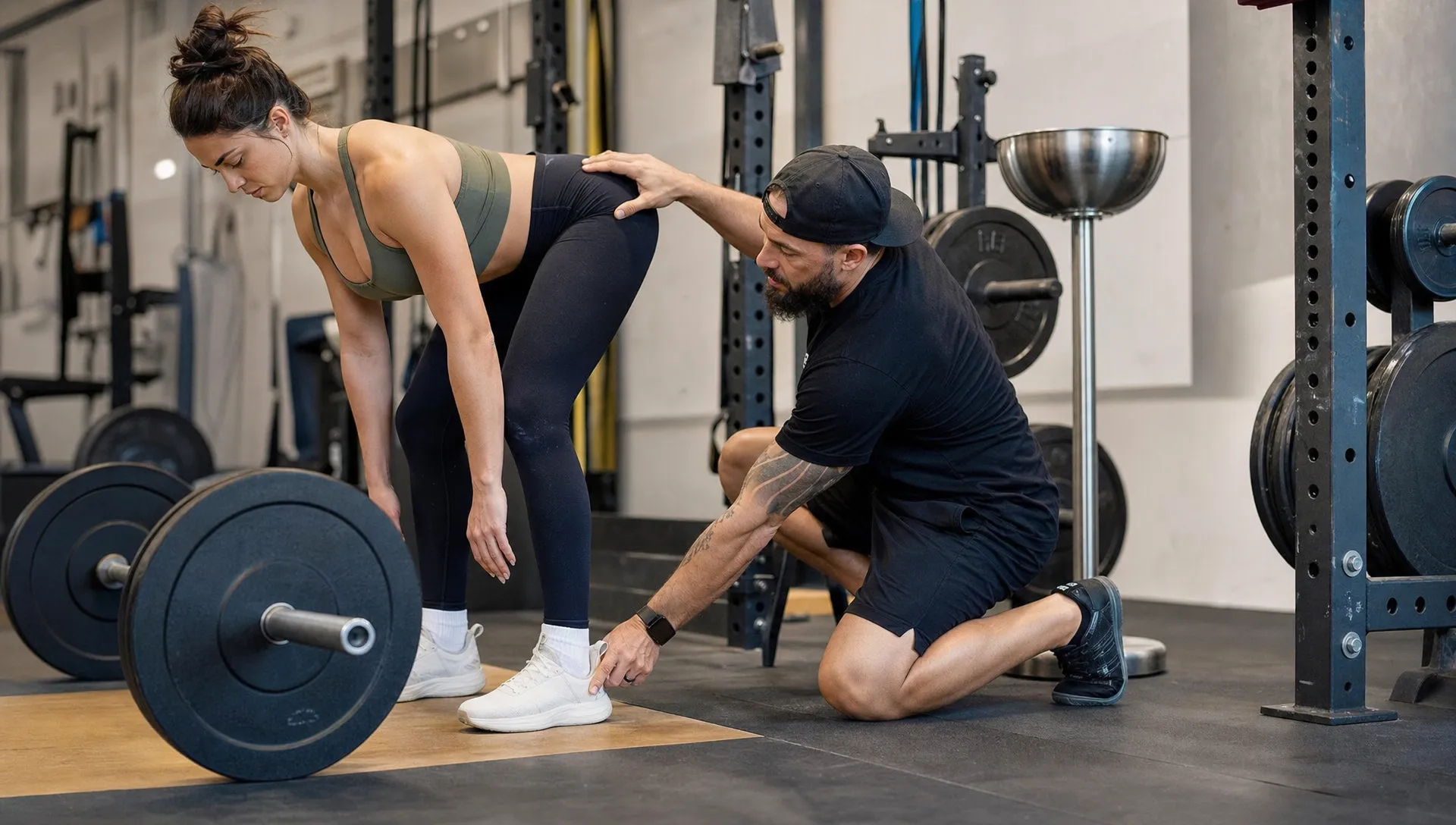


For many busy San Franciscans, fitness with personal trainer support delivers more than motivation. It turns limited training time into a clearer system: better exercise selection, safer progressions, more accountability and smarter use of data. That matters when your schedule is packed, your goals are specific and generic workouts have stopped producing meaningful change.
The key word is more. More does not always mean harder sessions, heavier weights or longer workouts. In a well-run coaching environment, it usually means more precision. A trainer helps decide what you should do, what you should stop doing and how your plan should change as your body adapts.
More than motivation: what coaching actually changes
Motivation can start a fitness plan, but it rarely carries people through travel, deadlines, family obligations and plateaus. Coaching changes the process by creating structure before motivation has to do all the work.
A qualified trainer watches how you move, listens to what your body tolerates and connects each workout to a bigger goal. If your aim is fat loss, strength, performance, longevity or simply feeling better in your body, the plan should not look identical. This is where fitness with personal trainer guidance often pays off: you get a plan built around the outcome you care about, not a template built for everyone.
Research supports the value of supervision. In a controlled study published in Medicine and Science in Sports and Exercise, Mazzetti and colleagues found that directly supervised resistance training produced greater strength gains than unsupervised training in trained men. Coaching does not replace effort, but it helps effort land in the right place.
At Custom Fit, that approach fits naturally with personal training, nutrition coaching, recovery services and advanced testing. The goal is not to make fitness feel more complicated. It is to remove guesswork so each decision has a reason.
Where fitness with personal trainer support delivers the biggest return
Not everyone needs a trainer for every phase of fitness. If you are healthy, consistent and progressing with a simple plan, self-directed workouts may be enough. The value rises when the cost of guessing gets higher.
That might mean you are returning after injury, juggling a high-pressure work schedule or preparing for a measurable performance goal. It might also mean you have been exercising for years but your body composition, strength or energy has barely changed. In those situations, fitness with personal trainer support becomes less of a luxury and more of a way to stop wasting time.
| Situation | What usually goes wrong alone | What a trainer adds |
|---|---|---|
| Busy schedule | Missed sessions and inconsistent intensity | Efficient programming and accountability |
| Strength plateau | Random exercise changes | Progressive overload and technique refinement |
| Fat loss goal | Overemphasis on cardio or restriction | Coordinated training and nutrition strategy |
| Longevity focus | Vague wellness habits | Strength, conditioning, recovery and testing |
| Returning to training | Too much too soon | Safer ramp-up and movement modifications |
For professionals moving between SoMa offices, Financial District meetings and home responsibilities, the main advantage may be decision compression. You show up, train with purpose and leave knowing the plan is handled.
More useful data, not just more data
Wearables, apps and smart scales can collect information all day, but information is only useful when someone can interpret it. A trainer can connect subjective feedback, performance trends, movement quality and body composition data into a plan that changes at the right time.
At Custom Fit, advanced testing can help make that process more objective. DEXA scans can provide insight into body composition, including body fat, lean mass and visceral fat. VO2 max testing can help evaluate cardiorespiratory fitness, which is strongly associated with long-term health outcomes. A large meta-analysis published in JAMA found that higher cardiorespiratory fitness was associated with lower risk of all-cause mortality and cardiovascular events.
When body composition is part of the conversation, professional interpretation matters. Custom Fit DEXA scans are performed by Registered Dietitians or Exercise Physiologists, so clients are working with professionals who understand nutrition, exercise physiology and body composition, not simply receiving an automated scan report. That distinction is especially important when deciding whether changes in weight reflect fat loss, muscle gain, fluid shifts or a mismatch between training and nutrition.
In this sense, fitness with personal trainer support works best when data sharpens the coaching rather than replacing it. The scan, test or metric is only the starting point. The value comes from translating it into better workouts, better recovery and better food choices.
More time back for high-output lives
The right trainer does not add complexity to your life. They reduce it. Instead of spending Sunday night building a workout plan, debating exercises or wondering whether you should push harder, you have a clear next step.
That is why personal training often appeals to executives, physicians, founders and parents with demanding schedules. Their calendar is already full of decisions. Fitness with personal trainer programming removes a category of daily debate and makes consistency easier to maintain.
This is similar to how high-performing organizations outsource specialized optimization rather than rebuilding everything internally. A retail brand, for example, may bring in AI-powered e-commerce optimization to improve digital performance instead of relying on guesswork. Your health deserves the same logic: when the system is important, expert guidance can save time, reduce errors and improve outcomes.
Custom Fit has written more specifically about the time and consistency question in its guide to whether personal training is worth it for busy professionals. The short version is simple: if lack of time is your main barrier, you need a plan that wastes less of it.
More safety when intensity goes up
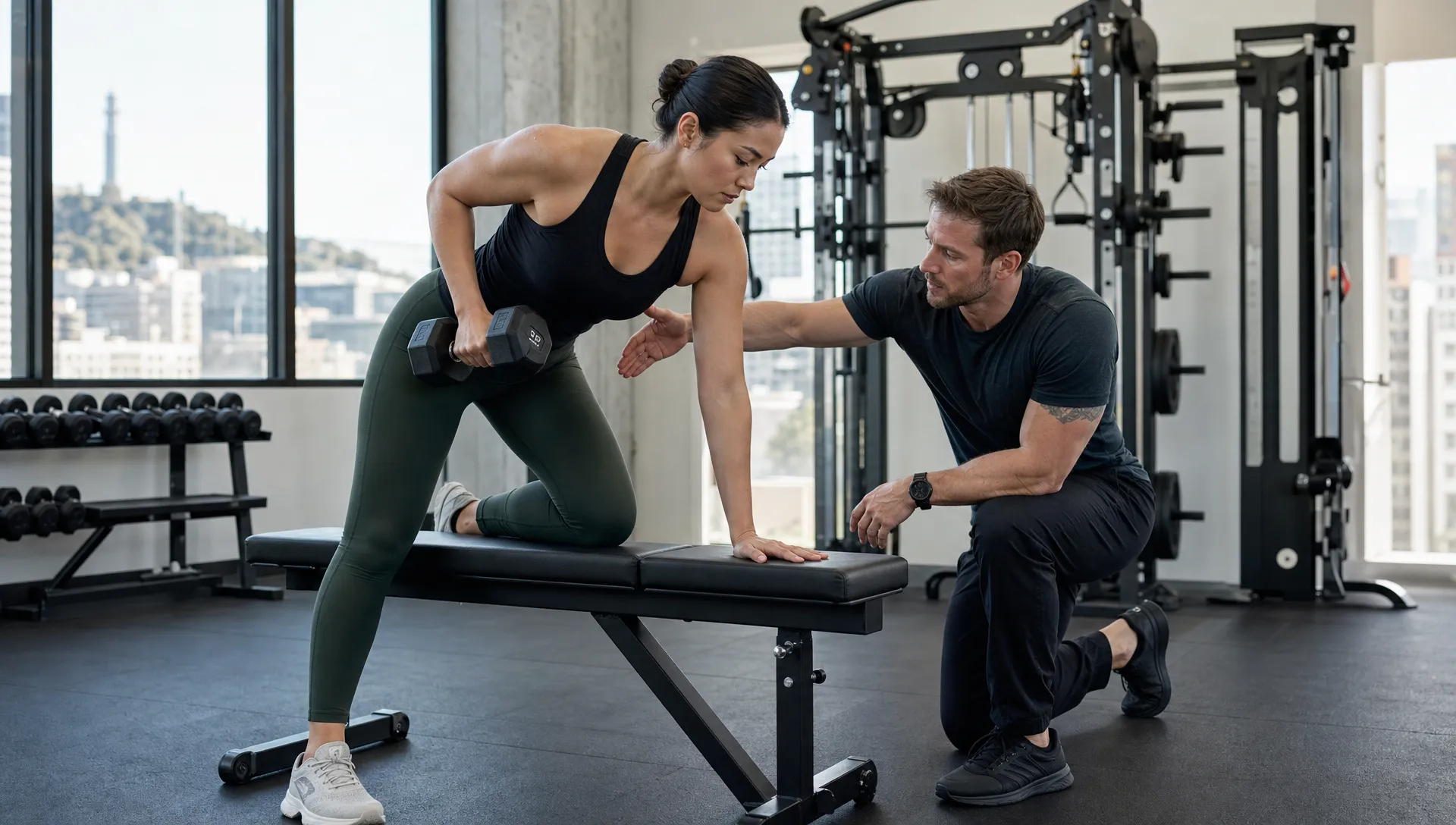
Training hard is not the same as training well. As weights get heavier, speed increases or fatigue builds, small technique errors can become bigger issues. A trainer helps you find the line between productive challenge and unnecessary risk.
That does not mean every movement has one perfect form for every person. Good coaching accounts for limb length, mobility, training age, previous injuries and the goal of the exercise. A squat for maximal strength may need different cues than a squat used for general fitness or return-to-training work.
Fitness with personal trainer oversight is especially useful for exercises where load, tempo and alignment matter. Deadlifts, presses, rows, lunges, carries and power movements all benefit from real-time feedback. Video can help, but it cannot always tell you what adjustment to make or how hard the set should feel.
Safety also includes recovery. A well-built plan alternates stress and adaptation. If sleep is poor, travel is heavy or soreness is lingering, the best session may not be the hardest one. It may be the session that keeps momentum without digging a deeper recovery hole.
More integration between training, nutrition and recovery
Many people treat fitness as separate projects: workouts in one place, nutrition advice somewhere else and recovery as an afterthought. Better results usually come when those pieces talk to each other.
At Custom Fit, personal training can be paired with nutrition coaching, Registered Dietitians, recovery programs and testing. This is where a client pursuing body recomposition, metabolic health or longevity may see more value than they would from workouts alone. If a DEXA scan suggests lean mass is not improving, the answer might involve strength programming, protein intake, total calories, recovery or all of them together.
The combination of nutrition and training is not just convenient. It often changes the quality of the plan. Custom Fit explains this in more depth in its article on why a dietitian and personal trainer make a stronger team, especially for clients who want measurable progress without chasing extreme diets.
Fitness with personal trainer coaching can also keep recovery from being treated as optional. Mobility work, deload weeks, conditioning intensity, sleep habits and soft tissue strategies all influence whether your body adapts. For longevity-focused clients, that balance matters as much as the workout itself.
When personal training may not deliver more
There are times when hiring a trainer is not the highest-value move. If you only want casual movement, enjoy large group classes and have no specific outcome in mind, you may not need individualized coaching. If you are unwilling to communicate honestly about sleep, nutrition, stress or adherence, even a strong trainer has limited information to work with.
A trainer also should not create dependence. The best coaching helps you understand your body better over time. You should learn why exercises are selected, how progress is measured and when adjustments are needed.
The return is highest when you are ready to participate in the process. That means showing up, giving feedback and following the plan outside the session. Fitness with personal trainer guidance delivers more when the relationship is collaborative rather than transactional.
How to choose a higher-value coaching experience
If you are evaluating options in San Francisco, look beyond personality and convenience. A good match should have the expertise, systems and environment to support your goal.
Look for evidence that the trainer or facility can assess your starting point, adapt your plan and coordinate related services when needed. For example, a client focused on longevity may benefit from strength training, VO2 max testing, DEXA-based body composition assessment, recovery support and nutrition coaching. A client focused on general fitness may need fewer tools but still benefit from clear programming and accountability.
A higher-value coaching experience usually includes:
- A clear assessment before the plan starts
- Specific goals that can be measured over time
- Exercise progressions matched to your current capacity
- Technique feedback during sessions
- Nutrition and recovery guidance when relevant
- Periodic reassessment instead of a static program
If you are still comparing options, Custom Fit has a practical guide on how to choose a fitness personal trainer for your goals. The best choice is rarely the trainer who promises the fastest transformation. It is the one who can build a plan you can execute consistently and improve intelligently.
Frequently Asked Questions
When does working with a personal trainer make the most sense? It makes the most sense when your goals are specific, your schedule is tight, your progress has stalled or you need help training safely. A trainer adds the most value when guessing is costing you time, consistency or confidence.
Can a personal trainer help with fat loss? Yes, especially when training is coordinated with nutrition and realistic habit changes. For many clients, fat loss is not just about burning calories during workouts. It depends on strength training, food intake, recovery, adherence and accurate progress tracking.
Is DEXA useful if I already track weight? DEXA can provide information a scale cannot, including body fat, lean mass and visceral fat estimates. At Custom Fit, DEXA scans are performed by Registered Dietitians or Exercise Physiologists, which means clients receive professional context rather than just an automated scan report.
How often should I train with a personal trainer? It depends on your goal, training history and budget. Some people benefit from multiple coached sessions per week, while others use one session weekly or periodically for programming, form checks and accountability.
Does personal training replace group classes? Not always. Group classes can be useful for energy, variety and community. Personal training is better when you need individualized programming, closer technique feedback or a plan tied to testing, body composition or performance goals.
Ready for training that does more?
The best fitness plan is not the one that looks hardest on paper. It is the one that fits your body, schedule and goals well enough to keep producing results. For many people, fitness with personal trainer support delivers more because it combines expert coaching, measurable feedback and a plan that evolves as they do.
Custom Fit brings personal training, nutrition coaching, DEXA scans, VO2 max testing, recovery services, group classes and memberships into one San Francisco wellness environment. If you want a more precise way to train, start with a conversation about what you want to change and what your current routine is missing.