When Advanced Training Helps and When It Backfires
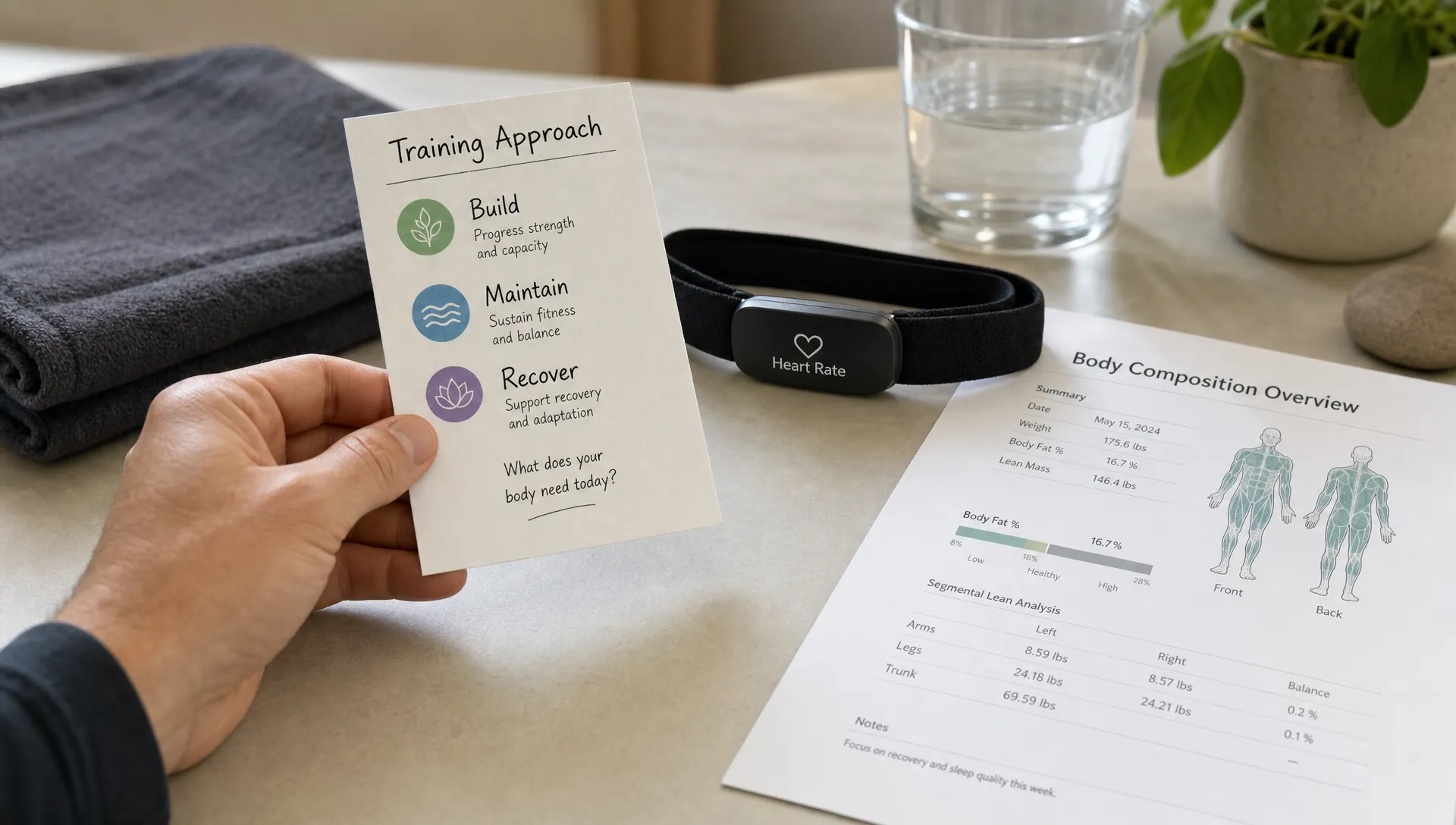


Advanced training has a powerful appeal. It sounds efficient, serious, and tailored for people who do not have time to waste. For busy San Francisco professionals, founders, physicians, and high performers, the promise is especially tempting: more precise workouts, measurable progress, and better returns from every hour in the gym.
But advanced training is not automatically better training. In the right context, it can help you break a plateau, improve VO2 max, build strength, preserve lean mass, and support long-term health. In the wrong context, it can increase fatigue, stall progress, aggravate injuries, and make you less consistent.
The key question is not “Am I advanced enough?” It is “Does this method solve the actual bottleneck in my body, schedule, and recovery capacity?”
What “Advanced Training” Really Means
Advanced training is often mistaken for workouts that look intense: heavy lifts, complex circuits, max-effort intervals, wearable-driven zones, or high-volume programs. Those can be advanced, but the real difference is not difficulty. It is precision.
A more useful definition is this: advanced training uses specific stress, specific recovery, and specific measurement to create a targeted adaptation.
That might include periodized strength programming, VO2 max intervals, lactate threshold work, hypertrophy volume blocks, velocity-based lifting, recovery tracking, DEXA body composition testing, or nutrition periodization. None of these tools are inherently good or bad. They become helpful when they match the goal and the person.
For example, a 42-year-old executive trying to improve metabolic health, maintain muscle, and train four days per week does not need the same plan as a competitive cyclist or physique athlete. A concierge medicine patient focused on longevity may benefit from testing and targeted interventions, but not from chasing fatigue as proof of effort.
Advanced training should make your plan clearer, not more chaotic.
When Advanced Training Helps
Advanced training helps most when the basics are already in place and the next step requires better targeting. If sleep, nutrition, consistency, and technique are unstable, more complexity usually adds noise. If those foundations are solid, advanced methods can unlock progress.
It helps when you have a measurable baseline
Objective data turns training from guesswork into a decision-making system. Without a baseline, people often misclassify their needs. They assume they need more cardio when they actually need more muscle. They assume they need harder intervals when they need more Zone 2. They assume fat loss has stalled when body composition is changing but scale weight is not.
Testing helps answer better questions:
- Is your aerobic engine limiting performance or health markers?
- Are you losing fat while preserving lean mass?
- Are your training zones based on physiology or a wearable estimate?
- Is your recovery capacity keeping up with your workload?
This is where tools like DEXA scans, VO2 max testing, and nutrition coaching can make advanced training more effective. The point is not to collect data for its own sake. The point is to choose the smallest effective training dose that moves the right metric.
It helps when you have plateaued for the right reason
A plateau is not always a sign that you need to train harder. Sometimes it means you need better progression. Sometimes it means you need more recovery. Sometimes it means you have adapted to your current stimulus and need a new one.
In strength training, progressive overload and periodization are well-supported principles. The American College of Sports Medicine’s position stand on resistance training progression emphasizes that training variables such as load, volume, exercise selection, and rest periods should change over time as a person adapts (ACSM position stand).
Advanced strength work can help when you are no longer improving with a simple routine. That might mean adjusting weekly volume, using heavier intensities, adding planned deloads, or rotating movements to manage joint stress. For many people, the biggest upgrade is not a fancy method, but better coaching. If strength is your priority, working with a coach can reduce wasted effort and improve execution, which is why personal training for strength training can work faster than trying to troubleshoot everything alone.
It helps when your goal demands specificity
General fitness can improve with simple, consistent training. Specific outcomes require more specific programming.
If you want to increase VO2 max, you likely need some training near high intensities, not just casual cardio. If you want to improve body composition, you need strength training, nutrition alignment, and enough recovery to preserve lean mass. If you want to prepare for a demanding event, your plan must reflect the energy systems and movement patterns of that event.
Research on high-intensity interval training shows that it can improve cardiometabolic fitness in appropriate populations, including people with lifestyle-related cardiometabolic disease (systematic review and meta-analysis). But that does not mean every person should do all-out intervals year-round. The dose, frequency, and progression matter.
Advanced training helps when it creates specificity without overwhelming the system.
When Advanced Training Backfires
Advanced training backfires when intensity, volume, or complexity exceeds your ability to adapt. This is common among motivated people because they are willing to work hard, but they may not notice the difference between productive stress and accumulating strain.
It backfires when intensity replaces consistency
High performers often want the hardest effective workout. The better question is: what can you repeat consistently while still recovering?
A plan built around frequent max-effort sessions may feel productive for two weeks and then collapse. Sleep worsens. Joints ache. Workouts become inconsistent. Motivation drops. The person concludes they lack discipline, when the real issue is poor load management.
For many busy professionals, the most effective program is not the most extreme one. It is the one that fits the calendar, reduces decision fatigue, and progresses intelligently. If time pressure is your main obstacle, it may be more useful to build the right support system than to chase a more aggressive protocol. That is one reason personal training can be especially valuable for busy professionals who need efficient structure, not more fitness homework.
It backfires when every workout has a different goal
Advanced training requires prioritization. Trying to improve maximal strength, marathon endurance, hypertrophy, fat loss, mobility, and recovery metrics all at once can dilute the signal.
This is especially true when strength and endurance are both programmed aggressively. The “interference effect” is not a myth, although it is often overstated. Classic research by Hickson found that concurrent strength and endurance training can compromise strength development under certain conditions, especially when endurance volume and intensity are high (Hickson study).
That does not mean cardio ruins strength. It means the details matter: sequencing, frequency, intensity, fueling, and your primary goal. A well-built plan can combine both, but a random mix of hard lifting and hard intervals can make everything feel harder while improving little.
It backfires when data creates overreaction
Wearables, scans, and performance metrics can be useful, but they can also create anxiety. One poor sleep score does not mean you should cancel training. One great readiness score does not mean you should max out. One body composition scan does not define success or failure.
Data should guide decisions, not dictate them. Advanced training works best when testing is interpreted by someone who understands the full context: training age, injury history, nutrition, stress, medications, sleep, and goals.
It backfires when recovery is treated as optional
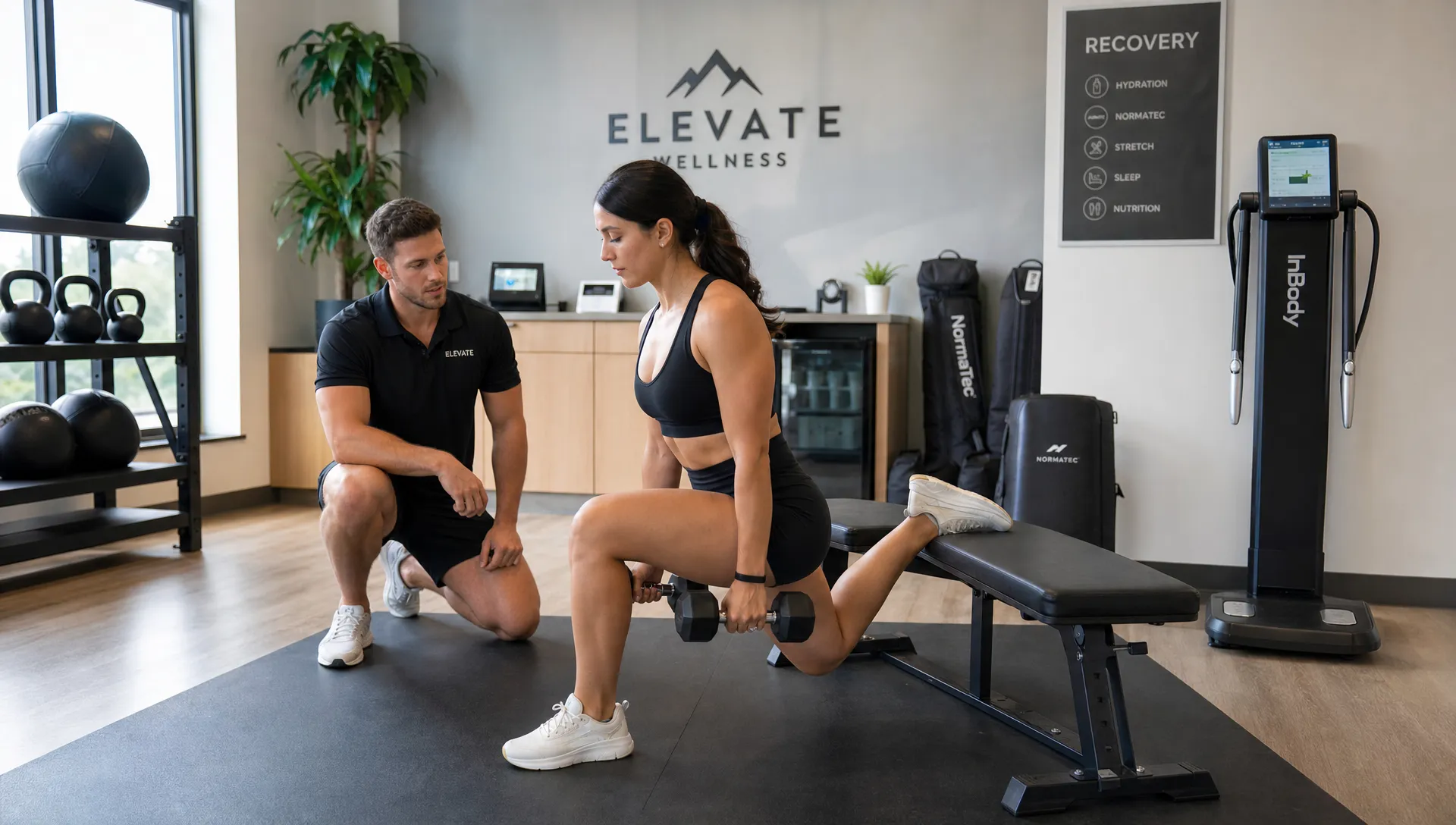
The harder the training, the more recovery matters. This is not just about soreness. It includes nervous system fatigue, connective tissue tolerance, immune function, mood, appetite, sleep quality, and performance trends.
Overtraining syndrome is complex and relatively uncommon in recreational fitness, but under-recovery is very common. A joint consensus statement from the European College of Sport Science and the American College of Sports Medicine describes overtraining syndrome as involving performance decline, persistent fatigue, and mood disturbance after excessive training stress without adequate recovery (consensus statement).
Most people do not need to fear training hard. They need to understand that hard training only works when the body has enough resources to adapt.
Life outside the gym counts too. Travel, parenting, caregiving and long workdays can affect the time and energy available for training. Adjust your plan during demanding periods and protect the basics of sleep and nutrition.
How to Know If You Are Ready for Advanced Training
You do not need to be an athlete to benefit from advanced training. You do need enough consistency and feedback to make the added complexity worthwhile.
A practical readiness check includes:
- You train consistently at least three days per week.
- You can perform major movements with good control and no recurring pain.
- You sleep enough most nights to recover from harder sessions.
- You have a clear primary goal for the next 8 to 12 weeks.
- You are willing to adjust nutrition to support the training plan.
- You track at least one meaningful outcome, such as strength, VO2 max, lean mass, waist measurement, or performance.
If most of these are true, advanced training may help. If most are false, the next step is usually not more intensity. It is better structure.
The Smart Way to Add Advanced Training
The safest and most effective way to progress is to add one advanced variable at a time. Do not increase intensity, volume, frequency, and complexity in the same week. That makes it impossible to know what is helping or hurting.
Start with the bottleneck. If your aerobic fitness is low, a VO2 max test can help define zones and identify whether you need more base work, intervals, or both. If you are already doing intervals but not improving, review common VO2 max training mistakes that hold back progress before adding more hard sessions.
If your body composition is the goal, begin with strength training quality, protein intake, total energy balance, and recovery. Research suggests resistance training volume has a dose-response relationship with hypertrophy, but more is not always better for every person (meta-analysis on weekly sets and muscle growth). The best volume is the amount you can recover from while progressing.
If longevity is the goal, think in phases. You may emphasize strength and lean mass for one block, aerobic capacity for another, and recovery or mobility during a high-stress work period. Longevity-focused fitness is not about winning every workout. It is about building durable capacity over years.
For most adults, advanced training should follow a simple rhythm: assess, plan, train, recover, reassess. This keeps the process responsive without becoming reactive.
What Advanced Training Can Look Like in Real Life
A well-designed advanced program may look less dramatic than expected. It might include two progressive strength sessions, one Zone 2 aerobic session, one interval session, daily walking, and targeted nutrition. For a time-crunched professional, that can outperform six random high-intensity workouts.
For someone with a higher training age, the plan may include more nuanced progressions: heavy strength work on days with the best recovery, lower-intensity conditioning after demanding workdays, and deload weeks before fatigue becomes a problem. For a longevity clinic patient, testing may determine whether the priority is increasing lean mass, improving cardiorespiratory fitness, or reducing visceral fat.
The common thread is alignment. The training matches the goal, the goal matches the person, and the stress matches the recovery budget.
That is also why long-term habits matter. Advanced methods work best when they sit on top of repeatable behaviors, not in place of them. If you want a broader framework, these fitness training habits that deliver better long-term results are a strong foundation before layering in more specialized work.
Frequently Asked Questions
Is advanced training only for athletes? No. Advanced training can benefit anyone with a clear goal, a consistent baseline, and enough recovery capacity. For non-athletes, it should be scaled to health, longevity, and lifestyle rather than competition.
How often should I do high-intensity training? It depends on your goal, training history, and recovery. Many people do well with one to two high-intensity sessions per week, supported by strength training and lower-intensity aerobic work. More is not automatically better.
Can advanced training help with fat loss? Yes, but only when paired with appropriate nutrition, strength training, and recovery. Harder workouts alone do not guarantee fat loss, especially if they increase hunger, stress, or inconsistency.
What is the biggest sign that advanced training is backfiring? A sustained drop in performance, poor sleep, irritability, recurring aches, and loss of motivation are common warning signs. If you are working harder but seeing worse results, the plan likely needs adjustment.
Should I test VO2 max or body composition before starting? Testing is not required, but it can make training more precise. VO2 max testing and DEXA scans can help identify the right priorities and track whether the plan is working.
Train Harder Only When It Makes You Better
Advanced training is valuable when it adds precision. It becomes a problem when it adds stress without direction.
If you are unsure whether you need more intensity, better recovery, or a clearer plan, Custom Fit can help you make that decision with coaching, testing, nutrition support, and structured programming. Explore Custom Fit to build a data-driven approach that matches your goals, schedule, and body.