When a Deadlift Trainer Can Improve Your Form and Confidence
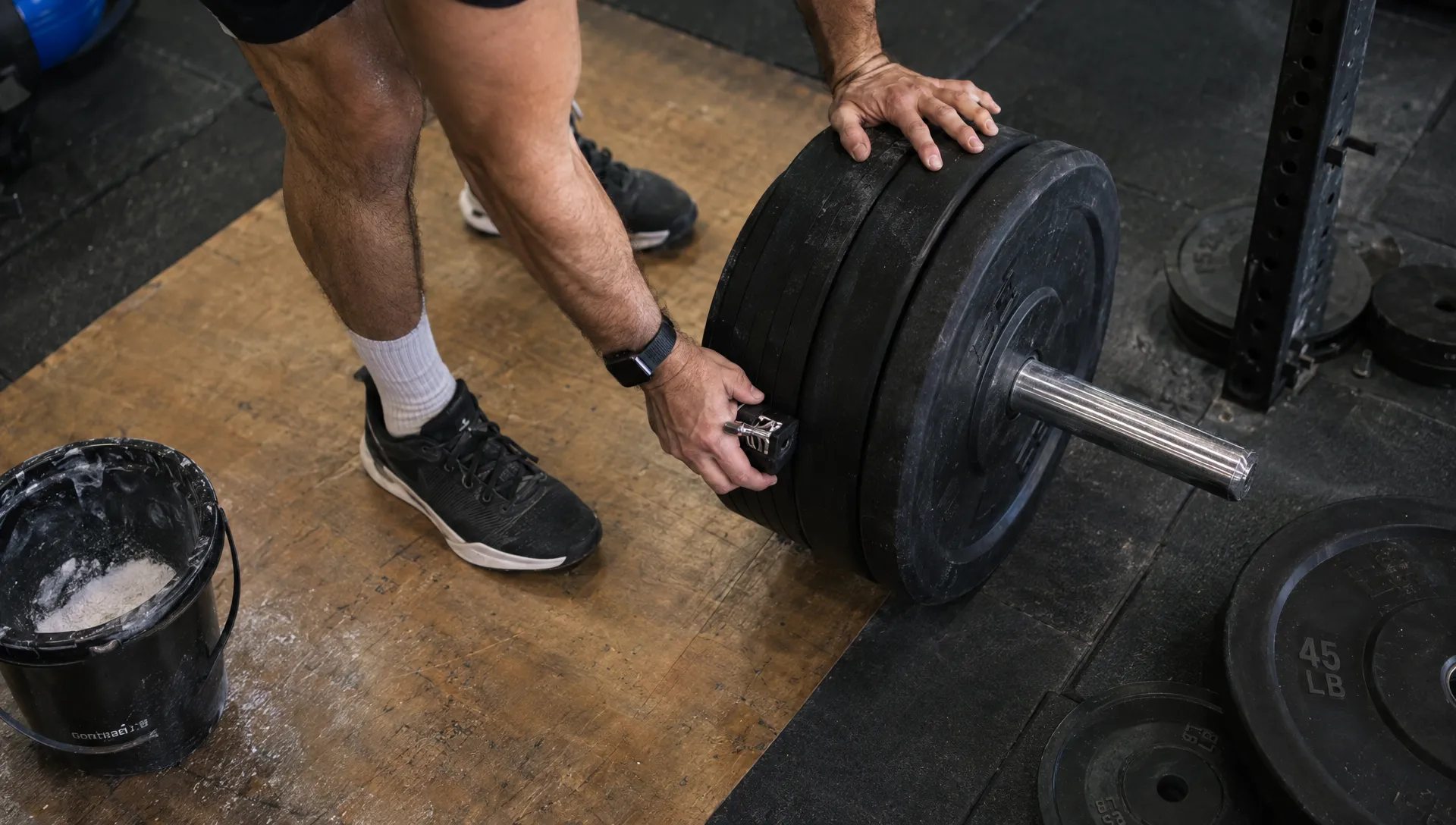


A deadlift trainer can help when you know the basic instructions but cannot make them work consistently. Perhaps the bar drifts forward, your lower back feels overworked or you hesitate before every set. Useful coaching does more than point out imperfections: it helps you find a workable setup, choose an appropriate load and understand what a controlled repetition feels like.
You do not need to pursue competitive lifting to benefit. For someone fitting strength training around a demanding San Francisco workweek, the goal may simply be to train confidently without spending every session second-guessing technique.
Signs your current approach needs feedback
An occasional awkward repetition does not automatically mean you need ongoing coaching. The stronger signal is a recurring problem that you cannot identify or resolve, especially when it limits training or makes you avoid the exercise.
Your repetitions feel different every time
Your first repetition feels balanced, but the next starts with the bar farther away. You change your stance repeatedly or cannot remember how you positioned your hips during the set that felt good.
These are useful reasons to seek feedback. A coach can watch several repetitions, identify what changes and help you establish a repeatable starting routine. The aim is consistency, not making your lift resemble someone else's proportions.
You feel anxious even with manageable weights
A deadlift trainer can help distinguish uncertainty about technique from a load that is genuinely beyond your current control. Those problems need different responses: one may call for clearer instruction, while the other requires reducing the challenge.
Confidence should come from successful practice, not pressure to lift heavier. You should know how to start, when to stop and which sensations deserve attention. Coaching is less useful if every session leaves you dependent on reassurance before each repetition.
Adding weight makes the lift fall apart
Some change in movement is expected as effort increases. However, repeated loss of balance, uncontrolled lowering or a bar that swings away from you suggests that the next weight increase can wait.
If you already understand the exercise but struggle to apply it, private training sessions focused on mastering technique can provide time for observation and practice rather than rushed corrections between exercises.
What a deadlift trainer should assess
Useful assessment looks at the interaction between your setup, the exercise variation and the load. It should not consist of declaring your form wrong based on a single photograph.
Your starting position and available range
For a conventional barbell deadlift, a coach will usually examine the bar's position relative to your feet, your grip and whether you can reach the bar without losing balance. Hip height depends partly on your proportions; forcing everyone into the same position is not helpful.
A deadlift trainer should also notice when the starting height creates an unnecessary obstacle. Raising the implement may let you practice a controlled hinge before attempting a pull from the floor. That adjustment is a training choice, not evidence that you have failed the exercise.
How you create tension and move the weight
Bracing means creating trunk tension before the weight moves. A cue such as “prepare for a gentle push against your abdomen” may be more useful than several anatomical instructions at once.
The coach should also observe whether you maintain stable foot pressure, keep the weight reasonably close and finish standing tall without exaggerating a backward lean. These are practical checkpoints, not guarantees against injury. Your movement history, symptoms and tolerance still matter.
Whether the load supports learning
A weight that is appropriate for building strength may be too demanding for learning a new setup. Your coach should be willing to reduce the load so you can practice without rushing.
Good feedback is specific: “The bar moved away as you started; let's bring it closer before the next repetition.” Vague commands such as “engage everything” offer little you can test. Ideally, each correction gives you one clear action and a way to judge whether it helped.
The best variation is one you can train productively
Conventional, sumo, trap-bar and Romanian deadlifts are related movements, but they are not interchangeable. A Romanian deadlift begins from standing and emphasizes the hinge during lowering; it does not require reaching the floor. A trap bar changes the position of the handles and load relative to your body.
A deadlift trainer can use these differences to match the exercise to your goals and current ability rather than treating one version as mandatory.
A systematic review of muscle activation across deadlift variations found differences in the muscles emphasized by different versions. Muscle activation measurements do not establish which variation is safest or produces the best long-term results for you, but they support treating exercise selection as a meaningful programming decision.
| Training obstacle | Possible coaching adjustment | What to evaluate |
|---|---|---|
| Difficulty reaching the floor comfortably | Raise the starting height or try higher handles | Can you start in a balanced, controlled position? |
| Trouble understanding the hip hinge | Practice an unloaded hinge, then a light Romanian deadlift | Can you move your hips back without turning the movement into a squat? |
| Bar repeatedly drifting forward | Adjust setup and practice with a manageable load | Does the weight stay closer during the pull? |
| Technique changes sharply with heavier weight | Reduce the load and rebuild gradually | Can you repeat the movement across the set? |
These are options to investigate, not prescriptions. Pain or significant movement limitations may require clinical assessment before choosing an adjustment.
Progress should build confidence, not just increase weight
A productive coaching session might begin with observing your current lift, followed by a simpler variation or setup change. You then practice the adjustment at a manageable load and agree on what to repeat independently.
A deadlift trainer should make progress visible through more than the number on the bar. Useful signs include a more consistent setup, smoother repetitions and less need for reminders. Confidence becomes more durable when you can explain what you are doing and recognize when a set is becoming too demanding.
The American College of Sports Medicine's position stand on resistance-training progression supports adjusting training demands as capacity develops. That does not mean adding weight every session. Repeating a load while improving control can be a sensible step.
For example, a beginner might initially practice a raised-start deadlift, then gradually increase the range or load as repetitions become reliable. That is an illustrative sequence, not a universal schedule. Someone with previous lifting experience may need only a small setup change.
Before leaving, you should understand your next session: which variation to use, what effort to aim for and what would prompt you to stop or reduce the load. Without that transfer to independent practice, even good in-session feedback has limited value.

Video feedback works best with a clear question
Video can reveal patterns you miss while lifting, but it cannot tell you everything about effort, pain or balance. Record from a position that shows your whole body and the implement without placing the camera in anyone's lifting space.
Ask your deadlift trainer what angle is useful and what you are reviewing. “Does the bar move away at the start?” is more actionable than “Does my form look good?” Comparing similar loads and camera positions also makes changes easier to interpret.
A phone is usually enough to capture a set for review with your coach. Clear, useful feedback matters more than buying new recording equipment.
Get permission before filming anyone else and avoid capturing other gym members unnecessarily.
Know when coaching is not the next step
Muscular effort and fatigue can be normal parts of training, but sharp pain, symptoms spreading down a limb or new numbness are not problems to solve by pushing through another set.
A deadlift trainer can adjust exercise selection and training demands, but should not diagnose an injury or promise that a technique correction will eliminate pain. Persistent or recurring symptoms warrant evaluation by an appropriate licensed healthcare professional. New or progressive weakness needs prompt medical attention.
If you have already been assessed, coaching can help implement exercise guidance within the trainer's scope. That may involve changing the range, load or variation rather than abandoning strength training altogether.
A responsible coach should be comfortable referring you out. Claims that one “perfect” spinal position makes lifting risk-free, or that every uncomfortable sensation is harmless, are reasons to question the advice.
Choose a coach who teaches you to make decisions
Before committing, ask how the coach approaches deadlift instruction, how they handle symptoms and how they decide when to progress. You are looking for a clear teaching process, not simply impressive lifting numbers.
These questions fit naturally into a personal training consultation:
- How would you assess my current deadlift and choose a starting variation?
- What would make you reduce the load, change the exercise or recommend clinical assessment?
- How will I know I am ready to progress?
- What should I be able to practice independently between sessions?
The answers should reflect your goals and schedule. For a busy professional, a manageable plan that fits a real workweek is more useful than an ambitious routine that rarely happens.
A good deadlift trainer also explains the reason behind a correction. Over time, you should become better at choosing an appropriate weight, setting up consistently and recognizing when fatigue is changing the lift. The goal is greater independence, not needing supervision forever.
Frequently asked questions
Do beginners need coaching before trying deadlifts? Not everyone does, but individualized instruction can help if you struggle to understand the hinge, choose a starting load or feel comfortable practicing. Begin with a manageable variation rather than treating a floor-level barbell pull as a requirement.
How many sessions does it take to improve form? There is no reliable fixed number. A simple setup issue may improve quickly, while learning a new movement or returning after symptoms may require more practice. Look for repeatability and independent understanding rather than a promised timeline.
Can an experienced lifter benefit from a deadlift trainer? Yes. Experienced lifters may benefit when technique changes under heavier loads, progress stalls or a different variation better suits their current goals. Coaching should address a specific problem rather than rebuild the lift without a reason.
Build a lift you understand
Custom Fit offers personal training in San Francisco. If deadlifts leave you uncertain, explore personal training at Custom Fit and discuss your lifting experience, goals and any symptoms before choosing an approach. Ask for a plan that helps you practice confidently and understand when to progress, not simply lift more weight.