What Personal Trainers Should Look For in a Gym
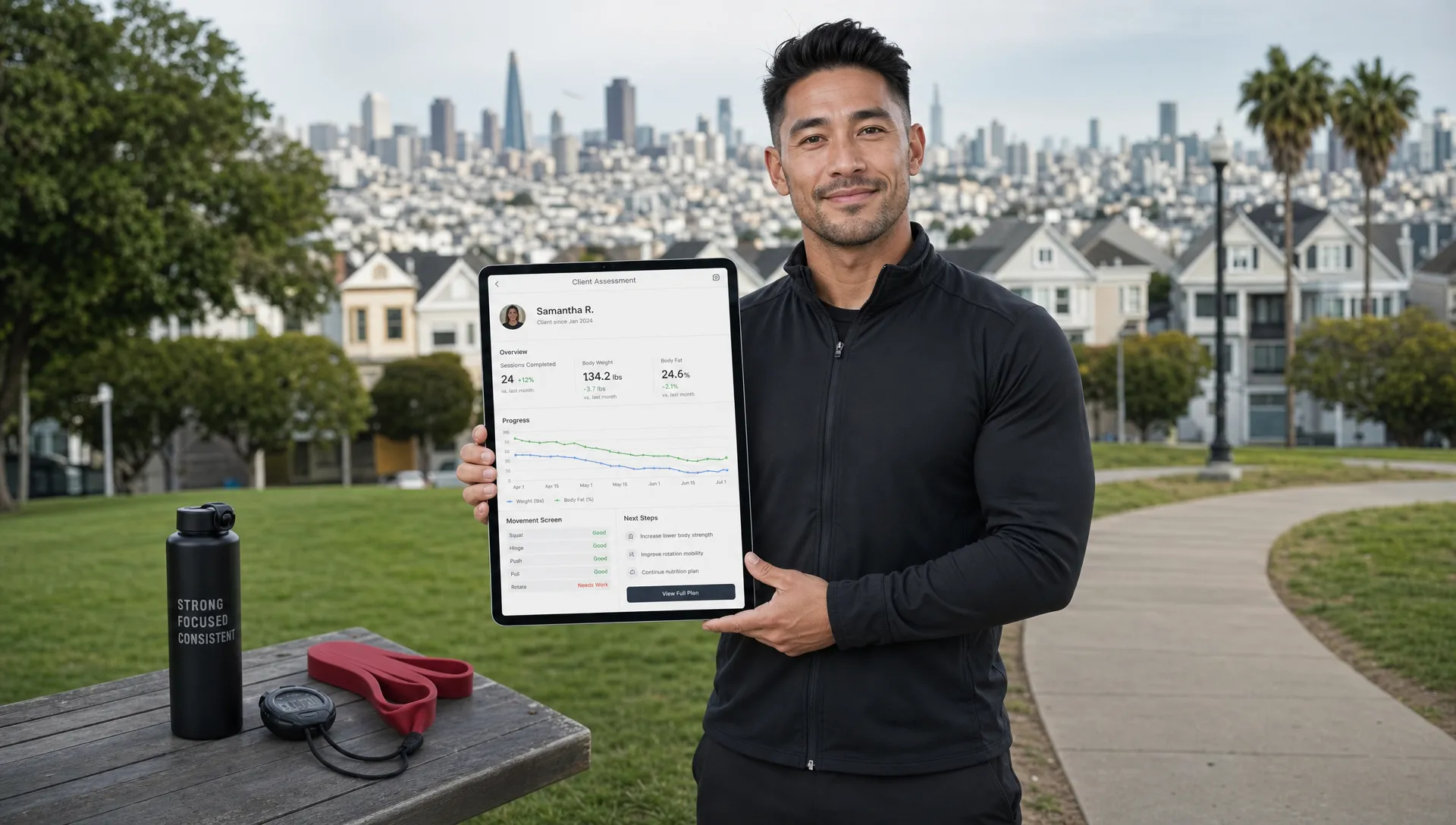


For a personal trainer, choosing a gym is a business decision, a coaching decision, and a reputation decision all at once. The right facility helps you coach better, retain clients longer, and deliver a more professional experience. The wrong one creates friction: crowded equipment, poor scheduling, weak assessment tools, unclear policies, and a client experience that makes even great programming harder to sell.
A great gym for personal trainers is not simply the one with the most machines. It is the one that supports the clients you serve, the methods you use, and the outcomes you are accountable for. Whether you train busy professionals, strength athletes, longevity-focused clients, or people returning to fitness after years away, here is what to evaluate before you commit.
Start with client fit, not square footage
Before looking at equipment, look at your client base. A gym that works beautifully for group bootcamps may be a poor fit for executive clients who value privacy, punctuality, and a calm environment. A facility that is perfect for powerlifting may not support clients who need metabolic testing, nutrition coaching, or recovery services.
Ask yourself who you train most often and what they expect from the experience. High-income professionals in San Francisco, for example, often care about efficiency, cleanliness, discretion, and measurable progress. They may not want to wait for a rack, share crowded floor space, or train in an environment where the music, lighting, and traffic make communication difficult.
The best gym for personal trainers should make your coaching feel more premium, not less. If the facility creates delays, confusion, or discomfort, your clients will associate those issues with you, even if you do not control them.
Look for assessment tools that support better programming
Strong coaching starts with a clear baseline. A gym that supports serious assessment gives trainers a major advantage because it helps turn subjective goals into objective targets. At minimum, you should be able to evaluate movement quality, strength, cardiovascular capacity, body composition, lifestyle constraints, and recovery patterns.
This does not mean every trainer needs a lab. It does mean the facility should support a professional intake process. If you want a deeper framework, Custom Fit’s guide to what a gym fitness trainer should measure first is a useful reference for structuring baseline assessments before prescribing training.
For more advanced clients, access to data such as DEXA scans, VO2 max testing, or body composition tracking can help refine programming. Cardiorespiratory fitness is especially relevant for long-term health. A large 2018 study in JAMA Network Open found that higher cardiorespiratory fitness was strongly associated with lower all-cause mortality, reinforcing why aerobic capacity deserves attention alongside strength work.
A gym that offers testing or has trusted referral relationships can help you move from vague progress updates to measurable outcomes. That matters for retention, especially when clients are investing in premium coaching.
Make sure the equipment fits real programming
A gym can look impressive on a tour and still be hard to coach in. What matters is whether the equipment supports the kinds of sessions you actually run, especially during peak hours.
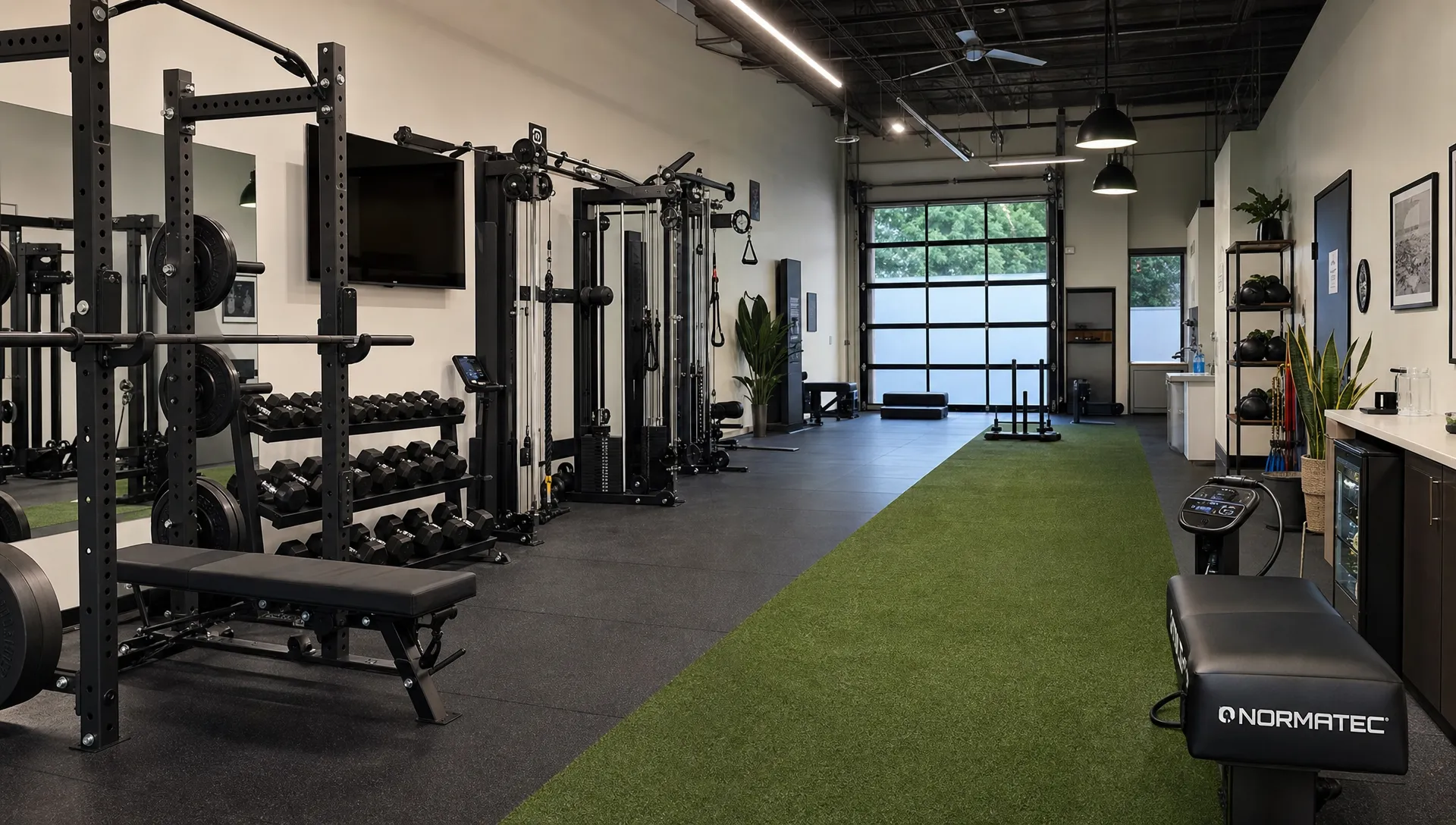
For most personal trainers, a strong setup includes reliable strength equipment, enough open floor space, adjustable tools for different body types, and conditioning options that do not create bottlenecks. You should be able to coach a beginner safely, progress an intermediate client intelligently, and challenge an advanced client without constantly improvising around missing or occupied equipment.
Pay close attention to the basics:
- Racks, benches, dumbbells, cables, and free weights that are maintained and available often enough to use consistently.
- Open space for carries, mobility work, warmups, sled work, or athletic drills if those are part of your programming.
- Cardio equipment that supports both low-intensity conditioning and structured intervals.
- Clean, well-organized storage so sessions do not lose momentum while you search for bands, attachments, or small tools.
- Equipment spacing that allows you to coach safely without putting clients in crowded traffic paths.
Equipment variety is useful, but consistency is more valuable. If you cannot reliably repeat key movements, track load, and progress exercises over time, your programming quality will suffer.
Evaluate whether the environment helps you coach
Personal training is not just exercise selection. It is observation, cueing, feedback, adjustment, and decision-making in real time. The gym environment should make those things easier.
Research supports the value of direct supervision. A study published in Medicine & Science in Sports & Exercise found that supervised resistance training produced greater strength gains than unsupervised training, likely because supervision improved effort, technique, and progression. That advantage is harder to deliver if the gym is too loud to communicate, too crowded to observe movement, or too chaotic to maintain session flow.
Look for clear sightlines, reasonable noise levels, enough space to move around your client, and a culture where coaching is respected. If other trainers, members, or staff regularly interrupt sessions, ignore safety rules, or create territorial conflict over equipment, your client experience will decline.
A serious training environment should feel energetic but controlled. Clients should be able to focus, trainers should be able to coach, and everyone should understand basic etiquette.
Take safety, scope of practice, and ethics seriously
The facility you choose should protect both your clients and your professional reputation. That includes the obvious safety basics, such as clean equipment, emergency procedures, staff awareness, and appropriate liability policies. It also includes ethical boundaries.
Personal trainers should not diagnose medical conditions, prescribe medications, or position research compounds as client protocols. This matters more than ever as some fitness and wellness spaces increasingly discuss peptides, hormones, supplements, and longevity interventions. If your client base includes physicians, longevity clinics, or highly informed professionals, you may hear questions about emerging compounds. Your role is to stay within scope, refer to licensed clinicians, and distinguish human health services from research-only contexts. For example, independently batch-tested research peptide providers explicitly frame products as research reagents, not for human or animal consumption, which underscores why trainers must avoid turning lab topics into client recommendations.
A gym with strong professional standards will not pressure trainers to overstep. Instead, it will encourage collaboration with qualified providers, such as registered dietitians, physical therapists, physicians, or other licensed professionals when appropriate.
Prioritize nutrition and recovery support
Training outcomes are shaped by what happens outside the workout. If a gym gives you access to nutrition coaching, recovery services, or referral partners, you can support clients more comprehensively without pretending to be an expert in every domain.
Nutrition is a clear example. The joint position stand on nutrition and athletic performance from the Academy of Nutrition and Dietetics, Dietitians of Canada, and the American College of Sports Medicine emphasizes that nutrition strategies should support performance, recovery, body composition, and health. For clients with complex needs, a registered dietitian is often the right professional to involve.
Recovery support can also improve the training experience. This might include structured deloading practices, mobility work, sleep education, soft tissue services, or recovery modalities offered by the facility. The key is not chasing every trend. The key is having credible support that helps clients train consistently and recover well.
Consider privacy, professionalism, and the client journey
A client’s perception of value starts before the workout begins. Parking, entry, check-in, locker rooms, cleanliness, staff communication, and scheduling all influence how professional your service feels.
This is especially important if you train executives, physicians, founders, or clients who are paying for a premium experience. They often want sessions to start on time, end on time, and fit into a demanding schedule without unnecessary friction. A gym that feels disorganized can undermine even excellent coaching.
Look at the facility through your client’s eyes. Would they feel comfortable arriving for an early morning session? Is there enough privacy for sensitive conversations about body composition, health goals, or lifestyle barriers? Does the gym feel welcoming to beginners as well as advanced clients? Are staff members professional when interacting with your clients?
A strong gym protects the client relationship you have built. It makes clients feel like they are in the right place.
Make sure progress tracking is easy
Great trainers do not rely on memory. They track workouts, adjust programming, and communicate progress. A gym should make that process easier, whether through testing services, integrated coaching systems, reliable scheduling, or simply a culture that values measurement.
Progress tracking can include strength numbers, conditioning benchmarks, body composition changes, adherence, pain-free movement, energy levels, recovery markers, or nutrition habits. The most important metrics depend on the client’s goals.
For trainers building premium offers, this is where the facility can elevate the entire package. A strong program includes more than sessions on a calendar. It includes assessment, goal setting, individualized programming, coaching, accountability, and review points. Custom Fit’s article on what belongs in a strong personal training package is a helpful benchmark for thinking beyond single-session delivery.
When a gym supports measurement, your conversations with clients change. Instead of saying, “You look like you’re improving,” you can say, “Here is what changed, here is why it matters, and here is what we are adjusting next.”
Understand the business model before you sign
For independent trainers, the financial arrangement matters as much as the facility. A beautiful gym can become a poor decision if the economics, policies, or restrictions do not support your business.
Clarify the details before committing. Are you an employee, contractor, renter, or partner? Who owns the client relationship? Are you allowed to market your own services? What happens if a client cancels? Can you train during peak hours? Are there restrictions on pricing, packages, assessments, or outside referrals?
You should also evaluate whether the gym helps you grow. Some facilities provide referrals, front desk support, community events, testing services, or a professional environment that makes selling premium coaching easier. Others simply rent space. Neither model is automatically good or bad, but you need to know what you are paying for.
A gym for personal trainers should improve your capacity, credibility, and client outcomes. If it only adds overhead, keep looking.
Watch for red flags
Some issues are minor annoyances. Others are signs that the gym may hurt your business or expose you to unnecessary risk.
Be cautious if you notice:
- Vague or changing trainer agreements.
- Poor equipment maintenance or frequent broken machines.
- No clear emergency procedures or safety standards.
- Overcrowding that makes planned workouts difficult to run.
- A culture that encourages trainers to give medical, nutrition, or supplement advice beyond their qualifications.
- Inconsistent cleanliness, especially in high-touch areas.
- Staff who seem indifferent to client experience or trainer professionalism.
One red flag may not be a deal breaker. A pattern usually is.
Ask better questions on your tour
A gym tour should be more than a walkthrough. Treat it like a due diligence process. You are deciding whether this environment can support your coaching standards and your livelihood.
Ask how many trainers work there, when peak hours occur, how scheduling works, and what happens when multiple trainers need the same equipment. Ask whether assessments, body composition testing, VO2 max testing, nutrition coaching, or recovery services are available. Ask who handles client issues, billing questions, and facility maintenance.
You should also ask about culture. What kinds of clients does the gym serve best? What standards are trainers expected to follow? Are continuing education, collaboration, or referrals encouraged? How does the facility handle conflicts between trainers or members?
The answers will tell you more than the equipment list.
Think like a client before deciding
The best way to evaluate a gym is to imagine bringing your most important client there tomorrow. Would the facility make you feel more confident or more apologetic? Would it help you deliver a polished experience? Would it give you tools to assess, coach, progress, and retain that client?
If the answer is yes, the gym may be a strong fit. If you find yourself making excuses during the tour, your clients will probably notice the same problems later.
For trainers, the right facility becomes part of the service. It supports your process, strengthens your brand, and helps clients believe they are investing in something serious.
Frequently Asked Questions
What should personal trainers look for first in a gym? Start with client fit. The gym should match the people you train, the experience they expect, and the outcomes you promise. After that, evaluate assessment tools, equipment access, safety standards, scheduling, and business terms.
Is equipment variety the most important factor? No. Equipment matters, but availability, maintenance, layout, and programming consistency matter more. A smaller gym with the right tools and a professional environment can be better than a large gym where you constantly fight for space.
Should personal trainers choose a private gym or a commercial gym? It depends on your clients and business model. Private gyms often offer more control, privacy, and premium positioning. Commercial gyms may offer more traffic and lower barriers to entry. The right choice is the one that supports your coaching, finances, and client experience.
How important are testing services like DEXA scans or VO2 max testing? They are not required for every client, but they can be valuable for trainers who serve performance, longevity, body composition, or health-focused clients. Objective testing can improve goal setting, accountability, and program adjustments.
What gym policies should independent trainers review? Review rent, revenue splits, client ownership, cancellation rules, insurance requirements, scheduling access, marketing restrictions, and any noncompete or nonsolicitation language. If anything is unclear, ask before signing.
Build your training around a better standard
If you are a client in San Francisco looking for a facility that takes coaching, testing, nutrition, and recovery seriously, Custom Fit offers a data-driven approach to personal training and wellness. With personal training, nutrition coaching, DEXA scans, VO2 max testing, recovery programs, and registered dietitians, Custom Fit is built for people who want more than a generic workout.