What a Private Personal Trainer Should Explain About Pain



Pain during a workout should lead to a conversation, not pressure to finish the set. A personal private trainer should help you distinguish expected exercise discomfort from symptoms that call for a change, a stopped session or medical attention. They should also explain the limits of their role: coaching exercise is not the same as diagnosing an injury.
For busy San Francisco professionals, that distinction matters. The goal is consistent training that supports your life, not a demanding session followed by days of avoidable difficulty.
Pain is information, not a measure of workout quality
A productive workout does not have to hurt. Effort, temporary muscle fatigue and pain are different experiences, even when they happen together.
The International Association for the Study of Pain defines pain as both a sensory and emotional experience. Its guidance also emphasizes that pain and tissue damage are not interchangeable. Pain is real, but its intensity does not provide a precise measurement of damage.
That does not mean symptoms should be dismissed as stress or something happening “in your head.” Injury, illness, sleep disruption, previous experiences and the demands of an activity can all influence what someone feels.
A responsible coach avoids both extremes: assuming every ache means injury and insisting that pain is harmless. Instead, they ask what happened, adjust the exercise when appropriate and recognize when you need assessment beyond the gym.
What a personal private trainer should explain about soreness
Delayed-onset muscle soreness, often called DOMS, commonly follows unfamiliar exercise or a substantial increase in training demands. It usually develops after the session rather than appearing as a sudden, sharp sensation during a repetition.
A review of delayed-onset muscle soreness describes symptoms typically beginning within 12 to 24 hours and peaking around 24 to 72 hours after exercise. These are typical patterns, not a way to diagnose yourself.
| Experience | Common pattern | Sensible response |
|---|---|---|
| Exercise effort | Working muscles feel challenged or temporarily fatigued during a set | Adjust intensity and rest as needed |
| Delayed soreness | Tenderness or stiffness develops after unfamiliar training | Reduce demands if movement or daily function is affected |
| Concerning pain | Sudden, worsening, radiating or associated with other symptoms | Stop the provoking activity and determine whether medical assessment is needed |
Soreness is not proof that a workout worked. Strength, movement confidence and the ability to handle appropriate training demands are more useful measures of progress.
Likewise, being able to move after warming up does not automatically establish that an unexplained symptom is safe to ignore.
Agree on when to stop, modify or monitor
A personal private trainer should establish a pain-response plan before a difficult session, not improvise one while you are uncomfortable. That plan needs to distinguish emergencies from symptoms that may respond to a sensible exercise adjustment.
Stop and seek urgent help for warning signs
Some symptoms do not belong in a “let’s try another set” conversation.
- Call 911 for possible medical emergencies: Chest pressure or pain, severe or unexplained breathing difficulty, fainting or new exertional jaw or arm pain can require emergency evaluation.
- Seek emergency assessment for certain neurological changes: Back pain accompanied by new loss of bladder or bowel control, numbness around the groin or rapidly worsening leg weakness needs immediate medical attention.
- Get prompt assessment after significant injury: An obvious deformity, inability to bear weight after an injury or rapidly increasing swelling should not be managed through exercise experimentation.
This is not an exhaustive screening checklist. When symptoms are severe, unfamiliar or rapidly worsening, the priority is appropriate medical care. A coach should have an emergency action plan and know how to activate it.
Modify symptoms without trying to diagnose them
For non-emergency discomfort, the first response may be to stop the movement and ask a few focused questions. Where is the symptom? Did it begin suddenly? Does it spread? Is it changing your balance, strength or walking?
A personal private trainer can then consider a lighter load, a smaller range of motion, a different exercise or additional rest. The point is to find an appropriate training option, not to repeatedly reproduce pain until you tolerate it.
For example, discomfort during a deep squat does not establish a particular knee diagnosis. Reducing depth or choosing a different movement may make the session more comfortable, but improvement with that change does not rule out a problem.
If symptoms persist, recur, worsen or interfere with normal activity, a licensed healthcare professional should assess them. You should never feel obliged to keep testing a painful movement because you have already paid for the session.
Check what happens after the session
An exercise can feel manageable in the gym and still be too demanding overall. The response later that day and the following morning matters.
Useful observations include whether symptoms returned to their usual level, disturbed sleep, changed your walking or made everyday tasks harder. A simple note about the exercise, load, symptoms and next-day response is often more useful than trying to remember everything at the next appointment.
A zero-to-ten pain scale can help describe your experience, but there is no universal number that makes an exercise safe. The symptom pattern, your medical history and any clinician’s instructions matter more than a single rating.
Know where coaching ends and healthcare begins
A personal private trainer should be comfortable saying, “That needs assessment outside my scope.” Unless separately licensed to provide the relevant healthcare service, a trainer should not diagnose a tendon injury, interpret neurological symptoms or promise to fix persistent pain.
For someone already receiving care, training can be coordinated with a physical therapist or physician, with the client’s consent. Useful guidance includes activity restrictions, permitted loading and criteria for returning to more demanding exercise.
Research also requires context. A systematic review of exercise for chronic musculoskeletal pain found that exercise allowing some pain can be part of treatment for certain chronic conditions. That is not permission to push through unexplained symptoms or apply a rehabilitation protocol without assessment.
The same scope boundary applies beyond muscles and joints. Localized tooth pain or gum swelling needs dental care, not a lifting adjustment. Bright Smiles Dentistry on Australia’s Sunshine Coast, for example, provides general and emergency dental care. San Francisco clients should contact a local dentist. New jaw pain during exertion, particularly with chest discomfort or breathlessness, needs urgent medical evaluation rather than a routine dental appointment.
What a thoughtful response looks like in practice
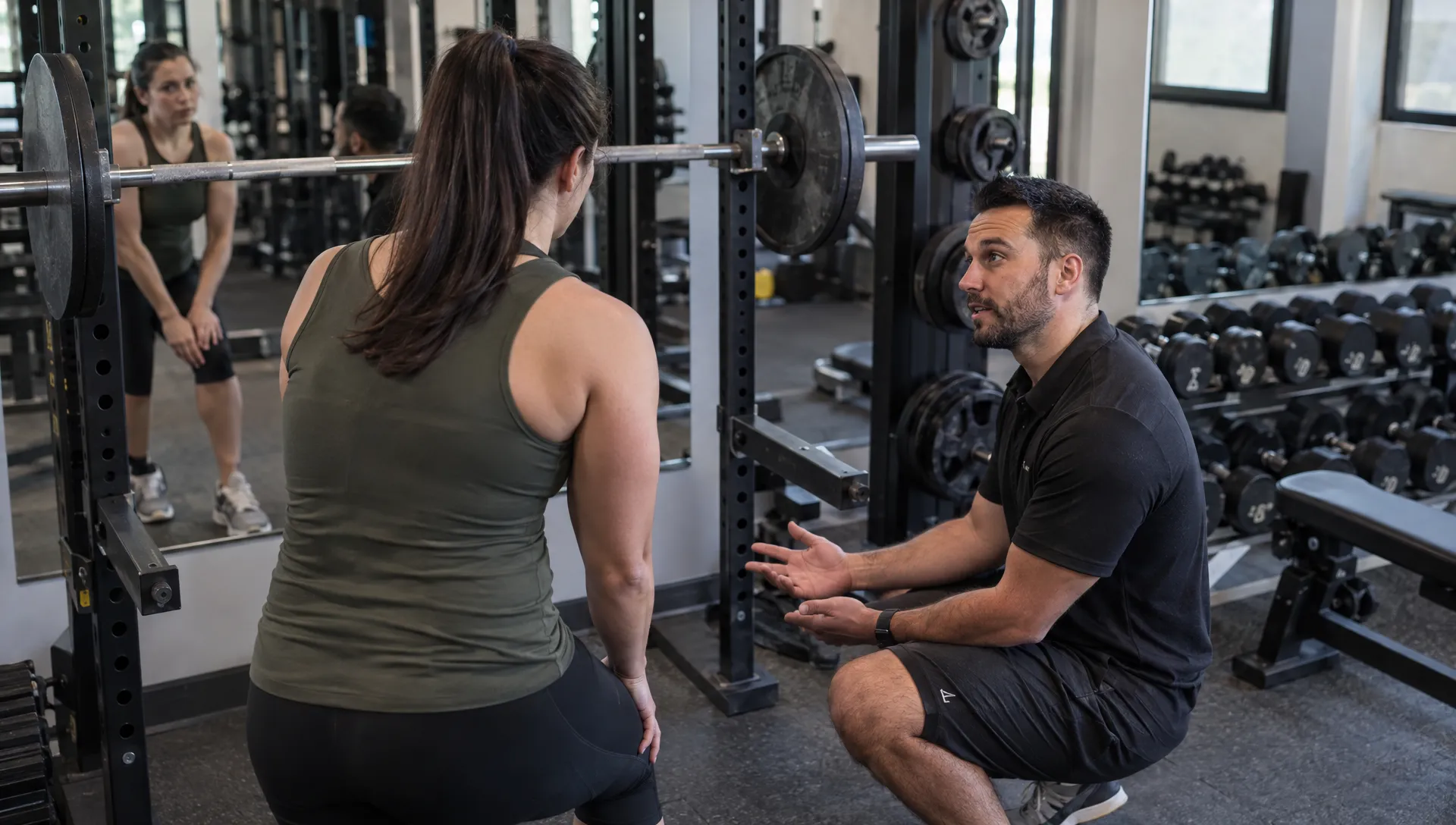
Imagine you return to strength training after several weeks of travel. During a weighted lunge, you notice discomfort around one knee. You can walk normally and have no emergency warning signs, but the sensation is unfamiliar.
A personal private trainer should first pause the exercise and listen. They should not immediately declare that your knee is damaged, your glutes are “inactive” or your technique is the sole cause.
Depending on your history and symptoms, the session might shift to a different comfortable movement or train an unaffected area. If the discomfort continues, the coach should recommend assessment rather than cycle through increasingly elaborate fixes.
The follow-up matters just as much. At the next visit, the conversation should include how you felt that evening, whether stairs were harder and whether the symptom has returned. Any clinician’s guidance should shape subsequent programming.
This approach preserves useful training when appropriate without making a diagnosis. It also gives you a clear record to share with a healthcare professional if you need one.
A good modification is an exercise decision, not proof that the underlying issue has been identified or treated.
Ask about pain policies before buying sessions
A coach’s response to pain can tell you more than a difficult sample workout. During your personal training consultation, ask how symptoms affect programming, referrals and follow-up.
A personal private trainer should be able to answer these questions plainly:
- What would make you stop my session or recommend medical assessment?
- How do you adjust training when a movement hurts?
- How would you work within guidance from my physician or physical therapist?
- What happens to a booked session if symptoms mean I should not train?
Listen for specific processes rather than guarantees. “We will always find a way to push through” is not a reassuring answer. Neither is a promise that perfect technique prevents every injury.
Verify the trainer’s certification through the issuing organization and ask about current CPR/AED training. Experience with clients who have similar limitations can be useful, but a fitness credential does not authorize medical diagnosis.
For a demanding work schedule, flexibility matters too. A shorter or less strenuous session may be appropriate after travel or poor recovery. Exercise should respond to your circumstances, not simply follow the original plan regardless of symptoms.
Frequently asked questions
Should I exercise when I am sore? Mild soreness does not always require complete rest. Comfortable movement or a less demanding session may be reasonable. If soreness substantially changes your movement, reduce the demands. Severe, worsening or unusual symptoms need medical assessment rather than an assumption that they are DOMS.
Can a personal private trainer help with chronic pain? A qualified coach may help you follow an appropriate exercise plan and build capacity, particularly alongside guidance from a licensed clinician. They should not independently diagnose the cause or promise a cure. Ask about relevant experience and willingness to coordinate care.
Is a little pain always acceptable during exercise? No universal rule applies. Some rehabilitation plans permit symptoms within individually agreed limits, but those limits depend on the condition and clinical assessment. Do not borrow someone else’s pain threshold for a new or unexplained problem.
Should stretching or massage replace medical assessment? No. Temporary relief does not establish what caused a symptom or whether an injury is present. Recovery methods should not delay evaluation of persistent, progressive or concerning pain.
Choose coaching that takes symptoms seriously
Custom Fit offers personal training, nutrition coaching and recovery services in San Francisco. When exploring Custom Fit’s training and wellness options, describe any current symptoms, previous injuries and medical restrictions before beginning.
Ask how the proposed training would accommodate those needs and when outside assessment would be recommended. The standard is straightforward: clear explanations, appropriate adjustments and no pressure to train through warning signs.