What a Gym Fitness Trainer Should Measure First
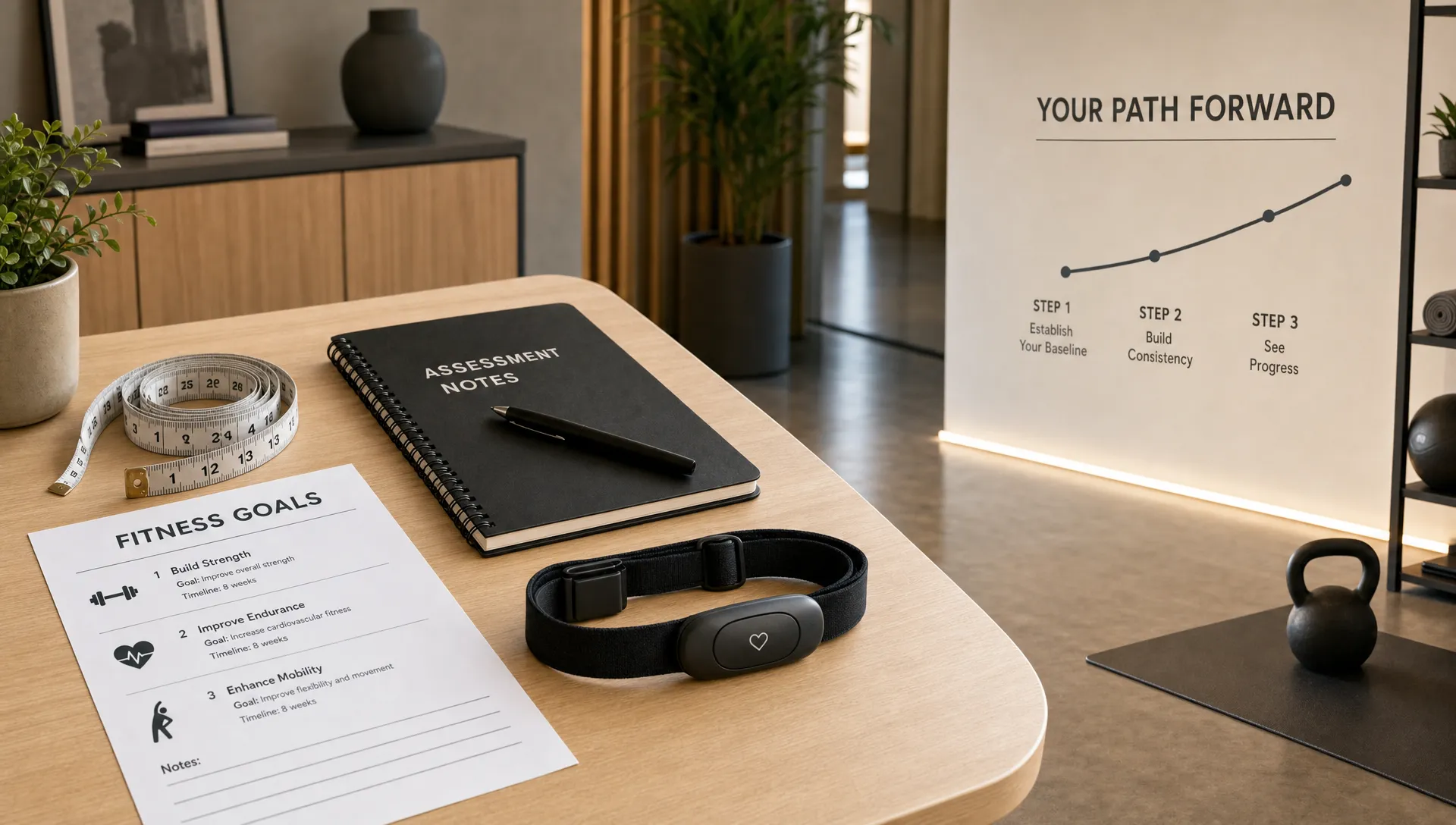


A great training plan does not start with a hard workout. It starts with the right measurements.
For a busy San Francisco professional, a founder with limited training windows, or a physician referring patients into a fitness program, the first session with a gym fitness trainer should answer one practical question: what data do we need before we choose the plan? Without that answer, even a well-intentioned program can drift into guesswork.
The best trainers measure enough to make smart decisions, but not so much that the client leaves with a spreadsheet and no clear next step. The goal is to establish a useful baseline, identify risks, personalize the program, and create a repeatable way to prove progress.
The first thing to measure is not your weight
Most people expect a trainer to start with body weight, body fat, or a fitness test. Those can matter, but they should not be the first measurement.
The first thing a gym fitness trainer should measure is the gap between where you are now and what you are trying to achieve. That includes your goal, your constraints, your injury history, your schedule, your current training tolerance, and the health markers that may affect exercise selection.
A client who wants to lose 15 pounds, a client preparing for a cycling event, and a client rebuilding strength after years of desk work may all need very different first measurements. The right baseline depends on the decision it will guide.
In other words, measurements should not be collected because they are interesting. They should be collected because they change the program.
A smart first-session measurement hierarchy
Here is a practical order of operations a qualified trainer can use before writing the first real training block.
What to measure first          | Why it matters                                                                | What it changes in the program
Goals and constraints          | Defines the destination and realistic pace                                    | Training frequency, session length, recovery expectations
Health and injury history      | Flags movements or intensities that need caution                              | Exercise selection, progression speed, referrals when needed
Body composition               | Shows muscle, fat, and sometimes bone-related trends better than scale weight | Nutrition targets, strength priorities, progress tracking
Cardiorespiratory fitness      | Reflects aerobic capacity and long-term health risk                           | Conditioning zones, interval intensity, endurance goals
Movement and strength baseline | Reveals asymmetries, limitations, and starting loads                          | Warm-ups, mobility work, strength programming
Recovery and lifestyle inputs | Explains why performance may fluctuate | Training volume, sleep goals, stress management, nutrition timingStart with goals, schedule, and readiness
Before a trainer measures your squat depth or VO2 max, they should understand your life.
For high-performing professionals, the limiting factor is often not motivation. It is calendar friction. A person who can train three times per week at 6:30 a.m. needs a different plan than someone with unpredictable travel, late dinners, and inconsistent sleep.
A good trainer should document:
- Primary goal, such as fat loss, strength, endurance, longevity, pain-free movement, or energy
- Secondary goals, such as better posture, improved lab markers, or performance in a sport
- Weekly schedule and realistic training availability
- Current medications, medical considerations, and injury history
- Training experience, preferences, and exercises the client dislikes or fears
- Sleep, stress, alcohol intake, and recovery patterns
This is not small talk. It is the foundation of adherence. A technically perfect program that does not fit your week is still a bad program.
When appropriate, trainers should also know when to refer out. Pain, dizziness during exertion, unexplained shortness of breath, chest discomfort, or complex medical issues should be handled with medical oversight. For concierge medicine practices and longevity clinics, this is where a fitness team and healthcare team can coordinate around shared goals without blurring professional boundaries.
Measure body composition before judging progress by weight
Scale weight is easy to track, but it is often too blunt to guide a premium training program. If a client gains three pounds of muscle and loses three pounds of fat, the scale says nothing changed. The body did.
That is why body composition is often one of the most useful early measurements. It helps separate fat mass, lean mass, and overall weight trends. In a more advanced setting, DEXA scans can provide a more detailed baseline than standard bathroom-scale metrics.
For many clients, body composition answers important questions:
Is the goal really fat loss, or is it recomposition? Is the client under-muscled for their age and activity level? Is progress happening even when the scale is stable? Should nutrition focus on a calorie deficit, muscle gain, or maintenance with better protein distribution?
For athletes and performance-focused clients, body composition also helps avoid the trap of chasing lighter body weight at the expense of power, resilience, or recovery. If you want a deeper look at how to interpret these changes, Custom Fit’s guide to science-backed body composition strategies explains why lean mass, fat mass, visceral fat, and bone-related metrics can matter more than weight alone.
Measure cardiorespiratory fitness when health, endurance, or longevity matter
Cardiorespiratory fitness is one of the most important measurements a trainer can use, especially for clients focused on longevity, metabolic health, or endurance performance.
The American Heart Association has argued that cardiorespiratory fitness should be treated as a clinical vital sign because of its strong relationship with health outcomes. In its scientific statement, the AHA notes that low cardiorespiratory fitness is associated with higher risk of cardiovascular disease and all-cause mortality, while improvements in fitness are linked with lower risk (Circulation, 2016). A large meta-analysis in JAMA also found that higher cardiorespiratory fitness was associated with lower risk of death and cardiovascular events (Kodama et al., 2009).
For clients who want measurable health improvement, VO2 max testing can be especially valuable. It helps establish aerobic capacity and can guide training zones more precisely than guessing based on age-predicted heart rate formulas.
That does not mean every new client needs a maximal test on day one. A skilled trainer should match the assessment to the person. Some clients may start with a submaximal test, walking test, bike assessment, or heart-rate-based conditioning baseline before progressing to more formal testing.
The key is this: if cardiovascular health, stamina, or longevity is part of the goal, the trainer should measure aerobic capacity early enough to guide the plan.
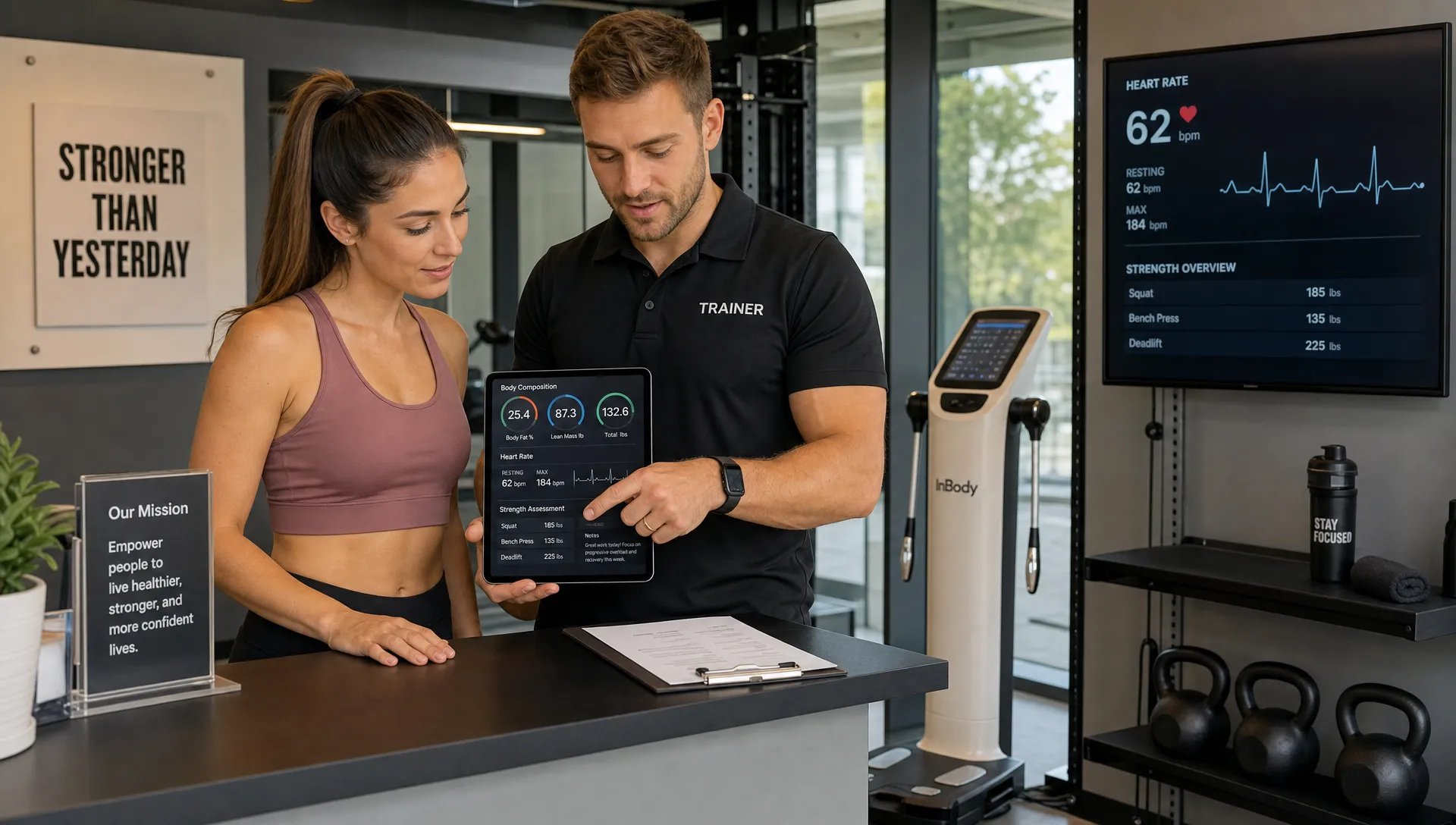
Measure movement quality before loading aggressively
Strength training is one of the highest-value investments most adults can make, but load should follow movement readiness.
A trainer does not need to overcomplicate this with an hour of obscure corrective tests. They do need to understand how the client moves under basic patterns: squat, hinge, push, pull, carry, rotate, and brace.
Useful early observations include joint range of motion, side-to-side differences, balance, trunk control, foot and ankle mechanics, and whether pain appears during basic movement. For a desk-bound executive, the trainer may notice limited hip extension or thoracic mobility. For a recreational runner, single-leg control and calf strength may be more relevant. For an older client, balance and getting up from the floor may be more meaningful than a barbell benchmark.
Strength baselines are also important, but they should be selected wisely. A true one-rep max is rarely necessary in the first session. Safer options include estimated rep maxes, controlled tempo sets, grip strength, push-up variations, carry tests, or machine-based strength assessments.
Grip strength is particularly interesting because it is simple, quick, and associated with broader health outcomes. The PURE study published in The Lancet found that grip strength was a strong predictor of cardiovascular mortality and all-cause mortality across diverse populations (Leong et al., 201562000-6/fulltext)). It is not a complete fitness assessment, but it can be a useful piece of the baseline.
Measure nutrition and metabolism before prescribing intensity alone
Training and nutrition are inseparable. If a client wants fat loss, muscle gain, better energy, or improved metabolic health, the trainer should understand the client’s nutrition habits early.
This does not mean every trainer should prescribe detailed medical nutrition therapy. Registered dietitians and qualified nutrition professionals are the right fit for more complex needs. But a trainer should at least know whether the client is eating enough protein, consistently fueling workouts, drinking enough fluids, and matching intake to goals.
Protein is a good example. The International Society of Sports Nutrition position stand states that higher protein intakes can support muscle adaptation in exercising individuals, with needs varying by training status, goals, and energy intake (JISSN, 2017). If a client is lifting hard but under-eating protein, the training plan may look like the problem when the real bottleneck is recovery and nutrition.
For practical nutrition habits that support training without overcomplication, Custom Fit’s article on nutrition for gym-goers is a helpful next step.
A complete wellness routine can also include services outside the gym. For example, clients who think broadly about recovery, confidence, and self-care may pair fitness and nutrition with personalized skincare and wellness services from providers such as Lumina Skin Sanctuary, especially when they want their health routine to feel integrated rather than fragmented.
Measure recovery because it determines how much training you can absorb
The workout is only the stimulus. Adaptation happens when the body recovers.
That is why a trainer should measure or at least track the main recovery inputs from the beginning. Sleep duration, sleep quality, soreness, stress, resting heart rate, perceived energy, and training readiness can all help explain why performance changes from week to week.
Wearables can be useful here, but they should not replace coaching judgment. A low readiness score does not always mean a client should skip training. It may mean the session should shift from high-intensity intervals to lower-intensity strength work, mobility, or recovery-focused conditioning.
For demanding professionals, recovery tracking is often the difference between a sustainable program and a cycle of overreaching, soreness, missed sessions, and restarts. A trainer should be able to adjust volume and intensity based on how the client is responding, not just what was written on the plan.
What should not be measured first?
Some measurements are useful later, but they can mislead the program if they dominate the first session.
Daily body weight should not be treated as the main success metric. It fluctuates with hydration, sodium intake, menstrual cycle, travel, alcohol, carbohydrate intake, and stress.
Smartwatch calorie burn should not drive programming. Consumer wearables can help with trends, but calorie expenditure estimates are often imprecise at the individual level.
Max-effort challenges should not come before readiness screening. A brutal first workout may feel like proof of intensity, but it does not prove the trainer understands your body.
Aesthetic photos can be useful for some clients, but they should be optional and handled professionally. They are not a substitute for performance, health, or body composition data.
How often should a trainer re-measure?
The first measurements create the map. Re-testing shows whether the route is working.
Measurement               | Practical re-test cadence  | Why
Goals and schedule        | Every 4 to 6 weeks         | Life changes quickly, and the plan should match reality
Body weight trend         | Weekly average if relevant | Helps smooth normal day-to-day fluctuation
Body composition          | Every 8 to 16 weeks        | Allows enough time for meaningful change
Strength benchmarks       | Every 4 to 8 weeks         | Confirms progressive overload and skill improvement
Cardiorespiratory fitness | Every 8 to 16 weeks        | Tracks aerobic adaptation without over-testing
Nutrition habits          | Weekly or biweekly         | Keeps behavior aligned with goals
Recovery markers | Daily to weekly | Helps adjust training load in real time If you want a broader comparison of tracking methods, including DEXA scans and VO2 max testing, wearables, and progress photos, Custom Fit’s guide to tracking your fitness progress breaks down which tools are most useful for different goals.
What this looks like in a data-driven training environment
In a data-driven studio, measurement is not a one-time intake form. It is part of the coaching process.
At Custom Fit SF, personal training, nutrition coaching, DEXA scans, VO2 max testing, recovery programs, and registered dietitian support can work together to create a clearer picture of the client’s starting point. The value is not just having access to tests. It is knowing how to translate results into programming decisions.
That matters for individual clients, but it also matters for physician groups, longevity clinics, concierge medicine practices, and employee wellness teams. When training data is collected thoughtfully, it can support better communication, cleaner goal setting, and more accountable progress tracking.
The best gym fitness trainer is not the one who measures everything. It is the one who measures the right things first, explains why they matter, and uses them to build a plan you can actually follow. For a deeper look at this approach, Custom Fit’s article on personal training in San Francisco built around your data explains how measurement can shape the entire coaching experience.
Frequently Asked Questions
What should a gym fitness trainer measure in the first session? A trainer should start with goals, health history, injury history, schedule, and readiness. From there, useful baselines may include body composition, movement quality, strength, cardiorespiratory fitness, nutrition habits, and recovery patterns.
Is body weight a good first measurement? Body weight can be useful, but it should not be the only or primary measurement. It does not distinguish between muscle, fat, water, and normal short-term fluctuations. Body composition and performance markers usually provide more actionable information.
Should every client do VO2 max testing? Not every client needs VO2 max testing immediately, but it can be very valuable for people focused on longevity, cardiovascular health, endurance, or precise conditioning zones. A trainer should choose the safest and most relevant assessment for the client’s current fitness level.
How do measurements improve personal training results? Measurements help a trainer personalize exercise selection, intensity, nutrition priorities, recovery strategy, and re-testing cadence. They also make progress more visible, which can improve motivation and accountability.
How often should fitness measurements be repeated? Many strength and habit measures can be reviewed every 4 to 8 weeks, while body composition and VO2 max are often re-tested every 8 to 16 weeks. Recovery and lifestyle inputs may be tracked more frequently because they affect day-to-day training quality.
Ready to train from a smarter baseline?
If you want a program built around your body, your schedule, and your measurable goals, start with the right data. Custom Fit SF combines expert coaching with advanced testing, nutrition support, and recovery services to help you train with more clarity and less guesswork.
Explore Custom Fit SF to learn how a data-driven fitness and wellness studio can help you build a plan that fits your life and proves your progress.