The Essential Workouts for Longevity and Everyday Strength
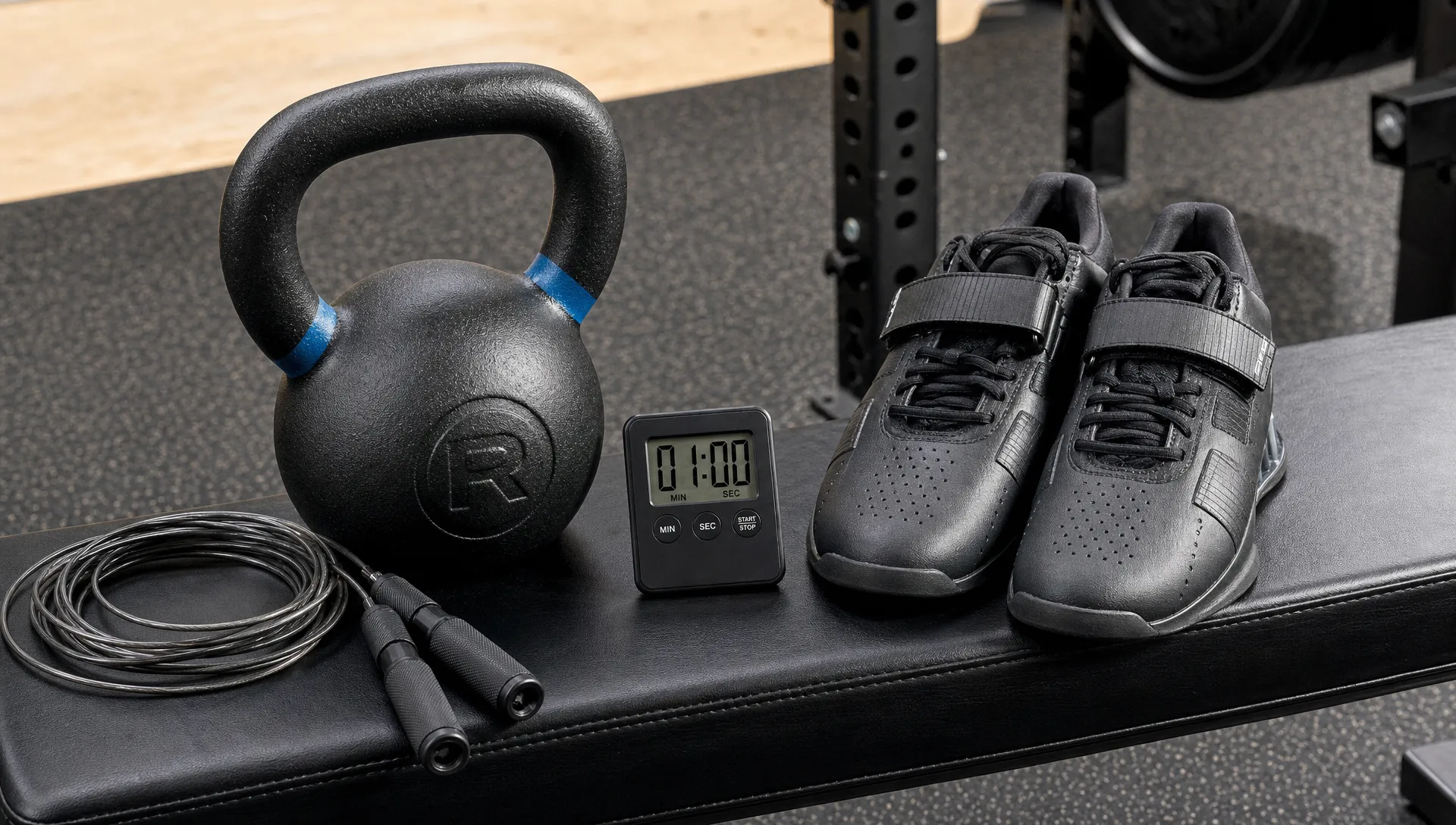


The best workouts for longevity are not the flashiest ones. They are the workouts that help you keep doing real-life things well: climbing stairs without thinking about it, carrying groceries, getting up from the floor, hiking on the weekend, staying sharp through long workdays, and maintaining independence as decades pass.
For busy San Francisco professionals, the goal is not to train like a professional athlete. The goal is to build a body that is strong, metabolically healthy, resilient, and adaptable. That means combining strength training, aerobic conditioning, mobility, balance, and recovery in a way you can actually maintain.
What makes a workout good for longevity?
A true longevity program supports health span, not just lifespan. It should improve the physical qualities most connected to everyday function and long-term health. The Physical Activity Guidelines for Americans recommend regular aerobic activity plus muscle-strengthening exercise at least two days per week, but the most effective routine goes beyond checking a box.
The essential workouts for longevity usually train five areas:
- Strength, so you preserve muscle, bone support, and joint control
- Aerobic fitness, so your heart, lungs, and metabolism work efficiently
- Power, so you can react quickly and move with confidence
- Mobility and balance, so you reduce stiffness and fall risk
- Recovery capacity, so your body adapts instead of breaking down
If your workouts only burn calories but leave you weaker, more tired, or more injury-prone, they are not serving longevity. If they help you build capacity for real life, they are doing their job.
Strength training: the foundation of everyday strength
Muscle is one of the most important assets for aging well. It supports posture, glucose regulation, bone loading, balance, and the ability to perform basic tasks without assistance. Strength training also gives you a clearer path for progression than many other forms of exercise: lift a little more, move with better control, complete more quality repetitions, or recover faster between sets.
Research supports this priority. A 2022 systematic review in the British Journal of Sports Medicine found that muscle-strengthening activities were associated with a lower risk of all-cause mortality, cardiovascular disease, cancer, and diabetes. You do not need extreme volume to benefit. Most adults can make meaningful progress with two to four well-designed strength sessions per week.
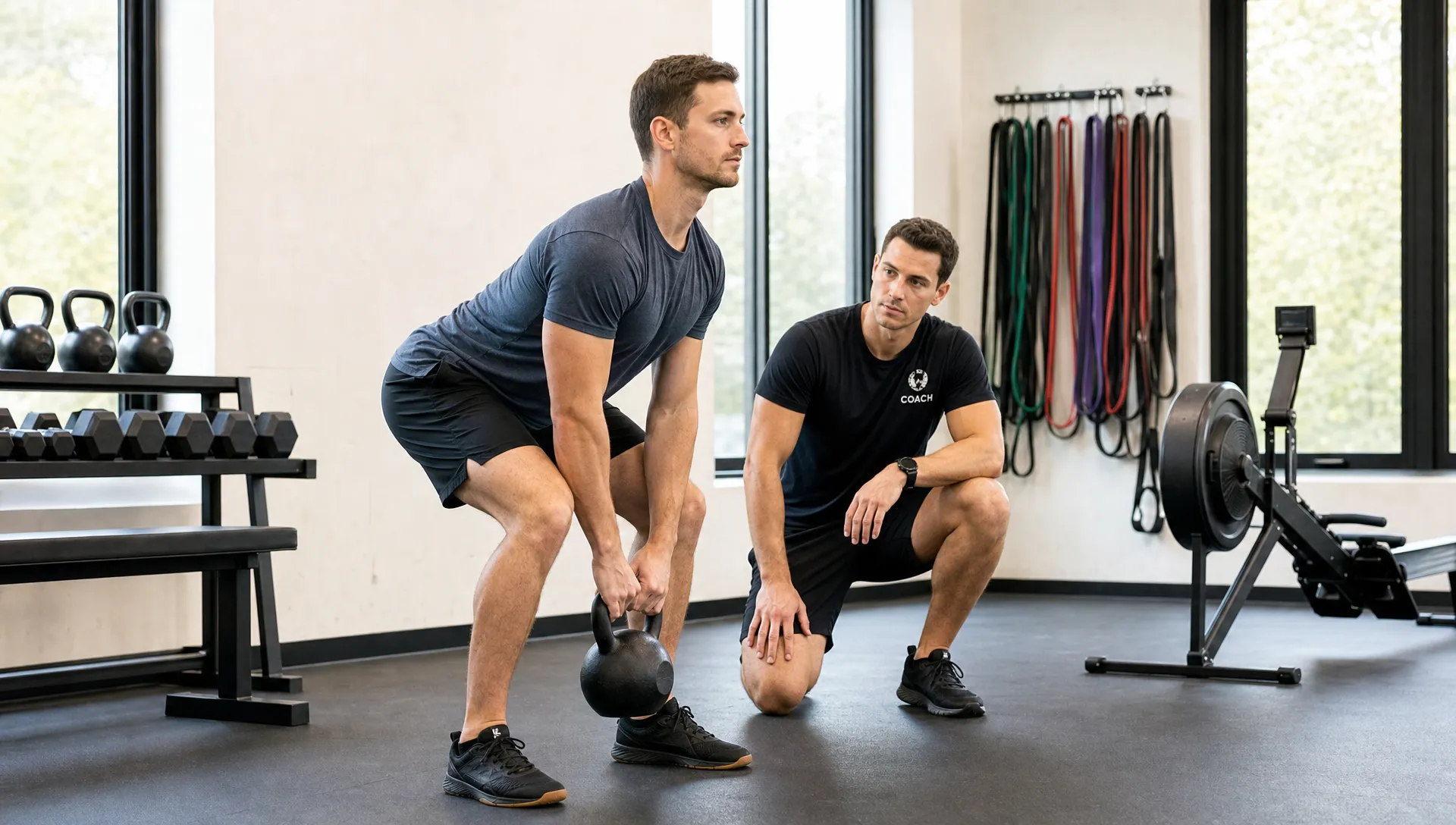
A longevity-focused strength program should train basic human movement patterns: squatting, hinging, pushing, pulling, stepping, carrying, rotating, and resisting rotation. In practice, that might look like goblet squats, Romanian deadlifts, split squats, cable rows, chest presses, suitcase carries, and anti-rotation core work.
The key is not novelty. It is progressive consistency. A productive workout should challenge the muscles without turning every session into a maximal effort. Leave one or two quality repetitions in reserve on most sets, use controlled tempo, and prioritize positions that feel stable and repeatable.
Strength training also becomes more important with age. If you are in your 30s, 40s, or 50s, you are not just training for today’s mirror. You are building the muscle reserve you will rely on later.
Aerobic base: the heart and metabolism workout
Aerobic training is the other non-negotiable pillar. It improves the efficiency of your cardiovascular system, supports blood pressure and metabolic health, and gives you more stamina for everything else you do.
The simplest version is Zone 2 training, often described as a steady effort where you can speak in short sentences but would not want to hold a long conversation. This can be done on a bike, incline treadmill, rower, elliptical, or outside on a brisk walk. In San Francisco, the city itself can become a training tool. A purposeful walk through SoMa or a hillier route near the Financial District can turn a commute break into useful aerobic work.
Cardiorespiratory fitness is one of the strongest predictors of long-term health. A large study published in JAMA Network Open found that higher cardiorespiratory fitness was associated with lower long-term mortality, with no observed upper limit of benefit in the study population.
For most people, two to four weekly aerobic sessions is a strong target. Start with 20 to 30 minutes if you are rebuilding consistency, then gradually extend toward 40 to 60 minutes as your schedule and recovery allow. The best aerobic workout is the one you can repeat without feeling drained for the rest of the day.
VO2 max intervals: the small dose of hard work
Once you have a reasonable aerobic base, higher-intensity intervals can help improve VO2 max, which is a measure of how well your body uses oxygen during hard exercise. VO2 max is not just an athlete metric. It is a practical marker of cardiovascular capacity, fatigue resistance, and physiological reserve.
Intervals do not need to be complicated. A common approach is four rounds of three to four minutes at a hard but controlled pace, with equal or slightly shorter recovery between rounds. Another option is six to ten rounds of one minute hard, followed by one to two minutes easy. The goal is to accumulate high-quality work, not to collapse at the end.
For longevity, more intensity is not always better. One interval session per week is enough for many people, especially if they are also strength training and managing demanding careers. Two can work for well-conditioned clients, but only if sleep, nutrition, and recovery are strong.
If you have cardiovascular risk factors, a long training gap, or uncertainty about intensity, testing and professional guidance matter. Guessing your max effort is less useful than knowing your current capacity and building from there.
Power training: move fast enough to stay capable
Strength helps you produce force. Power helps you produce force quickly. That distinction matters because real life often happens fast. You trip on a curb, catch yourself on stairs, lift a bag into an overhead bin, or react to an unexpected movement during a weekend sport.
Power tends to decline faster than strength with age, which is why it deserves a small but consistent place in longevity training. The volume should be low, the movements should be crisp, and fatigue should be minimal.
Examples include medicine ball chest passes, low box step-ups performed with speed, kettlebell swings for people who hinge well, light sled pushes, or controlled jump variations for clients whose joints tolerate impact. Power work usually belongs near the beginning of a workout after a warm-up, not at the end when coordination is fading.
You do not need to jump if jumping is not appropriate. You do need to train speed, reaction, and confidence in some form.
Mobility, balance, and warm-ups: the quiet longevity multipliers
Mobility is not about extreme flexibility. It is about having enough usable range of motion to move well under control. Hips that extend, ankles that dorsiflex, shoulders that rotate, and a spine that can move comfortably all make strength and cardio training safer and more effective.
Balance is equally practical. A study in the British Journal of Sports Medicine found that inability to complete a 10-second one-legged stance in middle-aged and older adults was associated with higher mortality risk over the study follow-up period. That does not mean standing on one leg is magic. It means balance reflects an important combination of strength, nervous system control, vision, joint function, and confidence.
A warm-up is the bridge between your desk, car, or commute and the work you are about to ask your body to do. Five to ten minutes of intentional preparation can improve movement quality and reduce the tendency to compensate. If you want a practical starting point, Custom Fit has a helpful guide to a full-body warm-up for longevity.
For daily life, loaded carries are one of the most underrated choices. Farmer carries, suitcase carries, and front-loaded carries train grip, posture, trunk stability, and gait. They look simple, but they transfer beautifully to real-world strength.
Recovery: where adaptation actually happens
Longevity training is not about seeing how much stress you can survive. It is about applying the right stress, then recovering well enough to adapt. This is especially important for high-output professionals whose nervous systems are already loaded by long hours, travel, meetings, and decision fatigue.
Recovery starts with sleep, protein, hydration, and reasonable training distribution. It also includes lower-intensity movement, mobility work, and recovery services when appropriate. If your resting energy, mood, sleep quality, or performance is declining, your program may need less intensity or better spacing, not more discipline.
A simple rule works well: hard days should be hard enough to stimulate progress, and easy days should be easy enough to restore you. Many people get stuck in the middle, training too hard to recover but not hard enough to improve.
A practical weekly template for workouts for longevity
There is no single perfect week, but most successful longevity programs share a similar structure. The exact schedule should depend on your baseline, injury history, goals, and available time.
A sustainable weekly plan might include:
- Two or three full-body strength sessions focused on compound movements and controlled progression
- Two or three Zone 2 aerobic sessions, either standalone or after shorter strength sessions
- One interval session to challenge VO2 max, if recovery and readiness are good
- Five to ten minutes of mobility and balance work most days
- Daily walking or low-intensity movement to reduce sedentary time
This does not have to mean living in the gym. A busy executive might lift twice per week, complete one longer Zone 2 session on the weekend, add one short interval workout midweek, and walk daily. Someone with more flexibility might train four or five days with shorter, more focused sessions.
The right plan is the one that produces measurable improvement without making your life harder to manage.
Use data to personalize the plan
Longevity training works best when it is measured, but not overcomplicated. In the same way businesses use Syneo's AI and digitalization services to make operations more efficient, a good fitness program uses the right data to turn effort into better decisions.
Body composition, aerobic capacity, and movement quality can all change how your workouts should be designed. A scale cannot tell you whether you are gaining muscle, losing fat, preserving bone, or reducing visceral fat. A treadmill pace cannot tell you your true VO2 max. And a generic calorie target cannot tell you how your metabolism is responding to training.
This is where testing becomes useful. DEXA can help assess body composition, including lean mass, body fat, bone metrics, and visceral fat. At Custom Fit, DEXA scans are performed by Registered Dietitians or Exercise Physiologists, so clients work with professionals who understand nutrition, exercise physiology and body composition, not simply an automated scan report.
VO2 max testing can help identify cardiovascular capacity and appropriate training zones. If you want a deeper overview of which assessments are most useful, Custom Fit’s guide to longevity testing in San Francisco explains how these tools fit together.
The point is not to collect numbers for their own sake. The point is to make your training more specific. If your DEXA shows low lean mass, strength may move to the top of the plan. If your VO2 max is lagging, aerobic work and intervals may need more attention. If visceral fat is elevated, nutrition, walking volume, resistance training, sleep, and stress management all become part of the solution.
How to know your program is working
A good longevity program should create visible and measurable changes. You should notice that everyday tasks feel easier, your posture and energy are better, and your workouts feel more controlled. Over time, you may also see improvements in lean mass, body fat, resting heart rate, training loads, aerobic pace, blood markers, and recovery.
Progress is not always linear. Travel, stress, illness, and life changes will affect performance. What matters is the long-term trend. If you can keep training consistently for months and years, you will get a much bigger return than you would from a perfect plan followed for three weeks.
For many people, coaching makes that consistency easier. A coach can adjust the plan before small issues become injuries, help you train around schedule constraints, and keep your workouts aligned with your actual goals rather than social media trends.
Frequently Asked Questions
What are the most important workouts for longevity? The most important workouts for longevity are strength training, Zone 2 aerobic work, occasional higher-intensity intervals, mobility work, balance practice, and daily low-intensity movement. Together, they support muscle, cardiovascular fitness, coordination, and independence.
How many days per week should I exercise for longevity? Many adults do well with three to five structured sessions per week, plus daily walking or movement. A practical plan might include two or three strength workouts, two aerobic sessions, and short mobility work most days.
Is strength training or cardio more important for aging well? Both matter. Strength training helps preserve muscle, bones, balance, and everyday function. Cardio supports heart health, metabolism, stamina, and VO2 max. The best longevity programs combine both instead of choosing one.
Should I train differently after 40? Usually, yes. Recovery, joint history, muscle maintenance, and cardiovascular capacity become more important. Training should still be challenging, but warm-ups, progression, mobility, and recovery need more attention.
Do I need testing before starting longevity workouts? You can start with basic movement and walking, but testing helps personalize the plan. DEXA scans and VO2 max testing can show what to prioritize and how to measure progress more accurately.
Build a stronger body for the decades ahead
The essential workouts for longevity are simple, but they work best when they are personalized. Strength, aerobic fitness, power, balance, mobility, and recovery all matter. The right mix depends on your body, your goals, and your current data.
Custom Fit helps clients connect training, nutrition coaching, recovery, and advanced testing into a plan that is built for real life. If you want a comprehensive starting point, explore the Longevity Blueprint and start building the strength and capacity you want to keep for decades.