How Work Out Classes Fit Into a Busy Week
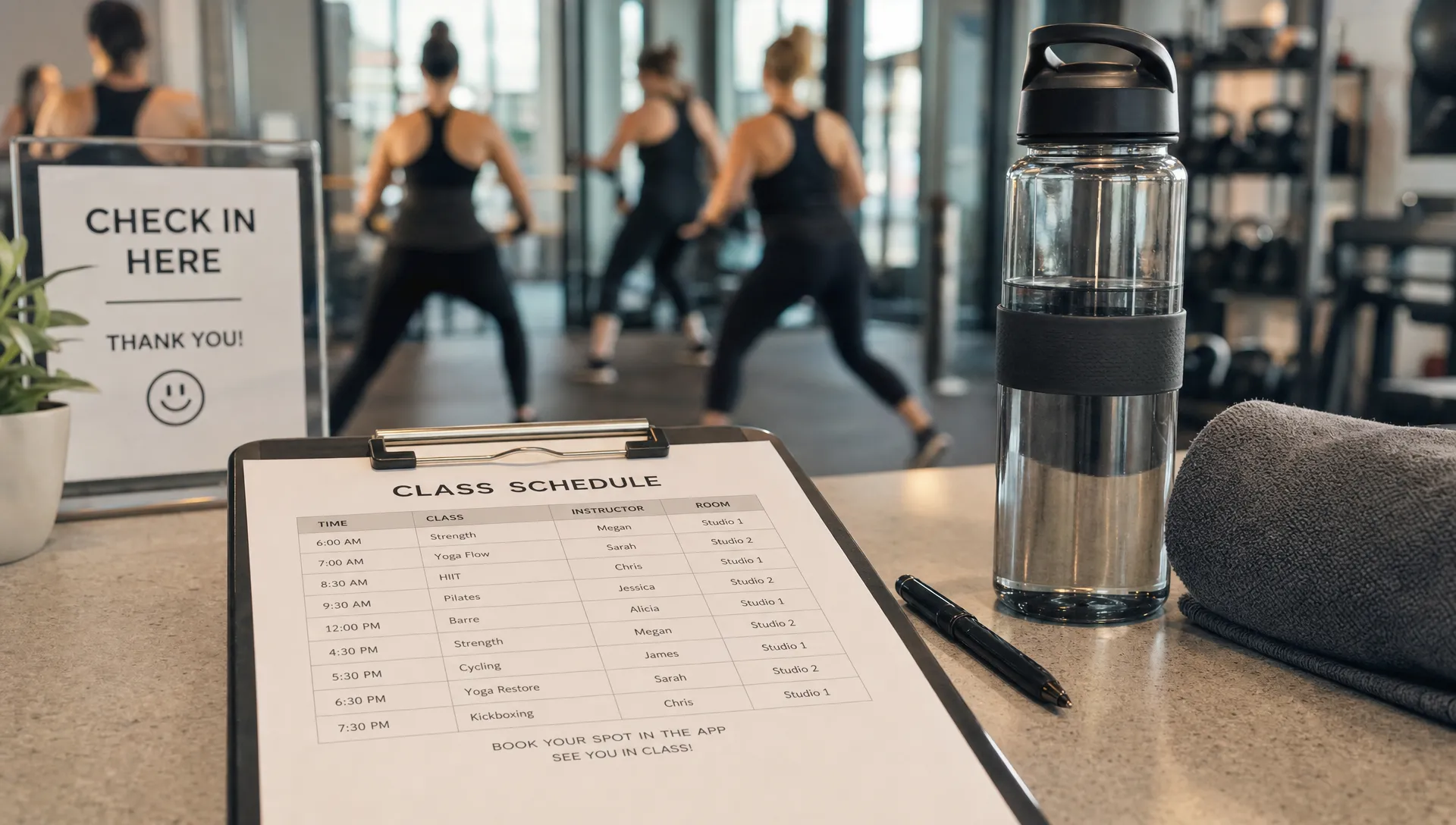


Work out classes can be the difference between hoping you exercise and actually getting it done. When your week is packed with meetings, client calls, school logistics, travel across San Francisco and late dinners, the right class format gives your workout a start time, a coach and a clear plan.
The goal is not to cram more into an already overloaded calendar. It is to choose the few training appointments that give you the best return for your time, then protect them like you would a board meeting or medical appointment.
Why work out classes can fit a packed calendar
A busy week usually breaks fitness for one of three reasons: you do not know what to do, you wait for a perfect time or you burn energy deciding whether to train. Classes solve those problems by removing friction.
Instead of building a workout from scratch, you show up to a planned session. Instead of negotiating with yourself at 6 p.m., you have already committed. Instead of wondering whether you trained hard enough, a coach guides pace, form and progression.
This is why class-based training often works well for high-performing professionals. It narrows the decision to one question: “Can I make this appointment?” That is much easier than asking yourself to design a full program after a long workday.
For a deeper look at consistency, Custom Fit has also covered how gym classes help busy adults stay consistent through structure, accountability and reduced decision fatigue.
What your week actually needs
Before adding more exercise, define the minimum effective week. The Physical Activity Guidelines for Americans recommend that adults get 150 to 300 minutes of moderate-intensity aerobic activity, or 75 to 150 minutes of vigorous activity, plus muscle-strengthening activities on two or more days per week.
That does not mean every professional needs five long gym visits. A realistic week can combine strength, conditioning and recovery in a few well-placed sessions. The American College of Sports Medicine’s position stand on exercise prescription also emphasizes a mix of cardiorespiratory, resistance, flexibility and neuromotor training for healthy adults.
For most busy people, work out classes should cover three priorities:
- Strength training to preserve lean mass, improve posture and support long-term function
- Cardiovascular work to build stamina, improve metabolic health and reduce fatigue
- Mobility or recovery to keep training sustainable during stressful weeks
If your current routine is mostly random cardio, you may be missing strength. If it is all high intensity, you may be under-recovering. The right mix matters more than simply adding another hard session.
The busy-week formula for work out classes
A smart schedule starts with the number of days you can reliably protect. Then it assigns a training purpose to each class. This keeps your week focused and prevents the common pattern of doing whatever class happens to fit the moment.
| Schedule type | Best fit | Weekly structure | Why it works |
|---|---|---|---|
| Very busy week | 2 training days | 2 strength-focused classes | Maintains momentum without overwhelming the calendar |
| Balanced week | 3 training days | 2 strength classes and 1 conditioning class | Covers muscle, metabolism and aerobic capacity |
| Performance week | 4 training days | 2 strength, 1 conditioning and 1 mobility or recovery session | Builds fitness while managing fatigue |
| Travel-heavy week | 1 to 2 training days | 1 full-body class and 1 short cardio session | Keeps the habit alive during disruption |
The best work out classes for a busy week are not always the hardest ones. They are the ones that make the rest of your life easier by improving energy, focus and resilience without leaving you drained for two days.
If your calendar changes constantly, choose a primary plan and a fallback plan. For example, your ideal week might be Monday strength, Wednesday conditioning and Friday strength. Your fallback week might be Tuesday full-body and Saturday morning strength. That way, one missed session does not become a missed week.
Choosing class times you will not cancel
Most people do not fail because they picked the wrong exercise. They fail because they picked a time slot that competes with everything else.
Morning classes work well if your evenings are unpredictable. Lunch classes can be ideal if you work near SoMa, the Financial District or another area where getting across town at 5:30 p.m. can derail the plan. Evening classes fit people who need a mental reset after work, but they require stronger boundaries around dinner, emails and family commitments.
When choosing work out classes, look for the time of day with the least negotiation. If you repeatedly cancel a 6 p.m. session, stop treating it as a willpower problem. Move the class earlier, shorten the session or pair it with a commute pattern you already have.
A useful rule: schedule training immediately before or after something fixed. That could be school drop-off, your first office block, a recurring team meeting or a weekly appointment at a wellness studio. The fewer gaps between obligations, the fewer chances your day has to swallow the workout.
Make classes more personal with data
Class training should not feel generic. Even in a group format, your training choices can be guided by objective information about your body, capacity and goals.
For example, VO2 max testing can help identify aerobic fitness and training zones, which can make conditioning classes more precise. Body composition testing can show whether your routine is supporting muscle maintenance, fat loss or overall metabolic health. At Custom Fit, DEXA scans are performed by Registered Dietitians or Exercise Physiologists, so clients are working with professionals who understand nutrition, exercise physiology and body composition, not simply receiving an automated scan report.
That distinction matters for busy people. If you only have two or three training slots per week, you want those sessions to be aligned with what your body actually needs. Data can help determine whether to prioritize strength, conditioning, nutrition, recovery or a combination.
If you are comparing options, this guide to fitness programs that work for demanding schedules offers a broader view of how personal training, classes, testing and recovery can fit together.

Use classes to protect energy, not just burn calories
A common mistake is treating every class as a calorie-burning event. That mindset can push busy professionals toward too much intensity, especially during high-stress periods.
Training should build capacity. A good strength class can make daily movement easier, improve confidence and support healthier aging. A conditioning class can improve your ability to recover between demanding work blocks. A mobility or recovery session can reduce stiffness from desk time, flights and long commutes.
This is where work out classes can be more effective than unstructured solo workouts. A coach can keep you from turning every session into a max-effort test. They can also help you modify movements when you are tired, sore or returning after time away.
If recovery is the missing piece in your schedule, Custom Fit’s article on choosing a recovery gym that supports better training explains what to look for beyond basic amenities.
For parents, founders and teams, protect the slot
The busiest people often need the clearest boundaries. Parents are coordinating school schedules. Founders are switching between strategy, hiring and clients. Physicians and executives may move from deep focus work to urgent decisions with little transition time.
Personalized structure helps in many parts of life. Families weighing education options, for instance, may value adaptive environments such as Colegio Pioneros, where the learning model is designed around individual development. Fitness benefits from the same principle: the plan should match the person, not the other way around.
That means your work out classes should respect the real constraints of your week. If Thursday always runs long, do not schedule your hardest session there. If Monday sets the tone for your mood and productivity, place a reliable class early in the week. If Friday is your pressure-release day, use a class that leaves you better for the weekend rather than exhausted.
For employee benefits managers, concierge medicine practices and longevity clinics, this is also why structured fitness partnerships can be useful. Clients and employees often need more than access to equipment. They need a system that turns good intentions into repeatable appointments.
How to avoid overbooking your fitness week
Ambition is useful, but overbooking creates the boom-and-bust cycle: four hard sessions one week, none the next. A better strategy is to start with the schedule you can repeat for six weeks.
If two classes per week are realistic, start there. Add walking, light cycling or mobility on non-class days. Once the habit is stable, increase volume only if recovery, sleep and energy remain strong.
Pay attention to these warning signs that your schedule is too aggressive:
- You feel sore for more than two days after most classes
- You dread sessions you used to enjoy
- Your sleep, mood or work focus gets worse
- You keep canceling the same class every week
- You are stacking high-intensity sessions without recovery
The best work out classes leave you challenged but functional. You should be able to train, work and live well, not choose one at the expense of the others.
A practical sample week
Here is a simple template for a busy San Francisco professional who wants strength, energy and consistency without living at the gym.
| Day | Training focus | Example approach |
|---|---|---|
| Monday | Strength | Full-body class before work or at lunch |
| Tuesday | Low-intensity movement | Walk, easy bike or mobility at home |
| Wednesday | Conditioning | Coached interval or cardio-focused class |
| Thursday | Recovery | Mobility, soft tissue work or rest |
| Friday | Strength | Full-body class with progressive loading |
| Saturday | Optional lifestyle activity | Hike, long walk, recreational sport or class makeup |
| Sunday | Reset | Rest, meal planning and calendar review |
This kind of week works because it has structure without rigidity. If Monday collapses, move strength to Tuesday. If Wednesday is overloaded, make it a 30-minute aerobic session instead of skipping movement entirely.
Frequently Asked Questions
How many work out classes should I take each week? Most busy adults do well with two to four classes per week, depending on training history, sleep, stress and goals. Two well-coached strength sessions can be enough to build consistency, while three or four sessions can support broader strength, cardio and recovery goals.
Are morning or evening classes better? The best time is the one you can keep consistently. Morning classes reduce the risk of late-day cancellations, but lunch or evening sessions can work if they fit your commute, energy and family schedule.
Can classes replace personal training? Classes can be highly effective, especially when they are coached well. Personal training may be better if you need individualized programming, injury modifications, performance testing or close attention to technique.
What if I only have 30 to 45 minutes? A shorter class can still be valuable if it has a clear purpose. Full-body strength, interval conditioning or mobility sessions can all fit into a compact window when the programming is efficient.
How do I know if my class schedule is working? Track consistency, energy, strength, sleep and how your clothes fit. If you want more objective insight, testing such as VO2 max or DEXA can help show whether your routine is moving you toward your goals.
Build a week you can actually repeat
Fitness does not need to dominate your calendar to change your health. The right class schedule gives your week a rhythm: strength when you need structure, conditioning when you need capacity and recovery when your body needs support.
If you are in San Francisco and want a more personalized approach, Custom Fit combines coaching, nutrition, testing and recovery services to help busy people train with purpose. Start with the number of sessions you can truly protect, then build from there.