How Virtual Nutrition Coaching Creates Real Accountability
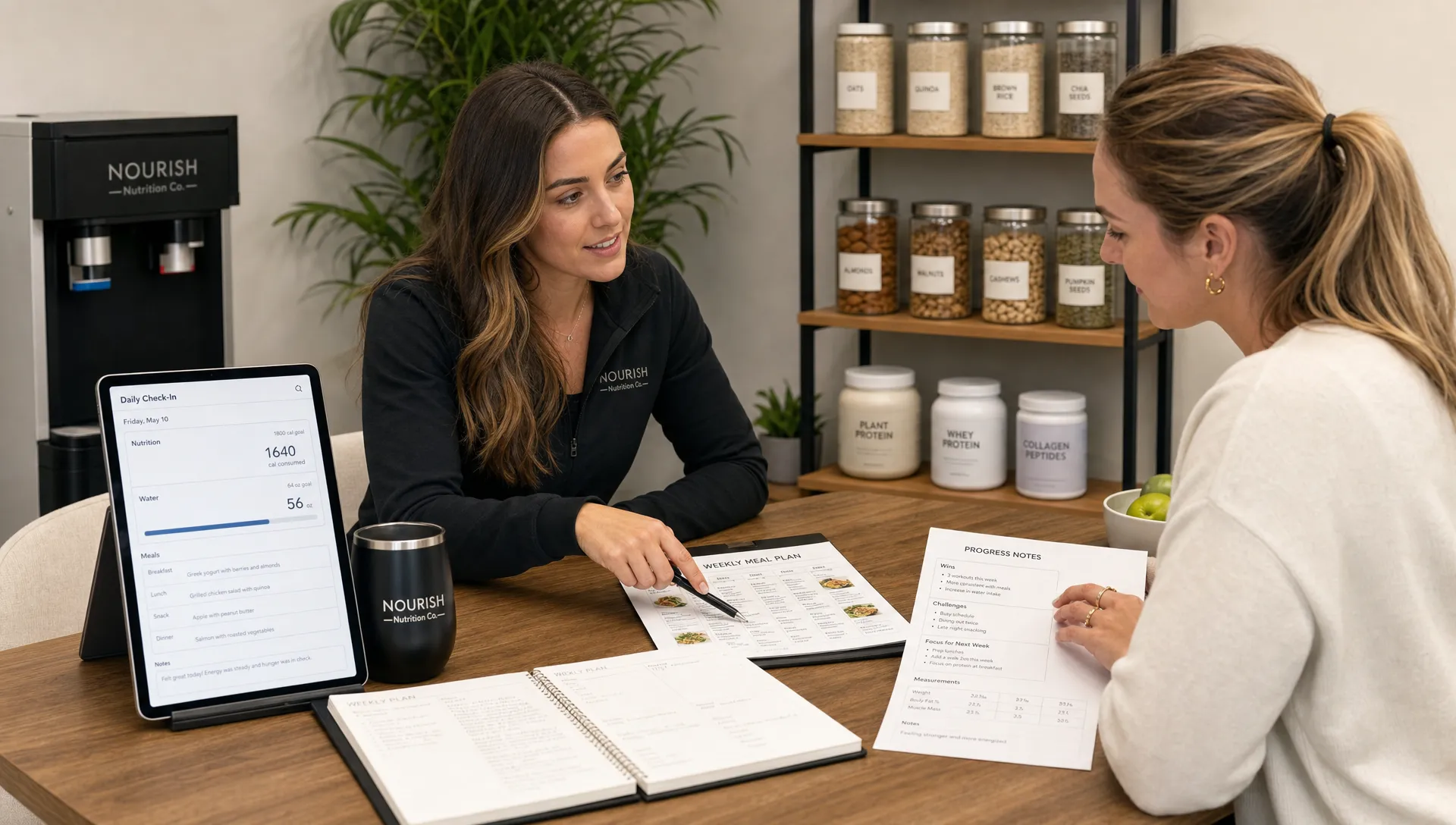


Nutrition advice has never been easier to find. Meal plans, macro calculators, recipe apps, wearable data, and social media tips are everywhere. Yet most people do not struggle because they lack information. They struggle because real life keeps changing: meetings run late, business dinners happen, travel interrupts routines, stress alters appetite, and the plan that looked perfect on Sunday becomes unrealistic by Wednesday.
That is where a virtual nutrition coach can create something an app cannot: real accountability. Not guilt. Not surveillance. Not another dashboard you ignore after two weeks. Real accountability is a structured relationship that turns your goals into decisions you can repeat, adjust, and sustain.
For busy San Francisco professionals, private practice physicians, longevity clinics, and employers building wellness benefits, virtual nutrition coaching can be especially valuable because it makes support easier to access between the moments when motivation is high. The best programs blend human coaching, practical habit design, and relevant health data so you are not left guessing what to do next.
Accountability is not pressure, it is a feedback system
Accountability is often misunderstood as someone checking whether you were good or bad. That framing rarely works for long. Effective nutrition accountability is more like a performance feedback system. It helps you notice what happened, understand why it happened, and decide what to change next.
Research supports the value of this kind of ongoing feedback. A systematic review on dietary self-monitoring found a consistent association between self-monitoring and weight loss outcomes, especially when people tracked regularly and received feedback rather than simply collecting data in isolation. The key insight is not that everyone needs to count every gram forever. It is that behavior change improves when actions become visible and coachable.
The same principle shows up in broader lifestyle medicine. The landmark Diabetes Prevention Program showed that structured lifestyle intervention could significantly reduce type 2 diabetes risk in high-risk adults. While that program was not built around modern virtual coaching tools, it demonstrated something that still matters today: people do better when nutrition and activity goals are supported by structure, follow-up, and skilled guidance.
A strong accountability system includes four elements:
- Clarity: You know exactly what you are working on this week, not just the outcome you want someday.
- Visibility: Your coach can see enough of your patterns to help you identify what is working and what is not.
- Interpretation: Someone with training can distinguish between a discipline problem, a planning problem, a recovery problem, and a nutrition mismatch.
- Adjustment: Your plan changes when your schedule, stress, training load, lab results, or body composition data changes.
That last point is what separates real coaching from generic advice. Accountability only works when the plan is flexible enough to survive real life.
What a virtual nutrition coach does that an app cannot
Nutrition apps are useful tools. They can help you log meals, estimate calories, track protein, and build awareness. But they are not the same as coaching. An app can tell you that your lunch was low in protein. It usually cannot tell you that your lunch was low in protein because your morning meetings are too close together, your office options are limited, and you need a default order that works near your workplace.
A virtual nutrition coach looks at the same data through a human lens. They can ask why something happened, not just record that it happened. They can help you build a repeatable strategy for workdays, client dinners, early training sessions, travel weeks, and weekends with family.
This is why there are times when a personal nutritionist makes more sense than an app, especially for people with performance goals, complex schedules, health concerns, or a history of starting and stopping plans. Apps can create awareness, but human coaching turns awareness into decisions.
Virtual coaching also removes one of the biggest barriers to consistency: friction. If every nutrition conversation requires commuting across the city, finding parking, or rearranging your day, the support itself becomes hard to maintain. Virtual check-ins, messaging, and video sessions make accountability easier to keep in the calendar.
How virtual nutrition coaching turns goals into weekly actions
A goal like eat healthier is too vague to be accountable. So is lose body fat, build muscle, improve energy, or reduce cholesterol. Those outcomes matter, but they need to be translated into actions that can be practiced this week.
A virtual nutrition coach helps break goals into specific behaviors, such as eating a high-protein breakfast four days this week, planning two restaurant meals in advance, adding a recovery meal after strength training, or setting a cutoff for late-night snacking. The goal becomes concrete enough to review.
The most effective weekly actions are small enough to execute and meaningful enough to matter. For example, a busy executive who skips lunch and overeats at dinner may not need a complicated meal plan. They may need a recurring lunch order, a protein target, and a 3 pm snack strategy. A physician who spends long days in clinic may need portable meals that hold up between patient blocks. A frequent traveler may need airport defaults and a hotel breakfast plan.
Accountability happens when your coach asks: Did the action fit your life? If not, what got in the way? What should we change next week?
That type of review creates momentum because the conversation is not about perfection. It is about learning faster.
Why virtual coaching fits high-performance San Francisco schedules
In San Francisco, nutrition consistency has a unique set of challenges. A professional may train early, commute through SoMa, take meetings near the Financial District, attend a client dinner in Jackson Square, and get home late. The problem is not knowing that vegetables and protein matter. The problem is making good decisions across a day that does not leave much room for improvisation.
Virtual nutrition coaching fits this reality because it can happen in the gaps. A coach can review a food log before a meeting, help adjust dinner strategy after a last-minute reservation, or refine a travel plan before a flight. Accountability becomes timely instead of retrospective.
This matters because delayed feedback is less useful. If you only discuss your nutrition every month, you may repeat the same mistake for weeks. If your coach checks in during the week, you can correct course while the decision is still relevant.
A good coach also accounts for the social and professional realities of eating. Business meals, networking events, catered lunches, and family commitments are not exceptions to your nutrition plan. They are part of the plan. Virtual coaching can help you create rules of thumb for those situations without making your life feel rigid.
If consistency is your main challenge, Custom Fit has a helpful companion article on how a nutrition accountability coach helps you stay consistent by turning broad intentions into weekly commitments and supportive follow-up.
Data makes accountability more honest
A virtual nutrition coach can be effective with simple tools, but accountability becomes more precise when paired with reliable data. Weight alone is a limited signal. It can fluctuate with hydration, sodium, stress, hormones, sleep, and training. Someone may be losing fat while gaining muscle, or losing weight while also losing lean mass. Those are very different situations.
This is where body composition testing can sharpen the coaching conversation. DEXA scans, when interpreted properly, can help distinguish body fat, lean mass, and visceral fat trends over time. VO2 max testing, metabolic insights, training performance, and recovery markers can also help explain why a nutrition strategy is or is not producing the expected results.
At Custom Fit, DEXA scans are performed by Registered Dietitians or Exercise Physiologists. That matters because clients are working with professionals who understand nutrition, exercise physiology, and body composition, not simply receiving an automated scan report. The value is not just the scan. It is the interpretation, the context, and the plan that follows.
For example, if a client wants fat loss but their lean mass is declining, the accountability target may shift from eating less to eating enough protein, improving strength training consistency, and managing recovery. If visceral fat is a concern, the strategy may focus more on meal timing, alcohol patterns, sleep, fiber intake, and cardiometabolic markers. If performance is the goal, the coach may prioritize fueling around training instead of pushing constant restriction.
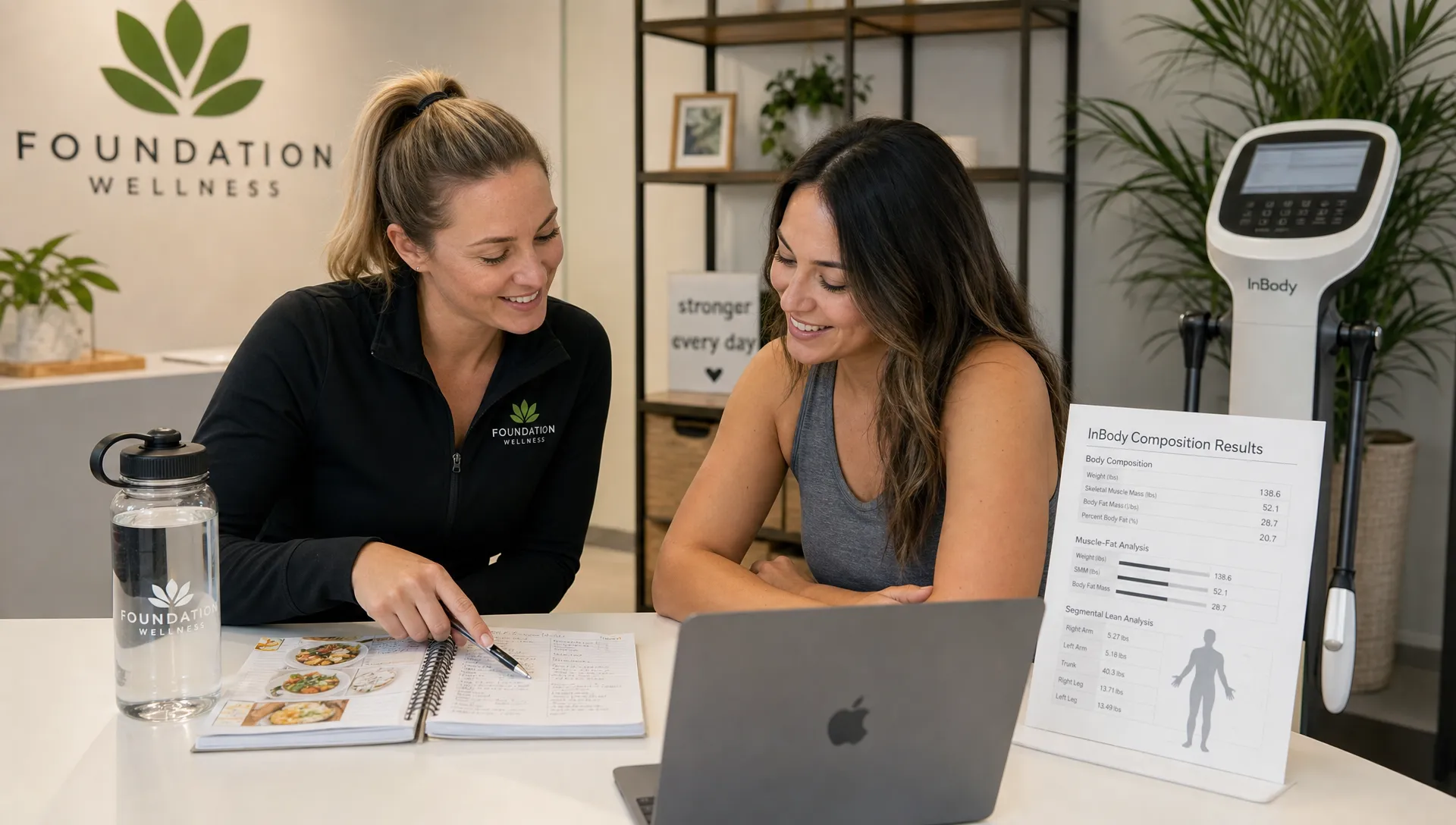
Data helps prevent the most common accountability mistake: judging success by the wrong metric. A skilled coach can help you understand whether the plan is truly moving you toward better health, stronger performance, and sustainable body composition changes.
What real virtual accountability looks like week by week
The most useful virtual nutrition coaching programs usually follow a rhythm. That rhythm may vary by person, but it should create enough structure that progress is visible.
A typical week might include:
- A planning touchpoint: You and your coach identify the biggest nutrition challenge of the week and choose one or two priority actions.
- A midweek check-in: Your coach reviews how the plan is going before small problems become full resets.
- A meal or schedule adjustment: You adapt the plan around training days, work events, travel, or unexpected stress.
- A reflection review: You look at what worked, what failed, and what should change next week.
- A longer progress review: Every few weeks, you evaluate trends in energy, strength, body composition, digestion, sleep, and adherence.
This rhythm creates consistency without requiring constant contact. The point is not to make you dependent on a coach. The point is to help you build a decision-making system you can eventually run with more independence.
Over time, the best accountability becomes internal. You start asking yourself the same questions your coach would ask: What is the highest-impact choice here? What has worked before? What is realistic today? What am I pretending not to know?
The privacy and professionalism layer matters
Virtual nutrition coaching often involves sensitive information: health goals, food logs, weight history, body composition data, lab values, medication context, and sometimes employer-sponsored wellness participation. For individuals, this means choosing coaches and clinics that treat personal information with care. For employers, concierge medicine groups, and longevity clinics, it means designing programs that respect confidentiality from the start.
Accountability should never feel like surveillance. Clients should understand what information is collected, who can access it, how it is used, and how progress is discussed. This is especially important when coaching is offered as an employee benefit or integrated into a medical or longevity program.
Organizations building wellness programs can benefit from thinking about privacy through a broader governance lens. Resources from governance, risk, and compliance consultants are a useful reminder that strong health programs need both effective support and responsible data practices.
For private practice doctors and concierge medicine facilities, this is also a partnership consideration. A nutrition coaching partner should be able to support patient goals while respecting professional boundaries, referral workflows, and appropriate data handling.
How to tell if your virtual nutrition coach is creating real accountability
Not every virtual program is equally valuable. Some are little more than templated meal plans with occasional messages. Real accountability feels different because the coach is actively helping you connect behavior, context, and outcomes.
Look for these signs:
- Your coach asks about your schedule, stress, training, sleep, preferences, and barriers before making recommendations.
- Your weekly goals are specific enough that you can clearly say whether they happened.
- Check-ins lead to adjustments, not just encouragement.
- Your coach helps you build strategies for restaurants, travel, office meals, and social events.
- Progress is measured with more than scale weight.
- You feel supported without feeling judged.
Red flags include one-size-fits-all meal plans, extreme restriction, no discussion of your real schedule, lack of credential transparency, and coaching that focuses only on compliance instead of problem-solving.
For high-performing clients, the best coach is not someone who simply pushes harder. It is someone who helps you spend less mental energy on nutrition while getting better results.
Who benefits most from virtual nutrition accountability
Virtual nutrition coaching can work for many people, but it is especially helpful for those whose environment changes often. If your schedule is unpredictable, accountability needs to travel with you.
Busy professionals benefit because the plan can be built around meetings, restaurants, travel, and training windows. Parents benefit because coaching can adapt to family meals and limited prep time. Athletes and recreational lifters benefit because nutrition can be aligned with training volume and recovery. People focused on longevity benefit because a coach can help connect daily eating patterns with long-term health markers.
Employers can also benefit when nutrition coaching is part of a broader wellness strategy. The value is not simply offering another perk. It is helping employees build sustainable habits that support energy, resilience, and health. For employee benefits managers, the strongest programs are the ones that combine access, confidentiality, credible coaching, and measurable engagement.
Clinics and medical practices may find value in nutrition coaching partnerships when patients need more support than a short appointment can provide. Many patients understand what they should do, but they need follow-through between visits. A virtual coach can help bridge that gap while staying aligned with the broader care plan.
Frequently Asked Questions
Is a virtual nutrition coach as effective as in-person coaching? It can be, especially when the program includes regular check-ins, individualized feedback, and clear action steps. In-person coaching may be useful for testing or hands-on assessments, while virtual coaching often improves access and consistency between appointments.
Do I need to track calories to be accountable? Not always. Some clients benefit from macro or calorie tracking, but others do better with meal structure, protein targets, photo logs, portion guidance, or habit-based goals. A good coach chooses the method that fits your needs and reduces unnecessary friction.
How often should I check in with a virtual nutrition coach? Weekly check-ins are common because they allow enough time to practice while still giving your coach a chance to adjust the plan quickly. Some people need more frequent touchpoints during travel, stressful periods, or new habit formation.
Can virtual nutrition coaching help with body composition goals? Yes, especially when paired with reliable assessment tools. Body composition goals require more nuance than scale weight alone, since fat loss, muscle gain, and visceral fat changes can move differently. Professional interpretation of data can make accountability more accurate.
What should I prepare before starting nutrition coaching? Bring your goals, typical schedule, current eating patterns, training routine, recent labs or testing if available, and a clear sense of where consistency breaks down. The more context your coach has, the more practical your plan can be.
Build accountability around your actual life
Nutrition success is not about finding the perfect plan. It is about building a system that helps you make better decisions repeatedly, even when life gets busy.
A virtual nutrition coach can create that system by giving you structure, feedback, and support between the moments when you would normally fall off track. When paired with professional testing, expert interpretation, and realistic habit design, accountability becomes less about willpower and more about clarity.
If you are in San Francisco and want nutrition support connected to personal training, testing, recovery, and long-term health goals, Custom Fit SF can help you take a more data-informed approach to your next step.