How to Find the Right Gym in San Francisco for Your Goals
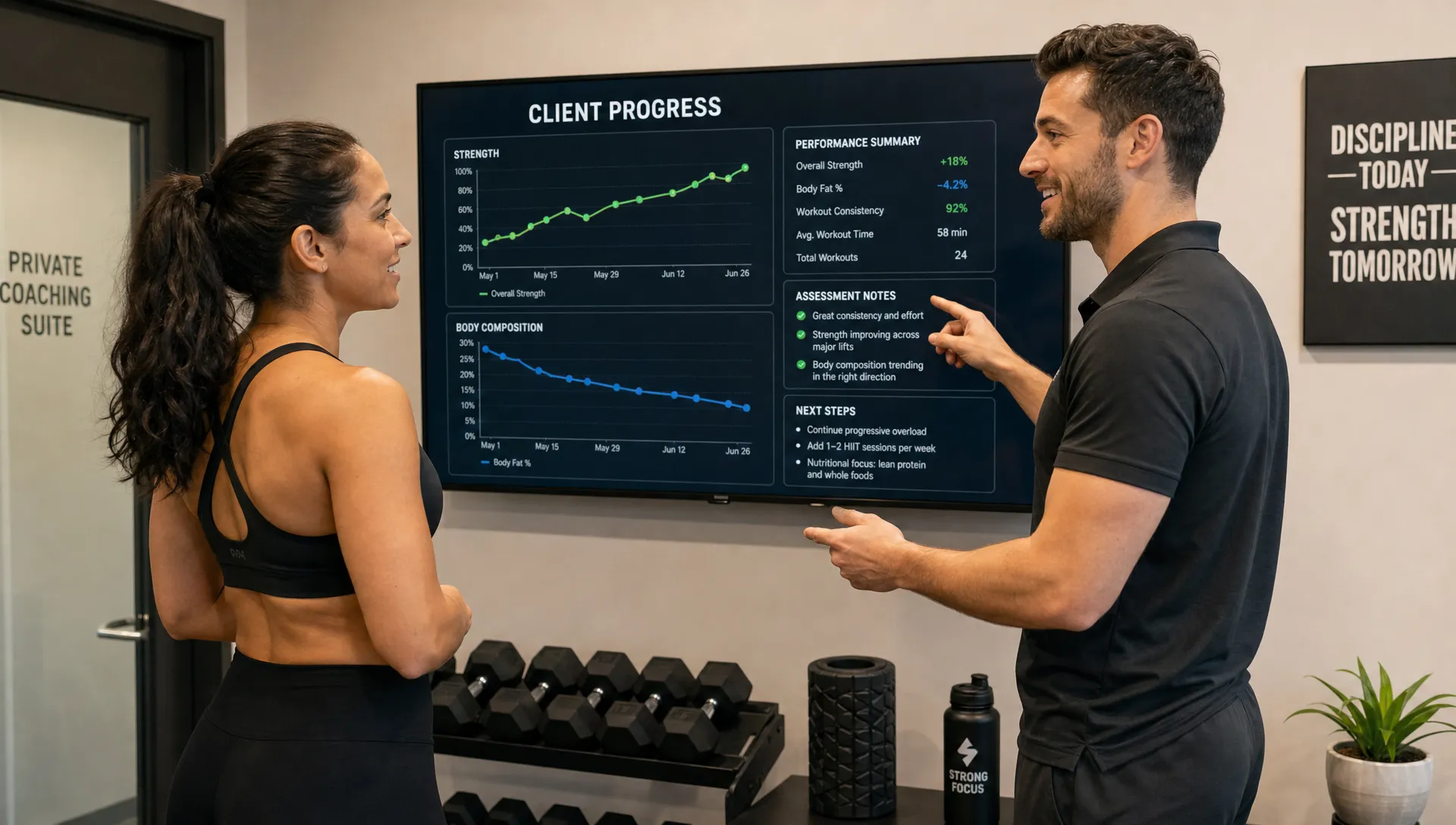


If you have searched for a gym in San Francisco, you already know the options can blur together quickly. One place advertises luxury amenities. Another promises high-intensity classes. Another has endless equipment but little guidance. The right choice depends less on the nicest locker room and more on whether the gym can help you reach your specific goal without wasting time.
For a busy professional, a good gym has to fit your schedule, your commute and your standards. For someone managing metabolic health, it should offer more than generic workouts. For an athlete, it needs coaching and testing that can translate effort into measurable performance. The goal is to choose a place where training, nutrition, recovery and data work together.
Start With the Outcome You Actually Want
Before comparing facilities, define the result that would make the membership worth it. “Getting in shape” is too vague to guide a smart decision. A better goal sounds like “lose 10 pounds of fat without losing muscle,” “run a faster half marathon,” “build strength after 40,” “improve VO2 max,” or “reduce visceral fat while improving energy at work.”
Ask yourself four questions before touring any gym:
- What measurable change do I want in the next 90 days?
- Do I need coaching, accountability or a self-directed place to train?
- What data would help me track progress accurately?
- What location and schedule would I realistically use three or four times per week?
That last question matters in San Francisco. A beautiful facility across town may look appealing during a tour, but it will not help if traffic, parking or back-to-back meetings keep you from showing up.
Match the Gym Type to Your Goal
Different gyms are built for different outcomes. A large commercial gym can be the right choice for an experienced lifter who knows how to program. A boutique class studio may suit someone who wants energy and structure. A private training studio is often a better fit for people who want individual coaching, injury-aware programming or measurable changes in body composition.
| Gym type | Best for | What to check before joining |
|---|---|---|
| Large commercial gym | Independent training, flexible hours, general fitness | Equipment availability, crowding, cleanliness and whether you need outside coaching |
| Boutique class studio | Motivation, group energy, conditioning | Class size, coaching quality, progression and whether workouts match your goal |
| Personal training studio | Fat loss, strength, accountability, technique | Trainer credentials, assessment process, program updates and privacy |
| Data-driven wellness gym | Body composition, longevity, performance, metabolic goals | Access to DEXA, VO2 max testing, nutrition coaching and interpretation from qualified professionals |
| Recovery-focused gym | High training volume, stress management, injury prevention | Whether recovery services are integrated into your training plan or treated as add-ons |
If your goal involves measurable change, look for a facility that starts with assessment rather than assumptions. At Custom Fit, for example, the model combines personal training, nutrition coaching, DEXA scans, VO2 max testing, recovery programs, memberships and group classes within a data-driven fitness environment.
If Your Goal Is Fat Loss or Body Composition
For fat loss, the biggest mistake is choosing a gym based only on calorie burn. High-output workouts can help, but long-term body composition changes usually require strength training, nutrition strategy, recovery and accurate tracking.
A standard scale cannot show whether you are losing fat, gaining muscle or retaining water. That is why body composition testing can be useful, especially for people who want to lose fat without sacrificing lean mass. DEXA scans can estimate fat mass, lean mass, bone density and visceral fat, giving you a clearer baseline than weight alone.
At Custom Fit, DEXA scans are performed by Registered Dietitians or Exercise Physiologists. That matters because clients are working with professionals who understand nutrition, exercise physiology and body composition, not simply receiving an automated scan report. The interpretation is where the value comes from: what the numbers mean, how they connect to training and what should change in your nutrition plan.
Nutrition support is also central. The New England Journal of Medicine's Diabetes Prevention Program trial found that intensive lifestyle intervention reduced the incidence of type 2 diabetes by 58 percent among high-risk adults, showing how powerful structured exercise and nutrition changes can be. If food choices, travel meals or late work nights are the main obstacles, a gym with qualified nutrition coaching may be more valuable than one with more machines. You can also review what to look for in a nutrition coach in San Francisco before committing to a program.
If Your Goal Is Strength, Muscle or Healthy Aging
Strength training should be progressive, not random. The right gym will help you build a plan around movement quality, progressive overload, adequate recovery and clear benchmarks. This is especially important if you are returning after time off, dealing with old injuries or trying to maintain muscle as you age.
An American College of Sports Medicine position stand on resistance training progression emphasizes the importance of structured progression for improving strength, power and hypertrophy. In practical terms, that means your program should evolve. If you are doing the same circuit every week with no load tracking, no technique coaching and no progression, your results will eventually stall.
Look for coaches who can explain why each exercise is in your program. A strong program should include major movement patterns, appropriate intensity, planned recovery and modifications when your schedule or body demands them.
If Your Goal Is Endurance, Performance or Longevity
For endurance and performance goals, the best gym is not necessarily the one with the hardest workouts. It is the one that can identify your current capacity and train the right energy systems at the right time.
VO2 max testing can be especially useful for runners, cyclists, recreational athletes and longevity-focused clients. It helps estimate aerobic capacity and can guide heart rate zones for training. A 2018 JAMA Network Open cohort study of more than 122,000 adults found that higher cardiorespiratory fitness was associated with lower all-cause mortality, which is one reason VO2 max has become a key metric in performance and longevity conversations.
If you are evaluating a gym for longevity, ask how testing translates into action. A VO2 max result should lead to training zones. A DEXA scan should lead to a plan for muscle, fat mass and visceral fat. Recovery work should be connected to training load rather than sold as a separate luxury.
Make the Gym Fit Your San Francisco Routine
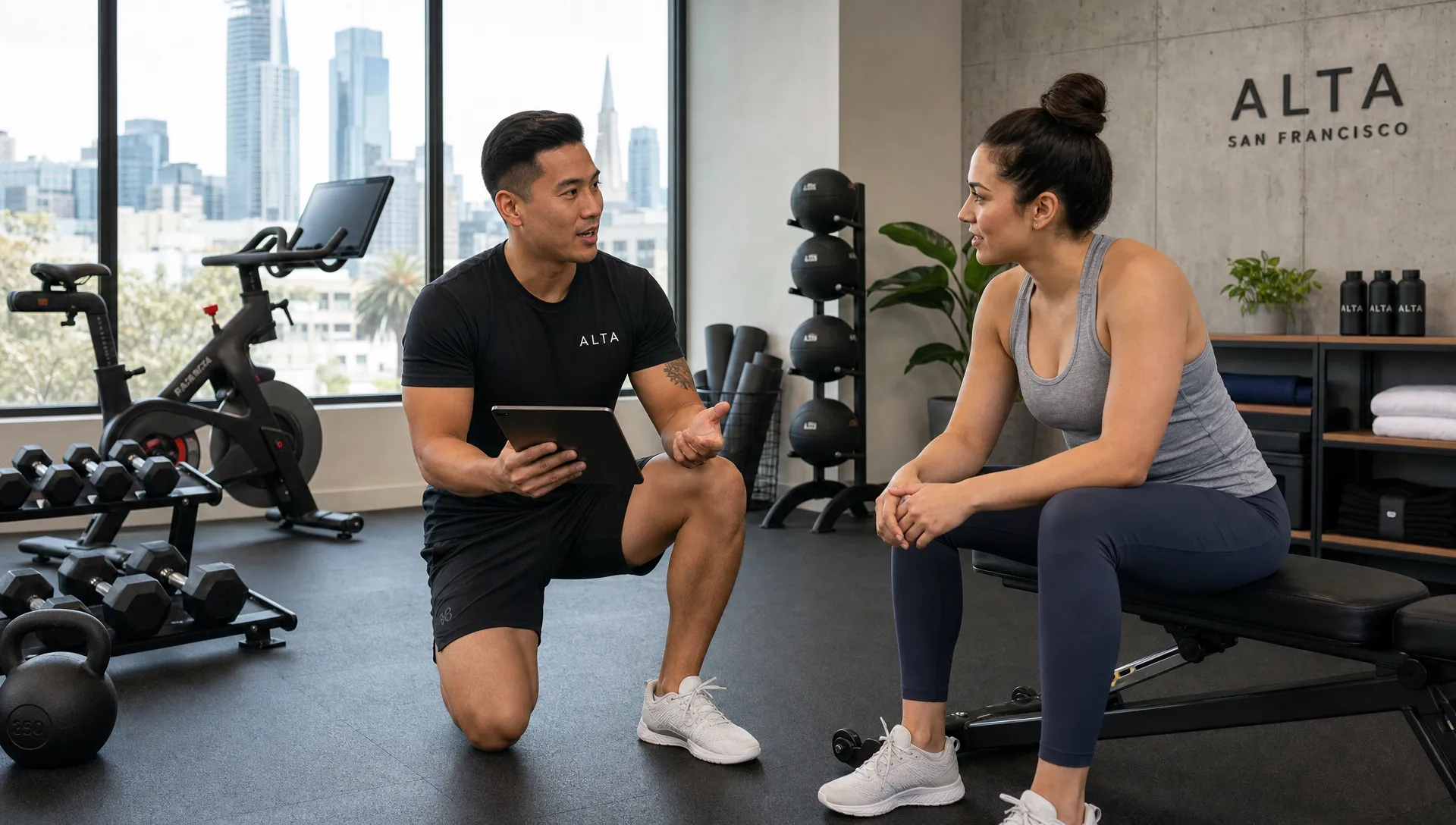
In San Francisco, convenience is not a small detail. It is often the difference between consistency and another unused membership. If you work in SoMa and live on the west side, the right gym may be one close to your office so you can train before dinner. If you live near Hayes Valley or commute through Civic Center, a centrally located studio can make morning or midday training much easier.
For people who want a more private, coached environment, personal training in Hayes Valley can be a practical fit because the neighborhood is accessible from many parts of the city and close to work, dining and transit corridors.
Also consider the rhythm of your life. High-income professionals often need predictable scheduling, efficient sessions and a place where they can transition quickly between work and training. Parents may need consistency more than novelty. Physicians, founders and executives may prefer a quieter environment with a higher level of privacy. The best gym for your goals is the one you can use consistently without adding friction to your week.
Evaluate the Quality of the Team, Not Just the Space
A gym can look impressive and still provide average guidance. When your goals involve health data, body composition or performance testing, the qualifications of the team matter.
Ask who performs assessments, who interprets results and who updates your plan. Registered Dietitians, Exercise Physiologists and experienced coaches bring different expertise. A strong gym knows how to integrate those disciplines rather than handing you disconnected services.
The same principle applies across health care. You would evaluate a physician or dental provider by credentials, services and patient guidance, not just the look of the office. A clinic such as CP Dental's dentistry services in Brisbane makes its scope of care and locations clear, which is the kind of transparency you should also expect from a gym handling your training data and body composition goals.
Questions to Ask Before You Join
A good gym should welcome detailed questions. If the team cannot explain how they will help you reach your goal, the facility may not be as personalized as it appears.
Use these questions during a consultation or tour:
- How do you assess new clients before building a plan?
- Who designs my program and how often is it updated?
- Do you offer nutrition coaching from qualified professionals?
- How do you measure progress beyond body weight?
- Do you offer DEXA scans, VO2 max testing or other performance assessments?
- How do you adjust training if I travel, sleep poorly or have a demanding work week?
- What does communication look like between sessions?
- Is recovery built into the plan or treated as an optional extra?
Listen for specific answers. “We customize everything” is not enough. A better answer explains the assessment, the training plan, the role of nutrition, the follow-up schedule and how your data will guide decisions.
Green Flags and Red Flags
A gym does not need every possible service to be a good fit, but it should be honest about what it does well. The best gyms are clear about their process and realistic about what results require.
| Green flag | Red flag |
|---|---|
| A structured intake and baseline assessment | A sales tour with no real discussion of your goals |
| Coaches who explain programming decisions | Random workouts that change constantly with no progression |
| Clear nutrition support or referral options | Weight loss promises based only on intense workouts |
| Body composition data interpreted by qualified professionals | A scan or report with no coaching context |
| Recovery matched to training load | Recovery services sold without a training strategy |
| Flexible options for busy schedules | A program that assumes your week is always predictable |
Be cautious with any gym that guarantees dramatic results in a short time. Sustainable changes in strength, aerobic fitness, body composition and metabolic health require consistency, professional guidance and adjustments along the way.
What the First 90 Days Should Look Like
A goal-focused gym should be able to map your first 90 days before you sign up. The plan does not need to be rigid, but it should have a clear structure.
Days 1 to 14 should focus on assessment, movement quality, goal setting and baseline data. This may include strength testing, DEXA, VO2 max, nutrition review or recovery habits depending on your goal.
Weeks 3 to 6 should build consistency. Your coach should monitor technique, training response, soreness, sleep and schedule demands. If fat loss is a goal, this is often when nutrition habits become more specific.
Weeks 7 to 12 should show measurable progress. That might mean stronger lifts, better aerobic zones, improved energy, reduced waist circumference, better body composition or a more consistent training rhythm. The gym should help you interpret what improved, what did not and what changes next.
The World Health Organization recommends adults include both aerobic activity and muscle-strengthening work for health. A strong gym helps you turn that broad guideline into a plan that fits your body, schedule and goals.
Frequently Asked Questions
What is the best type of gym in San Francisco for fat loss? The best choice is usually a gym that combines strength training, nutrition coaching and accurate progress tracking. If body composition is your priority, look for DEXA scans interpreted by qualified professionals rather than relying only on the scale.
Do I need a private gym or a regular gym? A regular gym can work if you already know how to train and stay consistent. A private or semi-private training environment is often better if you want coaching, accountability, privacy, injury-aware programming or a plan built around specific health metrics.
How important is location when choosing a gym in San Francisco? Location is extremely important because consistency drives results. Choose a gym near your home, office or regular commute so training does not become another logistical challenge.
Should I choose a gym with DEXA and VO2 max testing? If your goals involve body composition, visceral fat, longevity or endurance performance, these tests can give useful baseline data. The key is choosing a gym where qualified professionals explain the results and turn them into a plan.
How quickly should I expect results after joining a gym? Many people feel better within a few weeks, but measurable changes in strength, aerobic capacity or body composition often take 8 to 12 weeks of consistent training, nutrition and recovery.
Choose the Gym That Can Prove Progress
The right gym in San Francisco is not just the closest facility or the most expensive one. It is the one that understands your goal, measures what matters and gives you the coaching support to follow through.
If you want a data-driven approach that brings together personal training, nutrition coaching, DEXA scans, VO2 max testing and recovery, Custom Fit is designed for people who want more than a standard workout. Ask about memberships, training options and the new client special to see whether the model fits your goals.